Mineral
Acanthite
Ag₂SAkantit
Silver's black sulfide: one of the world's main silver ores and the mineral that coats tarnished native silver.
Also known as: Argentite (name of the high-temperature form, often used loosely) · Silver glance
- Popularly: Ore and raw material

In short
Acanthite is a mineral made of silver and sulfur (silver sulfide, Ag₂S). It is an iron-black mineral with a metallic lustre, soft enough to be cut with a knife. Acanthite, proustite and pyrargyrite are among the few silver minerals that can contain enough silver to be mined. Silver sulfide is stable as acanthite below 173 °C; its cubic form above that temperature is called argentite. Its name comes from the Greek for “thorn”, after the shape of its crystals.
Photos

How does it form?
Acanthite is a common silver mineral in sulfide veins left by moderately low-temperature hot water solutions (hydrothermal fluids) moving through cracks. It also forms near the surface of deposits, in zones of secondary enrichment where silver is dissolved and deposited again. Above 173 °C silver sulfide crystallises as cubic argentite; on cooling it turns into acanthite but often keeps its cubic or octahedral outer shape. These relict crystals can grow up to 8 cm.
What is it used for?
- Silver ore: It is one of the few silver minerals that can contain enough silver to be mined. Silver sulfide minerals are concentrated by flotation.
- Science: The change from argentite to acanthite is a good example of how the same compound can take different crystal structures at different temperatures.
- Collecting: Its sharp crystals and specimens found with native silver are sought by collectors.
What determines its value?
Acanthite is a valuable ore for its silver: about 87% of the weight of pure silver sulfide is silver. Most silver produced today is a by-product of lead–zinc, copper and gold mining, and silver minerals such as acanthite also occur within these ores. Collectors look for sharp, lustrous crystals, especially large cubes and octahedra that kept the shape of argentite, and specimens found with native silver.
This information is educational, not buying, selling or investment advice. Value varies enormously with quality and treatment.
How to recognise it
- 1
Iron black, metallic and completely opaque; its streak is black.
- 2
Very soft (Mohs 2–2.5); a knife cuts it like lead (it is sectile).
- 3
Very heavy (specific gravity about 7.2): nearly three times as heavy as a piece of quartz the same size.
- 4
Its crystals are often cubes or octahedra; these are really argentite crystals formed at high temperature that turned into acanthite as they cooled but kept their outer shape.
- 5
Usually found with native silver, proustite, pyrargyrite, galena, chalcopyrite, sphalerite, calcite and quartz.
Fakes and imitations
What shops usually don’t tell you:
- Galena is also a grey-black, heavy, metallic sulfide; galena, however, is brittle and breaks into steps along its perfect cubic cleavage, while acanthite has no distinct cleavage and can be cut with a knife like lead.
Myths and misconceptions
MythCube-shaped black silver sulfide crystals are argentite.
FactArgentite is stable only above 173 °C. The cubes and octahedra we see at room temperature are crystals that turned into acanthite as they cooled but kept the outer shape of argentite; today they are really acanthite.
Did you know?
The black coating on many native silver specimens exposed to air or hot water is acanthite.
Acanthite is sensitive to light (photosensitive).
It was first described in 1855 from the mines of Jáchymov (Joachimsthal), in today's Czechia. The “Joachimsthaler” silver coins minted there from 1520 became known in German as “Thaler”, the origin of the word “dollar”.
Where is it found?
Loading map…
- Jáchymov (Joachimsthal), Karlovy Vary, Czechia · Type localityAcanthite was first described in 1855 from specimens here; the “Joachimsthaler” silver coins minted from 1520 are the origin of the word “dollar”
- Freiberg, Saxony, Germany · Historic sourceOne of the old Saxon silver-mining districts the Handbook of Mineralogy cites for fine acanthite crystals
- Guanajuato, Mexico · Known localityThe Rayas and other mines; among the localities the Handbook of Mineralogy cites for acanthite
- Comstock Lode, Virginia City, Nevada, USA · Historic sourceThe famous US silver deposit; the Handbook of Mineralogy records acanthite here
- Cobalt, Ontario, Canada · Known localityAcanthite occurs in various silver mines here
Locations are approximate to protect sites. Red dots mark places in Türkiye. Open in the big map →
Frequently asked questions
What is acanthite?
Acanthite is a mineral made of silver and sulfur (silver sulfide, Ag₂S). It is an iron-black mineral with a metallic lustre, soft enough to be cut with a knife. Acanthite, proustite and pyrargyrite are among the few silver minerals that can contain enough silver to be mined. Silver sulfide is stable as acanthite below 173 °C; its cubic form above that temperature is called argentite. Its name comes from the Greek for “thorn”, after the shape of its crystals.
Why does silver tarnish?
Silver reacts with sulfur compounds in the air and in sweat, forming silver sulfide on its surface. The same happens in nature: the black coating on many native silver specimens exposed to air or hot water is acanthite, the silver sulfide mineral.
What is acanthite used for?
Silver ore: It is one of the few silver minerals that can contain enough silver to be mined. Silver sulfide minerals are concentrated by flotation. Science: The change from argentite to acanthite is a good example of how the same compound can take different crystal structures at different temperatures. Collecting: Its sharp crystals and specimens found with native silver are sought by collectors.
How hard is acanthite?
It has a hardness of 2–2.5 on the Mohs scale. It is soft enough to scratch with a fingernail. Its specific gravity is 7.2–7.24 g/cm³.
Where is acanthite found?
Its best-known localities: Jáchymov (Joachimsthal), Karlovy Vary, Czechia; Freiberg, Saxony, Germany; Comstock Lode, Virginia City, Nevada, USA; Guanajuato, Mexico; Cobalt, Ontario, Canada.
How can you tell if acanthite is real?
Iron black, metallic and completely opaque; its streak is black. Very soft (Mohs 2–2.5); a knife cuts it like lead (it is sectile). Very heavy (specific gravity about 7.2): nearly three times as heavy as a piece of quartz the same size. Galena is also a grey-black, heavy, metallic sulfide; galena, however, is brittle and breaks into steps along its perfect cubic cleavage, while acanthite has no distinct cleavage and can be cut with a knife like lead.
Is acanthite valuable?
On the “street to diamond” value ladder it sits on step 3 of nine: Building and industrial stone. Acanthite is a valuable ore for its silver: about 87% of the weight of pure silver sulfide is silver. Most silver produced today is a by-product of lead–zinc, copper and gold mining, and silver minerals such as acanthite also occur within these ores. Collectors look for sharp, lustrous crystals, especially large cubes and octahedra that kept the shape of argentite, and specimens found with native silver.
Sources
- Acanthite · Wikipedia
- Handbook of Mineralogy: Acanthite · Mineralogical Society of America
- Dünyada ve Türkiye'de Gümüş (Maden Serisi) · MTA Genel Müdürlüğü
- Jáchymov · Wikipedia
External links
ReviewedLast checked: 4 October 2026
On the same step
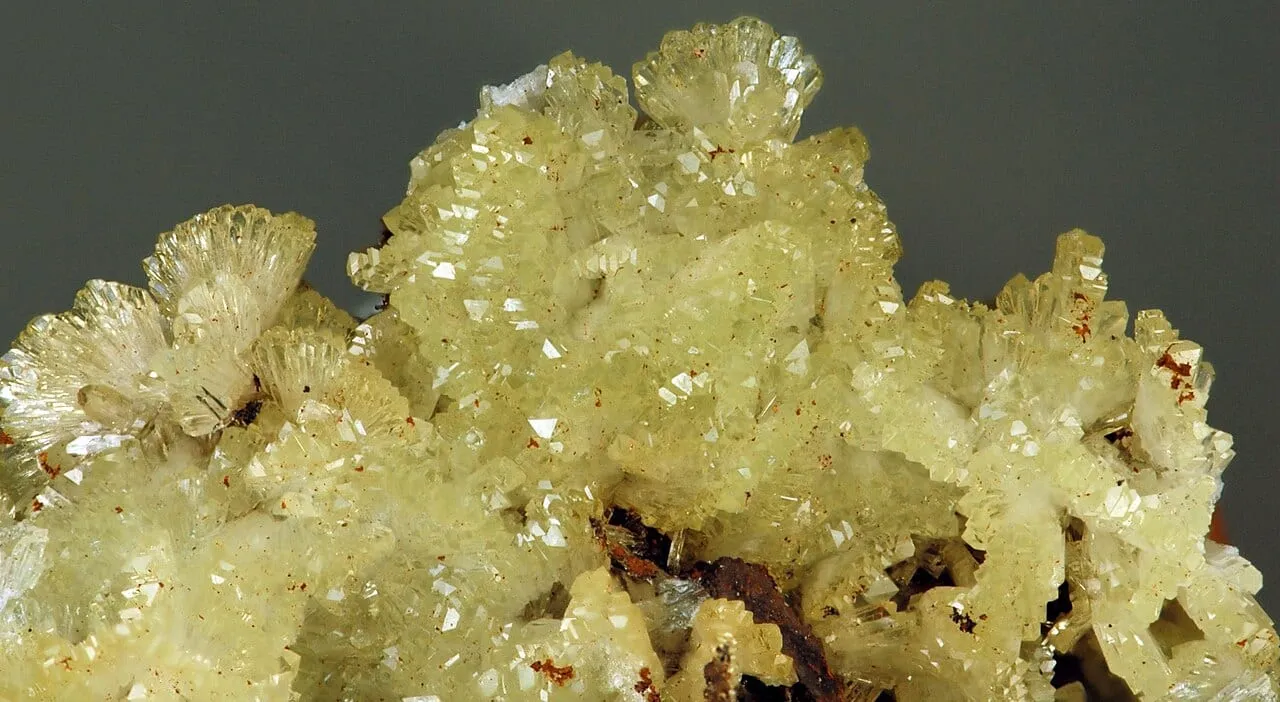
Adamite
Zinc arsenate in fan-shaped crystals from honey yellow to green: some specimens glow under ultraviolet light.
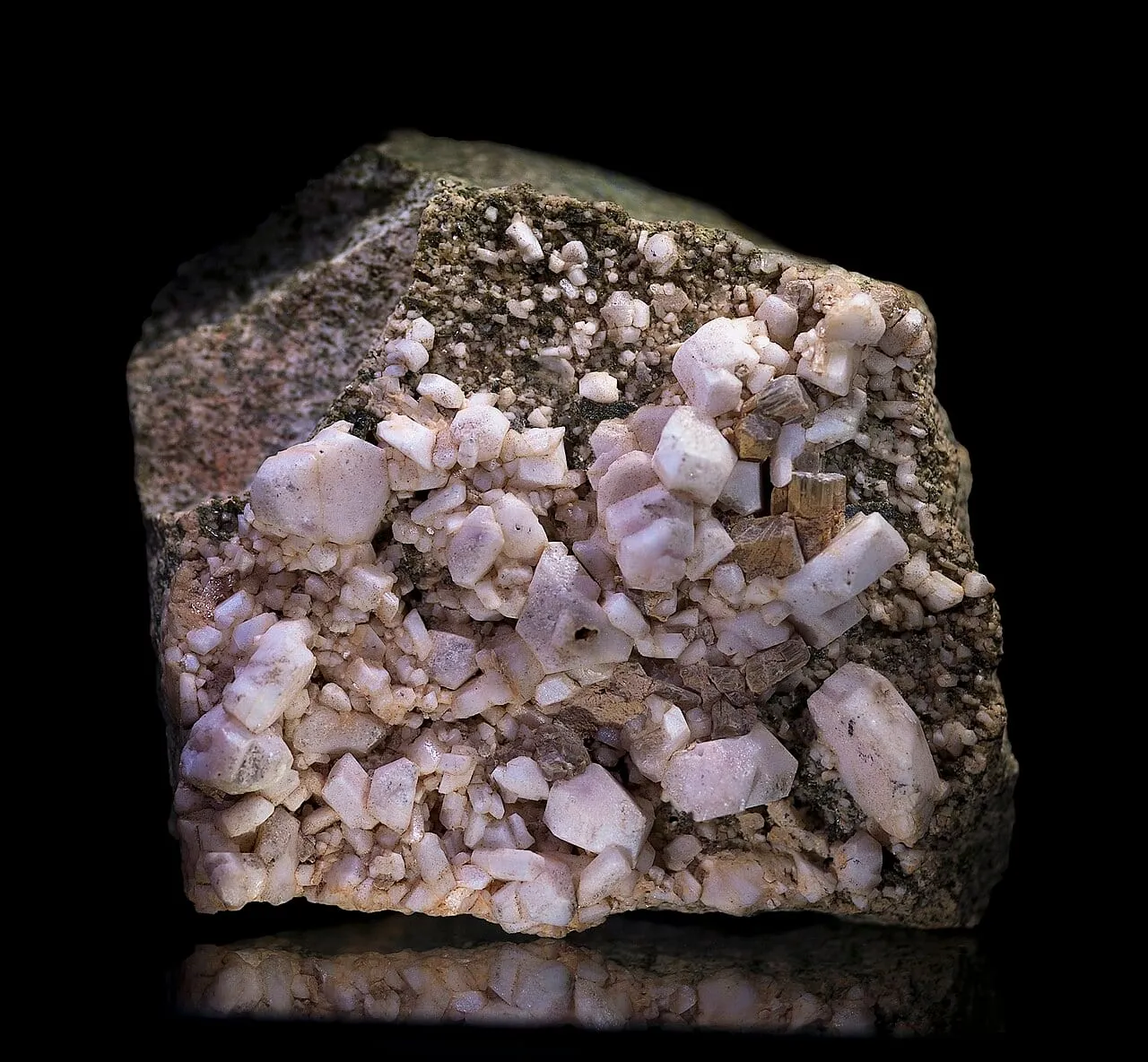
Albite
The white, sodium end of the feldspars: with its deposits at Çine–Milas, a glass and ceramics raw material that makes Türkiye one of the world’s main feldspar producers.
Alunite
The “alum stone” from which alum was made for centuries. Foça, Şaphane in Kütahya and Şebinkarahisar are Türkiye's old alum homelands.