Everyday name
Rock crystal
Kristal ve necef taşı (dağ kristali)
The clear stone people call “crystal” or, in Türkiye, “necef taşı” is colourless quartz; the “crystal” of chandeliers and glasses is lead glass.
Also known as: Clear quartz · Crystal · Crystal ball · Mountain crystal
- Popularly: Semi-precious stone
- Everyday
- Ornamental
In short
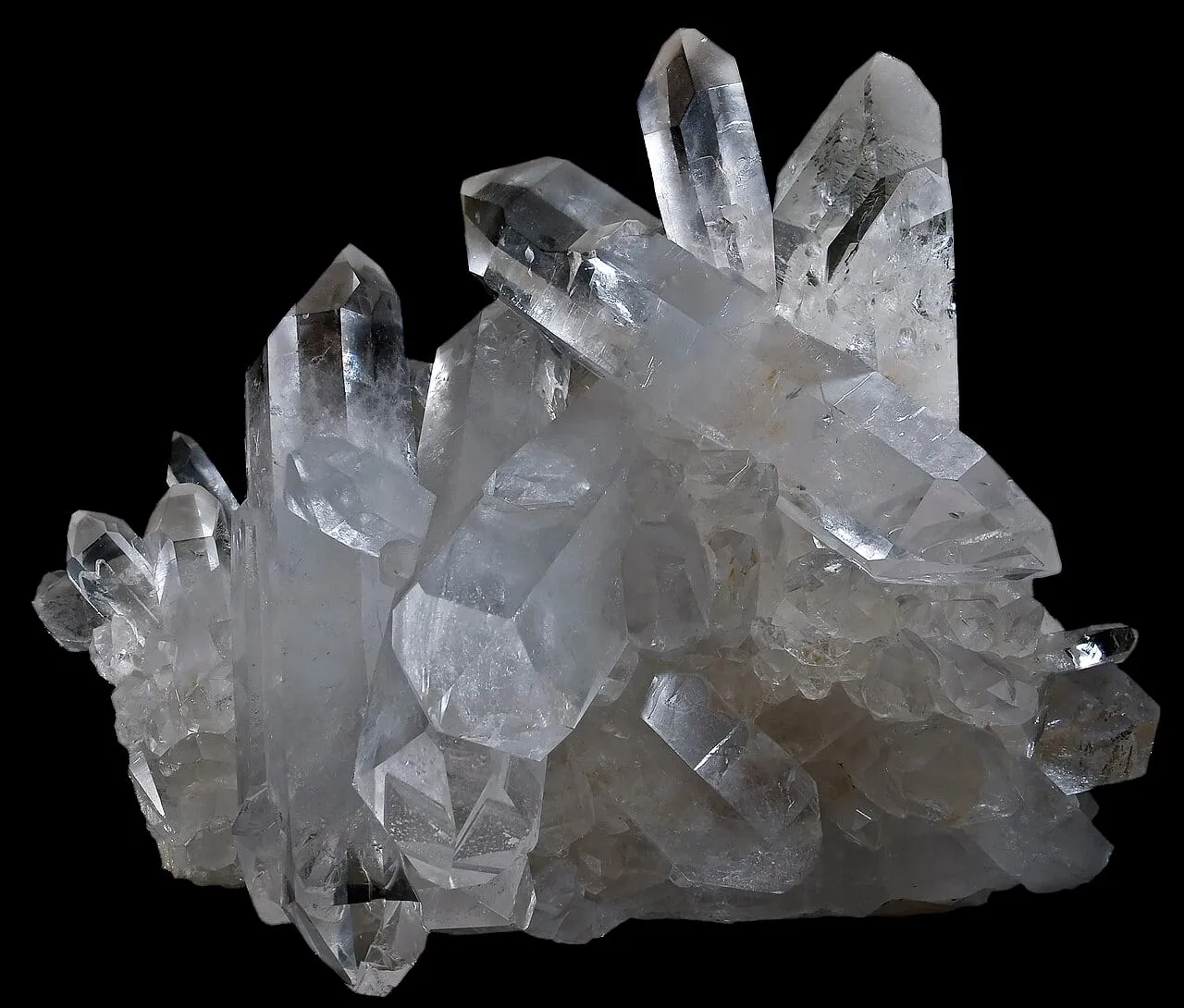
Rock crystal (in Turkish “necef taşı” or “dağ kristali”) is the everyday name for colourless, transparent quartz. Chemically it is silicon dioxide (SiO₂); in nature it usually grows as six-sided prisms with pointed tips and is hard enough to scratch glass. In everyday language the word “crystal” is used for three different things: clear quartz (rock crystal), any mineral specimen sold in crystal shops, and the sparkling lead glass used in chandeliers and drinking glasses. In science, a crystal is a solid whose atoms are arranged in a regular, repeating pattern: salt, sugar, snowflakes and quartz are crystals, whereas glass, with its disordered atoms, is not.
In scientific terms
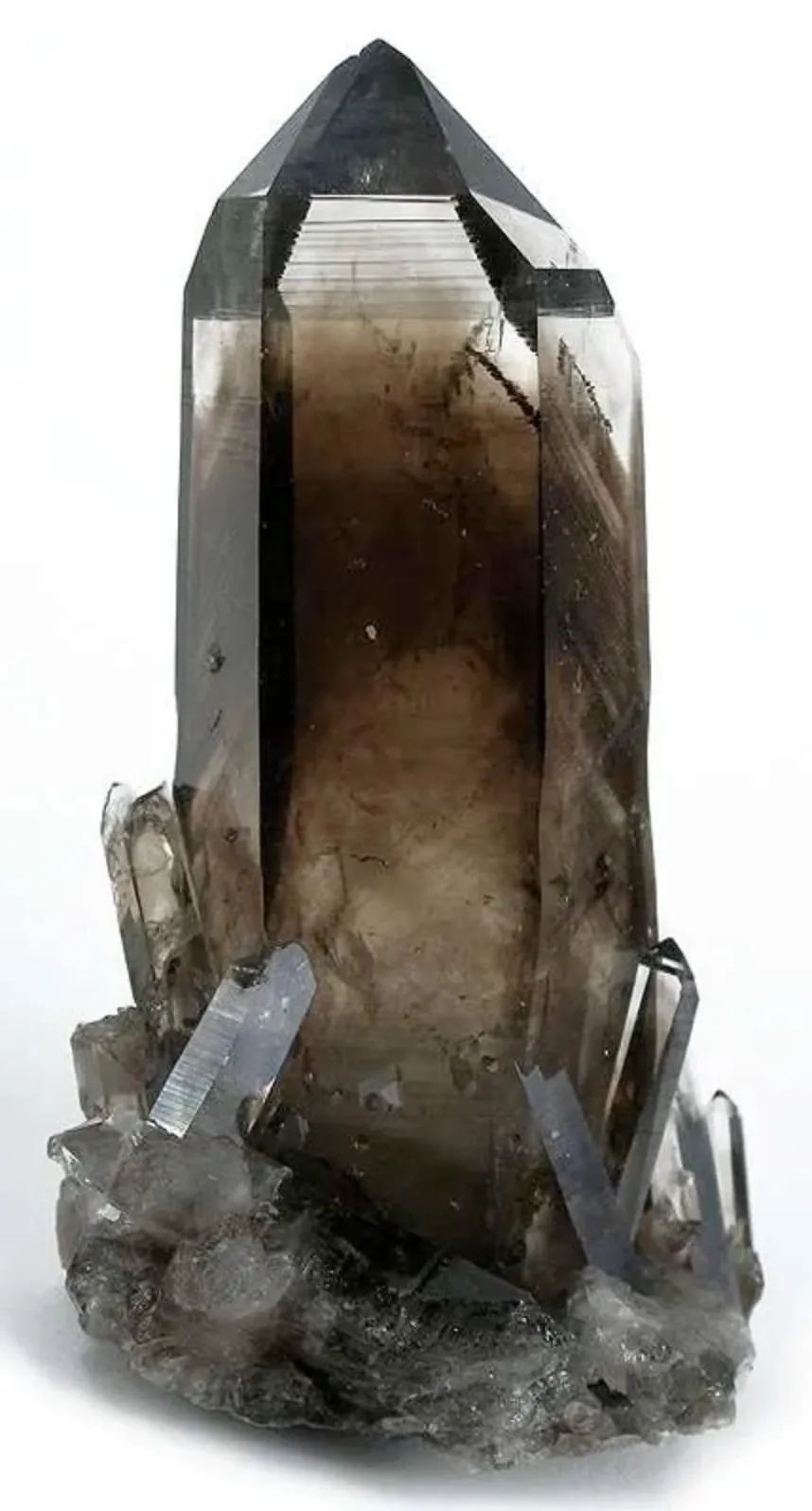
This is an everyday name; in science it means these stones:

What is it used for?
- Ornaments and jewellery: Rock crystal is worked into pendants, beads, spheres, bowls and figurines; in the past it was also carved into cups, ewers and seals.
- Collecting: Clear clusters with intact points are among mineral collectors’ favourite specimens.
- Technology: Quartz’s piezoelectricity is used to keep time in watches and electronic circuits; synthetic quartz crystals grown for the purpose are preferred today.
- Optics: Because quartz lets ultraviolet light through, it is used in some optical components.
Why is “crystal” such a confusing word?
In science, a crystal is any solid whose atoms are arranged in a regular, repeating pattern: table salt, sugar, snowflakes, diamond and quartz are all crystals. In everyday language the word first referred to clear quartz, rock crystal. When Venetian glassmakers called their clear glass that imitated rock crystal “cristallo”, “crystal” came to be used for sparkling glassware too. Today, crystal shops sell every kind of mineral specimen, from amethyst to tourmaline, as “crystals”.
Rock crystal in Türkiye
In Turkish, clear quartz is called necef taşı, dağ kristali or billur. Türkiye’s Mining Law lists necef taşı in Group V, alongside gemstones such as diamond, ruby and emerald. The “crystal” chandeliers, glasses and ornaments found in homes, however, are made of glass, not natural necef taşı.
What determines its value?
Rock crystal is a common stone; its value depends on size, clarity, the shape of the crystal and its completeness (undamaged tips). Collectors prize large, clear clusters with intact points; in ornaments, spheres and carvings made from large, inclusion-free pieces are worth more. Crystals with interesting inclusions such as needles of rutile are also sought after. The value of lead crystal glass comes not from any stone but from glassmaking skill and cutting.
This information is educational, not buying, selling or investment advice. Value varies enormously with quality and treatment.
How to recognise it
- 1
Natural rock crystal usually ends in a six-sided prism with a pointed tip; fine horizontal lines can be seen across the prism faces.
- 2
It is hard (Mohs 7): a steel knife cannot scratch it, but it scratches glass. Lead crystal glass is much softer and can be scratched with a knife.
- 3
It feels cold in the hand and stays cold for a long time; inside there are often fine, veil-like cracks and small inclusions. Glass spheres show round air bubbles and swirl marks instead.
- 4
Looking at a thin thread or line through a crystal sphere, in some directions the line appears doubled (double refraction); this does not happen in glass.
Fakes and imitations
What shops usually don’t tell you:
- Chandelier drops, crystal glasses and decanters, and “crystal” ornaments and stones are mostly glass containing additives such as lead or barium. Under European Union rules, glass containing at least 24 percent lead oxide may be called “lead crystal”.
- Some items sold in crystal shops as “clear quartz” or “crystal balls” are made of melted glass or synthetic quartz; flawless clarity and bubbles suggest glass.
Safety
Natural rock crystal is harmless. Lead crystal, however, can release lead into drinks; the amount rises sharply when acidic drinks such as wine, liqueurs and fruit juice are kept in decanters for long periods. Do not store drinks in lead crystal or give it to babies and children. Remember too that a crystal sphere can focus sunlight like a lens and start a fire.
Myths and misconceptions
MythCrystal chandeliers and glasses are made of natural crystal, that is, stone.
FactAlmost all of them are glass. Glass with added lead sparkles more and is easy to cut; the name “crystal” comes from “cristallo”, the name Venetian glassmakers gave to their glass imitating rock crystal. Because its atoms are disordered, glass is not a crystal in the scientific sense.
Myth“Necef taşı” is a separate stone, different from quartz.
FactNecef taşı, dağ kristali and billur are all Turkish folk names for the same mineral, colourless quartz. Amethyst, citrine and smoky quartz are coloured varieties of quartz.
What is it believed to be good for?
This section reports beliefs; it is not health information. There is no scientific evidence for these claims and no stone replaces medical treatment.
The meanings people give this stone, and who holds them:
- Since the Middle Ages people have believed that the future can be seen by gazing into spheres of rock crystal (crystal gazing).
- Today, stone sellers and crystal therapy sources claim that clear quartz cleanses “negative energy” from homes and people, clears the mind and sharpens focus.
- The same sources say crystals must be “purified” by leaving them in moonlight or in salt water.
What science says
There is no scientific evidence that rock crystal cleanses energy, strengthens the mind or reveals the future. Piezoelectricity, a real physical property of quartz, produces only tiny amounts of electricity when a crystal is squeezed and has no effect on the human body. Soaking crystals in salt water can damage some soft or water-sensitive minerals.
Did you know?
The word “crystal” comes from the ancient Greek “krystallos”, meaning ice. The Roman naturalist Pliny the Elder believed rock crystal was ice permanently frozen over great lengths of time.
Quartz produces electricity when squeezed (piezoelectricity); quartz watches and the timers in electronic devices rely on this. Virtually all the quartz used in electronics today, however, is synthetic quartz grown in factories.
Türkiye’s Mining Law names “Neceftaşı (Dağ kristali)” explicitly, listing it with amethyst, citrine and smoky quartz in Group V, the group that also includes diamond, ruby and emerald.
Frequently asked questions
What is rock crystal?
Rock crystal (in Turkish “necef taşı” or “dağ kristali”) is the everyday name for colourless, transparent quartz. Chemically it is silicon dioxide (SiO₂); in nature it usually grows as six-sided prisms with pointed tips and is hard enough to scratch glass. In everyday language the word “crystal” is used for three different things: clear quartz (rock crystal), any mineral specimen sold in crystal shops, and the sparkling lead glass used in chandeliers and drinking glasses. In science, a crystal is a solid whose atoms are arranged in a regular, repeating pattern: salt, sugar, snowflakes and quartz are crystals, whereas glass, with its disordered atoms, is not.
What is rock crystal used for?
Ornaments and jewellery: Rock crystal is worked into pendants, beads, spheres, bowls and figurines; in the past it was also carved into cups, ewers and seals. Collecting: Clear clusters with intact points are among mineral collectors’ favourite specimens. Technology: Quartz’s piezoelectricity is used to keep time in watches and electronic circuits; synthetic quartz crystals grown for the purpose are preferred today. Optics: Because quartz lets ultraviolet light through, it is used in some optical components.
How can you tell if rock crystal is real?
Natural rock crystal usually ends in a six-sided prism with a pointed tip; fine horizontal lines can be seen across the prism faces. It is hard (Mohs 7): a steel knife cannot scratch it, but it scratches glass. Lead crystal glass is much softer and can be scratched with a knife. It feels cold in the hand and stays cold for a long time; inside there are often fine, veil-like cracks and small inclusions. Glass spheres show round air bubbles and swirl marks instead. Chandelier drops, crystal glasses and decanters, and “crystal” ornaments and stones are mostly glass containing additives such as lead or barium. Under European Union rules, glass containing at least 24 percent lead oxide may be called “lead crystal”.
Is rock crystal valuable?
On the “street to diamond” value ladder it sits on step 5 of nine: Ornamental stone. Rock crystal is a common stone; its value depends on size, clarity, the shape of the crystal and its completeness (undamaged tips). Collectors prize large, clear clusters with intact points; in ornaments, spheres and carvings made from large, inclusion-free pieces are worth more. Crystals with interesting inclusions such as needles of rutile are also sought after. The value of lead crystal glass comes not from any stone but from glassmaking skill and cutting.
What is rock crystal good for?
Since the Middle Ages people have believed that the future can be seen by gazing into spheres of rock crystal (crystal gazing). Today, stone sellers and crystal therapy sources claim that clear quartz cleanses “negative energy” from homes and people, clears the mind and sharpens focus. The same sources say crystals must be “purified” by leaving them in moonlight or in salt water. There is no scientific evidence that rock crystal cleanses energy, strengthens the mind or reveals the future. Piezoelectricity, a real physical property of quartz, produces only tiny amounts of electricity when a crystal is squeezed and has no effect on the human body. Soaking crystals in salt water can damage some soft or water-sensitive minerals. This section reports beliefs; it is not health information. There is no scientific evidence for these claims and no stone replaces medical treatment.
Is rock crystal dangerous?
Natural rock crystal is harmless. Lead crystal, however, can release lead into drinks; the amount rises sharply when acidic drinks such as wine, liqueurs and fruit juice are kept in decanters for long periods. Do not store drinks in lead crystal or give it to babies and children. Remember too that a crystal sphere can focus sunlight like a lens and start a fire.
Sources
- Quartz · Encyclopaedia Britannica
- Lead glass · Wikipedia
- 3213 sayılı Maden Kanunu, madde 2: maden grupları (5177 sayılı Kanunla değişik metin) · FAOLEX (FAO), Türk mevzuatı metni, 2004
- Crystal · Wikipedia
- Quartz · Wikipedia
External links
Draft: awaiting expert reviewReport an error ↗
On the same step
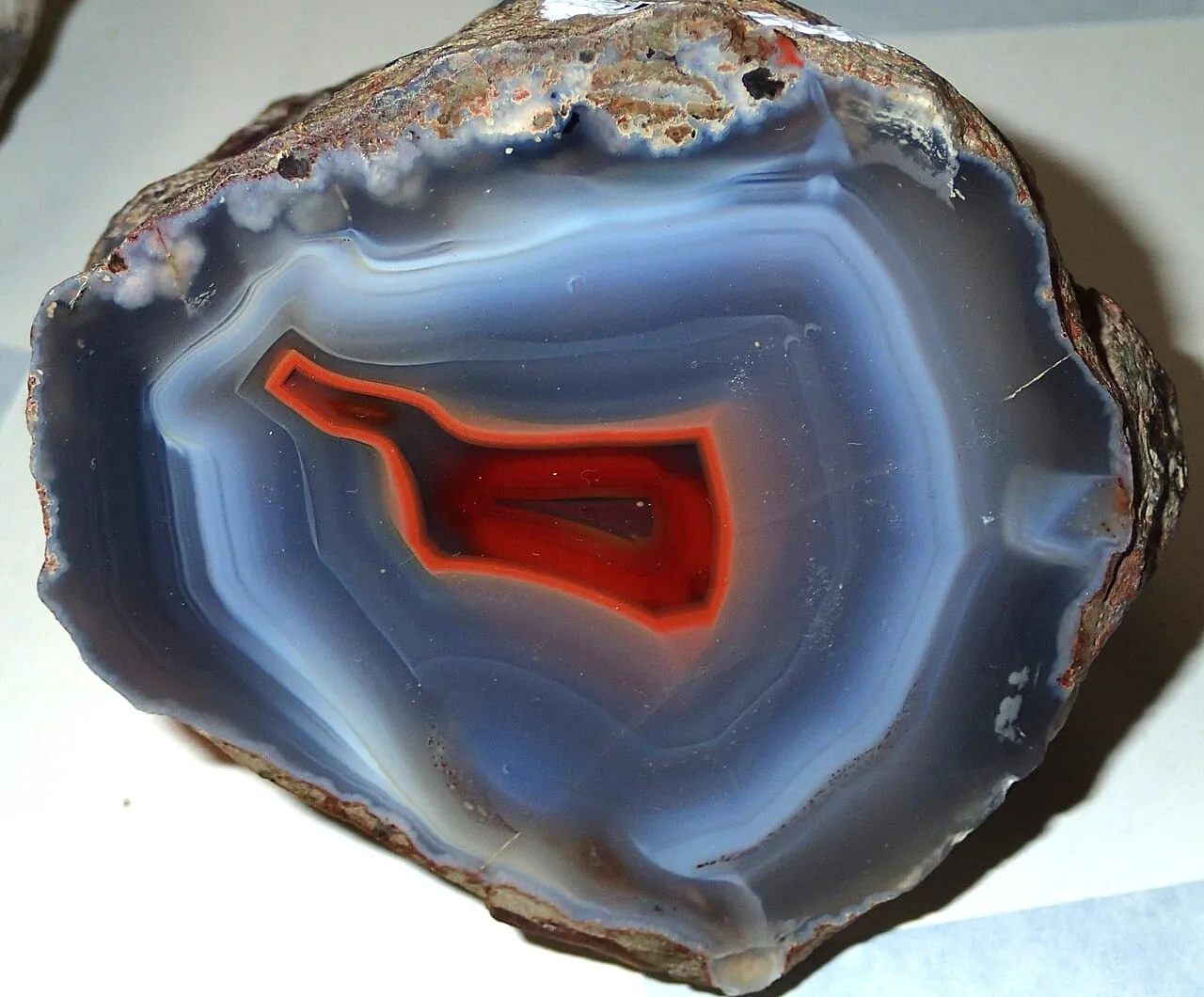
Agate
The banded variety of chalcedony: it grows layer by layer in hollows in volcanic rock and shows a new pattern every time it is cut.
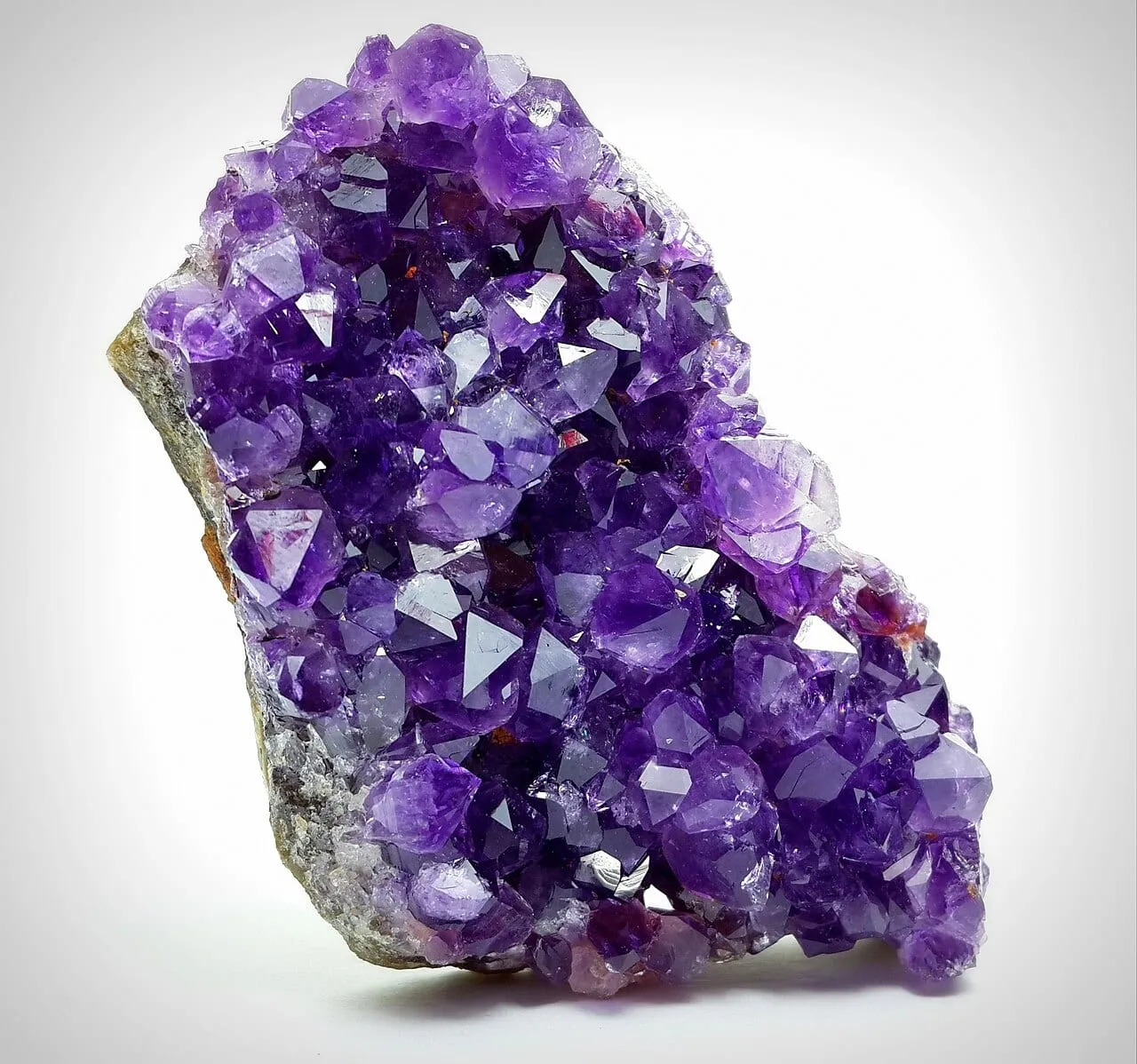
Amethyst
The purple variety of quartz, coloured by traces of iron working together with natural radiation.
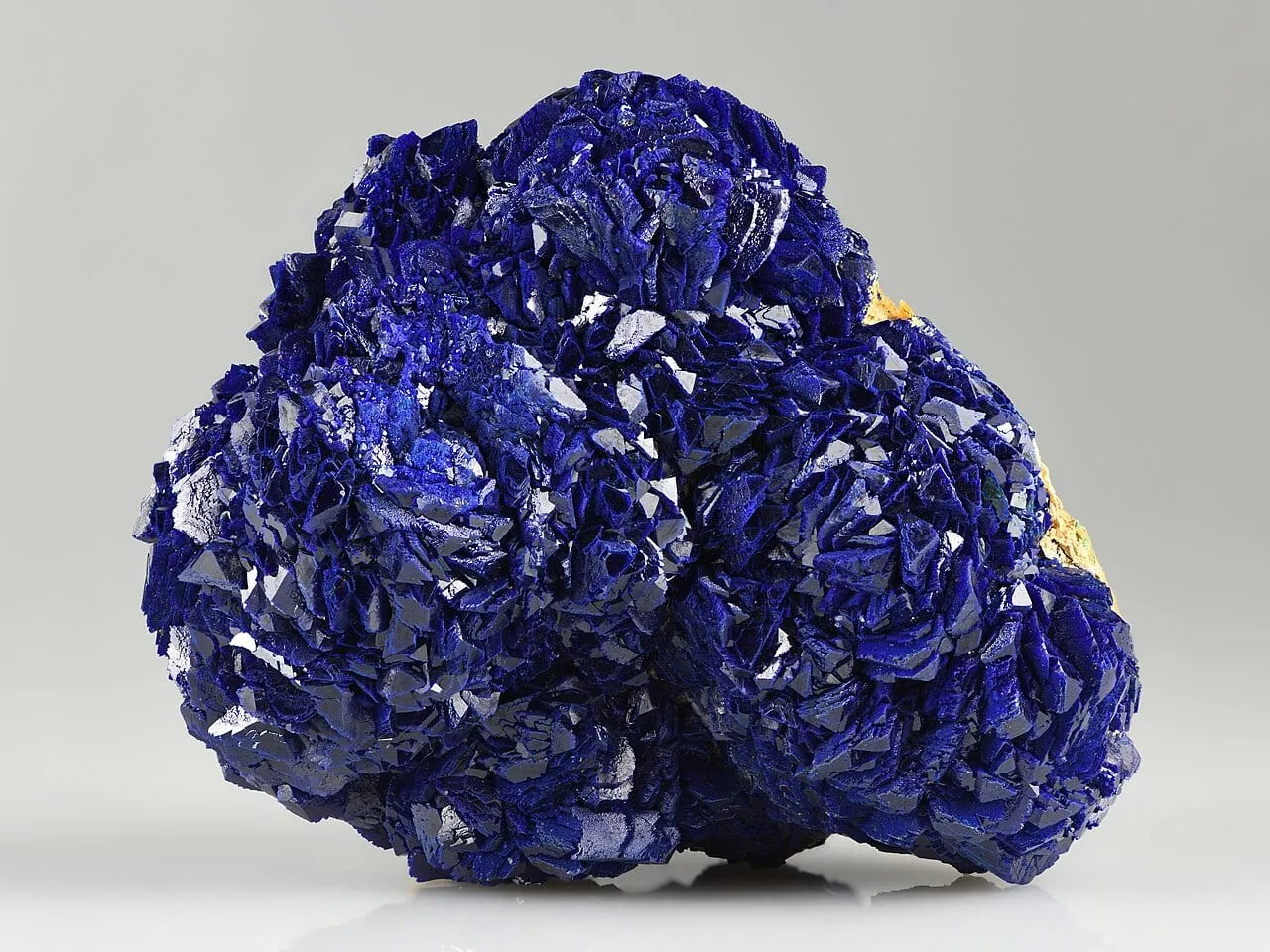
Azurite
A deep blue copper mineral that was the most important blue pigment of medieval and Renaissance painters.