Rock
Catlinite
Katlinit
The sacred pipestone of Native Americans: a red stone soft enough to carve with a knife, dug by hand from between hard quartzite layers in Minnesota.
Also known as: Pipestone · Red pipestone · Ínyaŋša (Dakota/Lakota)
- Popularly: Semi-precious stone

In short
Catlinite, or pipestone, is a brownish-red argillite (metamorphosed mudstone) found as a thin bed between hard layers of Sioux Quartzite at Pipestone, Minnesota. Because it is very fine-grained and easy to work, Native Americans, above all the Plains nations, have carved ceremonial pipes from it for centuries. The quarries have been protected as Pipestone National Monument since 1937, and only Native Americans may quarry the stone.
Photos

How does it form?
Catlinite formed about 1.76–1.60 billion years ago, in a setting where rivers laid down beds of sand and clay. Deep burial, with its heat and pressure, turned the sand beds into extremely hard Sioux Quartzite. The thin clay bed between them became a soft, very fine-grained argillite: catlinite.
Catlinite consists largely of microscopic crystals of pyrophyllite, diaspore, muscovite and kaolinite, and gets its colour from traces of hematite (iron oxide). The bed is only a few tens of centimetres thick and has no slaty cleavage; it parts along the bedding into slabs.
What is it used for?
- Ceremonial pipes: The Plains nations carve their sacred pipe, called čhaŋnúŋpa in Lakota, from this stone. The stone forms the bowl of the pipe, which has a wooden stem.
- Carving: Native artists also make figurines and ornaments from catlinite.
- Laboratory: Catlinite is also used for the hollow tubes of the pipeclay triangles used in laboratories.
How is it quarried?
At the Pipestone quarries the hard quartzite on top must be broken before the catlinite can be reached. Early quarriers used harder stones, mauls and branches as levers; today steel pry bars, wedges and sledgehammers are used, but only hand tools are allowed. Water often collects at the bottom of the quarry, leaving the lower part of the bed submerged.
Where is it found?
The famous deposit of catlinite is Pipestone National Monument in Minnesota. Other pipestones exist too: a harder stone near Hayward, Wisconsin, used by the Ojibwe for centuries; “Utah pipestone”, a by-product of slate quarrying around Delta, Utah; and a quarry near the Pipestone River in Ontario, Canada, that is no longer used.
What determines its value?
Its value comes from how soft and easy to carve it is, its close, smooth texture and its colour, but above all from its cultural and sacred meaning. At Pipestone National Monument unworked stone is not sold and taking stone from the grounds is illegal; the right to quarry belongs to Native Americans alone. Pipes and carvings made by Native artists are valued as works of art.
This information is educational, not buying, selling or investment advice. Value varies enormously with quality and treatment.
How to recognise it
- 1
A brownish-red stone, pinkish or cream-patched in places, buttery smooth to the touch.
- 2
Very soft (hardness about 2.5, like a fingernail): it can be cut with a hacksaw or even a knife.
- 3
In the quarry it lies between layers of Sioux Quartzite, which is far harder, harder even than steel.
Myths and misconceptions
MythAll red pipestone is catlinite.
FactGeologists give the name “catlinite” to the stone of Pipestone National Monument. Pipestones from the slate quarries of Utah or from quarries in Wisconsin are different stones, with different hardness and strength.
What is it believed to be good for?
This section reports beliefs; it is not health information. There is no scientific evidence for these claims and no stone replaces medical treatment.
The meanings people give this stone, and who holds them:
- According to Pipestone National Monument, the pipe made from this stone is sacred to many Native Americans, who use it for prayer, important rites and both civil and religious ceremonies.
What science says
This is a living religious tradition rather than a health claim, which is why the quarries are protected by law and reserved for Native Americans. Geologically, catlinite is a soft argillite whose red colour comes from small amounts of hematite.
Did you know?
The stone is named after the American painter George Catlin, who visited and painted the quarries in the 1830s. But Philander Prescott was the first to write about it, in 1832, noting that Native Americans had used the quarries since at least 1637.
In the past the quarries were treated as neutral ground where all nations could dig stone for ceremonial pipes.
In the Dakota and Lakota languages the red stone is called “ínyaŋša”.
Where is it found?
Loading map…
- Pipestone National Monument, Pipestone, Minnesota, USA · Type localityThe quarries that gave catlinite its name. The stone lies as a thin soft bed between hard layers of Sioux Quartzite. A national monument since 1937; only enrolled members of federally recognised tribes may quarry it, and only with hand tools.
- Near Hayward, Wisconsin, USA · Known localityA quarry with harder pipestone used by the Ojibwe for centuries. The point marks the town of Hayward.
- Delta, Utah, USA · Known locality“Utah pipestone” comes out here as a by-product of slate quarrying; it has both hard and soft kinds.
Locations are approximate to protect sites. Red dots mark places in Türkiye. Open in the big map →
Frequently asked questions
What is catlinite?
Catlinite, or pipestone, is a brownish-red argillite (metamorphosed mudstone) found as a thin bed between hard layers of Sioux Quartzite at Pipestone, Minnesota. Because it is very fine-grained and easy to work, Native Americans, above all the Plains nations, have carved ceremonial pipes from it for centuries. The quarries have been protected as Pipestone National Monument since 1937, and only Native Americans may quarry the stone.
Can anyone quarry pipestone?
No. At Pipestone National Monument quarrying is reserved for Native Americans enrolled in federally recognised tribes, and a permit is needed. Only hand tools may be used, even today; power tools are not allowed. Taking stone or anything else from the grounds is illegal.
What is catlinite used for?
Ceremonial pipes: The Plains nations carve their sacred pipe, called čhaŋnúŋpa in Lakota, from this stone. The stone forms the bowl of the pipe, which has a wooden stem. Carving: Native artists also make figurines and ornaments from catlinite. Laboratory: Catlinite is also used for the hollow tubes of the pipeclay triangles used in laboratories.
How hard is catlinite?
It has a hardness of 2.5 on the Mohs scale. It is soft enough to scratch with a fingernail. Its specific gravity is 2.7–2.8 g/cm³.
Where is catlinite found?
Its best-known localities: Pipestone National Monument, Pipestone, Minnesota, USA; Near Hayward, Wisconsin, USA; Delta, Utah, USA.
How can you tell if catlinite is real?
A brownish-red stone, pinkish or cream-patched in places, buttery smooth to the touch. Very soft (hardness about 2.5, like a fingernail): it can be cut with a hacksaw or even a knife. In the quarry it lies between layers of Sioux Quartzite, which is far harder, harder even than steel.
Is catlinite valuable?
On the “street to diamond” value ladder it sits on step 5 of nine: Ornamental stone. Its value comes from how soft and easy to carve it is, its close, smooth texture and its colour, but above all from its cultural and sacred meaning. At Pipestone National Monument unworked stone is not sold and taking stone from the grounds is illegal; the right to quarry belongs to Native Americans alone. Pipes and carvings made by Native artists are valued as works of art.
What is catlinite good for?
According to Pipestone National Monument, the pipe made from this stone is sacred to many Native Americans, who use it for prayer, important rites and both civil and religious ceremonies. This is a living religious tradition rather than a health claim, which is why the quarries are protected by law and reserved for Native Americans. Geologically, catlinite is a soft argillite whose red colour comes from small amounts of hematite. This section reports beliefs; it is not health information. There is no scientific evidence for these claims and no stone replaces medical treatment.
Sources
- Catlinite · Wikipedia
- Notes on catlinite and the Sioux quartzite (E. L. Berg), American Mineralogist 23, 258–268 · Mineralogical Society of America, 1938
- Geologic Formations — Pipestone National Monument · US National Park Service
- Frequently Asked Questions — Pipestone National Monument · US National Park Service
- Pipestone National Monument · Wikipedia
- Hayward, Wisconsin · Wikipedia
- Delta, Utah · Wikipedia
External links
Draft: awaiting expert reviewReport an error
On the same step
Agate
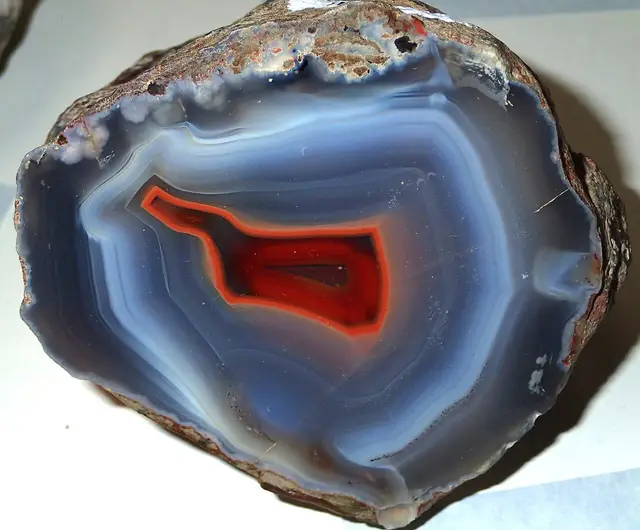
The banded variety of chalcedony: it grows layer by layer in hollows in volcanic rock and shows a new pattern every time it is cut.

Almandine
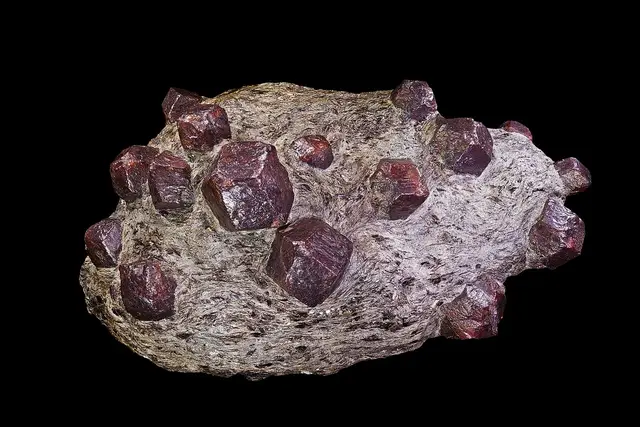
The commonest garnet: a deep red, iron-rich stone named after the ancient city of Alabanda in Anatolia, used in jewellery and in sandpaper alike.
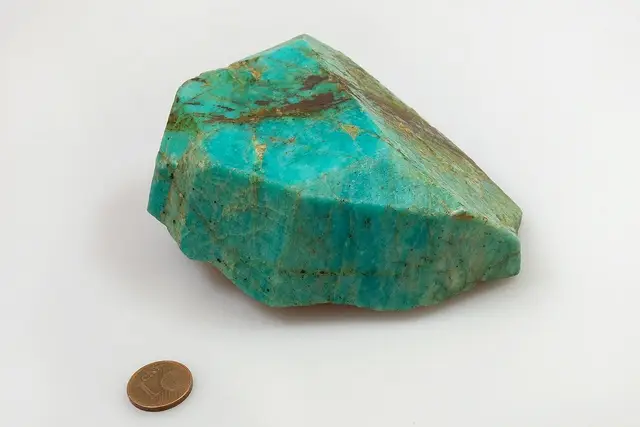
Amazonite
A turquoise-like green-blue feldspar: a variety of microcline worn as jewellery for more than three thousand years, but it can release lead.