VarietyA variety of Grossular
Tsavorite
Ca₃Al₂(SiO₄)₃Tsavorit
The emerald-green variety of grossular: found in Tanzania in 1967 and named after Tsavo National Park in Kenya, a comparatively young gem.
Also known as: Tsavolite
- Popularly: Semi-precious stone
- Gemstone
In short
Tsavorite is the vivid green variety of grossular garnet. It owes its colour mainly to vanadium, with some chromium. Found in Tanzania in 1967, it became known through a marketing campaign by Tiffany & Co. in the 1970s. It is noted for a colour that rivals emerald, for being more brilliant and for usually being clean inside; clean stones over one carat are rare.
Photos
How does it form?
Tsavorite grows in the same setting as grossular, but under special conditions. According to GIA it is rarer because it needs unusual rock chemistry and special conditions: for its emerald-green colour the rock must contain vanadium (and chromium). The East African deposits formed in a Neoproterozoic metamorphic event in which the rocks were folded and refolded again and again; this left a wide range of inclusions in most tsavorite crystals. For the family as a whole, see garnet.
What is it used for?
- Jewellery: Its vivid green and brilliance make it a gem for rings, earrings and necklaces. Like other garnets it has no cleavage and a hardness of 7–7.5, so it can also be used as an engagement ring stone.
- Collecting: Large, clean stones are collectors’ and museum pieces; the “Lion of Merelani” at the Smithsonian is the best-known example.
- An alternative to emerald: Because its colour can rival emerald, tsavorite is seen as an alternative for those looking for an emerald; it has higher dispersion than emerald and is usually cleaner.
Discovery and name
In 1967 the British geologist and gem prospector Campbell R. Bridges found a deposit of green grossular at a place called Lemshuko in Simanjiro District, Manyara Region, in north-eastern Tanzania. The stones were intensely coloured and transparent, but the Tanzanian government did not grant export permits. Bridges carried on prospecting in Kenya and found the variety there in 1971, and was granted a permit to mine. Until a marketing campaign by Tiffany & Co. in 1974, the stone was known only to mineral specialists. The name “tsavorite” was proposed in honour of Tsavo East National Park in Kenya.
The stone confused with emerald
Tsavorite can rival emerald in colour, but it is more brilliant than emerald, splits light more strongly, is usually cleaner and comes close to emerald in hardness. The emerald page lists tsavorite among the stones that can be mistaken for emerald.
What determines its value?
Colour matters most for tsavorite: vivid, saturated emerald green is the most sought after. Large stones are rare: clean tsavorites over one carat are scarce, so size raises value quickly. Clarity and cut also count; tsavorite is usually clean and normally receives no treatment. Because it has not been synthesised, the main risk is imitations such as green glass and YAG, so a laboratory report confirming that a stone is natural tsavorite is important.
This information is educational, not buying, selling or investment advice. Value varies enormously with quality and treatment.
How to recognise it
- 1
It is a vivid green or yellowish green stone, often clean and brilliant; compared with emerald it usually has fewer inclusions and splits light more strongly into coloured flashes (dispersion).
- 2
It is singly refractive, that is, like other garnets it does not split light in two; its hardness is 7–7.5 and it has no cleavage.
- 3
It may contain fluid inclusions, asbestos-like fibres and rows of negative crystals (crystal-shaped cavities inside the stone).
- 4
Other green garnets such as demantoid and uvarovite have a similar green, so a laboratory is needed for a sure identification. The specific gravity of demantoid is higher than that of tsavorite.
Fakes and imitations
What shops usually don’t tell you:
- Green glass and green YAG (a laboratory-made material with the garnet structure) have been used to imitate tsavorite; tsavorite itself has not been synthesised.
- Other green stones such as emerald, demantoid, uvarovite and green tourmaline may be sold as tsavorite.
Myths and misconceptions
MythTsavorite comes only from Kenya, and that is where its name comes from.
FactTsavorite was first found in Tanzania in 1967; the Kenyan deposit was discovered in 1971 and the stone took its name from Tsavo East National Park there. Today Tanzania, Kenya and Madagascar are commercial sources.
MythTsavorite is a cheap imitation of emerald.
FactTsavorite is not an imitation but a variety of a different mineral (grossular garnet). Its colour can rival emerald, and it is often more brilliant and cleaner; large, clean stones are rare and valuable.
What is it believed to be good for?
This section reports beliefs; it is not health information. There is no scientific evidence for these claims and no stone replaces medical treatment.
The meanings people give this stone, and who holds them:
- Today crystal-therapy websites claim that tsavorite is linked to the heart chakra and increases feelings of love, compassion and generosity.
- The same circles say that tsavorite supports the immune system and metabolism, cleanses the body and brings luck and abundance.
What science says
There is no scientific evidence that tsavorite increases love, compassion or generosity, supports immunity or metabolism, cleanses the body or brings abundance. Tsavorite was found only in 1967, so it has no tradition of belief reaching back to ancient times.
Did you know?
Tsavorite was found in Tanzania in 1967 by the British geologist Campbell Bridges, but the Tanzanian government refused export permits. Bridges carried on prospecting in Kenya and found it there too in 1971.
The name was proposed by Henry Platt, president of Tiffany & Co., in honour of Tsavo East National Park in Kenya.
A 925-carat crystal found in Tanzania in 2006 yielded a 325-carat cut stone, one of the largest clean tsavorites known.
The 116.76-carat “Lion of Merelani” on display at the Smithsonian is a tsavorite with 177 facets.
Where is it found?
Loading map…
- Taita-Taveta area (around Voi and Tsavo), Kenya · Major depositThe Kenyan deposits where the stone was found in 1971 and a mining permit was granted; it is named after Tsavo East National Park
- Lemshuko (near Komolo), Simanjiro, Manyara Region, Tanzania · Historic sourceWhere tsavorite was first found, in 1967; the Tanzanian government did not grant export permits at the time
- Merelani Hills, Simanjiro, Manyara Region, Tanzania · Major depositTsavorite from the same region as tanzanite; the 116.76-carat “Lion of Merelani” at the Smithsonian bears the name of this region
- Toliara Province, Madagascar · Known localityA commercial source of tsavorite after Kenya and Tanzania
Locations are approximate to protect sites. Red dots mark places in Türkiye. Open in the big map →
Frequently asked questions
What is tsavorite?
Tsavorite is the vivid green variety of grossular garnet. It owes its colour mainly to vanadium, with some chromium. Found in Tanzania in 1967, it became known through a marketing campaign by Tiffany & Co. in the 1970s. It is noted for a colour that rivals emerald, for being more brilliant and for usually being clean inside; clean stones over one carat are rare.
What is tsavorite used for?
Jewellery: Its vivid green and brilliance make it a gem for rings, earrings and necklaces. Like other garnets it has no cleavage and a hardness of 7–7.5, so it can also be used as an engagement ring stone. Collecting: Large, clean stones are collectors’ and museum pieces; the “Lion of Merelani” at the Smithsonian is the best-known example. An alternative to emerald: Because its colour can rival emerald, tsavorite is seen as an alternative for those looking for an emerald; it has higher dispersion than emerald and is usually cleaner.
How hard is tsavorite?
It has a hardness of 7–7.5 on the Mohs scale. It scratches glass and steel; a steel knife cannot scratch it. Its specific gravity is 3.55–3.73 g/cm³.
Where is tsavorite found?
Its best-known localities: Taita-Taveta area (around Voi and Tsavo), Kenya; Merelani Hills, Simanjiro, Manyara Region, Tanzania; Lemshuko (near Komolo), Simanjiro, Manyara Region, Tanzania; Toliara Province, Madagascar.
How can you tell if tsavorite is real?
It is a vivid green or yellowish green stone, often clean and brilliant; compared with emerald it usually has fewer inclusions and splits light more strongly into coloured flashes (dispersion). It is singly refractive, that is, like other garnets it does not split light in two; its hardness is 7–7.5 and it has no cleavage. It may contain fluid inclusions, asbestos-like fibres and rows of negative crystals (crystal-shaped cavities inside the stone). Green glass and green YAG (a laboratory-made material with the garnet structure) have been used to imitate tsavorite; tsavorite itself has not been synthesised.
Is tsavorite valuable?
On the “street to diamond” value ladder it sits on step 7 of nine: Precious stone. Colour matters most for tsavorite: vivid, saturated emerald green is the most sought after. Large stones are rare: clean tsavorites over one carat are scarce, so size raises value quickly. Clarity and cut also count; tsavorite is usually clean and normally receives no treatment. Because it has not been synthesised, the main risk is imitations such as green glass and YAG, so a laboratory report confirming that a stone is natural tsavorite is important.
What is tsavorite good for?
Today crystal-therapy websites claim that tsavorite is linked to the heart chakra and increases feelings of love, compassion and generosity. The same circles say that tsavorite supports the immune system and metabolism, cleanses the body and brings luck and abundance. There is no scientific evidence that tsavorite increases love, compassion or generosity, supports immunity or metabolism, cleanses the body or brings abundance. Tsavorite was found only in 1967, so it has no tradition of belief reaching back to ancient times. This section reports beliefs; it is not health information. There is no scientific evidence for these claims and no stone replaces medical treatment.
Family

_-_Merelani_Hills,_Tanzania.jpg)
_-_Merelani_Hills,_Arusha_Region,_Tanzania.jpg)
Sources
- Tsavorite Garnet Value, Price, and Jewelry Information · International Gem Society
- Tsavorite · Wikipedia
- Handbook of Mineralogy: Grossular · Mineralogical Society of America
- Garnet Description · GIA
- Grossular Garnet Value, Price, and Jewelry Information · International Gem Society
External links
Draft: awaiting expert reviewReport an error ↗
On the same step

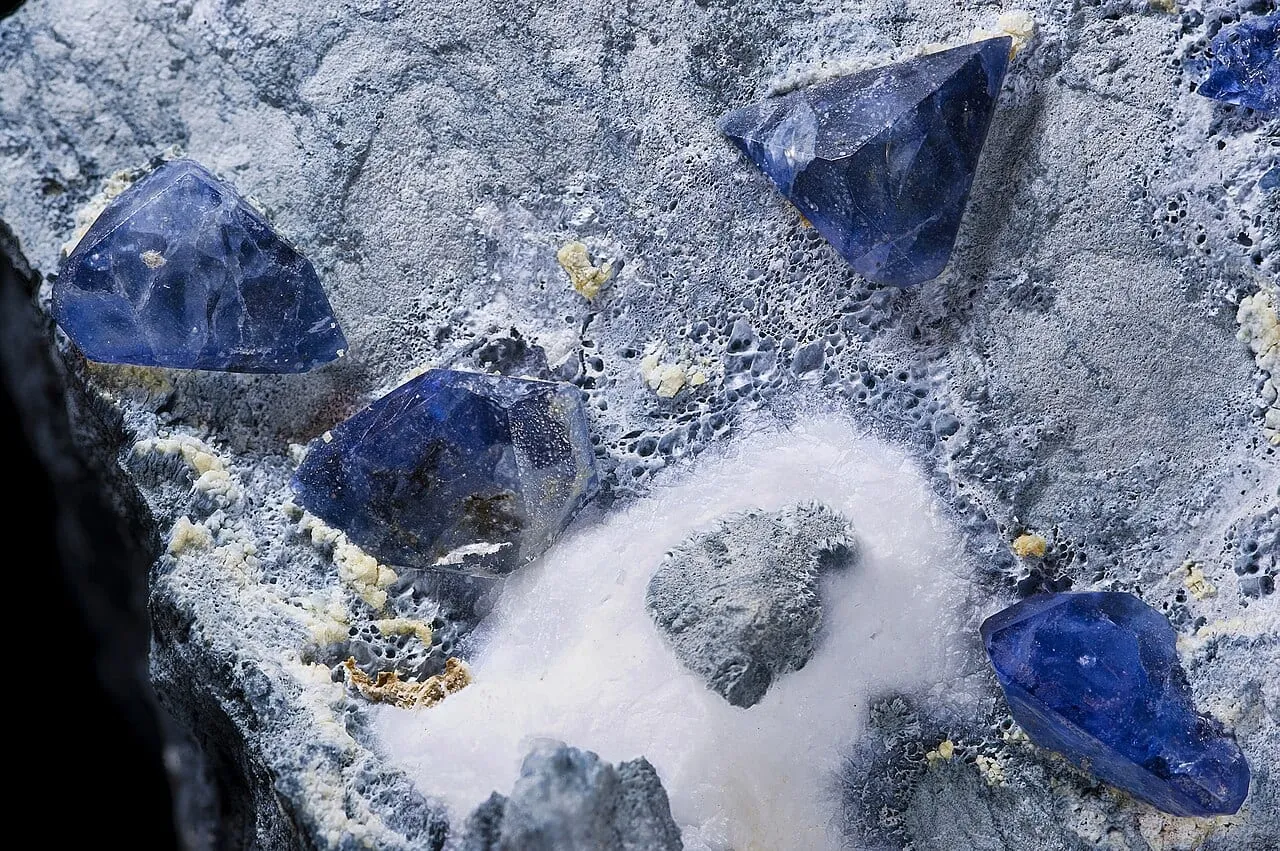
Benitoite
A sapphire-like blue stone whose gem crystals come from a single mine in the world: the official state gem of California.

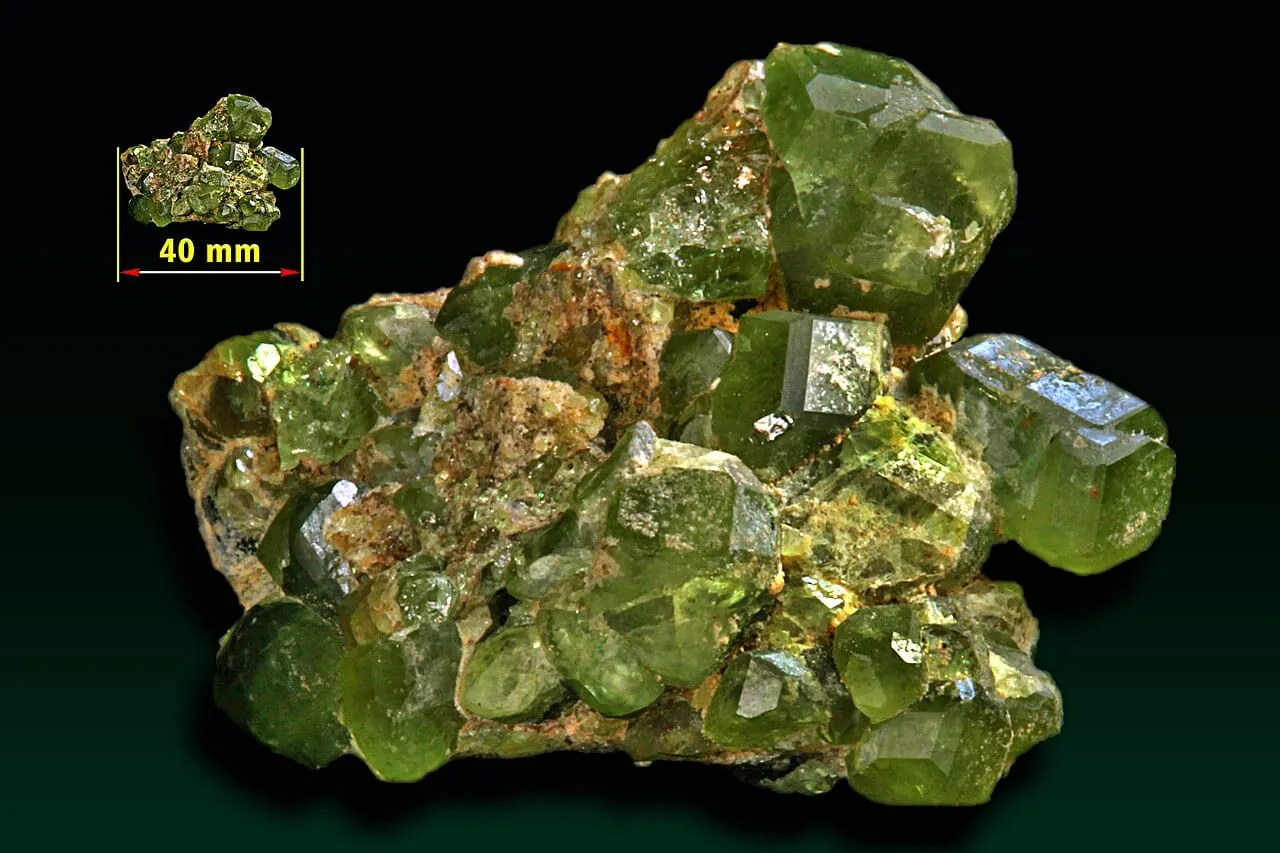
Demantoid
Its name means “diamond-like”: an emerald-green garnet that splits light more than diamond does, known since the 1850s from the Urals; a rare and valuable stone.
Diaspore
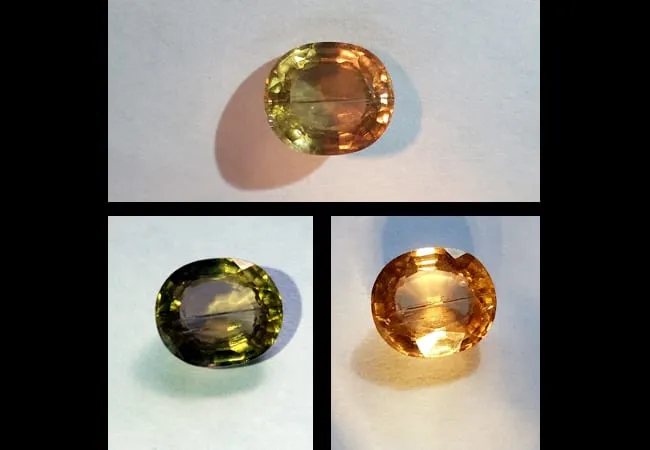
A rare mineral that looks greenish in daylight and pinkish under incandescent light; gem-quality material comes almost only from Muğla.