VarietyA variety of Gypsum
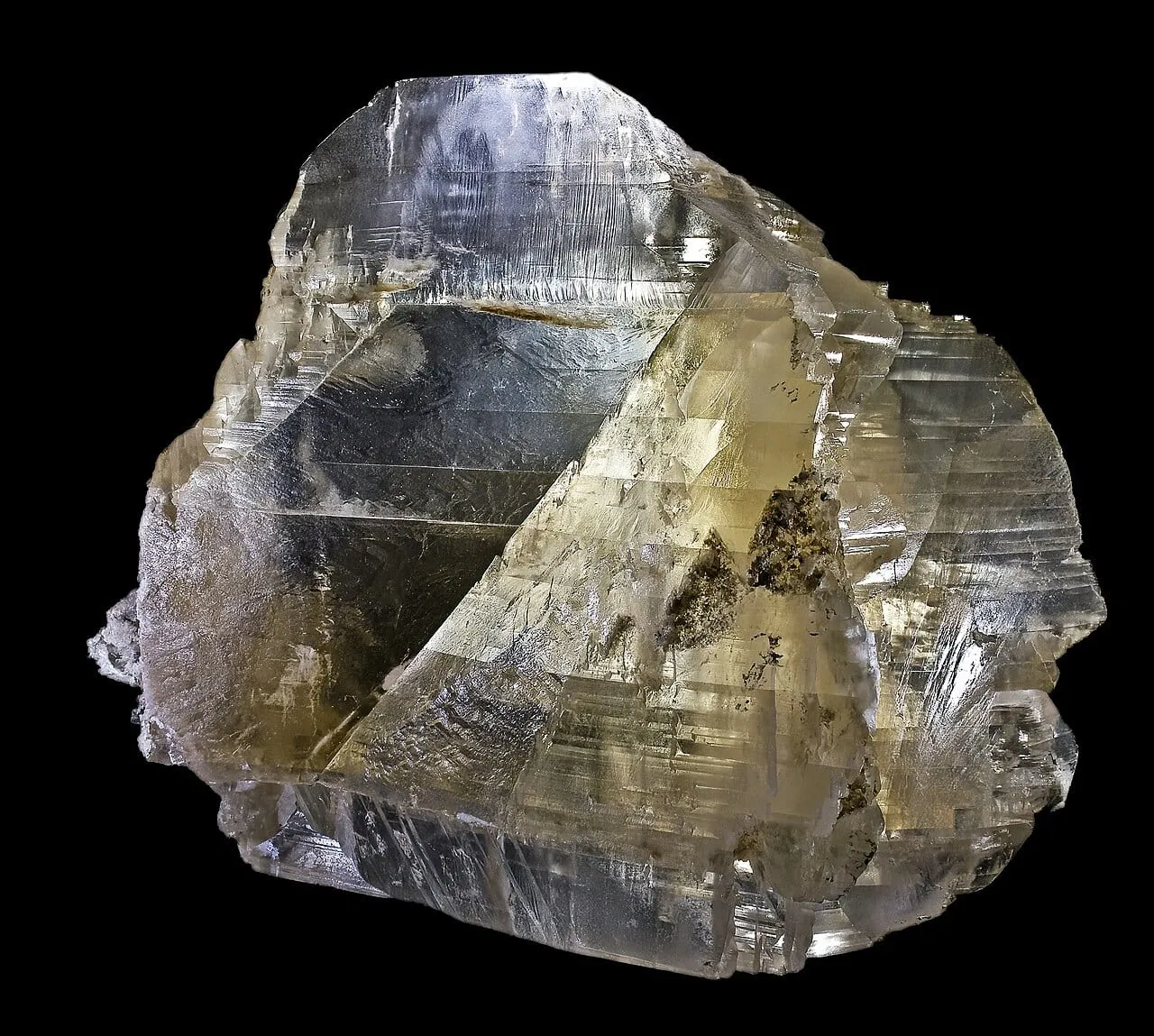
Selenite
CaSO₄·2H₂OSelenit
The clear, glassy crystalline variety of gypsum; so soft that a fingernail scratches it, and named from the Greek word for “moon”.
- Popularly: Common stone
- Ornamental
In short
Selenite is the colourless, transparent crystalline form of gypsum; chemically it is the same as gypsum (calcium sulfate and water). In crystal shops the name “selenite” is also used loosely for other kinds of gypsum: fibrous satin spar, desert roses and gypsum flowers. The largest natural crystals known are selenite.
Photos
How does it form?
Selenite is the transparent crystalline variety of gypsum and forms as gypsum does: it grows in evaporite layers deposited as closed seas, lakes and lagoons dry up, in alkaline lake muds, in clay beds and in caves. Crystals are often found free in clay and sometimes attached to the host rock. In arid regions sand can be trapped inside or on the surface of the crystal; the hourglass selenites of Oklahoma are an example. The giant crystals of Naica grew very slowly in very stable conditions, under mineral-rich water at about 58 °C.
What is it used for?
- Windows: Thin, mica-like sheets were once used in place of window glass.
- Ornaments: Crystal rods, clusters and carved pieces are sold as ornaments; being soft, it is easily worked and easily damaged.
- Collecting: Large, transparent and twinned crystals are sought by mineral collectors.
- Gypsum: The same mineral turns into plaster when heated and part of its water is driven off; the gypsum used for plaster, plasterboard and cement is the same substance as selenite (see Gypsum).
What determines its value?
Selenite is a common kind of gypsum; crystal rods, clusters and carved pieces are sold as ornaments. In collecting, the transparency and size of the crystal, the form of the twinning, freedom from damage and a famous origin such as Naica or Pulpí raise its value. Because it is so soft, scratches and breaks lower the value noticeably.
This information is educational, not buying, selling or investment advice. Value varies enormously with quality and treatment.
How to recognise it
- 1
It is colourless and transparent; it has a glassy lustre and a pearly sheen on cleavage faces.
- 2
A fingernail scratches it (hardness 2). It has perfect cleavage in one direction: it splits into thin, bendable sheets that do not spring back.
- 3
It does not fizz in acid, which separates it from the similar-looking calcite. Unlike quartz it is scratched easily.
- 4
Its crystals are tabular, prismatic or needle-like; twinning in the “swallowtail” form is very common.
Fakes and imitations
What shops usually don’t tell you:
- Satin spar: silky fibrous rods are often sold as “selenite”, but selenite is transparent, crystalline gypsum, and the fibrous, silky kind is called satin spar. Both are gypsum.
- Fibrous calcite can also be sold as satin spar; it is harder than gypsum (hardness 3), fizzes in acid and splits into leaning boxes (rhombohedra).
- Desert roses and gypsum flowers are also called “selenite”, but these are opaque rose-shaped clusters containing grains of sand, or curved fibrous growths that form in caves.
Myths and misconceptions
MythSelenite is a stone that contains selenium.
FactSelenite is gypsum, made of calcium sulfate and water (CaSO₄·2H₂O); it contains no selenium. The two names come from the same Greek word for “moon”.
MythEvery rod sold as “selenite” is selenite.
FactMany of the silky rods on sale are actually satin spar, the fibrous form of gypsum; both are gypsum, but they look different and form differently.
MythSelenite is a hard crystal like quartz and is not troubled by water.
FactIt is so soft that a fingernail scratches it (hardness 2) and it dissolves slowly in water, so it should not be left soaking.
What is it believed to be good for?
This section reports beliefs; it is not health information. There is no scientific evidence for these claims and no stone replaces medical treatment.
The meanings people give this stone, and who holds them:
- In ancient times selenite was believed to wax and wane with the moon; its name derives from the Greek selenites lithos, “moon stone”. Kunz reports that Mizauld, in the 16th century, described a white mark on a “selenite or moonstone” that grew and shrank with the phases of the moon.
- Today crystal-therapy practitioners claim that selenite cleanses the space it is in and the stones beside it of negative energy, and that it never needs “cleaning” because it cleans itself.
- Some news websites in Türkiye write that selenite clears energy blockages, brings abundance and blessing to the home, calms the mind and makes it easier to concentrate and sleep.
- The same articles claim selenite increases fertility and sexual desire and helps bone and skeletal problems, and even cysts.
What science says
There is no scientific evidence that selenite cleanses a space, clears blockages of energy, or affects fertility, bones or cysts; problems with cysts, bones and fertility should be assessed by a doctor. It is not clear which mineral the “selenite or moonstone” Kunz mentions would be called today. Selenite dissolves slowly in water, so it should not be left soaking and “selenite water” should not be drunk.
Did you know?
The name selenite comes from the same root as the element selenium, the Greek word selene meaning “moon”; but selenite contains no selenium.
Thin, mica-like sheets of selenite were once used in place of window glass; the windows of Santa Sabina church in Rome are an example.
Selenite crystals from the Salt Plains in Oklahoma have an hourglass-shaped inclusion of sand in the middle, which is reported not to occur anywhere else in the world.
Where is it found?
Loading map…
- Naica, Chihuahua, Mexico · Major depositThe Cave of the Crystals holds giant selenite crystals up to about 11 metres long
- Pulpí, Almería, Spain · Known localityThe giant geode in an old mine is lined with transparent selenite crystals up to 2 metres long
- Salt Plains National Wildlife Refuge, Oklahoma, USA · Known localityHourglass-shaped selenite crystals with a sand inclusion, not known to occur elsewhere in the world
- Lake Lucero, White Sands, New Mexico, USA · Known localityImpure, brownish selenite crystals form on the mudflats at the shore of the seasonal lake
- Lechuguilla Cave, Carlsbad Caverns National Park, New Mexico, USA · Known localityGypsum “chandeliers” up to 6 metres long, and gypsum hairs and beards
Locations are approximate to protect sites. Red dots mark places in Türkiye. Open in the big map →
Frequently asked questions
What is selenite?
Selenite is the colourless, transparent crystalline form of gypsum; chemically it is the same as gypsum (calcium sulfate and water). In crystal shops the name “selenite” is also used loosely for other kinds of gypsum: fibrous satin spar, desert roses and gypsum flowers. The largest natural crystals known are selenite.
What is selenite used for?
Windows: Thin, mica-like sheets were once used in place of window glass. Ornaments: Crystal rods, clusters and carved pieces are sold as ornaments; being soft, it is easily worked and easily damaged. Collecting: Large, transparent and twinned crystals are sought by mineral collectors. Gypsum: The same mineral turns into plaster when heated and part of its water is driven off; the gypsum used for plaster, plasterboard and cement is the same substance as selenite (see Gypsum).
How hard is selenite?
It has a hardness of 1.5–2 on the Mohs scale. It is soft enough to scratch with a fingernail. Its specific gravity is 2.31–2.33 g/cm³.
Where is selenite found?
Its best-known localities: Naica, Chihuahua, Mexico; Pulpí, Almería, Spain; Salt Plains National Wildlife Refuge, Oklahoma, USA; Lake Lucero, White Sands, New Mexico, USA; Lechuguilla Cave, Carlsbad Caverns National Park, New Mexico, USA.
How can you tell if selenite is real?
It is colourless and transparent; it has a glassy lustre and a pearly sheen on cleavage faces. A fingernail scratches it (hardness 2). It has perfect cleavage in one direction: it splits into thin, bendable sheets that do not spring back. It does not fizz in acid, which separates it from the similar-looking calcite. Unlike quartz it is scratched easily. Satin spar: silky fibrous rods are often sold as “selenite”, but selenite is transparent, crystalline gypsum, and the fibrous, silky kind is called satin spar. Both are gypsum.
Is selenite valuable?
On the “street to diamond” value ladder it sits on step 3 of nine: Building and industrial stone. Selenite is a common kind of gypsum; crystal rods, clusters and carved pieces are sold as ornaments. In collecting, the transparency and size of the crystal, the form of the twinning, freedom from damage and a famous origin such as Naica or Pulpí raise its value. Because it is so soft, scratches and breaks lower the value noticeably.
What is selenite good for?
In ancient times selenite was believed to wax and wane with the moon; its name derives from the Greek selenites lithos, “moon stone”. Kunz reports that Mizauld, in the 16th century, described a white mark on a “selenite or moonstone” that grew and shrank with the phases of the moon. Today crystal-therapy practitioners claim that selenite cleanses the space it is in and the stones beside it of negative energy, and that it never needs “cleaning” because it cleans itself. Some news websites in Türkiye write that selenite clears energy blockages, brings abundance and blessing to the home, calms the mind and makes it easier to concentrate and sleep. The same articles claim selenite increases fertility and sexual desire and helps bone and skeletal problems, and even cysts. There is no scientific evidence that selenite cleanses a space, clears blockages of energy, or affects fertility, bones or cysts; problems with cysts, bones and fertility should be assessed by a doctor. It is not clear which mineral the “selenite or moonstone” Kunz mentions would be called today. Selenite dissolves slowly in water, so it should not be left soaking and “selenite water” should not be drunk. This section reports beliefs; it is not health information. There is no scientific evidence for these claims and no stone replaces medical treatment.
Family


Sources
- Selenite (gypsum) · Wikipedia
- Gypsum · Wikipedia
- Handbook of Mineralogy: Gypsum · Mineralogical Society of America
- Naica Mine · Wikipedia
- Pulpí Geode · Wikipedia
- Salt Plains National Wildlife Refuge · Wikipedia
- Lake Lucero · Wikipedia
- Lechuguilla Cave · Wikipedia
- The Curious Lore of Precious Stones (G. F. Kunz) · J. B. Lippincott Company; Project Gutenberg, 1913
- Selenit Taşı Nedir, Ne İşe Yarar? Selenit Taşı Nerelerde Kullanılır? · CNN Türk, 2024
- Huzur veren Selenit taşı özellikleri ve faydaları · TGRT Haber, 2024
External links
Draft: awaiting expert reviewReport an error ↗
On the same step
Albite
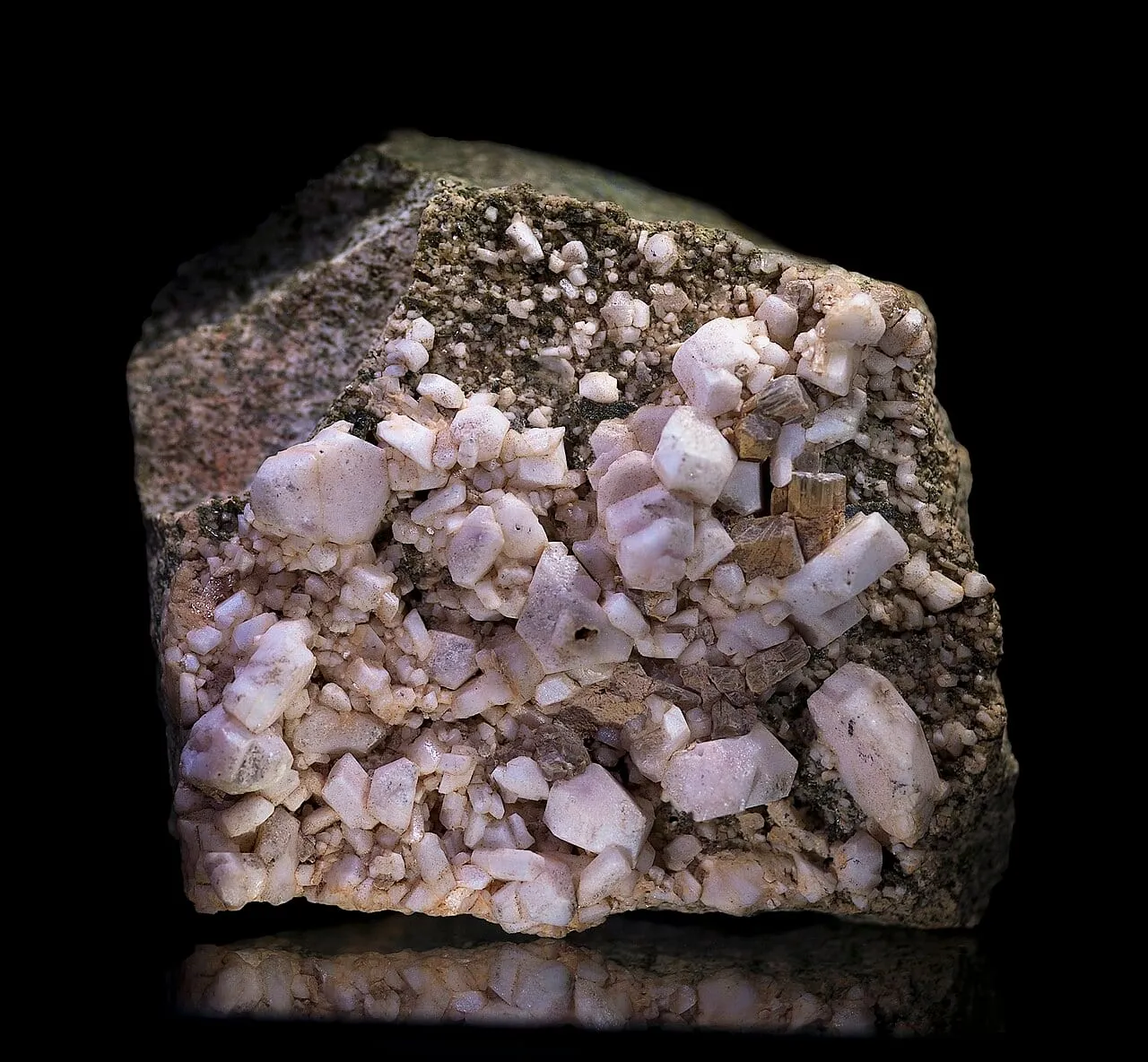
The white, sodium end of the feldspars: with its deposits at Çine–Milas, a glass and ceramics raw material that makes Türkiye one of the world’s main feldspar producers.
Anhydrite
Gypsum without its water: a calcium sulfate mineral, whose blue-grey Peruvian form is sold as “angelite”.
Apatite
A mineral cousin of our teeth and bones, the source of the phosphorus in fertilisers, and number 5 on the Mohs scale.