VarietyA variety of Gypsum
Satin spar
CaSO₄·2H₂OSatin spar
The silky, fibrous form of gypsum: most of the sticks sold in crystal shops as “selenite” are really satin spar.
Also known as: Atlas spar · Fibrous gypsum
- Popularly: Common stone
In short
Satin spar is the kind of gypsum made of fine, parallel fibres. Because the fibres reflect light in an orderly way, the stone has a silky sheen, and a cabochon can show a “cat’s-eye” line of light. Chemically it is the same as gypsum and soft enough to scratch with a fingernail. The same name is also used for the rarer fibrous forms of calcite and aragonite.
Photos
How does it form?
Satin spar forms as thin veins in gypsum-bearing sedimentary rocks, especially in beds of red mudstone and marl. Calcium sulfate dissolved from nearby beds of gypsum or anhydrite is carried by water seeping into cracks in the rock and is deposited there again. As a crack slowly opens, the crystals grow at right angles to its walls, producing parallel fibres that stretch from one side of the vein to the other.
A study of the coast at Watchet in England found that some of these veins opened when nodules of anhydrite took up water, turned into gypsum, swelled and cracked the rock. Water saturated with calcium sulfate then rose along the cracks and built dense networks of veins in the surrounding mudstones.
What is it used for?
- Ornamental stone: Cut as a cabochon (a polished dome) across the fibres, it shows a silky line of light; it has been used for beads, earrings and pendants.
- Carvings and décor: It is easy to work, so it is carved into eggs, spheres, towers, lamps and wands. Most of the sticks sold today in crystal shops as “selenite” are satin spar.
- History: In 19th-century England, Nottinghamshire gypsum was mined to make beads and ornaments, while in Russia satin spar carved into eggs was given as an Easter present.
- Gypsum: Heated, the same mineral turns into plaster, but the fibrous veins used for ornaments are tiny compared with the thick gypsum beds quarried for plaster.
Where is it found?
According to a 1920 study, East Bridgford in Nottinghamshire, England, is where the fibrous gypsum veins reach their finest development. Russia’s largest deposit is in Perm Krai. In Iran, layered deposits in the south of Fars Province were described scientifically in 2020.
What determines its value?
Satin spar is an abundant, inexpensive ornamental stone; it is so soft that it scratches easily, which keeps its value limited. Value depends on how straight and fine the fibres are, how strong the silky sheen and cat’s-eye line are, how clean the colour is and whether the piece is free of cracks. Dyed pieces, or pieces made of another mineral (fibrous calcite), should be clearly labelled.
This information is educational, not buying, selling or investment advice. Value varies enormously with quality and treatment.
How to recognise it
- 1
It is made of straight, thin, parallel fibres; it shines like silk, and a line of light glides across the fibres as it is turned.
- 2
A fingernail scratches it (hardness 2), and a needle point easily splits the fibres into splinters.
- 3
It does not fizz in acid. Fibrous calcite sold as “satin spar” is harder (a fingernail will not scratch it) and fizzes in dilute acid.
- 4
In nature it usually occurs as veins cutting red or greenish mudstones, with the fibres running from one wall of the vein to the other.
Fakes and imitations
What shops usually don’t tell you:
- Fibrous calcite and fibrous aragonite may also be sold as satin spar; they are harder than gypsum and fizz in acid.
- The silky pieces sold in shops as “selenite towers”, “selenite lamps” or “selenite wands” are mostly satin spar; the name selenite really belongs to the transparent crystalline form of gypsum.
Myths and misconceptions
MythThe silky white sticks sold in crystal shops as “selenite” are selenite.
FactMost of them are satin spar, the fibrous kind of gypsum. In mineralogy the name selenite is used for the transparent, glassy crystals of gypsum; both are gypsum, but they look different and form differently.
MythEvery stone sold as satin spar is gypsum.
FactThe name was first used for fibrous calcite, and it is still used for fibrous calcite and aragonite. Gypsum can be scratched with a fingernail and does not fizz in acid; calcite is harder and fizzes.
MythThe satin spar beads sold as “luck stones” at Niagara were taken from beneath the Falls at great risk.
FactSmall deposits of satin spar do occur beneath the Falls, but according to Kunz the stones on sale were cut in England or Russia; the tale of their perilous recovery was a sales story.
What is it believed to be good for?
This section reports beliefs; it is not health information. There is no scientific evidence for these claims and no stone replaces medical treatment.
The meanings people give this stone, and who holds them:
- In the early 20th century, satin spar beads mounted in brass were sold at Niagara Falls as “luck stones” believed to bring good fortune.
- Kunz reports that in Egypt egg-shaped satin spar ornaments, called “Pharaoh’s eggs”, were believed to protect their owners and bring good fortune.
- In Türkiye, some news websites writing about “selenite stone” claim that it clears energy blockages and cleanses a person of confusing thoughts; most of the silky sticks sold under that name are satin spar.
What science says
Satin spar is ordinary gypsum; there is no evidence that it brings luck, protects, clears energy blockages or cleanses anyone. Gypsum slowly dissolves in water, so satin spar should not be left soaking, and such water should not be drunk.
Did you know?
In 1913 George F. Kunz wrote that golden-yellow or salmon-coloured satin spar from Russia was carved into eggs, which were given as Easter presents.
According to Kunz, small consignments of satin spar were sent from time to time to Japan; he guessed the Japanese valued it for its purity or its cat’s-eye effect.
A directory of 1853 says that the gypsum of East Bridgford in Nottinghamshire was in great demand among the lapidaries of Derby, who turned it into beads and other ornaments.
Where is it found?
Loading map…
- East Bridgford, Nottinghamshire, England · Major depositAccording to a 1920 study, where the fibrous gypsum veins reach their greatest perfection; it was mined to make ornaments
- Kungur area, Perm Krai, Russia · Major depositRussia's largest deposit of fibrous gypsum (called “selenite” in Russian) is in Perm Krai; it also occurs around the Kungur Ice Cave
- Southern Fars Province, Zagros, Iran · Known localityStratiform satin spar between Late Miocene–Pliocene red marls and siltstones; reserves are reported to be at least 200,000 tonnes
- Watchet, Somerset, England · Known localityGypsum veins with fibres at right angles to the vein walls, cutting red Triassic mudstones in the coastal cliffs
- Niagara Falls, Canada–USA border · Historic sourceSmall deposits of satin spar occur beneath the Falls; most of the “luck stone” beads sold here in the early 20th century, however, were cut in England or Russia
Locations are approximate to protect sites. Red dots mark places in Türkiye. Open in the big map →
Frequently asked questions
What is satin spar?
Satin spar is the kind of gypsum made of fine, parallel fibres. Because the fibres reflect light in an orderly way, the stone has a silky sheen, and a cabochon can show a “cat’s-eye” line of light. Chemically it is the same as gypsum and soft enough to scratch with a fingernail. The same name is also used for the rarer fibrous forms of calcite and aragonite.
What is satin spar used for?
Ornamental stone: Cut as a cabochon (a polished dome) across the fibres, it shows a silky line of light; it has been used for beads, earrings and pendants. Carvings and décor: It is easy to work, so it is carved into eggs, spheres, towers, lamps and wands. Most of the sticks sold today in crystal shops as “selenite” are satin spar. History: In 19th-century England, Nottinghamshire gypsum was mined to make beads and ornaments, while in Russia satin spar carved into eggs was given as an Easter present.
How hard is satin spar?
It has a hardness of 1.5–2 on the Mohs scale. It is soft enough to scratch with a fingernail. Its specific gravity is 2.31–2.33 g/cm³.
Where is satin spar found?
Its best-known localities: East Bridgford, Nottinghamshire, England; Kungur area, Perm Krai, Russia; Niagara Falls, Canada–USA border; Southern Fars Province, Zagros, Iran; Watchet, Somerset, England.
How can you tell if satin spar is real?
It is made of straight, thin, parallel fibres; it shines like silk, and a line of light glides across the fibres as it is turned. A fingernail scratches it (hardness 2), and a needle point easily splits the fibres into splinters. It does not fizz in acid. Fibrous calcite sold as “satin spar” is harder (a fingernail will not scratch it) and fizzes in dilute acid. Fibrous calcite and fibrous aragonite may also be sold as satin spar; they are harder than gypsum and fizz in acid.
Is satin spar valuable?
On the “street to diamond” value ladder it sits on step 3 of nine: Building and industrial stone. Satin spar is an abundant, inexpensive ornamental stone; it is so soft that it scratches easily, which keeps its value limited. Value depends on how straight and fine the fibres are, how strong the silky sheen and cat’s-eye line are, how clean the colour is and whether the piece is free of cracks. Dyed pieces, or pieces made of another mineral (fibrous calcite), should be clearly labelled.
What is satin spar good for?
In the early 20th century, satin spar beads mounted in brass were sold at Niagara Falls as “luck stones” believed to bring good fortune. Kunz reports that in Egypt egg-shaped satin spar ornaments, called “Pharaoh’s eggs”, were believed to protect their owners and bring good fortune. In Türkiye, some news websites writing about “selenite stone” claim that it clears energy blockages and cleanses a person of confusing thoughts; most of the silky sticks sold under that name are satin spar. Satin spar is ordinary gypsum; there is no evidence that it brings luck, protects, clears energy blockages or cleanses anyone. Gypsum slowly dissolves in water, so satin spar should not be left soaking, and such water should not be drunk. This section reports beliefs; it is not health information. There is no scientific evidence for these claims and no stone replaces medical treatment.
Family
_1.jpg)
_2.jpg)
Sources
- Satin spar · Wikipedia
- Selenite (gypsum) · Wikipedia
- Handbook of Mineralogy: Gypsum · Mineralogical Society of America
- The fibrous gypsum of Nottinghamshire (W. A. Richardson), Mineralogical Magazine 19 (91) · Mineralogical Society of Great Britain (RRUFF archive), 1920
- East Bridgford · Wikipedia
- Geometry and formation of gypsum veins in mudstones at Watchet, Somerset, SW England (S. L. Philipp), Geological Magazine 145 (6): 831–844 · Cambridge University Press, 2008
- Селенит (минерал) · Wikipedia (Rusça)
- First Finding of Satin Spar Gemstone in Iran, Folded Zagros Zone, Fars Region (Zolfaghari, Barzegar & Amini), Journal of Mining and Environment 11 (4): 1039–1046 · Shahrood University of Technology, 2020
- The Curious Lore of Precious Stones (G. F. Kunz) · J. B. Lippincott Company; Project Gutenberg, 1913
- Selenit Taşı Nedir, Ne İşe Yarar? Selenit Taşı Nerelerde Kullanılır? · CNN Türk, 2024
External links
Draft: awaiting expert reviewReport an error
On the same step
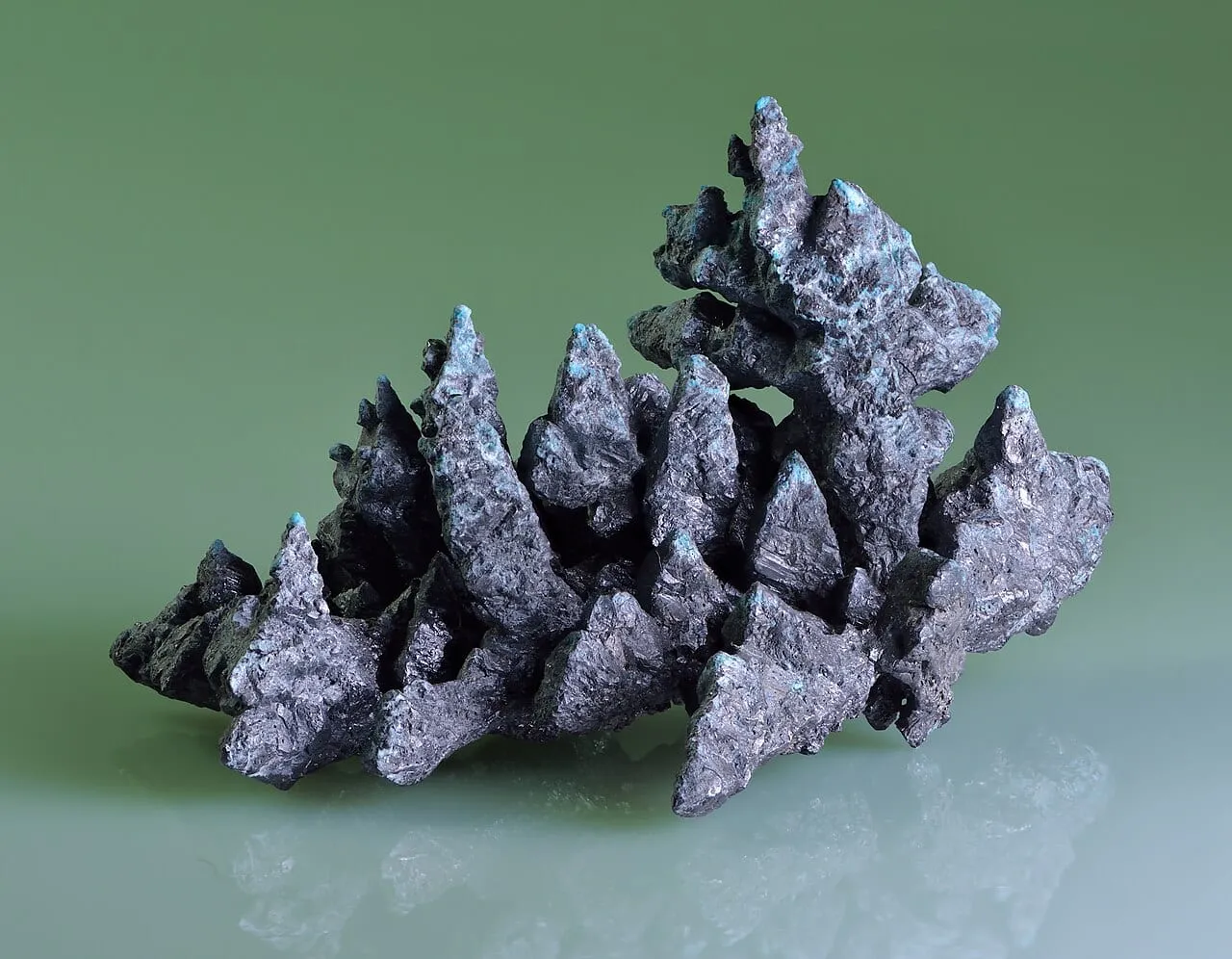
Acanthite
Silver's black sulfide: one of the world's main silver ores and the mineral that coats tarnished native silver.
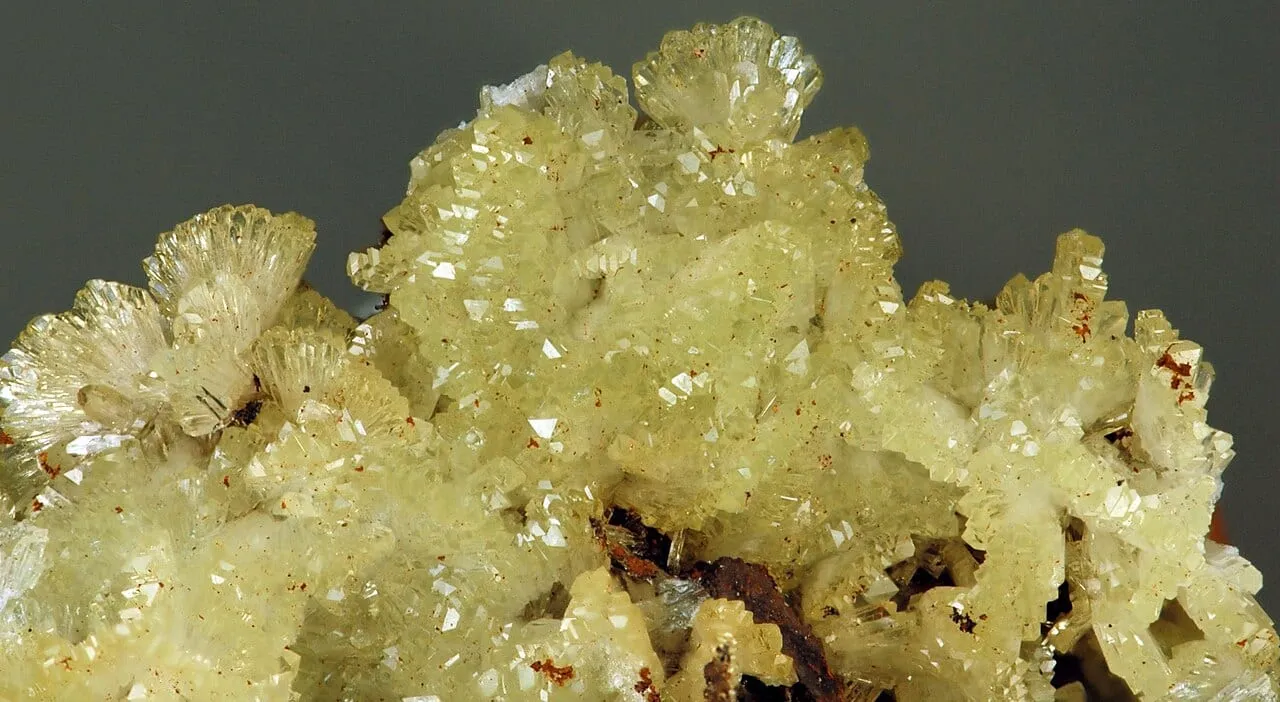
Adamite
Zinc arsenate in fan-shaped crystals from honey yellow to green: some specimens glow under ultraviolet light.
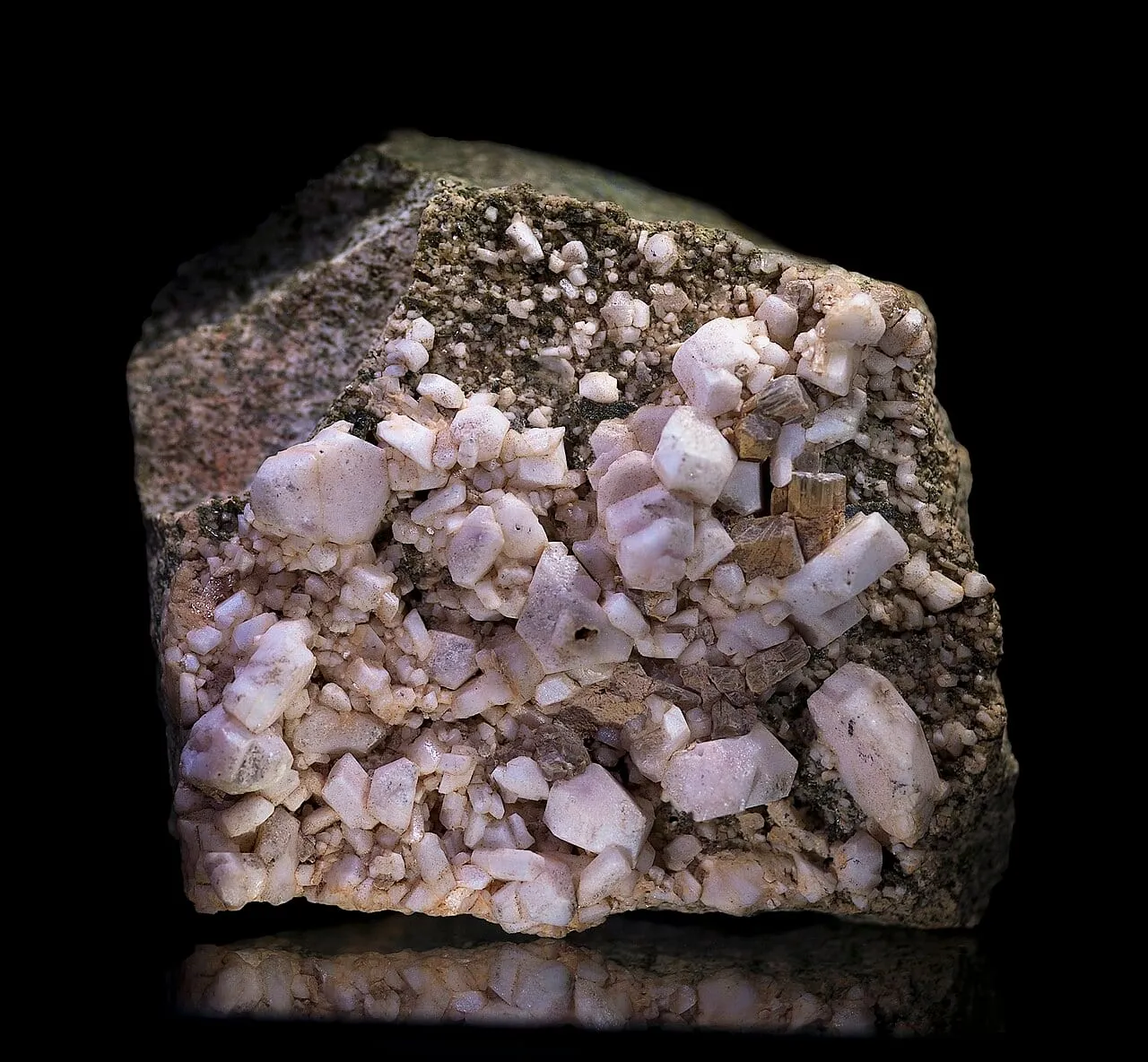
Albite
The white, sodium end of the feldspars: with its deposits at Çine–Milas, a glass and ceramics raw material that makes Türkiye one of the world’s main feldspar producers.