Mineral
Serpentine
Mg₃Si₂O₅(OH)₄Serpantin
The green mineral family that looks like snakeskin: antigorite, lizardite and fibrous chrysotile; the last is asbestos.
Also known as: Serpentine group · Serpentine subgroup
- Popularly: Semi-precious stone
- Ornamental
- Handle with care

In short
Serpentine is not a single mineral but a group of three main minerals with nearly the same chemical composition but different structures: antigorite, lizardite and fibrous chrysotile. It is usually green, slippery and soft; its name comes from the Latin serpentinus, “snake-like”, because its surface resembles snakeskin. These are the main minerals of the rock serpentinite. Some kinds are used as ornamental stone and as a jade imitation; the fibrous chrysotile kind is asbestos.
Photos

How does it form?
Serpentine minerals form when olivine-rich ultramafic rocks (such as peridotite) react with water, which is called serpentinisation. This transformation takes place between 0 and about 600 °C: in hydrothermal systems on the ocean floor, in subduction zones and in fault zones. Lizardite is the most common serpentine mineral and mostly develops by replacing olivine and pyroxene. Chrysotile grows as fibres in cracks and veins of the rock. For the rock these minerals form, see the Serpentinite page.
The three main minerals
- Lizardite: The most common serpentine mineral; it forms fine-grained, waxy flakes or masses. It is named after the Lizard Complex in Cornwall.
- Antigorite: It forms platy or bladed, sometimes fibrous crystals and is named after the Val Antigorio in Italy. Its olive-green kind with inclusions of chromite or magnetite is called “williamsite” in the USA.
- Chrysotile: The asbestos kind, made of silky, flexible fibres (see the Chrysotile page).
What is it used for?
- Ornamental and carving stone: Bowenite is the serpentine most often met in carving and jewellery. “Verde antico”, a brecciated serpentinite quarried in classical times at Casambala in Thessaly, Greece, was sought after as a facing stone.
- Historical use: It was a material for the cylinder seals of ancient Mesopotamia.
- Raw material: Serpentine rock is used as railway ballast and building material; it is a source of magnesium and of asbestos (use of which is now banned in many countries).
What determines its value?
The value of serpentine varies with its kind and use. As an ornamental stone, colour (especially a vivid, jade-like green), translucency, beauty of pattern and quality of polish are decisive; hard, translucent kinds such as bowenite are more sought after, while soft kinds carve easily but scratch easily. Pieces containing fibrous chrysotile (asbestos) are worthless because of the health risk, and working them is hazardous.
This information is educational, not buying, selling or investment advice. Value varies enormously with quality and treatment.
How to recognise it
- 1
Green (in yellowish, bluish, greyish or blackish tones), with a waxy, greasy or silky lustre; it feels slippery.
- 2
Most kinds are soft (hardness 2.5–4): a steel knife scratches them; hard, translucent kinds such as bowenite reach 5.5.
- 3
The three main minerals can be roughly told apart like this: lizardite is fine-grained and waxy; antigorite is platy or bladed, sometimes fibrous; chrysotile is silky, flexible fibres. X-ray diffraction or a microscope is needed for certain identification.
- 4
It does not fizz in dilute acid, which tells it apart from green marble.
Fakes and imitations
What shops usually don’t tell you:
- Bowenite, a light apple-green, fine-grained hard serpentine, looks like jade; it was also known by the Persian name sang-i-yashm, “false jade”. It is softer than true jade (nephrite, jadeite), with a hardness of about 5.5.
- Dyed serpentine can be sold as jade under misleading names such as “new jade”.
Safety
The fibrous member of the serpentine group, chrysotile, is, like all types of asbestos, carcinogenic to humans (IARC Group 1). Because serpentine rocks can contain veins of chrysotile, the dust released in cutting, sanding or grinding serpentine stone should not be inhaled; when serpentine rock is used for road surfacing, asbestos fibres can also become airborne. Serpentine powder should not be swallowed and no stone water or elixir should be made from it. Do not break specimens that look fibrous or have silky veins. In Türkiye the production, placing on the market and use of asbestos and asbestos-containing products has been banned since 31 December 2010.
Myths and misconceptions
MythSerpentine and serpentinite are the same thing.
FactSerpentine is a mineral group (antigorite, lizardite, chrysotile), whereas serpentinite is the rock that contains these minerals as its main components. In trade the two are often confused, and the rock is also called “serpentine”.
MythAll serpentine is asbestos.
FactThe only mineral of the serpentine group counted as asbestos is fibrous chrysotile; antigorite and lizardite are not asbestos. But because serpentine rocks can contain veins of chrysotile, only a laboratory can say that a piece of serpentine contains no fibres.
What is it believed to be good for?
This section reports beliefs; it is not health information. There is no scientific evidence for these claims and no stone replaces medical treatment.
The meanings people give this stone, and who holds them:
- Today crystal-therapy sources present serpentine as a “stone of balance”, claiming that it opens the heart chakra, soothes the nervous system and reduces stress and tension.
- The same sources claim that serpentine helps with kidney, liver and spleen complaints and strengthens the immune system.
What science says
No study shows that serpentine helps the organs or the immune system. On the contrary, serpentine rocks may contain veins of fibrous chrysotile (asbestos): the dust of these stones should not be inhaled, and no stone water or elixir should be made from them. For stress, tension or organ complaints, seek medical support.
Did you know?
According to Kunz, the earliest Babylonian and Assyrian cylinder seals (4000 to 2500 BC) were made of materials such as black or green serpentine, diorite and shell; a hard, black kind of serpentine was among the most common materials used for these seals.
The Māori of New Zealand carved beautiful objects from local serpentine and called the stone “tangiwai” (“tears”).
Where is it found?
Loading map…
- Kennack Cove, The Lizard, Cornwall, England · Type localityType locality of lizardite; the mineral is named after the Lizard Complex
- Val Antigorio, Piedmont, Italy · Type localityThe area that gave antigorite its name
- Unst, Shetland Islands, Scotland · Known localityWell-studied antigorite and lizardite from the Nikka Vord quarries
- Connemara, County Galway, Ireland · Known localityThe home of “Connemara marble”, which contains serpentine
- Xiuyan, Liaoning, China · Known locality
- Cecil County, Maryland, USA · Known localityOne of the main areas of the olive-green “williamsite” variety with chromite or magnetite inclusions
- Lancaster County, Pennsylvania, USA · Known locality
Locations are approximate to protect sites. Red dots mark places in Türkiye. Open in the big map →
Frequently asked questions
What is serpentine?
Serpentine is not a single mineral but a group of three main minerals with nearly the same chemical composition but different structures: antigorite, lizardite and fibrous chrysotile. It is usually green, slippery and soft; its name comes from the Latin serpentinus, “snake-like”, because its surface resembles snakeskin. These are the main minerals of the rock serpentinite. Some kinds are used as ornamental stone and as a jade imitation; the fibrous chrysotile kind is asbestos.
What is serpentine used for?
Ornamental and carving stone: Bowenite is the serpentine most often met in carving and jewellery. “Verde antico”, a brecciated serpentinite quarried in classical times at Casambala in Thessaly, Greece, was sought after as a facing stone. Historical use: It was a material for the cylinder seals of ancient Mesopotamia. Raw material: Serpentine rock is used as railway ballast and building material; it is a source of magnesium and of asbestos (use of which is now banned in many countries).
How hard is serpentine?
It has a hardness of 2.5–4 on the Mohs scale. A fingernail cannot scratch it, but a steel knife can. Its specific gravity is 2.5–2.6 g/cm³.
Where is serpentine found?
Its best-known localities: Kennack Cove, The Lizard, Cornwall, England; Val Antigorio, Piedmont, Italy; Unst, Shetland Islands, Scotland; Connemara, County Galway, Ireland; Xiuyan, Liaoning, China.
How can you tell if serpentine is real?
Green (in yellowish, bluish, greyish or blackish tones), with a waxy, greasy or silky lustre; it feels slippery. Most kinds are soft (hardness 2.5–4): a steel knife scratches them; hard, translucent kinds such as bowenite reach 5.5. The three main minerals can be roughly told apart like this: lizardite is fine-grained and waxy; antigorite is platy or bladed, sometimes fibrous; chrysotile is silky, flexible fibres. X-ray diffraction or a microscope is needed for certain identification. Bowenite, a light apple-green, fine-grained hard serpentine, looks like jade; it was also known by the Persian name sang-i-yashm, “false jade”. It is softer than true jade (nephrite, jadeite), with a hardness of about 5.5.
Is serpentine valuable?
On the “street to diamond” value ladder it sits on step 3 of nine: Building and industrial stone. The value of serpentine varies with its kind and use. As an ornamental stone, colour (especially a vivid, jade-like green), translucency, beauty of pattern and quality of polish are decisive; hard, translucent kinds such as bowenite are more sought after, while soft kinds carve easily but scratch easily. Pieces containing fibrous chrysotile (asbestos) are worthless because of the health risk, and working them is hazardous.
What is serpentine good for?
Today crystal-therapy sources present serpentine as a “stone of balance”, claiming that it opens the heart chakra, soothes the nervous system and reduces stress and tension. The same sources claim that serpentine helps with kidney, liver and spleen complaints and strengthens the immune system. No study shows that serpentine helps the organs or the immune system. On the contrary, serpentine rocks may contain veins of fibrous chrysotile (asbestos): the dust of these stones should not be inhaled, and no stone water or elixir should be made from them. For stress, tension or organ complaints, seek medical support. This section reports beliefs; it is not health information. There is no scientific evidence for these claims and no stone replaces medical treatment.
Is serpentine dangerous?
The fibrous member of the serpentine group, chrysotile, is, like all types of asbestos, carcinogenic to humans (IARC Group 1). Because serpentine rocks can contain veins of chrysotile, the dust released in cutting, sanding or grinding serpentine stone should not be inhaled; when serpentine rock is used for road surfacing, asbestos fibres can also become airborne. Serpentine powder should not be swallowed and no stone water or elixir should be made from it. Do not break specimens that look fibrous or have silky veins. In Türkiye the production, placing on the market and use of asbestos and asbestos-containing products has been banned since 31 December 2010.
Sources
- Handbook of Mineralogy: Lizardite · Mineralogical Society of America
- Handbook of Mineralogy: Antigorite · Mineralogical Society of America
- Handbook of Mineralogy: Clinochrysotile · Mineralogical Society of America
- Serpentine subgroup · Wikipedia
- Yılan taşı · Wikipedia (Turkish)
- Lizardite · Webmineral
- Antigorite · Webmineral
- The Curious Lore of Precious Stones (G. F. Kunz) · J. B. Lippincott Company; Project Gutenberg, 1913
- IARC Monographs Volume 100C: Arsenic, Metals, Fibres, and Dusts (Asbestos) · International Agency for Research on Cancer (WHO), 2012
External links
Draft: awaiting expert reviewReport an error ↗
On the same step
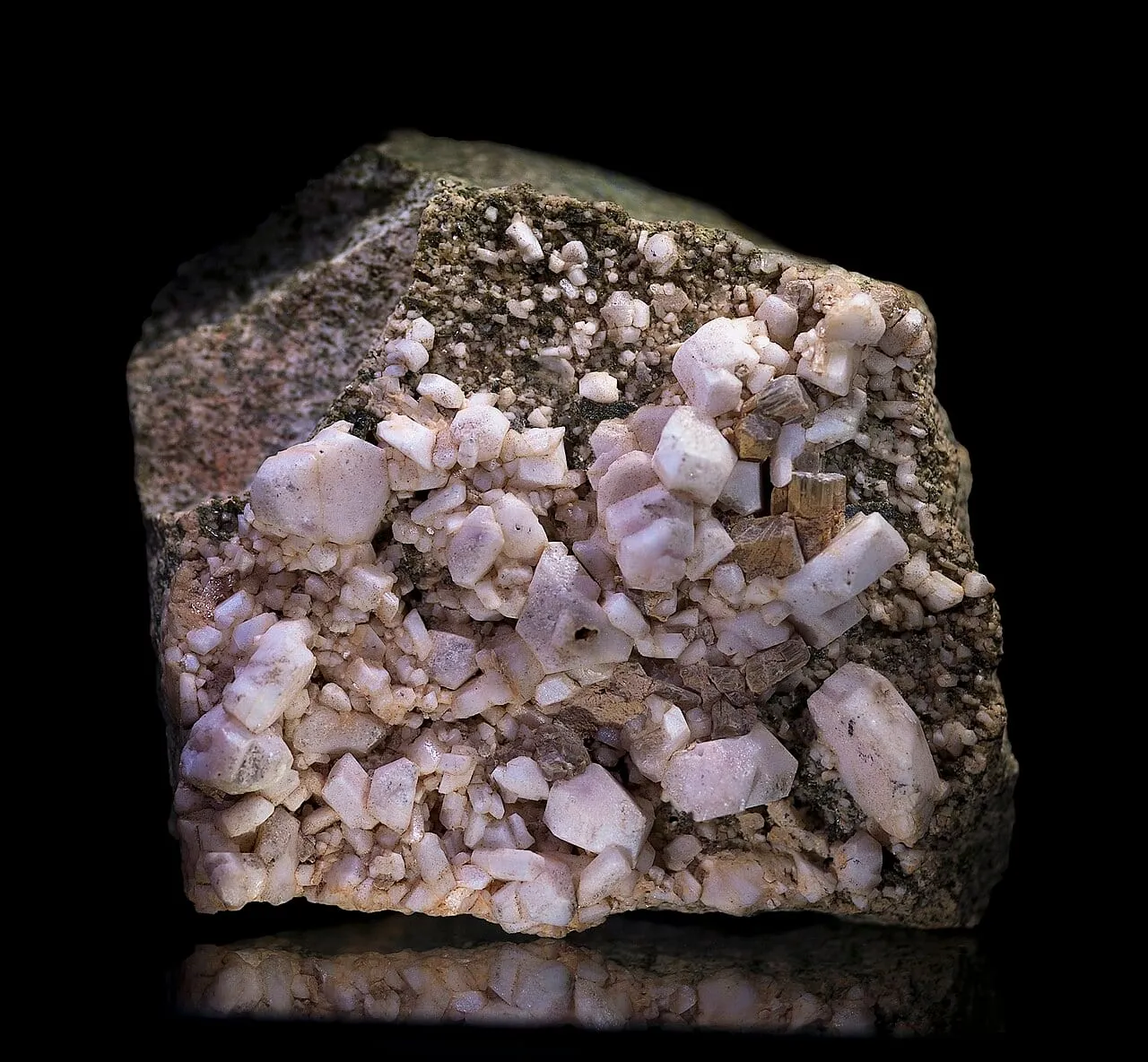
Albite
The white, sodium end of the feldspars: with its deposits at Çine–Milas, a glass and ceramics raw material that makes Türkiye one of the world’s main feldspar producers.
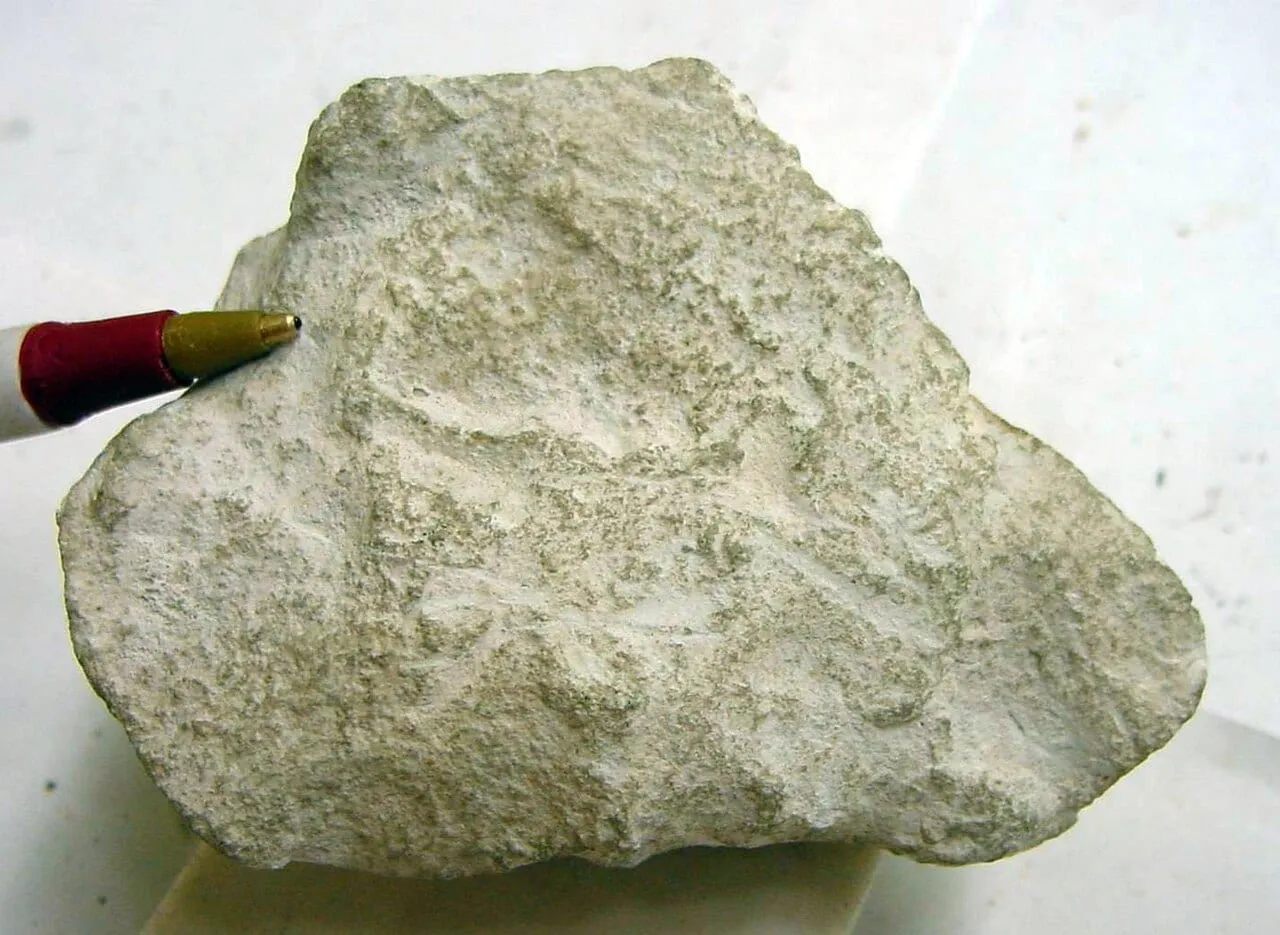
Alunite
The “alum stone” from which alum was made for centuries. Foça, Şaphane in Kütahya and Şebinkarahisar are Türkiye's old alum homelands.
Anhydrite
Gypsum without its water: a calcium sulfate mineral, whose blue-grey Peruvian form is sold as “angelite”.