VarietyA variety of Onyx
Sardonyx
SiO₂Sardoniks
Chalcedony with bands of brownish-red sard alternating with white or black onyx: a carver’s favourite since antiquity and a birthstone of August.
- Popularly: Semi-precious stone
- Birthstone: August
- Gemstone
- Ornamental
In short
Sardonyx combines two kinds of chalcedony, sard and onyx: bands of brownish red to dark orange sard alternate with layers of onyx that are usually white or black. The contrasting layers have been prized for centuries for carving cameos and engraved seal stones. In the modern list of August birthstones it stands alongside peridot and spinel.
Photos
How does it form?
Sardonyx is a chalcedony and forms like onyx: silica-rich waters seep into cavities and cracks in rock, and silica is deposited there layer by layer. Iron oxide gives some layers their red and brown shades; these coloured layers are called sard, and when they alternate with white or black layers, sardonyx results. Banded chalcedonies of this kind are found especially in cavities in volcanic rocks such as basalt.
What is it used for?
- Cameos and engraved stones: the contrast between its colour layers has made sardonyx a favourite material for cameos and intaglios (engraved seal stones) for centuries; the figure is carved in one colour layer and the background in another.
- Jewellery: it is used as beads, cabochons and brooches.
- History: Roman soldiers wore sardonyx rings with Mars carved on them, and in the Renaissance it was preferred for cameos and decorative art.
Where is it found?
According to GIA, the main sources are India, Brazil, Germany, Madagascar, Uruguay and the United States; stones with good contrast between their layers come especially from India.
What determines its value?
The value of sardonyx depends on how crisp, contrasting and regular its bands are, how attractive its colours are, whether it is free of cracks and how well it is polished; in engraved cameos and seal stones, the quality of the carving decides. Because its hardness is only 6.5–7 it needs care in rings. Heated or dyed stones are common and worth less than naturally coloured ones, and the treatment should be disclosed.
This information is educational, not buying, selling or investment advice. Value varies enormously with quality and treatment.
How to recognise it
- 1
It is made of straight, parallel bands: layers of brownish-red, orange or reddish sard alternate with white or black ones.
- 2
Its hardness is 6.5–7: it scratches glass, and a steel knife cannot scratch it.
- 3
The sard bands let light through their thin edges and look reddish; the stone has a waxy lustre, and a glassy shine when polished.
- 4
It does not fizz in dilute acid, whereas “onyx marble” made of calcite, which can look similarly banded, is easily scratched with a steel knife and fizzes in acid.
Fakes and imitations
What shops usually don’t tell you:
- Heated or dyed chalcedony: artificial treatments have been used since ancient times to produce the reds and yellows in sardonyx. The seller should disclose the treatment.
- Banded calcite and aragonite: the banded calcite found in Mexico, India and elsewhere is mostly sold as “onyx”; it is much softer than true onyx.
Myths and misconceptions
MythPeridot is the only birthstone for August.
FactThe modern list gives peridot, spinel and sardonyx for August. Spinel was added in 2016, while sardonyx is regarded as the oldest of the August birthstones.
MythThe red and yellow bands of sardonyx are always naturally coloured.
FactArtificial treatments such as heating and dyeing have been used since ancient times to produce the reds and yellows of sardonyx, so whether a stone’s colour is natural can only be established in a laboratory.
MythSardonyx is just another name for onyx.
FactSardonyx is a kind of onyx in which the bands are in the red and brown shades of sard instead of black.
What is it believed to be good for?
This section reports beliefs; it is not health information. There is no scientific evidence for these claims and no stone replaces medical treatment.
The meanings people give this stone, and who holds them:
- Greek and Roman soldiers are said to have carried sardonyx talismans engraved with symbols such as Mars or with portraits, believing that the stone gave them strength, courage and protection in battle.
- In Renaissance Europe, wearing sardonyx was believed to give the speaker eloquence.
- According to a traditional Persian belief sardonyx helped against epilepsy; English midwives are said to have laid the stone between the mother’s breasts to ease childbirth.
- Today the stone is believed to encourage integrity, clear communication and a lifetime of happiness, and to stand for enduring relationships.
What science says
There is no scientific evidence that sardonyx gives courage or protection in battle, strengthens speech, helps against epilepsy or eases childbirth. Epilepsy and childbirth need medical care; a stone is no substitute for treatment or for maternity care.
Did you know?
The name combines sard and onyx. Onyx is the Greek word for “fingernail” (onyx with pink and white bands can resemble one); sard, according to Pliny the Elder, took its name from the city of Sardis in Lydia.
GIA calls sardonyx “the most ancient of the August birthstones”; it also appears in the art of Minoan Crete, among the finds from Knossos.
Where is it found?
Loading map…
- Gujarat, India · Major depositGIA notes that sardonyx with good contrast between its layers comes especially from India; the Khambhat (Cambay) area is an old centre for working agate and onyx
- Rio Grande do Sul, Brazil · Major depositGIA lists Brazil among the main sources of sardonyx; the region is known for banded chalcedony and agate in basalt cavities
- Artigas, Uruguay · Known localityGIA lists Uruguay among the main sources of sardonyx
- Idar-Oberstein, Rhineland-Palatinate, Germany · Historic sourceGIA lists Germany among the sources of sardonyx; Idar-Oberstein is the traditional centre for cutting and dyeing agate and onyx
- Madagascar · Known localityGIA lists Madagascar among the sources of sardonyx; no exact site is given
Locations are approximate to protect sites. Red dots mark places in Türkiye. Open in the big map →
Frequently asked questions
What is sardonyx?
Sardonyx combines two kinds of chalcedony, sard and onyx: bands of brownish red to dark orange sard alternate with layers of onyx that are usually white or black. The contrasting layers have been prized for centuries for carving cameos and engraved seal stones. In the modern list of August birthstones it stands alongside peridot and spinel.
What is sardonyx used for?
Cameos and engraved stones: the contrast between its colour layers has made sardonyx a favourite material for cameos and intaglios (engraved seal stones) for centuries; the figure is carved in one colour layer and the background in another. Jewellery: it is used as beads, cabochons and brooches. History: Roman soldiers wore sardonyx rings with Mars carved on them, and in the Renaissance it was preferred for cameos and decorative art.
How hard is sardonyx?
It has a hardness of 6.5–7 on the Mohs scale. It scratches glass and steel; a steel knife cannot scratch it. Its specific gravity is 2.59–2.61 g/cm³.
Where is sardonyx found?
Its best-known localities: Gujarat, India; Rio Grande do Sul, Brazil; Idar-Oberstein, Rhineland-Palatinate, Germany; Artigas, Uruguay; Madagascar.
How can you tell if sardonyx is real?
It is made of straight, parallel bands: layers of brownish-red, orange or reddish sard alternate with white or black ones. Its hardness is 6.5–7: it scratches glass, and a steel knife cannot scratch it. The sard bands let light through their thin edges and look reddish; the stone has a waxy lustre, and a glassy shine when polished. Heated or dyed chalcedony: artificial treatments have been used since ancient times to produce the reds and yellows in sardonyx. The seller should disclose the treatment.
Is sardonyx valuable?
On the “street to diamond” value ladder it sits on step 5 of nine: Ornamental stone. The value of sardonyx depends on how crisp, contrasting and regular its bands are, how attractive its colours are, whether it is free of cracks and how well it is polished; in engraved cameos and seal stones, the quality of the carving decides. Because its hardness is only 6.5–7 it needs care in rings. Heated or dyed stones are common and worth less than naturally coloured ones, and the treatment should be disclosed.
What is sardonyx good for?
Greek and Roman soldiers are said to have carried sardonyx talismans engraved with symbols such as Mars or with portraits, believing that the stone gave them strength, courage and protection in battle. In Renaissance Europe, wearing sardonyx was believed to give the speaker eloquence. According to a traditional Persian belief sardonyx helped against epilepsy; English midwives are said to have laid the stone between the mother’s breasts to ease childbirth. Today the stone is believed to encourage integrity, clear communication and a lifetime of happiness, and to stand for enduring relationships. There is no scientific evidence that sardonyx gives courage or protection in battle, strengthens speech, helps against epilepsy or eases childbirth. Epilepsy and childbirth need medical care; a stone is no substitute for treatment or for maternity care. This section reports beliefs; it is not health information. There is no scientific evidence for these claims and no stone replaces medical treatment.
Family


Sources
- August Birthstones · GIA
- Sardonyx Overview · American Gem Society
- Onyx · Wikipedia
- Carnelian · Wikipedia
- Birthstone · Wikipedia
- The Curious Lore of Precious Stones (G. F. Kunz) · J. B. Lippincott Company (Project Gutenberg), 1913
External links
Draft: awaiting expert reviewReport an error ↗
On the same step
Agate
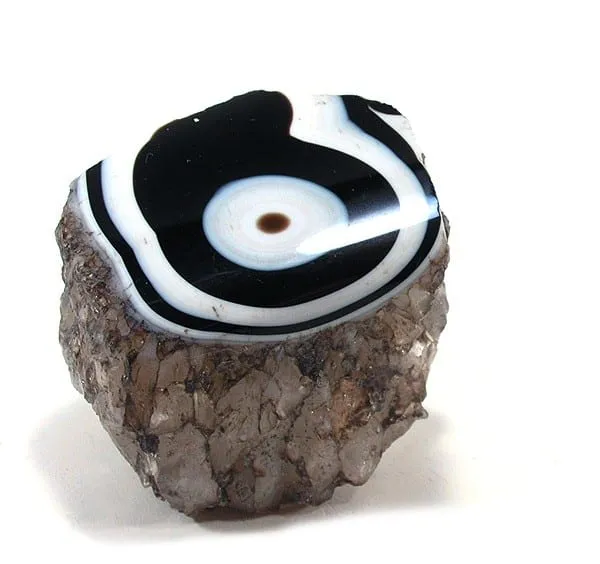
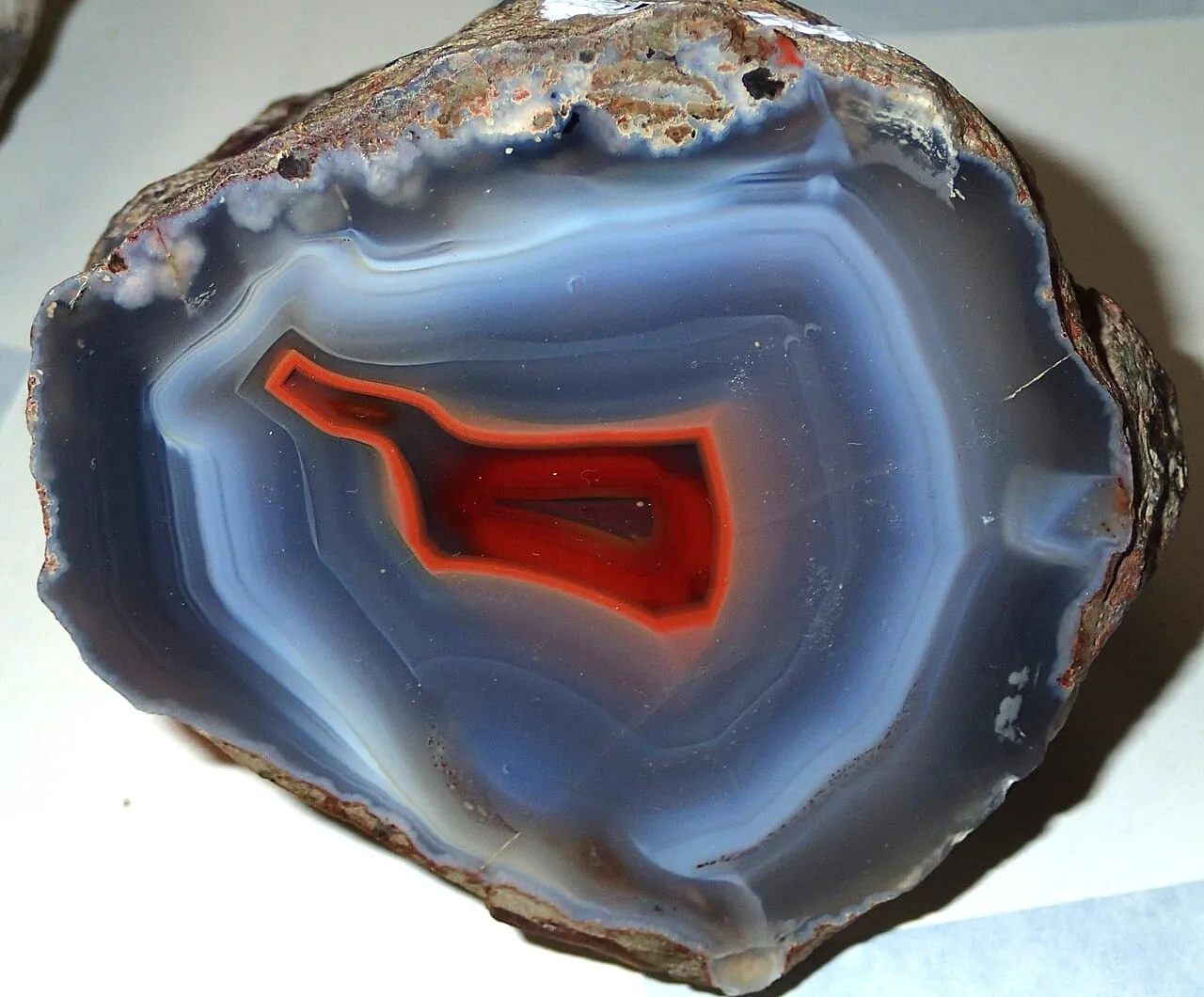
The banded variety of chalcedony: it grows layer by layer in hollows in volcanic rock and shows a new pattern every time it is cut.
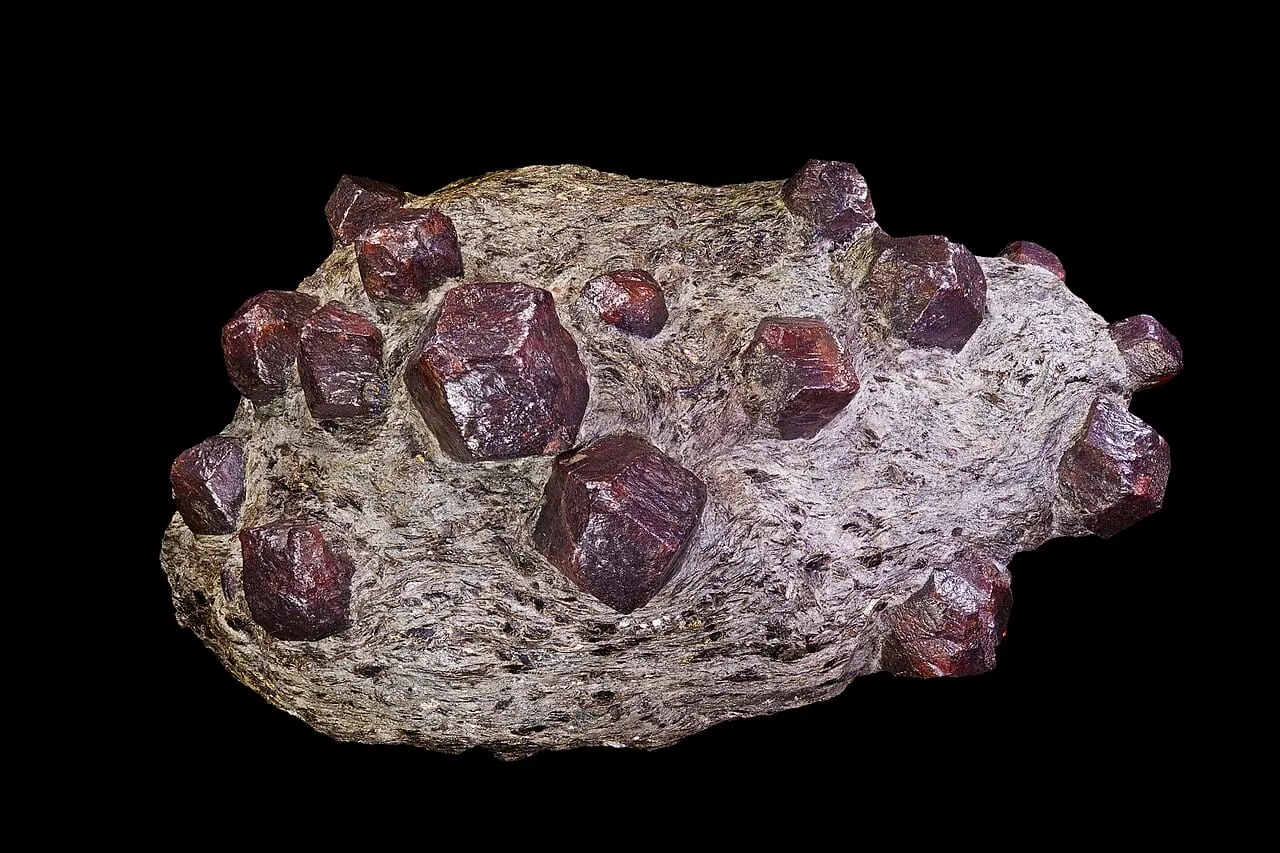
Almandine
The commonest garnet: a deep red, iron-rich stone named after the ancient city of Alabanda in Anatolia, used in jewellery and in sandpaper alike.
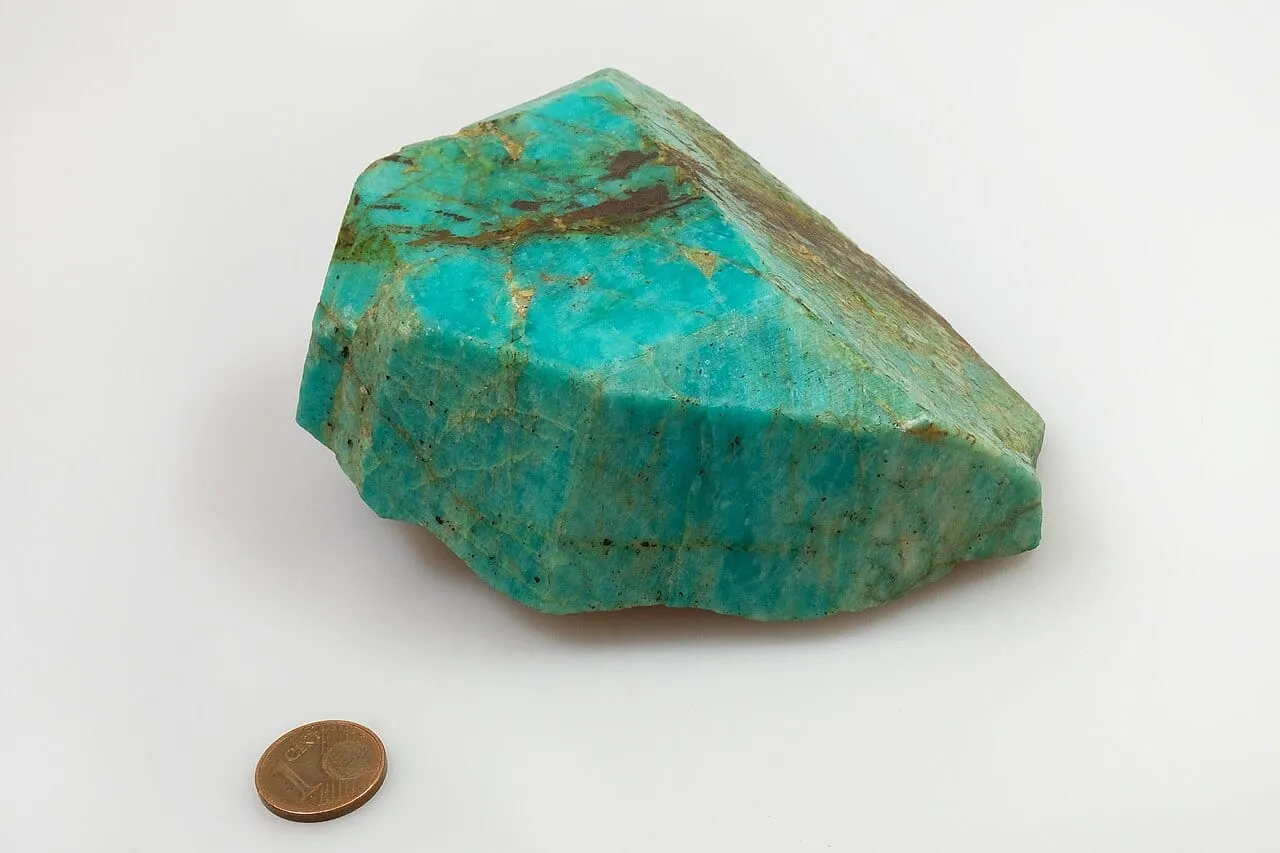
Amazonite
A turquoise-like green-blue feldspar: a variety of microcline worn as jewellery for more than three thousand years, but it can release lead.