Mineral
Cuprite
Cu₂OKüprit
A copper(I) oxide mineral known as “ruby copper” for its cochineal-red crystals; soft, but very dense and brilliant.
Also known as: Ruby copper
- Popularly: Ore and raw material
- Ore

In short
Cuprite is a red mineral (Cu₂O) made of copper and oxygen. It forms octahedral or cube-shaped crystals ranging in colour from deep ruby or cochineal red to nearly black, and sometimes fine, hair-like needle crystals. It forms in the air-weathered upper part of copper deposits and is a minor ore of copper. Its name comes from the Latin cuprum, meaning “copper”.
Photos

How does it form?
Cuprite is a secondary mineral that forms in the “oxidised” upper part of copper sulfide deposits, weathered by air and water. Minerals such as native copper, tenorite, malachite, azurite, calcite and chrysocolla, along with iron oxides, are found with it; it is therefore usually seen together with green malachite and blue azurite.
What is it used for?
Cuprite is a minor copper ore. In MTA’s table of the main copper minerals it has the highest copper content: 88.82 per cent (chalcocite 79.85, chalcopyrite 34.63). According to MTA, cuprite is not among the copper oxide minerals best suited to leaching (separating copper from the ore with an acid solution). Copper is used:
- in electrical and electronic equipment: cables, electric motors and circuit boards,
- in construction: water pipes and roofing,
- in alloys: brass (with zinc) and bronze (with tin).
Synthetic copper(I) oxide is used in paints that protect ship hulls against fouling, and as a pigment and a fungicide. Fine cuprite crystals are in great demand among collectors.
Cut cuprite
Because it is not hard, cuprite is rarely used in jewellery. According to Wikipedia, a deposit found at Onganja in Namibia in the 1970s yielded cuprite of a quality that could be faceted; these stones are rare pieces sought by collectors.
What determines its value?
Cuprite is valued as an ore: about 89 per cent of its weight is copper, but it occurs in limited amounts in the oxidised near-surface parts of deposits, and its worth depends on the size of the deposit, the cost of mining and processing, and demand for copper. For collectors, deep red, transparent, well-formed, undamaged crystals and specimens from famous places such as Onganja and Tsumeb in Namibia or the Urals are sought. Because it is so soft, cut stones are rare and are meant more for collections than for jewellery.
This information is educational, not buying, selling or investment advice. Value varies enormously with quality and treatment.
How to recognise it
- 1
Its colour is cochineal red, ruby red or purplish red; thick crystals can look nearly black. Held to the light, thick parts look red and thinner parts yellow-orange.
- 2
Its streak (powder colour) is shining brownish red.
- 3
Its lustre ranges from adamantine to submetallic.
- 4
It is very dense (specific gravity 6.1) but soft (hardness 3.5–4): a steel knife scratches it. It is brittle.
- 5
Crystals are octahedral, cubic or dodecahedral (up to 14 cm); it also forms hair-like capillary crystals and massive or earthy crusts.
Fakes and imitations
What shops usually don’t tell you:
- Cinnabar (mercury sulfide), red glass and other red minerals can resemble cuprite. Cuprite’s hardness (3.5–4), specific gravity (6.1) and brownish-red streak help tell it apart: cinnabar’s streak is scarlet and its specific gravity is above 8.
Safety
Cuprite is copper(I) oxide (about 89 per cent of its weight is copper). Handling it is generally harmless; wash your hands afterwards. Pure copper(I) oxide is reported to be harmful if swallowed or inhaled, to cause serious eye damage and to be very toxic to aquatic life; treat the mineral accordingly: do not grind or sand it, and do not breathe the dust or get it in your eyes. Do not put it in your mouth. It dissolves in acids, forming copper salts: do not put it in water, least of all acidic liquids such as lemon water or vinegar, to make “gem water” or an “elixir”. Too much copper causes nausea, vomiting, abdominal pain and diarrhoea, and with long exposure liver and kidney damage. Keep specimens away from children and pets.
Myths and misconceptions
MythCuprite is a gemstone like ruby that can be worn every day.
FactCuprite is soft (hardness 3.5–4) and brittle, so it is rarely used in jewellery. Stones cut from clear crystals from Namibia are for collectors only.
MythCopper minerals are natural, so putting them in water to make “crystal water” is harmless.
FactCuprite is copper(I) oxide and dissolves in acids. There is no knowing how much copper gets into the water; too much copper causes nausea, vomiting and, in time, liver and kidney damage.
What is it believed to be good for?
This section reports beliefs; it is not health information. There is no scientific evidence for these claims and no stone replaces medical treatment.
The meanings people give this stone, and who holds them:
- Crystal-therapy writers regard cuprite as the “stone of survival”: they claim it helps with grounding and acceptance, and makes it easier to let go of needless stress and of the urge to control everything.
- According to the same sources, cuprite stimulates the root chakra and increases vitality.
- Some crystal sellers and crystal-therapy sites say cuprite helps against vertigo and altitude sickness.
What science says
There is no scientific evidence that cuprite reduces stress, increases vitality or relieves vertigo and altitude sickness; for these symptoms see a doctor. Cuprite is copper(I) oxide and dissolves in acids: it should not be put in water, least of all an acidic drink, to make “gem water” or an “elixir”, and should not be put in the mouth; too much copper causes nausea, vomiting and, in time, liver and kidney damage.
Did you know?
Its name comes from the Latin cuprum (copper); the mineral was described by Wilhelm Haidinger in 1845. For its red colour it is also called “ruby copper”.
Cuprite’s refractive index (2.85) is much higher than diamond’s (2.42); yet because it is so soft, cut stones are for collectors only.
The variety made of fine, hair-like capillary crystals is called chalcotrichite, which in Ancient Greek means “plush copper ore”.
Where is it found?
Loading map…
- Nizhny Tagil, Ural Mountains, Russia · Historic sourceThe Handbook of Mineralogy names Bogoslovsk, Nizhni Tagil and Yekaterinburg in the Urals for cuprite (coordinate is the city of Nizhny Tagil)
- Dzhezkazgan (Jezkazgan), Kazakhstan · Known localityA copper district the Handbook of Mineralogy names for cuprite (coordinate is the town centre)
- Rheinbreitbach, Germany · Known localityA place the Handbook of Mineralogy names for cuprite (coordinate is the village centre)
- Tsumeb, Namibia · Known localityThe Handbook of Mineralogy mentions large cuprite crystals in Namibia from the Onganja mine and also lists Tsumeb; according to Wikipedia, the deposit found at Onganja in the 1970s yielded cuprite that could be faceted (coordinate is the town of Tsumeb)
- Kolwezi, Katanga, Democratic Republic of the Congo · Known localityThe Handbook of Mineralogy lists Likasi, Ruwe and the Mashamba West mine at Kolwezi in Katanga (coordinate is the town of Kolwezi)
- Bisbee, Arizona, USA · Known localityThe Handbook of Mineralogy mentions large cuprite crystals from Bisbee (Cochise County) in Arizona (coordinate is the town centre)
- Chuquicamata, Antofagasta, Chile · Known localityA huge copper mine the Handbook of Mineralogy names for cuprite
Locations are approximate to protect sites. Red dots mark places in Türkiye. Open in the big map →
Frequently asked questions
What is cuprite?
Cuprite is a red mineral (Cu₂O) made of copper and oxygen. It forms octahedral or cube-shaped crystals ranging in colour from deep ruby or cochineal red to nearly black, and sometimes fine, hair-like needle crystals. It forms in the air-weathered upper part of copper deposits and is a minor ore of copper. Its name comes from the Latin cuprum, meaning “copper”.
What is cuprite used for?
Cuprite is a minor copper ore. In MTA’s table of the main copper minerals it has the highest copper content: 88.82 per cent (chalcocite 79.85, chalcopyrite 34.63). According to MTA, cuprite is not among the copper oxide minerals best suited to leaching (separating copper from the ore with an acid solution). Copper is used: in electrical and electronic equipment: cables, electric motors and circuit boards, in construction: water pipes and roofing, in alloys: brass (with zinc) and bronze (with tin).
How hard is cuprite?
It has a hardness of 3.5–4 on the Mohs scale. A fingernail cannot scratch it, but a steel knife can. Its specific gravity is 6.14–6.15 g/cm³.
Where is cuprite found?
Its best-known localities: Nizhny Tagil, Ural Mountains, Russia; Dzhezkazgan (Jezkazgan), Kazakhstan; Rheinbreitbach, Germany; Tsumeb, Namibia; Kolwezi, Katanga, Democratic Republic of the Congo.
How can you tell if cuprite is real?
Its colour is cochineal red, ruby red or purplish red; thick crystals can look nearly black. Held to the light, thick parts look red and thinner parts yellow-orange. Its streak (powder colour) is shining brownish red. Its lustre ranges from adamantine to submetallic. Cinnabar (mercury sulfide), red glass and other red minerals can resemble cuprite. Cuprite’s hardness (3.5–4), specific gravity (6.1) and brownish-red streak help tell it apart: cinnabar’s streak is scarlet and its specific gravity is above 8.
Is cuprite valuable?
On the “street to diamond” value ladder it sits on step 4 of nine: Fine dimension stone and ore. Cuprite is valued as an ore: about 89 per cent of its weight is copper, but it occurs in limited amounts in the oxidised near-surface parts of deposits, and its worth depends on the size of the deposit, the cost of mining and processing, and demand for copper. For collectors, deep red, transparent, well-formed, undamaged crystals and specimens from famous places such as Onganja and Tsumeb in Namibia or the Urals are sought. Because it is so soft, cut stones are rare and are meant more for collections than for jewellery.
What is cuprite good for?
Crystal-therapy writers regard cuprite as the “stone of survival”: they claim it helps with grounding and acceptance, and makes it easier to let go of needless stress and of the urge to control everything. According to the same sources, cuprite stimulates the root chakra and increases vitality. Some crystal sellers and crystal-therapy sites say cuprite helps against vertigo and altitude sickness. There is no scientific evidence that cuprite reduces stress, increases vitality or relieves vertigo and altitude sickness; for these symptoms see a doctor. Cuprite is copper(I) oxide and dissolves in acids: it should not be put in water, least of all an acidic drink, to make “gem water” or an “elixir”, and should not be put in the mouth; too much copper causes nausea, vomiting and, in time, liver and kidney damage. This section reports beliefs; it is not health information. There is no scientific evidence for these claims and no stone replaces medical treatment.
Is cuprite dangerous?
Cuprite is copper(I) oxide (about 89 per cent of its weight is copper). Handling it is generally harmless; wash your hands afterwards. Pure copper(I) oxide is reported to be harmful if swallowed or inhaled, to cause serious eye damage and to be very toxic to aquatic life; treat the mineral accordingly: do not grind or sand it, and do not breathe the dust or get it in your eyes. Do not put it in your mouth. It dissolves in acids, forming copper salts: do not put it in water, least of all acidic liquids such as lemon water or vinegar, to make “gem water” or an “elixir”. Too much copper causes nausea, vomiting, abdominal pain and diarrhoea, and with long exposure liver and kidney damage. Keep specimens away from children and pets.
Sources
- Handbook of Mineralogy: Cuprite · Mineralogical Society of America
- Cuprite · Wikipedia
- Copper(I) oxide · Wikipedia
- Türkiye ve Dünyada Bakır · MTA Genel Müdürlüğü, Fizibilite Etütleri Dairesi Başkanlığı, 2021
- Copper (fact sheet: ToxFAQs) · Agency for Toxic Substances and Disease Registry (ATSDR), U.S. CDC
- Cuprite Healing Crystals Meaning · Refinery29, 2018
- Nizhny Tagil · Wikipedia
- Jezkazgan · Wikipedia
- Rheinbreitbach · Wikipedia
- Tsumeb · Wikipedia
- Kolwezi · Wikipedia
- Bisbee, Arizona · Wikipedia
- Chuquicamata · Wikipedia
External links
Draft: awaiting expert reviewReport an error ↗
On the same step
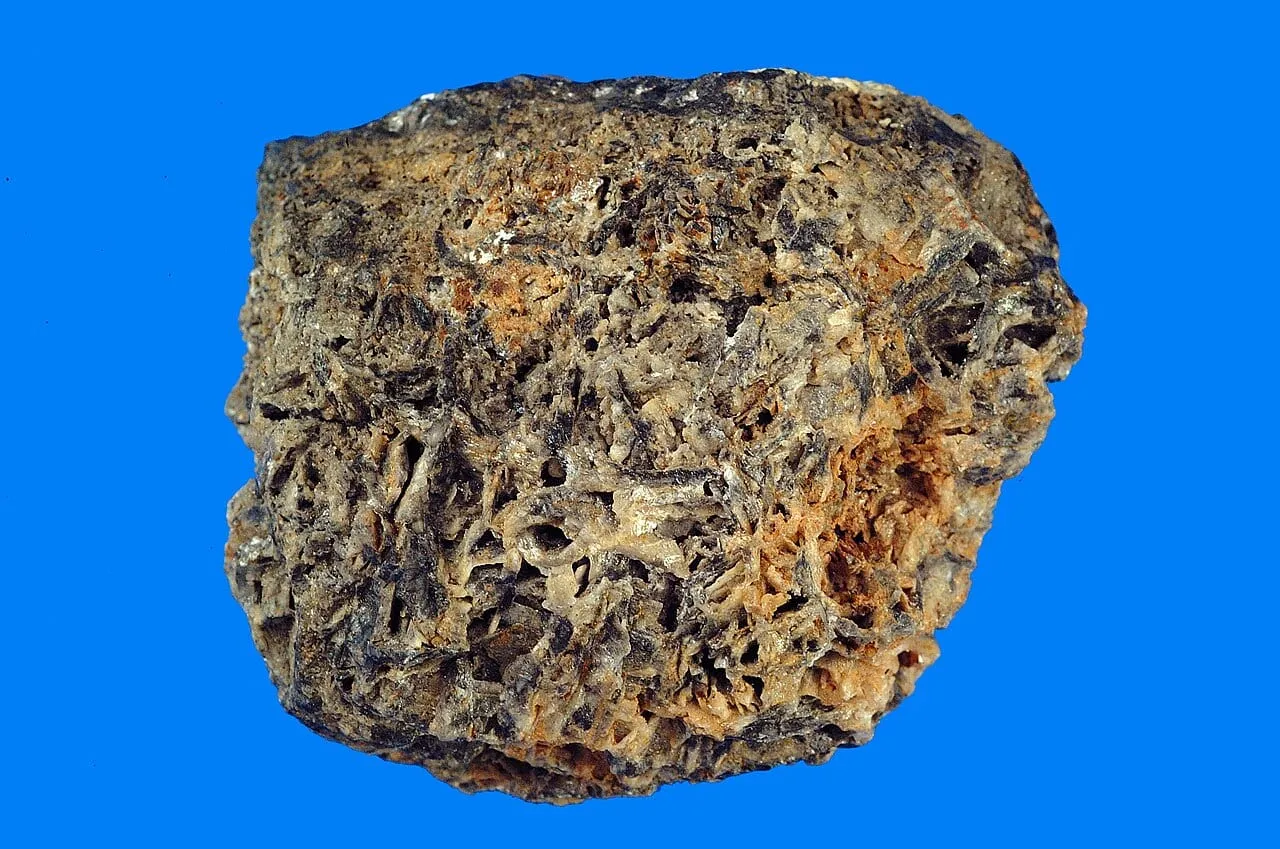
Anglesite
A heavy lead sulfate mineral with a diamond-like shine that grows as a crust around galena; it is named after the island of Anglesey in Wales.
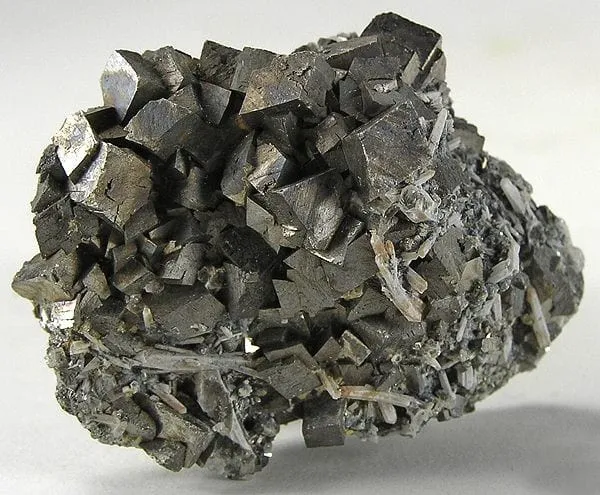
Arsenopyrite
A widespread silvery-grey sulfide containing arsenic: it smells of garlic when struck and is poisonous.
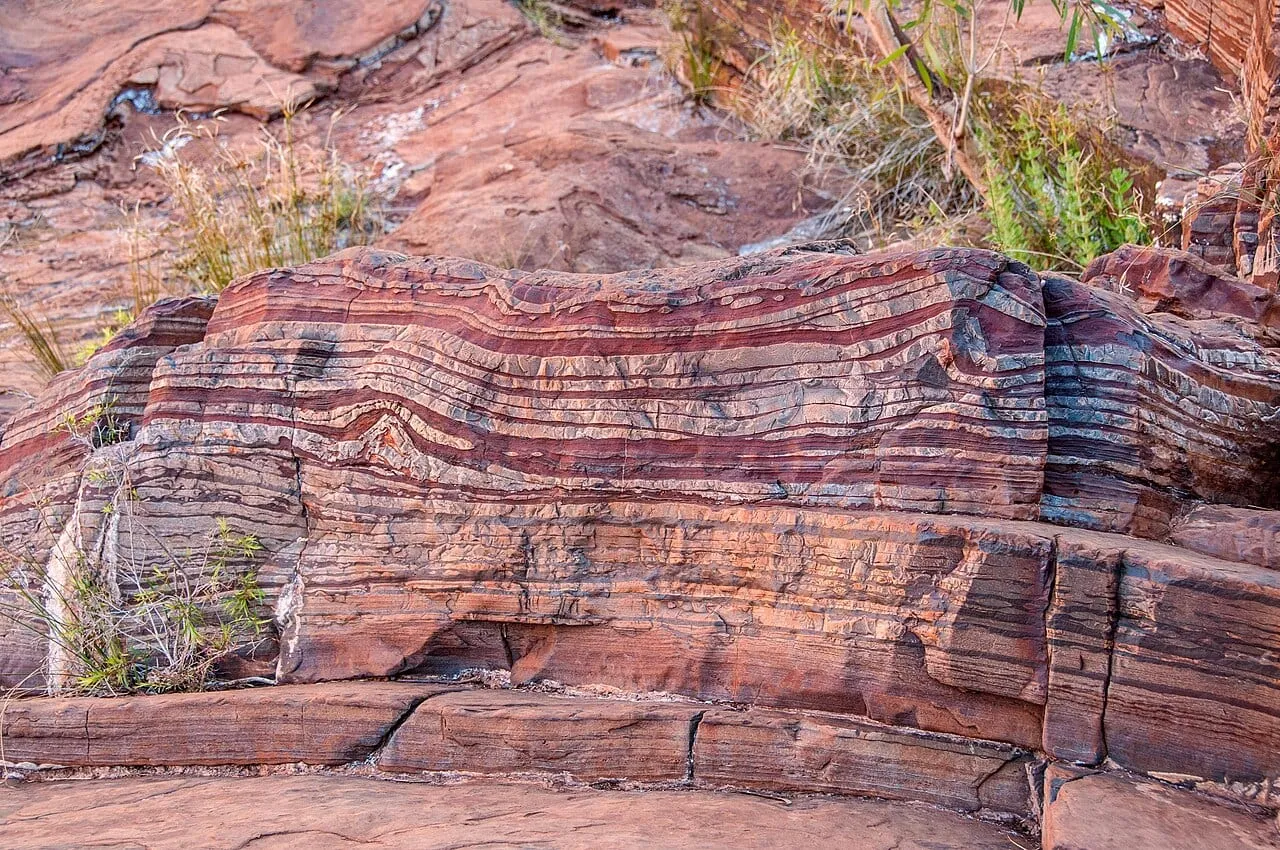
Banded iron formation
An ancient rock of alternating iron-oxide and chert bands: the record of oxygen beginning to build up on Earth, and the main source of iron ore.