Mineraloid
Chrysocolla
(Cu,Al)₂H₂Si₂O₅(OH)₄·nH₂OKrizokol
A sky-blue copper silicate that forms near the surface of copper mines; its name is Greek for “gold glue”.
- Popularly: Semi-precious stone
- Ornamental
- Gemstone
- Ore

In short
Chrysocolla is a blue or blue-green stone containing copper, silicon and water. It often has no orderly crystal structure: it usually occurs as glassy, opal-like or enamel-like masses whose crystals are too fine to see, or that are amorphous, which is why some sources count it as a mineraloid. It forms in the oxidised zone of copper deposits and, with a colour much like turquoise, has been used as an ornamental stone since antiquity.
How does it form?
Chrysocolla is a secondary mineral: it forms in the oxidised zone of copper sulfide deposits near the surface, where air and water reach the ore, as the copper dissolves and combines with silica-rich waters. It usually appears as crusts, grape-like or rounded masses, or vein fillings. Other secondary minerals such as quartz, limonite, malachite, azurite and cuprite are commonly found beside it. If there is a lot of silica, the stone hardens and turns into chrysocolla chalcedony.
What is it used for?
- Ornamental stone and jewellery: Carvings, beads and cabochons have been made since antiquity; it is easy to work. In silversmithing and goldsmithing it is often used in place of turquoise.
- Gem silica: Chalcedony with finely spread chrysocolla gives a vivid blue, translucent ornamental stone, best known from copper mines in Arizona; having the hardness of chalcedony (about 7), it is suited to jewellery.
- Copper ore: It is a minor ore of copper, but other minerals are the important sources of the metal.
What determines its value?
Its value depends on the vividness of the colour (pure sky blue is the most sought-after), the hardness of the stone and how well it takes a polish. Soft chrysocolla scratches and wears easily and so lasts poorly in jewellery; stones hardened by silica (chrysocolla chalcedony) are much more durable. “Gem silica”, chalcedony with finely and evenly spread vivid blue chrysocolla, is regarded as the most valuable variety of chalcedony. Any treatment applied to the stone should be disclosed by the seller.
This information is educational, not buying, selling or investment advice. Value varies enormously with quality and treatment.
How to recognise it
- 1
Its colour is blue, sky blue or blue-green; it appears as crusts, grape-like lumps or vein fillings. Impure stone turns brownish black.
- 2
Its hardness varies with the silica content, from about 2 to 4, and a knife scratches it. The silicified form (chrysocolla chalcedony) can be as hard as 7.
- 3
Its specific gravity is low (about 1.9–2.4); its broken surface is smooth and shell-like (conchoidal).
- 4
It is found with other secondary copper minerals such as malachite, azurite and cuprite; this company points to a copper deposit.
Fakes and imitations
What shops usually don’t tell you:
- Used in place of turquoise: chrysocolla is often used in silversmithing and goldsmithing instead of turquoise; the two look alike in colour, but chrysocolla is a silicate and turquoise a phosphate.
- Eilat stone: this name is used for a green-blue mixture of chrysocolla with malachite, azurite, turquoise and pseudomalachite; it is not a single mineral.
- Gem silica: blue chalcedony coloured by chrysocolla; it is much harder than chrysocolla (about 7) and is treated as a stone in its own right.
Safety
Chrysocolla contains copper. Holding or wearing polished stone is not a problem, but the dust from cutting, grinding and polishing should not be breathed in or swallowed. The stone should be worked wet, a dust mask worn, and the stone should not be put in water to make a drink.
Myths and misconceptions
MythChrysocolla and turquoise are the same stone.
FactThey are confused because their colours are similar, but they are different stones: chrysocolla is a copper silicate, while turquoise is a copper-bearing aluminium phosphate. Raw chrysocolla is mostly softer than turquoise.
MythAny chrysocolla can be worn in jewellery without worry.
FactIts hardness varies from 2 to 7 depending on the silica content. Dark navy chrysocolla is too soft for jewellery; sky-blue, green and blue-green kinds can approach 6, like turquoise; silicified chrysocolla chalcedony is very hard.
What is it believed to be good for?
This section reports beliefs; it is not health information. There is no scientific evidence for these claims and no stone replaces medical treatment.
The meanings people give this stone, and who holds them:
- Today crystal-therapy practitioners claim that chrysocolla is linked to the heart and throat chakras, calms, and brings emotional balance.
- Some news websites in Türkiye write that chrysocolla increases motivation and vitality, “rejuvenates”, and balances body and mind.
- The same articles say that the stone holds on to the feelings and thoughts of the people who touch it and therefore has to be “cleaned” regularly by leaving it in sunlight or burying it in the ground.
What science says
There is no scientific evidence that chrysocolla gives vitality, calm or motivation, or that a stone holds on to people's feelings and thoughts. Chrysocolla contains copper: the stone should not be put in water to make a drinkable “elixir”, and its dust should not be breathed in.
Did you know?
Its name comes from the ancient Greek words for “gold” (chrysos) and “glue” (kolla); it described a material used to solder gold. The word was first used by Theophrastus in 315 BC.
A 2006 study suggested that material identified as chrysocolla may be a microscopic mixture of spertiniite (a copper hydroxide), amorphous silica and water; so what chrysocolla really is is still debated.
Eilat stone, the national stone of Israel, is a mixture of copper minerals mined near Eilat and is also known as King Solomon stone.
Where is it found?
Loading map…
- Nizhny Tagil, Ural Mountains, Russia · Historic sourceCopper mines in the Urals, one of the places known for rich chrysocolla
- Timna Valley, Eilat, Israel · Historic sourceAlso called King Solomon's mines; Eilat stone is a mixture of copper minerals such as chrysocolla, malachite, azurite and turquoise
- Katanga (Lubumbashi, Likasi), Democratic Republic of the Congo · Known localityThe copper mines of Katanga; places such as the Star of the Congo mine yield rich chrysocolla
- Globe-Miami district, Arizona, USA · Major depositOccurs as part of large copper orebodies; the blue “gem silica”, chalcedony coloured by chrysocolla, also comes from mines here
- Chuquicamata, Antofagasta, Chile · Known locality
- Cananea, Sonora, Mexico · Known locality
- Chillagoe, Queensland, Australia · Known locality
Locations are approximate to protect sites. Red dots mark places in Türkiye. Open in the big map →
Frequently asked questions
What is chrysocolla?
Chrysocolla is a blue or blue-green stone containing copper, silicon and water. It often has no orderly crystal structure: it usually occurs as glassy, opal-like or enamel-like masses whose crystals are too fine to see, or that are amorphous, which is why some sources count it as a mineraloid. It forms in the oxidised zone of copper deposits and, with a colour much like turquoise, has been used as an ornamental stone since antiquity.
What is chrysocolla used for?
Ornamental stone and jewellery: Carvings, beads and cabochons have been made since antiquity; it is easy to work. In silversmithing and goldsmithing it is often used in place of turquoise. Gem silica: Chalcedony with finely spread chrysocolla gives a vivid blue, translucent ornamental stone, best known from copper mines in Arizona; having the hardness of chalcedony (about 7), it is suited to jewellery. Copper ore: It is a minor ore of copper, but other minerals are the important sources of the metal.
How hard is chrysocolla?
It has a hardness of 2–4 on the Mohs scale. A fingernail cannot scratch it, but a steel knife can. Its specific gravity is 1.9–2.4 g/cm³.
Where is chrysocolla found?
Its best-known localities: Globe-Miami district, Arizona, USA; Nizhny Tagil, Ural Mountains, Russia; Timna Valley, Eilat, Israel; Katanga (Lubumbashi, Likasi), Democratic Republic of the Congo; Chuquicamata, Antofagasta, Chile.
How can you tell if chrysocolla is real?
Its colour is blue, sky blue or blue-green; it appears as crusts, grape-like lumps or vein fillings. Impure stone turns brownish black. Its hardness varies with the silica content, from about 2 to 4, and a knife scratches it. The silicified form (chrysocolla chalcedony) can be as hard as 7. Its specific gravity is low (about 1.9–2.4); its broken surface is smooth and shell-like (conchoidal). Used in place of turquoise: chrysocolla is often used in silversmithing and goldsmithing instead of turquoise; the two look alike in colour, but chrysocolla is a silicate and turquoise a phosphate.
Is chrysocolla valuable?
On the “street to diamond” value ladder it sits on step 5 of nine: Ornamental stone. Its value depends on the vividness of the colour (pure sky blue is the most sought-after), the hardness of the stone and how well it takes a polish. Soft chrysocolla scratches and wears easily and so lasts poorly in jewellery; stones hardened by silica (chrysocolla chalcedony) are much more durable. “Gem silica”, chalcedony with finely and evenly spread vivid blue chrysocolla, is regarded as the most valuable variety of chalcedony. Any treatment applied to the stone should be disclosed by the seller.
What is chrysocolla good for?
Today crystal-therapy practitioners claim that chrysocolla is linked to the heart and throat chakras, calms, and brings emotional balance. Some news websites in Türkiye write that chrysocolla increases motivation and vitality, “rejuvenates”, and balances body and mind. The same articles say that the stone holds on to the feelings and thoughts of the people who touch it and therefore has to be “cleaned” regularly by leaving it in sunlight or burying it in the ground. There is no scientific evidence that chrysocolla gives vitality, calm or motivation, or that a stone holds on to people's feelings and thoughts. Chrysocolla contains copper: the stone should not be put in water to make a drinkable “elixir”, and its dust should not be breathed in. This section reports beliefs; it is not health information. There is no scientific evidence for these claims and no stone replaces medical treatment.
Is chrysocolla dangerous?
Chrysocolla contains copper. Holding or wearing polished stone is not a problem, but the dust from cutting, grinding and polishing should not be breathed in or swallowed. The stone should be worked wet, a dust mask worn, and the stone should not be put in water to make a drink.
Sources
- Handbook of Mineralogy: Chrysocolla · Mineralogical Society of America
- Chrysocolla · Wikipedia
- Chrysocolla · Webmineral
- Eilat stone · Wikipedia
- Gem Silica: The blue, most valuable variety of chalcedony · Geology.com
- Timna Valley · Wikipedia
- Nizhny Tagil · Wikipedia
- Globe, Arizona · Wikipedia
- Krizokol Taşı Nedir Ve Ne İşe Yarar? Krizokol Taşı Nasıl Anlaşılır Ve Kullanılır? Krizokol Taşı Faydaları Ve Özellikleri · Hürriyet Mahmure, 2021
External links
Draft: awaiting expert reviewReport an error ↗
On the same step
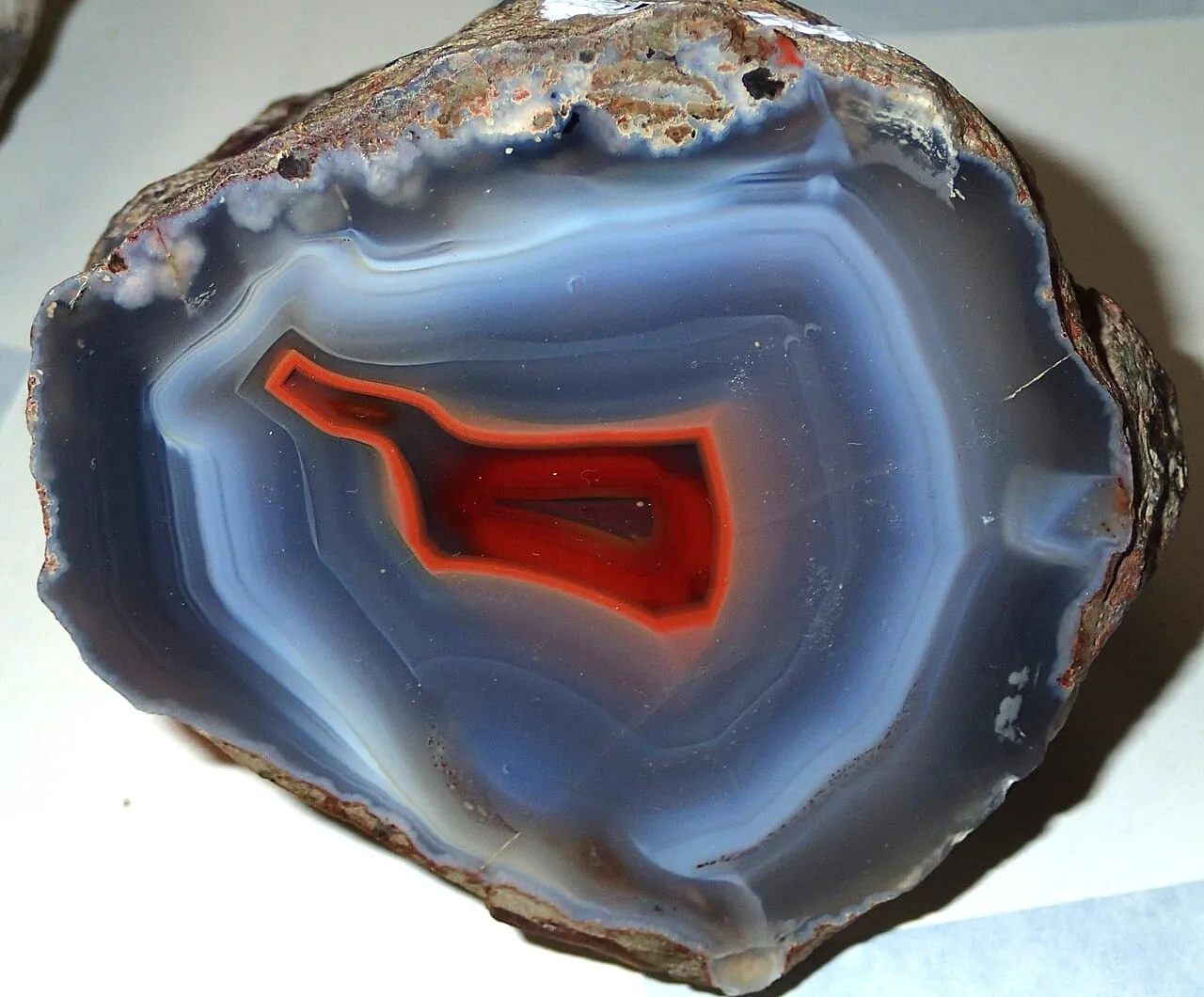
Agate
The banded variety of chalcedony: it grows layer by layer in hollows in volcanic rock and shows a new pattern every time it is cut.
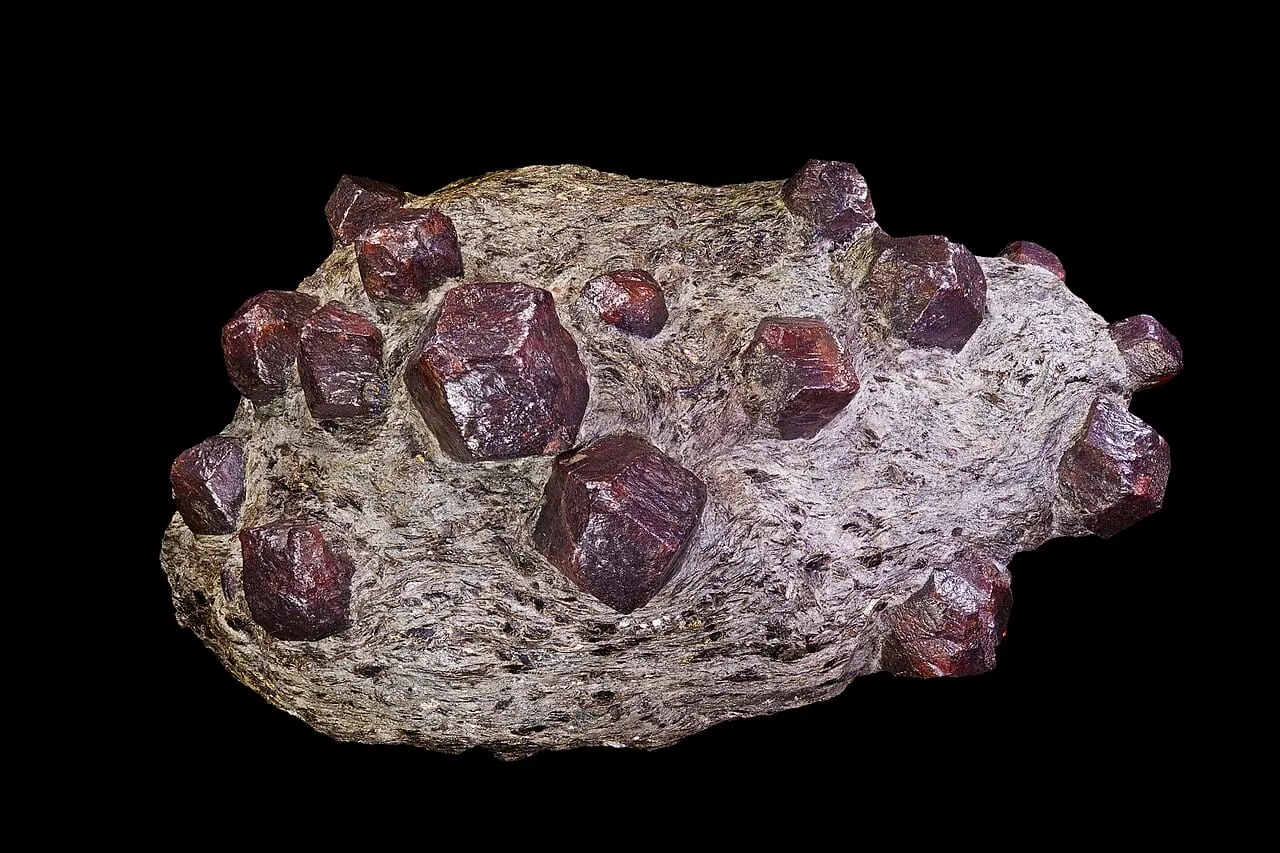
Almandine
The commonest garnet: a deep red, iron-rich stone named after the ancient city of Alabanda in Anatolia, used in jewellery and in sandpaper alike.
Amazonite
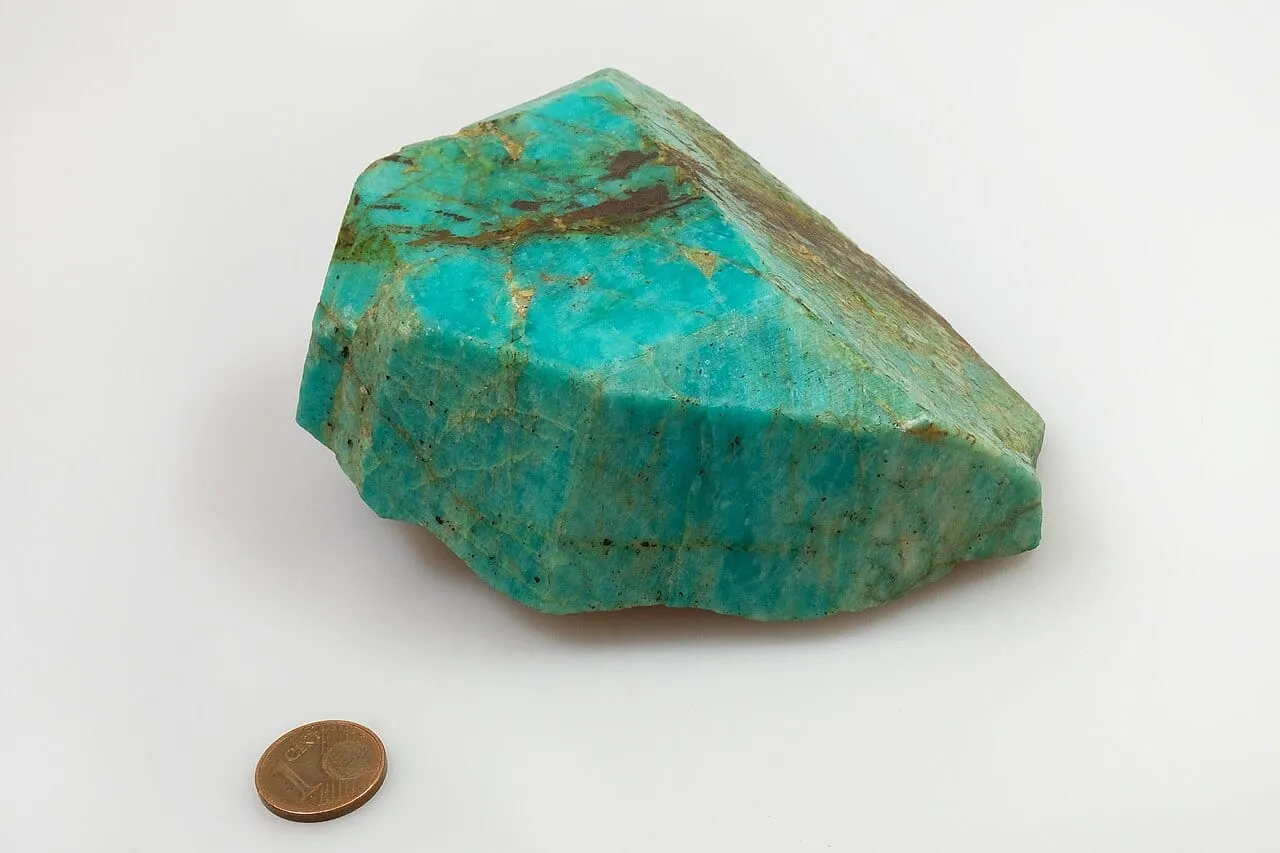
A turquoise-like green-blue feldspar: a variety of microcline worn as jewellery for more than three thousand years, but it can release lead.