Mineral
Dioptase
Cu₆Si₆O₁₈·6H₂ODioptaz
The copper silicate miners mistook for emerald, greener than emerald: beautiful but very fragile.
- Popularly: Semi-precious stone

In short
Dioptase is a deep emerald-green mineral made of copper and silicon with water in its structure (Cu₆Si₆O₁₈·6H₂O). It forms in the upper parts of copper deposits that are exposed to air. In the late 18th century, copper miners in Kazakhstan took it for emerald; in 1797 René Just Haüy showed that it was a new mineral and named it. It is a collector's favourite and is occasionally cut into small gems. Its finest specimens have come from the Tsumeb mine in Namibia.
Photos

How does it form?
Dioptase forms in the oxidised zone of some copper deposits, the part near the surface exposed to air and groundwater. It occurs with chrysocolla, malachite, mimetite, wulfenite, cerussite, hemimorphite, fluorite and quartz. Its crystals are usually short prisms or rhombohedral shapes and can grow up to 5 cm.
According to the Handbook of Mineralogy, the most splendid large crystals come from the Tsumeb, Guchab and Omaue (Kaokoveld) deposits in Namibia. Fine crystals also come from around Renéville, Mindouli and Pimbi in the Republic of the Congo. The Altyn-Tyube mine, where the first dioptase was found, lies about 50 km east of Karaganda in Kazakhstan.
What is it used for?
- Collecting: Its deep green crystals make it a collector’s favourite.
- Gemstone: It is occasionally cut into small gems, but because it is fragile it is rarely used in jewellery.
- Pigment: Ground dioptase is used as a painting pigment; its dust is toxic because of its copper content.
What determines its value?
The value of dioptase depends on the colour, lustre, size and condition of its crystals. Collectors most seek deep emerald-green, transparent, sharp-edged crystals, especially from Namibia's Tsumeb mine; Tsumeb dioptase is the most famous and the most expensive. Cut dioptase is small and rare; its softness and perfect cleavage make it unsuitable for everyday jewellery.
This information is educational, not buying, selling or investment advice. Value varies enormously with quality and treatment.
How to recognise it
- 1
Forms deep emerald-green or blue-green, glassy, short prismatic crystals.
- 2
Its streak (the powder it leaves on unglazed porcelain) is green; emerald's streak is white.
- 3
Its hardness is 5, far below emerald's 7.5–8; a steel knife can scratch it.
- 4
It has a perfect cleavage; looking into the crystal, the cleavage planes can be seen.
- 5
Usually found with copper minerals such as chrysocolla and malachite.
Fakes and imitations
What shops usually don’t tell you:
- Emerald is green too, but it is much harder (Mohs 7.5–8) and leaves a white streak. Dioptase leaves a green streak and can be scratched by a knife.
- Malachite and chrysocolla are also green copper minerals, but they are mostly opaque and massive or banded; dioptase forms distinct, transparent to translucent crystals.
Safety
Dioptase contains copper; according to Wikipedia, the dust of ground dioptase is toxic. Do not breathe the dust if the mineral is cut, ground or sanded, do not put dioptase in your mouth, and do not put it in drinking water.
Myths and misconceptions
MythBecause it is deep green, transparent and glassy, dioptase is a kind of emerald.
FactThe copper miners who first found dioptase also took it for emerald. But dioptase is a copper silicate, while emerald is beryl coloured by chromium or vanadium. Dioptase is much softer (Mohs 5) and leaves a green streak.
Did you know?
Its name comes from the Greek for “through” and “to see”: looking into the crystal, you can see its cleavage planes.
Dioptase is very fragile; specimens must never be cleaned in an ultrasonic cleaner, or they will shatter.
When heated or as its temperature changes, an electric charge builds up on its surface (it is pyroelectric).
Where is it found?
Loading map…
- Tsumeb, Oshikoto, Namibia · Major depositThe finest dioptase specimens of all came from this mine; it is the most famous and expensive source
- Altyn-Tyube, Karaganda area, Kazakhstan · Type localityWhere copper miners found the first dioptase in the late 18th century and took it for emerald; about 50 km east of Karaganda (approximate coordinate)
- Kolwezi, Lualaba, Democratic Republic of the Congo · Known localityThe Mashamba West mine, cited by the Handbook of Mineralogy for dioptase, lies in this copper district
Locations are approximate to protect sites. Red dots mark places in Türkiye. Open in the big map →
Frequently asked questions
What is dioptase?
Dioptase is a deep emerald-green mineral made of copper and silicon with water in its structure (Cu₆Si₆O₁₈·6H₂O). It forms in the upper parts of copper deposits that are exposed to air. In the late 18th century, copper miners in Kazakhstan took it for emerald; in 1797 René Just Haüy showed that it was a new mineral and named it. It is a collector's favourite and is occasionally cut into small gems. Its finest specimens have come from the Tsumeb mine in Namibia.
Is dioptase an emerald?
No. Miners in Kazakhstan took it for emerald in the late 18th century, but dioptase is a copper silicate, while emerald is beryl. Dioptase has a hardness of 5 and emerald 7.5–8, a difference that easily tells them apart.
What is dioptase used for?
Collecting: Its deep green crystals make it a collector's favourite. Gemstone: It is occasionally cut into small gems, but because it is fragile it is rarely used in jewellery. Pigment: Ground dioptase is used as a painting pigment; its dust is toxic because of its copper content.
How hard is dioptase?
It has a hardness of 5 on the Mohs scale. A fingernail cannot scratch it, but a steel knife can. Its specific gravity is 3.28–3.35 g/cm³.
Where is dioptase found?
Its best-known localities: Altyn-Tyube, Karaganda area, Kazakhstan; Tsumeb, Oshikoto, Namibia; Kolwezi, Lualaba, Democratic Republic of the Congo.
How can you tell if dioptase is real?
Forms deep emerald-green or blue-green, glassy, short prismatic crystals. Its streak (the powder it leaves on unglazed porcelain) is green; emerald's streak is white. Its hardness is 5, far below emerald's 7.5–8; a steel knife can scratch it. Emerald is green too, but it is much harder (Mohs 7.5–8) and leaves a white streak. Dioptase leaves a green streak and can be scratched by a knife.
Is dioptase valuable?
On the “street to diamond” value ladder it sits on step 4 of nine: Fine dimension stone and ore. The value of dioptase depends on the colour, lustre, size and condition of its crystals. Collectors most seek deep emerald-green, transparent, sharp-edged crystals, especially from Namibia's Tsumeb mine; Tsumeb dioptase is the most famous and the most expensive. Cut dioptase is small and rare; its softness and perfect cleavage make it unsuitable for everyday jewellery.
Is dioptase dangerous?
Dioptase contains copper; according to Wikipedia, the dust of ground dioptase is toxic. Do not breathe the dust if the mineral is cut, ground or sanded, do not put dioptase in your mouth, and do not put it in drinking water.
Sources
- Dioptase · Wikipedia
- Handbook of Mineralogy: Dioptase · Mineralogical Society of America
External links
ReviewedLast checked: 4 October 2026
On the same step
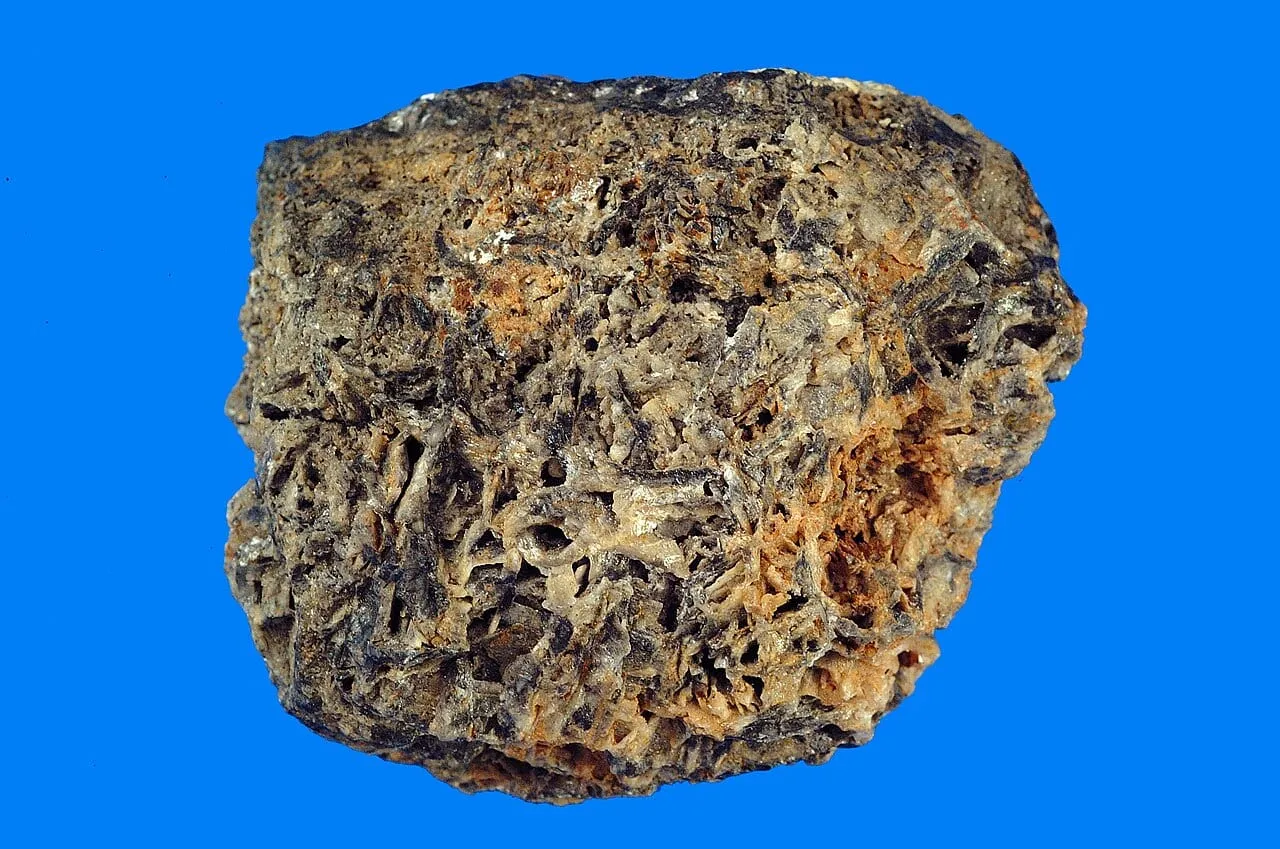
Anglesite
A heavy lead sulfate mineral with a diamond-like shine that grows as a crust around galena; it is named after the island of Anglesey in Wales.
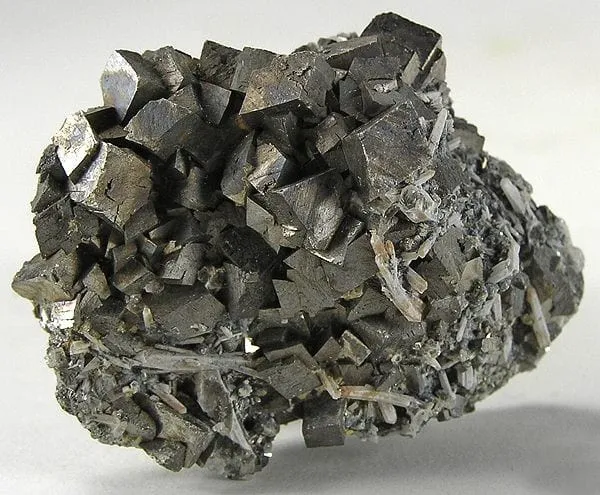
Arsenopyrite
A widespread silvery-grey sulfide containing arsenic: it smells of garlic when struck and is poisonous.
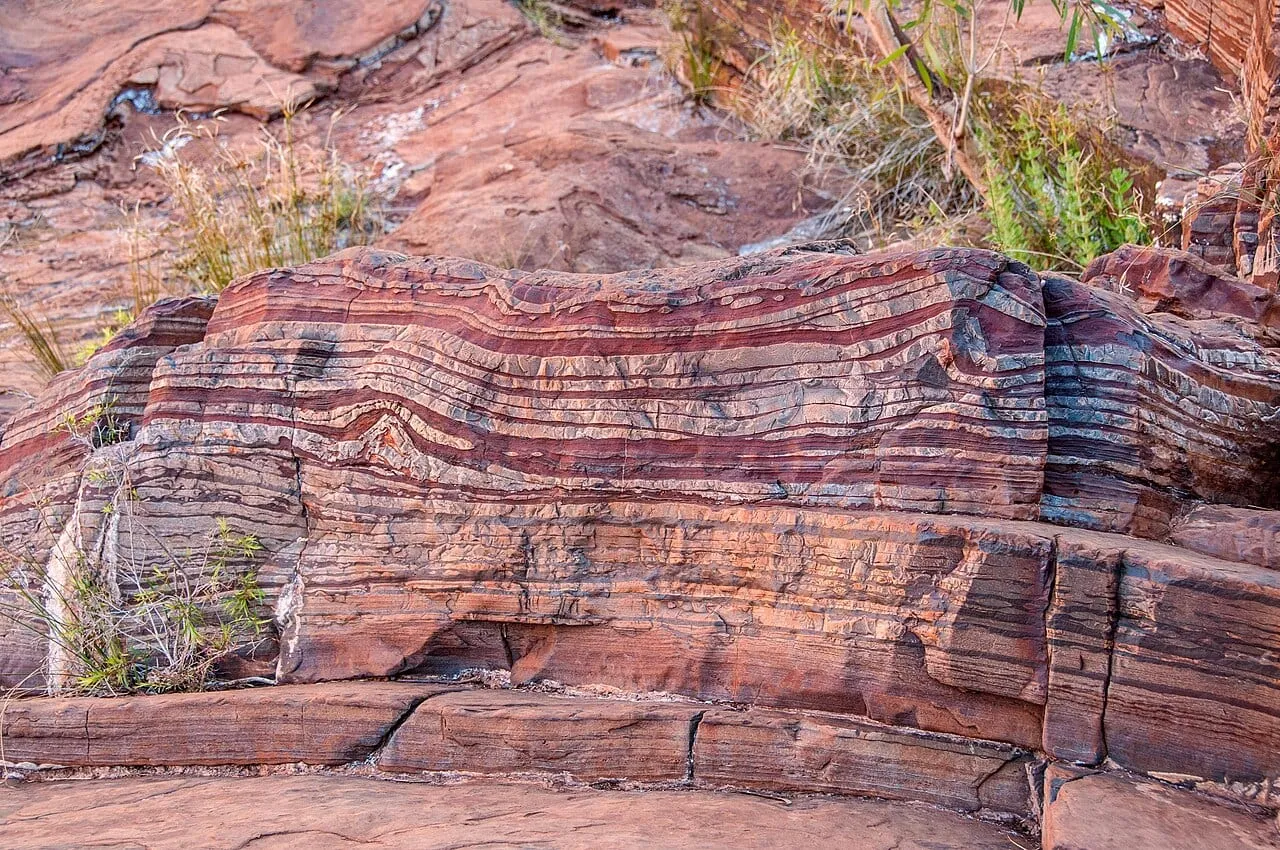
Banded iron formation
An ancient rock of alternating iron-oxide and chert bands: the record of oxygen beginning to build up on Earth, and the main source of iron ore.