Mineral
Cryolite
Na₃AlF₆Kriyolit
Greenland’s “ice stone”: the hidden hero of aluminium making, though its natural deposit has run out.
Also known as: Greenland spar
- Popularly: Ore and raw material
- Industrial
.jpg)
In short
Cryolite is a rare mineral made of sodium, aluminium and fluorine (Na₃AlF₆), white or colourless and ice-like in look. Its name comes from the Greek for “ice” and “stone”. For a long time it came almost only from the Ivittuut mine in Greenland and served in making aluminium by electrolysis, as the molten bath that dissolves aluminium oxide. Because the natural deposit is exhausted, industry today uses synthetic cryolite.
Photos

How does it form?
Cryolite is a rare mineral and forms only under particular conditions: in the late stage of some granite pegmatites, in tin-bearing alkaline granites, as a vapour-phase mineral in the cracks and groundmass of fluorine-rich, topaz-bearing rhyolites, and in a carbonatite vein. In the great deposit at Ivittuut it occurred with siderite, topaz, fluorite and chalcopyrite.
What is it used for?
- Aluminium production: In the Hall–Héroult process, aluminium oxide is dissolved in a molten cryolite bath. This brings the melting temperature down from over 2,000 °C to about 900–1,000 °C; according to Wikipedia it also improves the bath’s conductivity. Today synthetic, not natural, cryolite is used for this.
- Other uses: As an insecticide, as an additive that turns glass milky white (an opacifier), to give fireworks a yellow colour, and in the 19th and 20th centuries in Pennsylvania to make caustic soda and fluorine compounds such as hydrofluoric acid.
- Collecting: Since the mine closed, specimens from Ivittuut have a historic value for mineral collectors.
The story of Ivittuut
At Ivittuut in west Greenland, Danish engineers began mining in 1859, and in 1864 a Danish company was granted a monopoly on extraction. Because cryolite was indispensable to the aluminium industry, the mine became strategically important, and in the Second World War the USA built a base called Bluie West Seven to protect Ivittuut. As synthetic cryolite was developed, the natural deposit ran empty; the mine kept producing for a while from old waste rock, closed in 1987, and the community was abandoned soon after.
In Türkiye
No natural cryolite deposit is known in Türkiye. Cryolite enters Türkiye’s story through aluminium making: according to a report by the Chamber of Metallurgical Engineers (TMMOB), all commercial primary aluminium production in the world is done by the Hall–Héroult process, in which alumina is dissolved in a cryolite–aluminium fluoride bath and electrolysed. The only integrated plant in Türkiye that carries out every stage from bauxite to aluminium is Eti Alüminyum in Seydişehir, Konya, which lies in the Seydişehir–Akseki bauxite belt.
What determines its value?
In industry natural cryolite is no longer mined; the value of the synthetic cryolite used by the aluminium industry depends on its purity and the cost of its raw materials. Among collectors the most sought-after specimens come from Ivittuut, whose mine closed in 1987. Crystal form (rare), size, freedom from damage and an attractive association with minerals such as siderite, galena or chalcopyrite raise the value. Cryolite is too soft to be used as a gemstone.
This information is educational, not buying, selling or investment advice. Value varies enormously with quality and treatment.
How to recognise it
- 1
It is white or colourless, with a glassy, sometimes greasy or waxy lustre. Crystals are rare; it usually occurs as coarse-grained masses.
- 2
It is very soft (hardness 2.5–3) and its specific gravity is about 3. Its refractive index is very close to that of water (about 1.34), so clear fragments almost vanish when dropped into water.
- 3
In Ivittuut specimens it is usually intergrown with siderite, galena, chalcopyrite or fluorite.
- 4
Some specimens glow strong yellow under short-wave ultraviolet light and keep glowing yellow for a while after the light is switched off (phosphorescence).
Fakes and imitations
What shops usually don’t tell you:
- Because natural cryolite has run out, the cryolite used in industry is synthetic, made from raw materials such as fluorite. Anyone looking for a natural specimen should ask where the stone came from (for example Ivittuut).
Safety
Cryolite contains fluorine and aluminium. Handling a specimen is no problem, but if cryolite dust is breathed for years it can cause skeletal fluorosis, in which the bones become denser and harder and pain and stiffness set in; the disease was first recognised in workers who crushed and refined cryolite. Never grind or sand a specimen, do not breathe its dust, never put it in your mouth, and never put it in drinking water.
Myths and misconceptions
MythAluminium is obtained directly from cryolite.
FactAluminium is made from alumina (aluminium oxide) obtained from bauxite; cryolite is the molten bath that dissolves the alumina and makes the electrolysis easier. In aluminium making, 2 tonnes of alumina yield about 1 tonne of aluminium (Turkish chamber of metallurgical engineers, TMMOB).
MythThe aluminium industry still relies on natural cryolite from Greenland.
FactThe Ivittuut deposit ran out and the mine closed in 1987; today the aluminium industry uses synthetic cryolite made from raw materials such as fluorite.
What is it believed to be good for?
This section reports beliefs; it is not health information. There is no scientific evidence for these claims and no stone replaces medical treatment.
The meanings people give this stone, and who holds them:
- Crystal-therapy websites claim that cryolite helps with speech difficulties and regulates bodily functions, and that it stimulates the brain and makes learning easier.
- The same sites say cryolite opens the “third-eye chakra”, strengthens intuition, and brings happiness and peace.
What science says
No study supports these claims. Cryolite is a fluorine compound; breathing its dust for a long time damages the bones (seen in cryolite workers). It should therefore never be ground up and taken, or soaked in drinking water. Someone with a speech problem or learning difficulty should consult a specialist.
Did you know?
Named for its “ice stone” look, cryolite was first described in 1798 by the Danish veterinarian and physician Peter Christian Abildgaard, from samples obtained from local Inuit.
In 1886 Hall and Héroult, working independently and both aged 22, found how to make aluminium by electrolysing alumina dissolved in cryolite. In the early 19th century aluminium was costlier than gold or platinum; when an aluminium cap was placed on the Washington Monument in 1884 it was still dearer than silver.
In 1940, before the USA entered the war, it became involved in keeping Ivittuut, the world’s largest cryolite mine, out of Nazi Germany’s hands. Protecting the mine was a major factor in the American occupation of Greenland during the Second World War.
Because it contains sodium, cryolite gives fireworks a yellow colour.
Where is it found?
Loading map…
- Ivittuut (Ivigtut), Sermersooq, southwest Greenland · Type localityThe world’s largest cryolite deposit; the mine, closed in 1987, was the main source of the mineral
- Miass, Ilmen Mountains, Southern Urals, Russia · Known localityThe Handbook of Mineralogy names Miass in the Ilmen Mountains as a cryolite locality
- Khibiny Mountains, Kola Peninsula, Russia · Known localityAn alkaline rock massif named by the Handbook of Mineralogy in Russia
- Mont Saint-Hilaire, Quebec, Canada · Known localityA cryolite locality per the Handbook of Mineralogy; Wikimedia Commons holds microscopic cryolite specimens from here
- Pikes Peak area (St. Peters Dome), Colorado, USA · Known localityThe Handbook of Mineralogy names St. Peters Dome as a cryolite locality
- Sierra Blanca area (Round Top), Hudspeth County, Texas, USA · Known localityThe Handbook of Mineralogy names the Round Top intrusion as a cryolite locality
- Pitinga region, Amazonas, Brazil · Known localityCryolite occurs in the Madeira and Agua Boa granites
Locations are approximate to protect sites. Red dots mark places in Türkiye. Open in the big map →
Frequently asked questions
What is cryolite?
Cryolite is a rare mineral made of sodium, aluminium and fluorine (Na₃AlF₆), white or colourless and ice-like in look. Its name comes from the Greek for “ice” and “stone”. For a long time it came almost only from the Ivittuut mine in Greenland and served in making aluminium by electrolysis, as the molten bath that dissolves aluminium oxide. Because the natural deposit is exhausted, industry today uses synthetic cryolite.
What is cryolite used for?
Aluminium production: In the Hall–Héroult process, aluminium oxide is dissolved in a molten cryolite bath. This brings the melting temperature down from over 2,000 °C to about 900–1,000 °C; according to Wikipedia it also improves the bath’s conductivity. Today synthetic, not natural, cryolite is used for this. Other uses: As an insecticide, as an additive that turns glass milky white (an opacifier), to give fireworks a yellow colour, and in the 19th and 20th centuries in Pennsylvania to make caustic soda and fluorine compounds such as hydrofluoric acid.
How hard is cryolite?
It has a hardness of 2.5–3 on the Mohs scale. A fingernail cannot scratch it, but a steel knife can. Its specific gravity is 2.95–3 g/cm³.
Where is cryolite found?
Its best-known localities: Ivittuut (Ivigtut), Sermersooq, southwest Greenland; Miass, Ilmen Mountains, Southern Urals, Russia; Khibiny Mountains, Kola Peninsula, Russia; Mont Saint-Hilaire, Quebec, Canada; Pikes Peak area (St. Peters Dome), Colorado, USA.
How can you tell if cryolite is real?
It is white or colourless, with a glassy, sometimes greasy or waxy lustre. Crystals are rare; it usually occurs as coarse-grained masses. It is very soft (hardness 2.5–3) and its specific gravity is about 3. Its refractive index is very close to that of water (about 1.34), so clear fragments almost vanish when dropped into water. In Ivittuut specimens it is usually intergrown with siderite, galena, chalcopyrite or fluorite. Because natural cryolite has run out, the cryolite used in industry is synthetic, made from raw materials such as fluorite. Anyone looking for a natural specimen should ask where the stone came from (for example Ivittuut).
Is cryolite valuable?
On the “street to diamond” value ladder it sits on step 4 of nine: Fine dimension stone and ore. In industry natural cryolite is no longer mined; the value of the synthetic cryolite used by the aluminium industry depends on its purity and the cost of its raw materials. Among collectors the most sought-after specimens come from Ivittuut, whose mine closed in 1987. Crystal form (rare), size, freedom from damage and an attractive association with minerals such as siderite, galena or chalcopyrite raise the value. Cryolite is too soft to be used as a gemstone.
What is cryolite good for?
Crystal-therapy websites claim that cryolite helps with speech difficulties and regulates bodily functions, and that it stimulates the brain and makes learning easier. The same sites say cryolite opens the “third-eye chakra”, strengthens intuition, and brings happiness and peace. No study supports these claims. Cryolite is a fluorine compound; breathing its dust for a long time damages the bones (seen in cryolite workers). It should therefore never be ground up and taken, or soaked in drinking water. Someone with a speech problem or learning difficulty should consult a specialist. This section reports beliefs; it is not health information. There is no scientific evidence for these claims and no stone replaces medical treatment.
Is cryolite dangerous?
Cryolite contains fluorine and aluminium. Handling a specimen is no problem, but if cryolite dust is breathed for years it can cause skeletal fluorosis, in which the bones become denser and harder and pain and stiffness set in; the disease was first recognised in workers who crushed and refined cryolite. Never grind or sand a specimen, do not breathe its dust, never put it in your mouth, and never put it in drinking water.
Sources
- Cryolite · Wikipedia
- Kriyolit · Vikipedi
- Handbook of Mineralogy: Cryolite · Mineralogical Society of America
- Ivittuut · Wikipedia
- Hall–Héroult process · Wikipedia
- Alüminyum Raporu, 24. Dönem Çalışma Raporu, Ek-16 · TMMOB Metalurji Mühendisleri Odası, Alüminyum Komisyonu
- Toxicological Profile for Fluorides, Hydrogen Fluoride, and Fluorine · Agency for Toxic Substances and Disease Registry (ATSDR)
- Seydişehir Aluminum Plant · Eti Alüminyum
- Khibiny Mountains · Wikipedia
- Mont Saint-Hilaire · Wikipedia
- Miass · Wikipedia
- Pikes Peak · Wikipedia
- Sierra Blanca, Texas · Wikipedia
- Pitinga mine · Wikipedia
External links
Draft: awaiting expert reviewReport an error ↗
On the same step
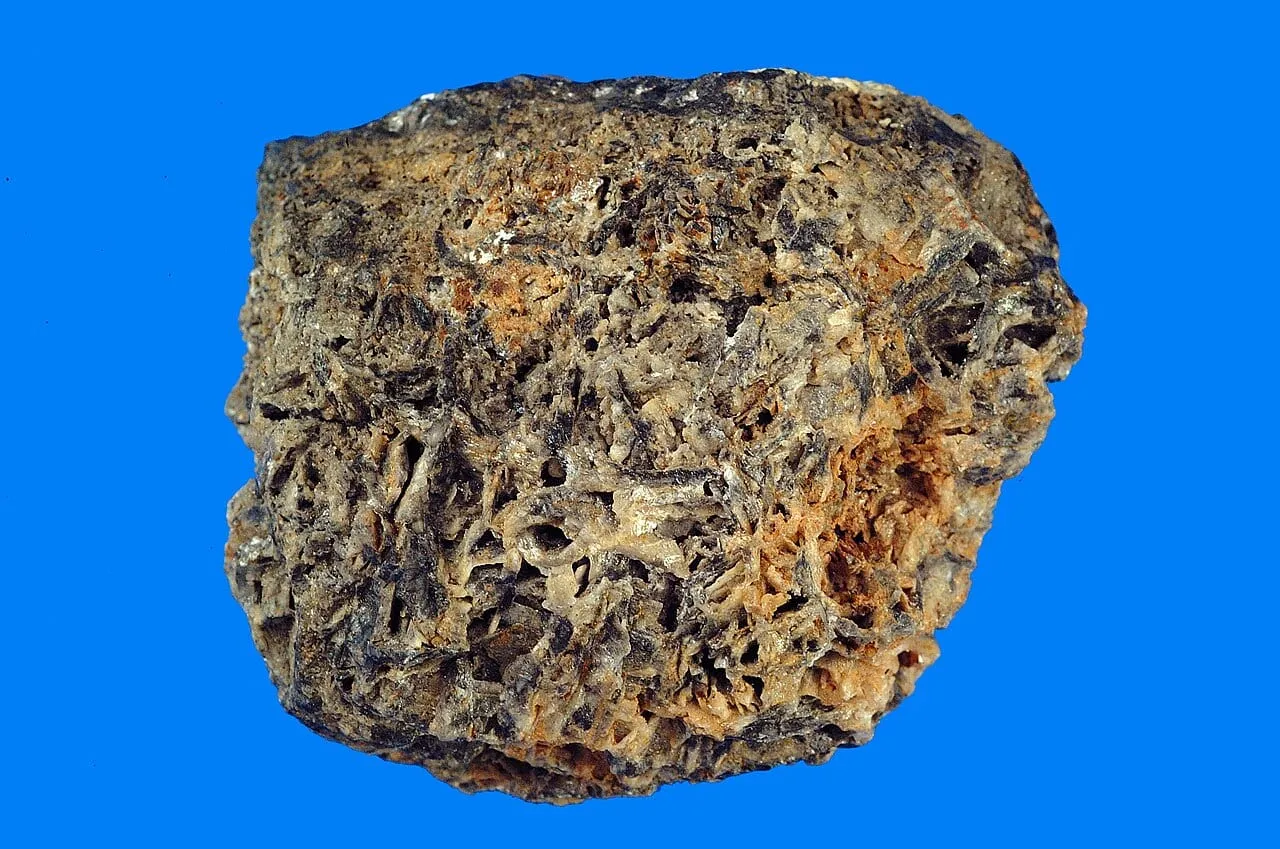
Anglesite
A heavy lead sulfate mineral with a diamond-like shine that grows as a crust around galena; it is named after the island of Anglesey in Wales.
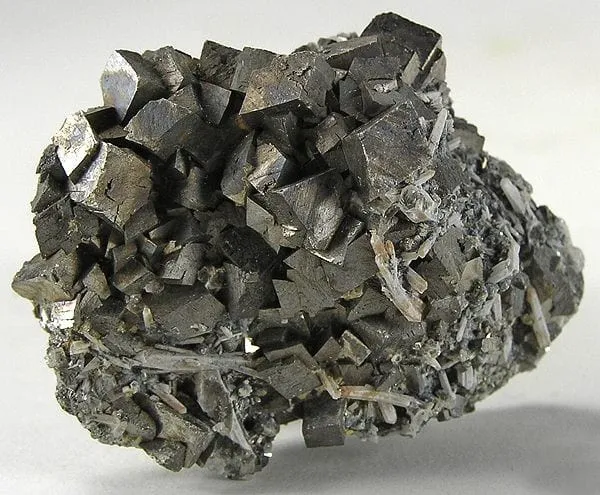
Arsenopyrite
A widespread silvery-grey sulfide containing arsenic: it smells of garlic when struck and is poisonous.
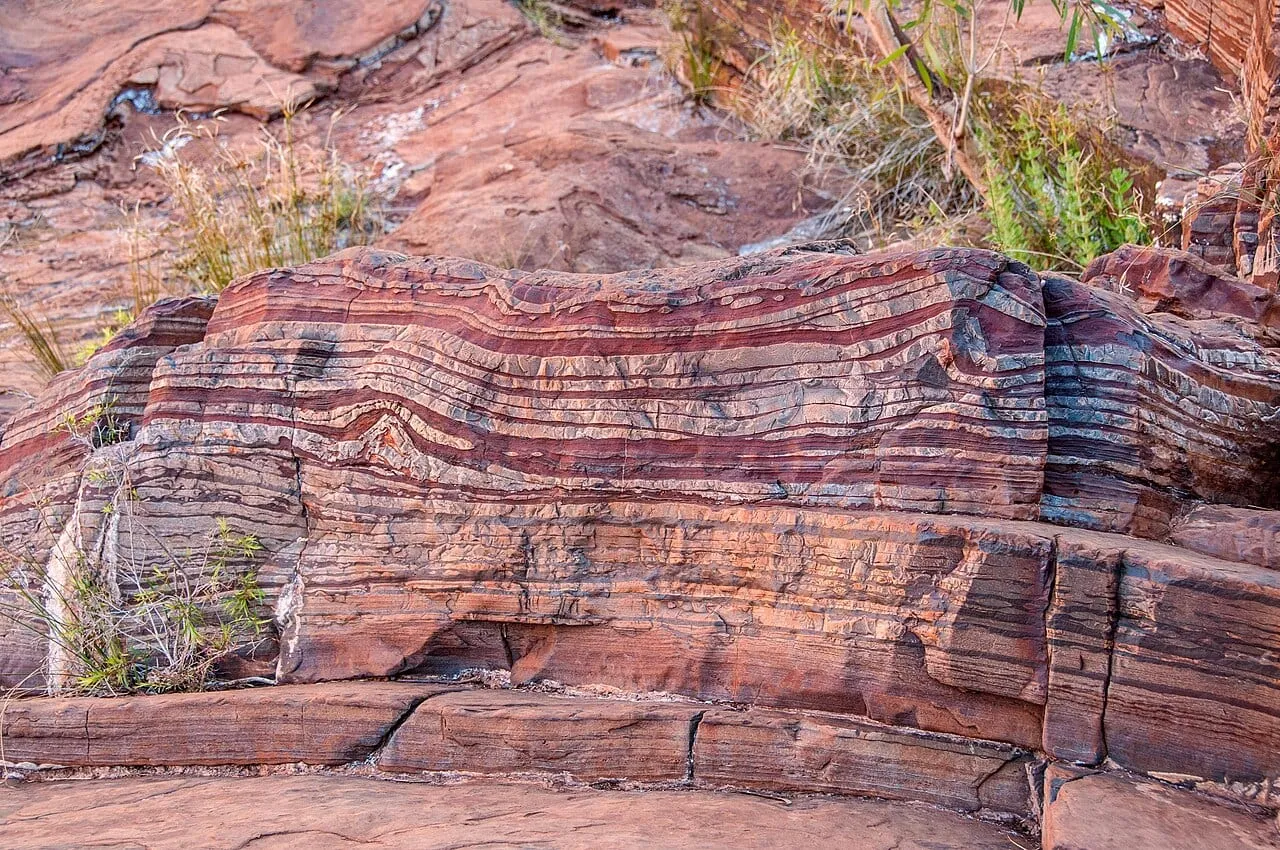
Banded iron formation
An ancient rock of alternating iron-oxide and chert bands: the record of oxygen beginning to build up on Earth, and the main source of iron ore.