Mineral
Bornite
Cu₅FeS₄Bornit
A copper ore that is copper-red on a fresh break and tarnishes to iridescent blue and purple in air; it is also called “peacock ore”.
Also known as: Peacock ore · Peacock copper · Purple copper ore
- Popularly: Ore and raw material
- Ore
- Important in Türkiye

In short
Bornite is a sulfide mineral (Cu₅FeS₄) made of copper, iron and sulfur. A freshly broken surface is copper-red to bronze-brown, but on contact with air it quickly becomes coated with an iridescent layer of blue, purple and red. That is why it is also known as “peacock ore” or “peacock copper”. About 63 per cent of its weight is copper, and it is an important copper ore. Be warned, though: most of the brilliantly coloured stones sold in shops under this name are not bornite but chalcopyrite coloured with acid.
Photos

How does it form?
Bornite forms in many settings: disseminated through mafic igneous rocks, in contact-metamorphic (skarn) deposits where magma meets limestone, in pegmatites, in medium- to high-temperature hot-water (hydrothermal) deposits and in copper-bearing sedimentary shales. It is stable below about 200 °C. It is usually found with chalcopyrite, pyrite and other copper and iron sulfides, and sometimes with garnet, calcite and quartz.
What is it used for?
Bornite is an important copper ore; about 63 per cent of its weight is copper. Copper, an excellent conductor of electricity and heat, is used:
- in electrical and electronic equipment: cables, electric motors and circuit boards,
- in construction: water pipes and roofing,
- in alloys: brass (with zinc) and bronze (with tin).
In ore processing, bornite is concentrated by froth flotation like the other copper sulfides; according to MTA, a chemical addition (Na₂S) is needed to make bornite cling to the froth. Fine specimens are also sought by collectors.
Is “peacock ore” really bornite?
Bornite tarnishes in air to iridescent blue, purple, red, green and yellow, which is why it is called “peacock ore”. But most of the many-coloured stones sold under that name are made by deliberately tarnishing the surface of chalcopyrite with acid. The treatment can produce colours far more vivid than genuine bornite would show. If you are buying such a stone, ask about acid treatment; a treated stone should not be put in the mouth.
In Türkiye
Bornite is an important mineral in the massive sulfide deposits of the Eastern Black Sea. According to an abstract from a Geological Congress of Turkey, bornite ore is abundant in the Eastern Pontide deposits and in most of them forms at the very end of primary sulfide deposition, replacing all the earlier phases (the Kanköy deposit is an exception to this pattern). In the Çayeli (Madenköy) deposit in Rize, beside sphalerite, chalcopyrite and pyrite, bornite, covellite, tetrahedrite, tennantite and galena are reported in the part called “black ore”.
At the Uslu copper mineralisation in Sivrice, Elazığ, MTA researchers identified bornite, chalcocite, covellite, digenite and chalcopyrite.
What determines its value?
Bornite is valued as an ore: the copper content of the ore (bornite itself is about 63 per cent copper), the size of the deposit, by-products such as silver, the cost of mining and processing, and demand for copper are what count. For collectors, well-crystallised, lustrous, undamaged specimens and those from famous localities are sought. For the coloured stones sold as “peacock ore”, the decisive factor is treatment: acid-coloured chalcopyrite must not be treated as equal to natural bornite, and a seller should disclose it.
This information is educational, not buying, selling or investment advice. Value varies enormously with quality and treatment.
How to recognise it
- 1
A freshly broken surface is copper-red to bronze-brown; the surface soon tarnishes with an iridescent coating of blue, purple and red. Its streak (powder colour) is pale grayish black.
- 2
It is soft (hardness 3–3.25), scratched by a steel knife; it is brittle and breaks unevenly.
- 3
Its specific gravity is about 5.1: roughly twice as dense as quartz, it feels heavy for its size.
- 4
Crystals are rare and look cube-like (“pseudocubic”), dodecahedral or octahedral; it is mostly granular, massive or disseminated through the rock.
- 5
Chalcopyrite, pyrite and other copper and iron sulfides are often found alongside it.
Fakes and imitations
What shops usually don’t tell you:
- Most of the bright blue, purple, pink and green stones sold as “peacock ore” are not bornite but chalcopyrite whose surface has been artificially coloured with acid. Chalcopyrite is brass-yellow and harder than bornite (3.5–4); on a worn or broken spot the yellow beneath may show.
- Bornite also tarnishes iridescently in nature, but if a specimen’s colours are far brighter than bornite should show, acid treatment should be suspected. For a certain identification, ask a specialist or a laboratory.
Safety
Bornite contains copper, iron and sulfur. Handling it is generally harmless; washing your hands afterwards is enough. Do not put it in your mouth or lick it, and do not grind or sand it and breathe the dust: copper dust irritates the nose and throat and can cause dizziness and headaches. Do not heat it; irritating sulfur dioxide gas is released. Coloured specimens sold as “peacock ore” may have been treated with acid; keep them out of the mouth and away from children and pets. Do not put bornite in water to make “gem water” or an “elixir”: there is no knowing how much copper will dissolve, and too much copper causes nausea, vomiting, abdominal pain and diarrhoea, and with long exposure liver and kidney damage.
Myths and misconceptions
MythThe colours of stones sold as “peacock ore” are natural, and they are all bornite.
FactMost specimens sold under this name are chalcopyrite whose surface has been artificially coloured with acid. Real bornite also tarnishes iridescently, but vivid colours far beyond what is expected raise the suspicion of treatment.
MythBornite and chalcopyrite are the same mineral; both are “peacock ore”.
FactBoth are copper-iron sulfides but they are different minerals: bornite (Cu₅FeS₄) is copper-red on a fresh surface and about 63 per cent copper; chalcopyrite (CuFeS₂) is brass-yellow, harder and about 35 per cent copper. Calling both “peacock ore” in the trade causes confusion.
What is it believed to be good for?
This section reports beliefs; it is not health information. There is no scientific evidence for these claims and no stone replaces medical treatment.
The meanings people give this stone, and who holds them:
- Crystal-therapy sources claim that “peacock ore” transforms negativity and protects its wearer from negative influences.
- According to the same sources, bornite activates the third-eye chakra and brings all the chakras into harmony.
- Some crystal-therapy pages claim that bornite supports health at the cellular level and corrects metabolic imbalances.
What science says
There is no scientific evidence that bornite transforms negativity, balances chakras or supports cell health. Bornite is a copper-bearing sulfide, and specimens sold as “peacock ore” may have been treated with acid: do not put these stones in water to make “gem water” or an “elixir” and do not put them in the mouth; too much copper causes nausea, vomiting and, in time, liver and kidney damage. For a health problem, see a doctor rather than relying on a stone.
Did you know?
Its name honours the Austrian mineralogist Ignaz von Born (1742–1791); the mineral was named “bornite” for him in 1845.
Bornite’s iridescent colours are only skin-deep: a freshly broken surface is copper-red, and the coloured film forms quickly on contact with air.
Bornite is also called “purple copper ore”.
Where is it found?
Loading map…
- Butte, Montana, USA · Known localityThe Handbook of Mineralogy names Butte (Silver Bow County) for fine bornite crystals; the coordinate is the Berkeley Pit in the Butte mining district
- Bristol, Connecticut, USA · Known localityA place the Handbook of Mineralogy names for fine bornite crystals (coordinate is the town centre)
- Carn Brea mine, Illogan, Cornwall, England · Historic sourceThe Handbook of Mineralogy names the Carn Brea mine in Cornwall for fine bornite crystals (coordinate is Illogan village)
- Dzhezkazgan (Jezkazgan), Kazakhstan · Known localityA copper district the Handbook of Mineralogy names for bornite (coordinate is the town centre)
- Mhangura (formerly Mangula), Zimbabwe · Known localityThe Handbook of Mineralogy mentions large bornite crystals from the Mangula mine in the Lomagundi district (coordinate is the town centre)
- Olympic Dam, South Australia · Major depositThe Handbook of Mineralogy lists Olympic Dam among the places where bornite is an important copper ore
- Messina (now Musina), Limpopo, South Africa · Known localityThe area of the Messina mine, from which the Handbook of Mineralogy took its X-ray pattern for bornite (coordinate is the town centre)
- Çayeli (Madenköy), Rize, Türkiye · Known localityBornite and covellite are reported in the “black ore” of the massive sulfide deposit, together with tetrahedrite, tennantite and galena (coordinate is the district centre)
- Uslu, Sivrice, Elazığ, Türkiye · Known localityBornite, chalcocite, covellite and digenite are reported from the Uslu copper mineralisation about 30 km south-west of Sivrice (coordinate is the Sivrice district centre)
Locations are approximate to protect sites. Red dots mark places in Türkiye. Open in the big map →
Frequently asked questions
What is bornite?
Bornite is a sulfide mineral (Cu₅FeS₄) made of copper, iron and sulfur. A freshly broken surface is copper-red to bronze-brown, but on contact with air it quickly becomes coated with an iridescent layer of blue, purple and red. That is why it is also known as “peacock ore” or “peacock copper”. About 63 per cent of its weight is copper, and it is an important copper ore. Be warned, though: most of the brilliantly coloured stones sold in shops under this name are not bornite but chalcopyrite coloured with acid.
What is bornite used for?
Bornite is an important copper ore; about 63 per cent of its weight is copper. Copper, an excellent conductor of electricity and heat, is used: in electrical and electronic equipment: cables, electric motors and circuit boards, in construction: water pipes and roofing, in alloys: brass (with zinc) and bronze (with tin). In ore processing, bornite is concentrated by froth flotation like the other copper sulfides; according to MTA, a chemical addition (Na₂S) is needed to make bornite cling to the froth. Fine specimens are also sought by collectors.
How hard is bornite?
It has a hardness of 3–3.3 on the Mohs scale. A fingernail cannot scratch it, but a steel knife can. Its specific gravity is 5.06–5.08 g/cm³.
Where is bornite found?
Its best-known localities: Olympic Dam, South Australia; Carn Brea mine, Illogan, Cornwall, England; Butte, Montana, USA; Bristol, Connecticut, USA; Dzhezkazgan (Jezkazgan), Kazakhstan.
Where is bornite found in Türkiye?
Known localities in Türkiye: Çayeli (Madenköy), Rize, Türkiye; Uslu, Sivrice, Elazığ, Türkiye.
How can you tell if bornite is real?
A freshly broken surface is copper-red to bronze-brown; the surface soon tarnishes with an iridescent coating of blue, purple and red. Its streak (powder colour) is pale grayish black. It is soft (hardness 3–3.25), scratched by a steel knife; it is brittle and breaks unevenly. Its specific gravity is about 5.1: roughly twice as dense as quartz, it feels heavy for its size. Most of the bright blue, purple, pink and green stones sold as “peacock ore” are not bornite but chalcopyrite whose surface has been artificially coloured with acid. Chalcopyrite is brass-yellow and harder than bornite (3.5–4); on a worn or broken spot the yellow beneath may show.
Is bornite valuable?
On the “street to diamond” value ladder it sits on step 4 of nine: Fine dimension stone and ore. Bornite is valued as an ore: the copper content of the ore (bornite itself is about 63 per cent copper), the size of the deposit, by-products such as silver, the cost of mining and processing, and demand for copper are what count. For collectors, well-crystallised, lustrous, undamaged specimens and those from famous localities are sought. For the coloured stones sold as “peacock ore”, the decisive factor is treatment: acid-coloured chalcopyrite must not be treated as equal to natural bornite, and a seller should disclose it.
What is bornite good for?
Crystal-therapy sources claim that “peacock ore” transforms negativity and protects its wearer from negative influences. According to the same sources, bornite activates the third-eye chakra and brings all the chakras into harmony. Some crystal-therapy pages claim that bornite supports health at the cellular level and corrects metabolic imbalances. There is no scientific evidence that bornite transforms negativity, balances chakras or supports cell health. Bornite is a copper-bearing sulfide, and specimens sold as “peacock ore” may have been treated with acid: do not put these stones in water to make “gem water” or an “elixir” and do not put them in the mouth; too much copper causes nausea, vomiting and, in time, liver and kidney damage. For a health problem, see a doctor rather than relying on a stone. This section reports beliefs; it is not health information. There is no scientific evidence for these claims and no stone replaces medical treatment.
Is bornite dangerous?
Bornite contains copper, iron and sulfur. Handling it is generally harmless; washing your hands afterwards is enough. Do not put it in your mouth or lick it, and do not grind or sand it and breathe the dust: copper dust irritates the nose and throat and can cause dizziness and headaches. Do not heat it; irritating sulfur dioxide gas is released. Coloured specimens sold as “peacock ore” may have been treated with acid; keep them out of the mouth and away from children and pets. Do not put bornite in water to make “gem water” or an “elixir”: there is no knowing how much copper will dissolve, and too much copper causes nausea, vomiting, abdominal pain and diarrhoea, and with long exposure liver and kidney damage.
Sources
- Handbook of Mineralogy: Bornite · Mineralogical Society of America
- Bornite · Wikipedia
- Bornite · Geology.com
- Peacock Ore · Minerals.net
- Türkiye ve Dünyada Bakır · MTA Genel Müdürlüğü, Fizibilite Etütleri Dairesi Başkanlığı, 2021
- Copper (fact sheet: ToxFAQs) · Agency for Toxic Substances and Disease Registry (ATSDR), U.S. CDC
- Rize-Çayeli-Madenköy Bakır-Çinko-Kurşun Kompleks Sülfürlü Cevherinin Flotasyonla Zenginleştirilmesinde Yeni Bir Yöntem: SO2-Sıcak Flotasyon (H. Uzun, B. Çevirmen) · Maden Mühendisleri Odası arşivi (maden.org.tr)
- Doğu Pontid Masif Sülfitlerinde Bornit Varlığı ve Önemi (E. Çiftçi) · 56. Türkiye Jeoloji Kurultayı bildiri özü (Maden Yatakları oturumu)
- Elazığ-Sivrice-Uslu Cu Cevherleşmesinin Jeolojik Özellikleri (A. Aydın, Ö. Dumanlılar, M. Yığmatepe) · 56. Türkiye Jeoloji Kurultayı bildiri özü (Maden Yatakları oturumu)
- Berkeley Pit · Wikipedia
- Bristol, Connecticut · Wikipedia
- Illogan · Wikipedia
- Jezkazgan · Wikipedia
- Mhangura · Wikipedia
- Olympic Dam mine · Wikipedia
- Musina · Wikipedia
- Sivrice · Wikipedia
External links
Draft: awaiting expert reviewReport an error ↗
On the same step
Anglesite
A heavy lead sulfate mineral with a diamond-like shine that grows as a crust around galena; it is named after the island of Anglesey in Wales.
Arsenopyrite
A widespread silvery-grey sulfide containing arsenic: it smells of garlic when struck and is poisonous.
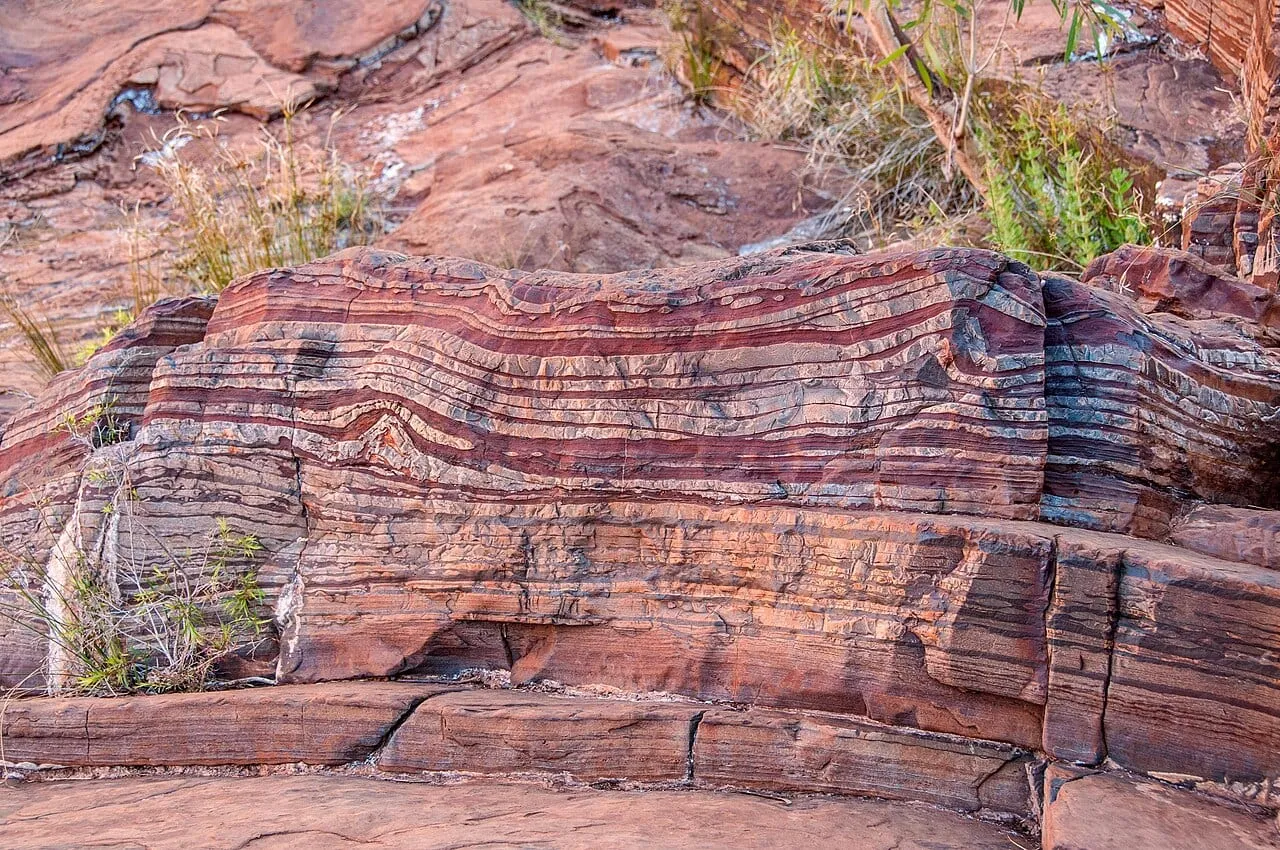
Banded iron formation
An ancient rock of alternating iron-oxide and chert bands: the record of oxygen beginning to build up on Earth, and the main source of iron ore.