Mineral
Galena
PbSGalen
The main ore of lead: a lead-grey, metallic mineral that breaks into little cubes and feels surprisingly heavy in the hand.
Also known as: Lead glance
- Ore
- Handle with care
- Important in Türkiye

In short
Galena is a shiny grey mineral made of lead and sulfur. It is the most important ore of lead and often contains a little silver, so throughout history it was also mined for silver. When it breaks it splits into small cubes, and it is very heavy for its size.
How does it form?
Galena mostly occurs in hydrothermal veins, formed where hot, metal-laden waters circulated through cracks in rock and cooled. Large lead–zinc deposits formed in cavities in carbonate rocks such as limestone and dolomite are also important sources; the deposits of Missouri in the USA are of this type. Galena is usually found together with the zinc mineral sphalerite, often alongside pyrite, chalcopyrite, calcite and baryte.
In Türkiye
Lead and silver mining in Anatolia goes back to ancient times. Slag heaps from antiquity have been found at places such as Bolkardağ (Niğde), Gümüşhane and Balya. Türkiye’s first lead mine production took place at the Balya-Karaaydın mine in Balya, Balıkesir. The Balya mine opened in the area in 2009 is the deepest lead–zinc mine in Türkiye. Keban in Elazığ is one of the silver-bearing lead deposits worked in the past.
What is it used for?
Today the most important use of lead is in batteries. Because it is heavy and dense, it is also used in shields that protect against radiation. Silver contained in galena is an important by-product of processing it. As its toxic effects became understood, lead was largely removed from paints, petrol and water pipes.
How to recognise it
- 1
It breaks in three directions at right angles; the pieces look like little cubes with stepped surfaces.
- 2
It is very heavy (specific gravity about 7.6): almost three times as heavy as a piece of quartz of the same size.
- 3
It is soft (hardness 2.5–2.75): a knife scratches it easily. The streak is lead-grey.
- 4
A fresh surface is bright silvery grey; with time it becomes dull and darker.
Fakes and imitations
What shops usually don’t tell you:
- The neat galena “cubes” often seen in collections are usually not true crystal faces but pieces broken along cleavage planes. They are natural, but should not be sold as crystals.
- Some traditional kohl (surma) eye cosmetics may still contain lead compounds such as ground galena. Lead-containing eye cosmetics can cause lead poisoning; avoid products of unknown composition.
Safety
Galena contains lead, a toxic metal that builds up in the body and can permanently damage the brain and nervous system, especially in children. According to the World Health Organization, there is no level of lead exposure that is known to be without harmful effects. Always wash your hands after touching galena, keep specimens out of children’s reach, and never put galena in your mouth, grind it, sand it or heat it. When heated it releases toxic lead fumes and sulfur dioxide.
Did you know?
The black kohl that ancient Egyptians painted around their eyes was made largely of ground galena.
In the early 20th century, some of the first radio receivers detected signals with a galena crystal touched by a fine wire (the “crystal radio”).
Where is it found?
Loading map…
- Viburnum Trend, Missouri, USA · Major depositMajor lead deposits in carbonate rocks; brilliant crystals
- Broken Hill, New South Wales, Australia · Major depositOne of the world’s largest lead–zinc–silver deposits
- Lavrion (Laurion), Attica, Greece · Historic sourceThe silver-bearing lead mines of ancient Athens
- Balya, Balıkesir, Türkiye · Known localityTürkiye’s first lead production was at Balya-Karaaydın; today the country’s deepest lead–zinc mine
- Keban, Elazığ, Türkiye · Historic sourceSilver-bearing lead deposit worked in the past
Locations are approximate to protect sites. Red dots mark places in Türkiye. Open in the big map →
Sources
- Handbook of Mineralogy: Galena · Mineralogical Society of America
- Dünyada ve Türkiye’de Kurşun · MTA Genel Müdürlüğü, Fizibilite Etütleri Daire Başkanlığı, 2023
- Lead poisoning (fact sheet) · World Health Organization
External links
Draft: awaiting expert reviewReport an error ↗
On the same step
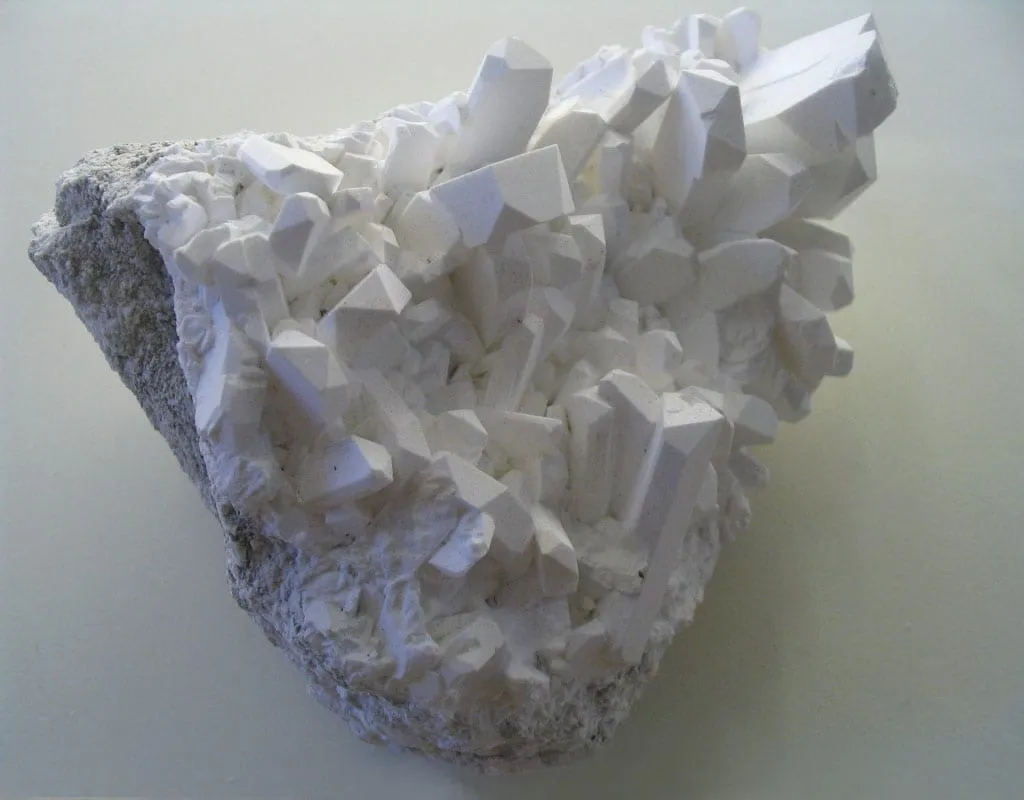
Borax (tincal)
A sodium borate that dissolves in water and crumbles to white powder in dry air; one of the world’s key tincal deposits is at Kırka in Eskişehir.
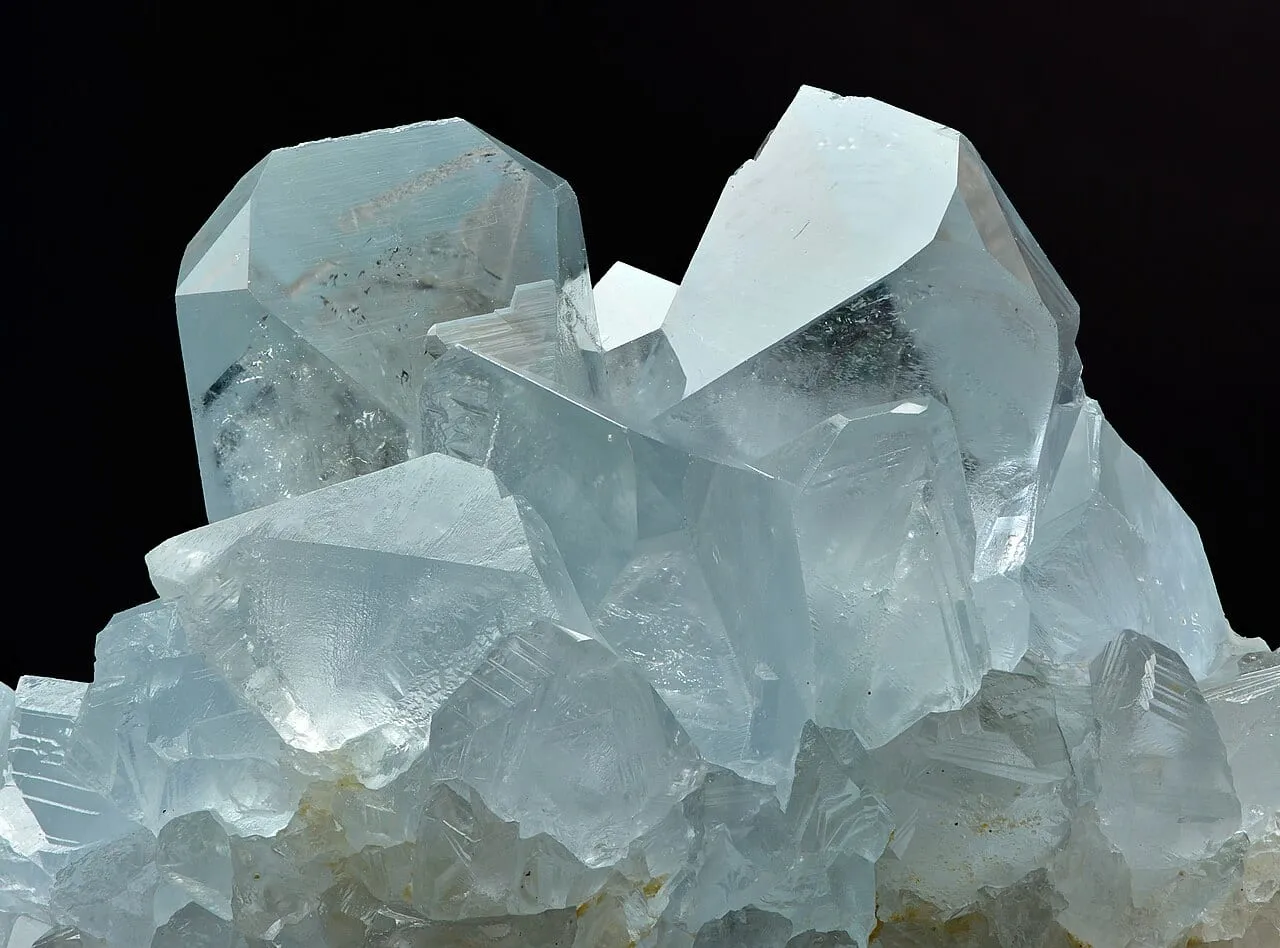
Celestine
A strontium mineral named after the sky, often forming pale blue crystals; the source of the red in fireworks.
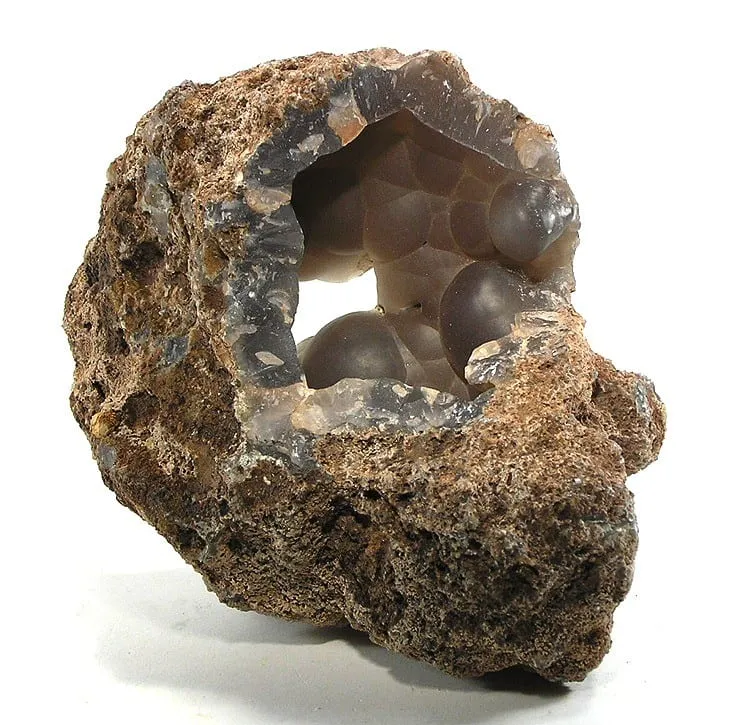
Chalcedony
A waxy-lustred stone made of quartz crystals far too small to see: the family name for agate, onyx and many other ornamental stones.