Mineral
Covellite
CuSKovelin
One of the most striking copper minerals, indigo-blue and iridescent; it is named for Niccolò Covelli, who found it on Vesuvius.
Also known as: Covelline
- Popularly: Ore and raw material
- Ore
- Important in Türkiye

In short
Covellite is a rare sulfide mineral (CuS) made of copper and sulfur. It is usually indigo-blue or darker, and often shimmers with iridescent colours running from brass-yellow to deep red. It is very soft and splits into paper-thin, flexible leaves. It mostly forms in the near-surface, air-weathered parts of copper deposits, and is also seen as an iridescent coating on other copper sulfides.
Photos

How does it form?
Covellite is mostly a secondary mineral: it forms in the near-surface “oxidation” zone of copper sulfide deposits, weathered by air and rainwater. Rarely it also forms directly (as a primary mineral) in hot-water veins; at Butte (Montana) such an occurrence has been reported at about 1,150 m depth. It is usually found with chalcopyrite, chalcocite, bornite and pyrite. The mineral was first found among the volcanic material of Mount Vesuvius.
What is it used for?
About 64 per cent of covellite’s weight is copper (64.46 in MTA’s table), and it counts as a copper ore; but it is present in small amounts in most deposits, and most copper comes from other minerals such as chalcopyrite. According to MTA, of the copper sulfide minerals, chalcocite and covellite are the best suited to leaching (separating copper from the ore with an acid solution).
Covellite also appears in scientific research: copper sulfide is studied for battery electrodes, electrocatalysis, sensor structures and superconductivity. Fine crystals are sought by collectors.
In Türkiye
In the Çayeli (Madenköy) massive sulfide deposit in Rize, beside sphalerite, chalcopyrite and pyrite, covellite, bornite, tetrahedrite, tennantite and galena are reported in the part called “black ore”. At the Uslu copper mineralisation in Sivrice, Elazığ, MTA researchers identified bornite, chalcocite, covellite, digenite and chalcopyrite. In the lead-zinc veins of İnler Yaylası (Şebinkarahisar) in Giresun, chalcocite and covellite are seen only rarely.
What determines its value?
Although about two thirds of covellite is copper, it occurs in small amounts in most deposits; as an ore, its worth depends on how much of it a deposit holds and how easily it is concentrated together with the main ore minerals. For collectors, the size and beauty of the crystals, the vividness of the colour, freedom from damage and a famous locality matter; specimens from places such as Butte (Montana) and Calabona (Sardinia) are sought. Because it is soft and brittle, undamaged specimens are scarce.
This information is educational, not buying, selling or investment advice. Value varies enormously with quality and treatment.
How to recognise it
- 1
Its colour is indigo-blue or darker, and it often shimmers with iridescent blue, purple, brass-yellow and deep red.
- 2
It is very soft (hardness 1.5–2): a fingernail scratches it.
- 3
Its perfect cleavage splits it into leaves, and the thin leaves can be bent (they are flexible).
- 4
Its streak (powder colour) is shining lead-gray.
- 5
Crystals are hexagonal plates (up to 10 cm), sometimes arranged like rosettes; it is also often massive or foliated.
Fakes and imitations
What shops usually don’t tell you:
- Other copper sulfides such as bornite and chalcopyrite also tarnish to blue-purple iridescent colours, and pieces of acid-coloured “peacock ore” can be mistaken for covellite. Covellite is softer than all of them (hardness 1.5–2), splits into leaves and leaves a shining lead-gray streak.
Safety
Covellite is a copper sulfide (about two thirds of its weight is copper). Handling it is generally harmless; wash your hands afterwards. It is very soft and brittle and crumbles easily: do not breathe the dust, because copper dust irritates the nose and throat and can cause dizziness and headaches. Do not put it in your mouth or lick it. Do not heat it; irritating sulfur dioxide gas is released. Do not put it in water to make “gem water” or an “elixir”: there is no knowing how much copper will dissolve, and too much copper causes nausea, vomiting, abdominal pain and diarrhoea, and with long exposure liver and kidney damage. Keep specimens away from children and pets.
Myths and misconceptions
MythEvery copper mineral with a blue-purple iridescent surface is covellite.
FactSuch a surface also forms on other copper sulfides such as bornite and chalcopyrite; covellite itself often occurs as an iridescent tarnish film on these minerals. True covellite is recognised by its great softness, its leaf-like cleavage and its shining lead-gray streak.
MythThe coloured stones sold as “peacock ore” are covellite.
FactThe name “peacock ore” is used for bornite and chalcopyrite, and most of the brightly coloured stones sold under it are chalcopyrite coloured with acid. Covellite is a separate, rare and very soft mineral.
What is it believed to be good for?
This section reports beliefs; it is not health information. There is no scientific evidence for these claims and no stone replaces medical treatment.
The meanings people give this stone, and who holds them:
- Crystal-therapy practitioners regard covellite as a “stone of transformation”: they claim it helps to let go of old habits and of feelings of guilt or shame.
- According to the same sources, covellite is linked to the third-eye chakra and strengthens intuition.
- Some crystal-therapy pages say that covellite improves circulation and oxygen intake and helps against fatigue.
What science says
There is no scientific evidence that covellite transforms emotions, strengthens intuition or improves circulation and oxygen intake. Covellite is a copper sulfide: it should not be put in the mouth or in water to make “gem water” or an “elixir”; too much copper causes nausea, vomiting and, in time, liver and kidney damage. Persistent fatigue or circulation problems call for a doctor.
Did you know?
Its name comes from the Italian scientist Niccolò Covelli (1790–1829), who studied the volcanic material of Vesuvius; the mineral was named for him in 1832.
On many copper sulfide minerals it also appears as a thin iridescent tarnish film.
Copper sulfide (CuS), the compound of covellite, becomes a superconductor below about 1.6 kelvin (−271.5 °C); it is also used in research on battery electrodes and electrocatalysis.
Where is it found?
Loading map…
- Mount Vesuvius, Campania, Italy · Type localityThe type locality; Niccolò Covelli found covellite in the volcanic material of Vesuvius
- Calabona mine, Alghero, Sardinia, Italy · Known localityThe Handbook of Mineralogy mentions large covellite crystals from the Calabona mine near Alghero (coordinate is the town of Alghero)
- Bor, Serbia · Known localityA copper-mining area the Handbook of Mineralogy names for covellite and one of the analysed samples’ sources (coordinate is the town centre)
- Leogang, Salzburg, Austria · Known localityA place the Handbook of Mineralogy names for covellite (coordinate is the settlement centre)
- Butte, Montana, USA · Major depositFine crystals in the primary ore according to the Handbook of Mineralogy; Wikipedia reports primary covellite in hot-water veins at about 1,150 m depth. The coordinate is the Berkeley Pit in the Butte mining district
- Summitville, Rio Grande County, Colorado, USA · Known localityA place the Handbook of Mineralogy names for covellite (coordinate is the Summitville mine)
- Kennecott, Alaska, USA · Known localityA former copper-mining camp, abandoned today, that the Handbook of Mineralogy names for covellite
- Çayeli (Madenköy), Rize, Türkiye · Known localityCovellite is reported in the “black ore” of the massive sulfide deposit, together with bornite, tetrahedrite, tennantite and galena (coordinate is the district centre)
- Uslu, Sivrice, Elazığ, Türkiye · Known localityBornite, chalcocite, covellite and digenite are reported from the Uslu copper mineralisation about 30 km south-west of Sivrice (coordinate is the Sivrice district centre)
- İnler Yaylası, Şebinkarahisar, Giresun, Türkiye · Known localityChalcocite and covellite are reported rarely in the lead-zinc veins (coordinate is the Şebinkarahisar district centre)
Locations are approximate to protect sites. Red dots mark places in Türkiye. Open in the big map →
Frequently asked questions
What is covellite?
Covellite is a rare sulfide mineral (CuS) made of copper and sulfur. It is usually indigo-blue or darker, and often shimmers with iridescent colours running from brass-yellow to deep red. It is very soft and splits into paper-thin, flexible leaves. It mostly forms in the near-surface, air-weathered parts of copper deposits, and is also seen as an iridescent coating on other copper sulfides.
What is covellite used for?
About 64 per cent of covellite’s weight is copper (64.46 in MTA’s table), and it counts as a copper ore; but it is present in small amounts in most deposits, and most copper comes from other minerals such as chalcopyrite. According to MTA, of the copper sulfide minerals, chalcocite and covellite are the best suited to leaching (separating copper from the ore with an acid solution). Covellite also appears in scientific research: copper sulfide is studied for battery electrodes, electrocatalysis, sensor structures and superconductivity. Fine crystals are sought by collectors.
How hard is covellite?
It has a hardness of 1.5–2 on the Mohs scale. It is soft enough to scratch with a fingernail. Its specific gravity is 4.6–4.76 g/cm³.
Where is covellite found?
Its best-known localities: Mount Vesuvius, Campania, Italy; Butte, Montana, USA; Calabona mine, Alghero, Sardinia, Italy; Bor, Serbia; Leogang, Salzburg, Austria.
Where is covellite found in Türkiye?
Known localities in Türkiye: Çayeli (Madenköy), Rize, Türkiye; Uslu, Sivrice, Elazığ, Türkiye; İnler Yaylası, Şebinkarahisar, Giresun, Türkiye.
How can you tell if covellite is real?
Its colour is indigo-blue or darker, and it often shimmers with iridescent blue, purple, brass-yellow and deep red. It is very soft (hardness 1.5–2): a fingernail scratches it. Its perfect cleavage splits it into leaves, and the thin leaves can be bent (they are flexible). Other copper sulfides such as bornite and chalcopyrite also tarnish to blue-purple iridescent colours, and pieces of acid-coloured “peacock ore” can be mistaken for covellite. Covellite is softer than all of them (hardness 1.5–2), splits into leaves and leaves a shining lead-gray streak.
Is covellite valuable?
On the “street to diamond” value ladder it sits on step 4 of nine: Fine dimension stone and ore. Although about two thirds of covellite is copper, it occurs in small amounts in most deposits; as an ore, its worth depends on how much of it a deposit holds and how easily it is concentrated together with the main ore minerals. For collectors, the size and beauty of the crystals, the vividness of the colour, freedom from damage and a famous locality matter; specimens from places such as Butte (Montana) and Calabona (Sardinia) are sought. Because it is soft and brittle, undamaged specimens are scarce.
What is covellite good for?
Crystal-therapy practitioners regard covellite as a “stone of transformation”: they claim it helps to let go of old habits and of feelings of guilt or shame. According to the same sources, covellite is linked to the third-eye chakra and strengthens intuition. Some crystal-therapy pages say that covellite improves circulation and oxygen intake and helps against fatigue. There is no scientific evidence that covellite transforms emotions, strengthens intuition or improves circulation and oxygen intake. Covellite is a copper sulfide: it should not be put in the mouth or in water to make “gem water” or an “elixir”; too much copper causes nausea, vomiting and, in time, liver and kidney damage. Persistent fatigue or circulation problems call for a doctor. This section reports beliefs; it is not health information. There is no scientific evidence for these claims and no stone replaces medical treatment.
Is covellite dangerous?
Covellite is a copper sulfide (about two thirds of its weight is copper). Handling it is generally harmless; wash your hands afterwards. It is very soft and brittle and crumbles easily: do not breathe the dust, because copper dust irritates the nose and throat and can cause dizziness and headaches. Do not put it in your mouth or lick it. Do not heat it; irritating sulfur dioxide gas is released. Do not put it in water to make “gem water” or an “elixir”: there is no knowing how much copper will dissolve, and too much copper causes nausea, vomiting, abdominal pain and diarrhoea, and with long exposure liver and kidney damage. Keep specimens away from children and pets.
Sources
- Handbook of Mineralogy: Covellite · Mineralogical Society of America
- Covellite · Wikipedia
- Türkiye ve Dünyada Bakır · MTA Genel Müdürlüğü, Fizibilite Etütleri Dairesi Başkanlığı, 2021
- Copper (fact sheet: ToxFAQs) · Agency for Toxic Substances and Disease Registry (ATSDR), U.S. CDC
- Rize-Çayeli-Madenköy Bakır-Çinko-Kurşun Kompleks Sülfürlü Cevherinin Flotasyonla Zenginleştirilmesinde Yeni Bir Yöntem: SO2-Sıcak Flotasyon (H. Uzun, B. Çevirmen) · Maden Mühendisleri Odası arşivi (maden.org.tr)
- Elazığ-Sivrice-Uslu Cu Cevherleşmesinin Jeolojik Özellikleri (A. Aydın, Ö. Dumanlılar, M. Yığmatepe) · 56. Türkiye Jeoloji Kurultayı bildiri özü (Maden Yatakları oturumu)
- İnler Yaylası (Şebinkarahisar-Giresun) Kurşun-Çinko Yataklarında Sıvı Kapanım ve Kararlı İzotoplar (O ve H) Jeokimyası İncelemeleri (A. Gökçe, G. Bozkaya) · 56. Türkiye Jeoloji Kurultayı bildiri özü (Maden Yatakları oturumu)
- Mount Vesuvius · Wikipedia
- Alghero · Wikipedia
- Bor, Serbia · Wikipedia
- Leogang · Wikipedia
- Berkeley Pit · Wikipedia
- Summitville mine · Wikipedia
- Kennecott, Alaska · Wikipedia
- Sivrice · Wikipedia
- Şebinkarahisar · Wikipedia
External links
Draft: awaiting expert reviewReport an error ↗
On the same step
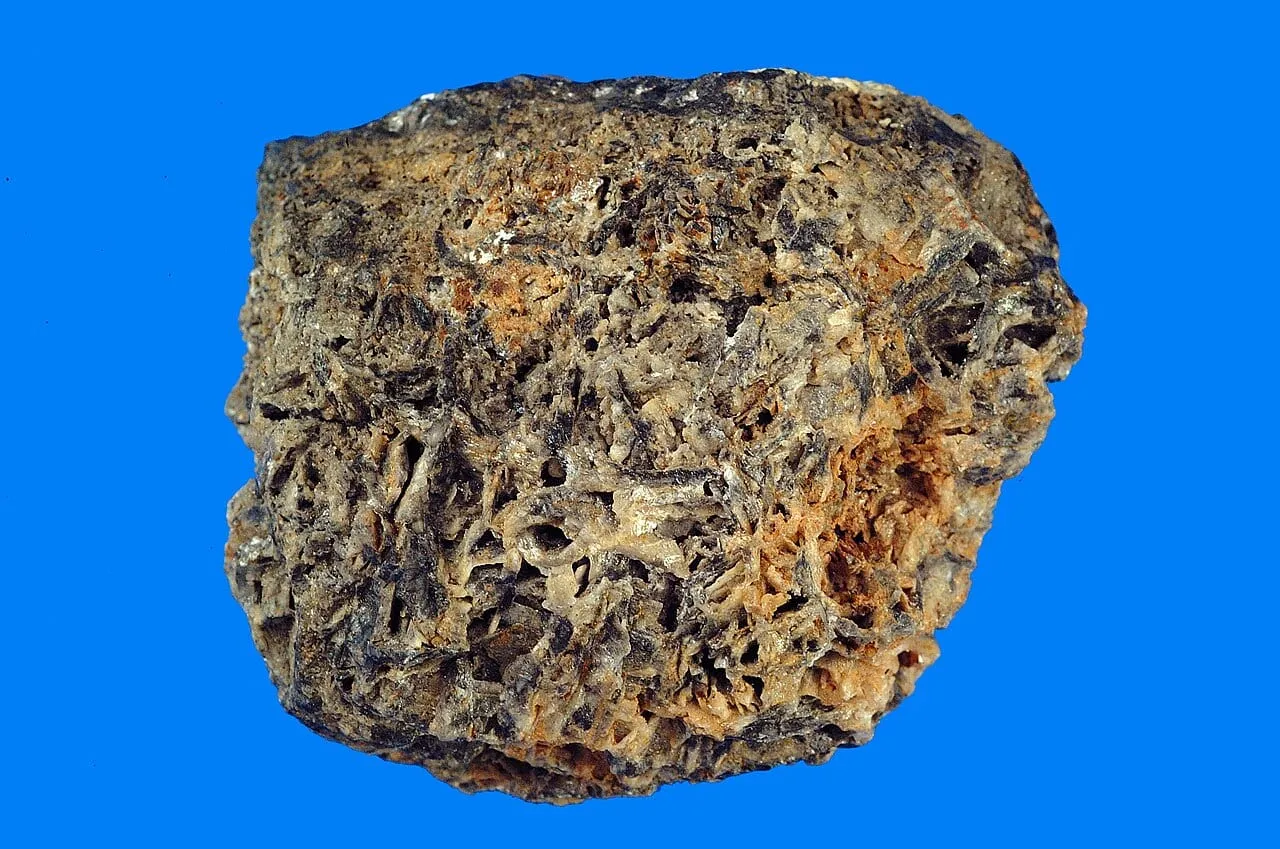
Anglesite
A heavy lead sulfate mineral with a diamond-like shine that grows as a crust around galena; it is named after the island of Anglesey in Wales.
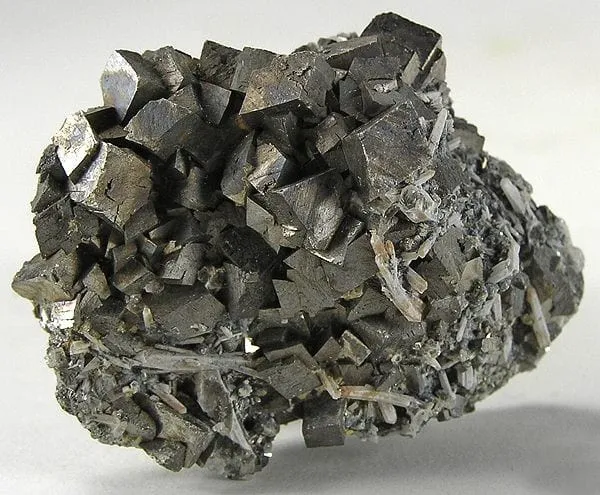
Arsenopyrite
A widespread silvery-grey sulfide containing arsenic: it smells of garlic when struck and is poisonous.
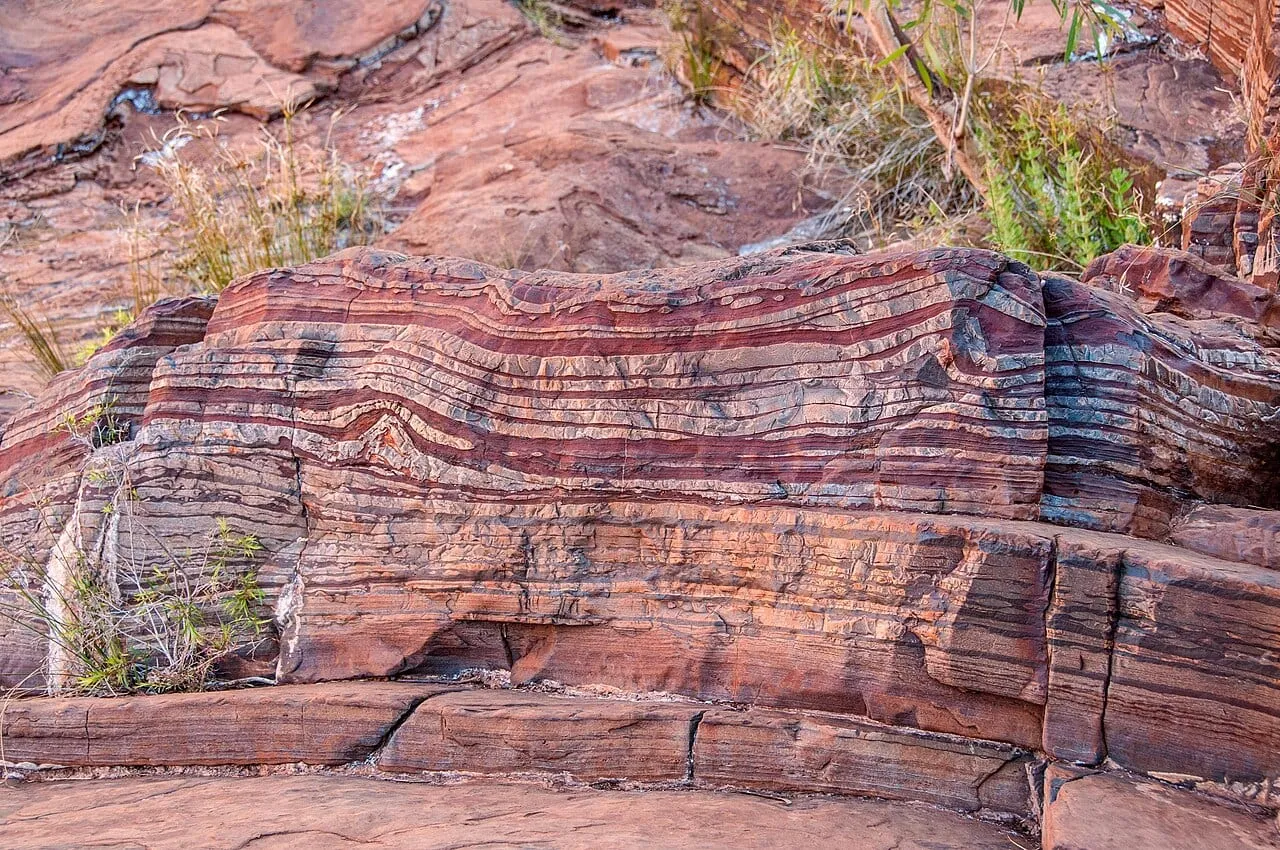
Banded iron formation
An ancient rock of alternating iron-oxide and chert bands: the record of oxygen beginning to build up on Earth, and the main source of iron ore.