Mineral
Borax (tincal)
Na₂B₄O₅(OH)₄·8H₂OBoraks (tinkal)
A sodium borate that dissolves in water and crumbles to white powder in dry air; one of the world’s key tincal deposits is at Kırka in Eskişehir.
Also known as: Tincal (crude borax ore) · Tincalconite (the white, dehydrated alteration product)
- Ore
- Industrial
- Important in Türkiye

In short
Borax is a soft mineral made of sodium, boron and a lot of water. It forms in salty lakes in dry regions as the water evaporates. Raw borax from the mine is called tincal. It is a raw material for glass, detergents, fertilisers and many other industrial products.
How does it form?
Borax is an evaporite mineral that forms when boron-rich water evaporates in closed salt lakes in volcanic regions. It still forms today in some salt lakes in Tibet. In the past, borax collected from lakes in Tibet and Ladakh reached distant lands along trade routes. Large commercial deposits, however, lie between clay layers of ancient lakes that dried up millions of years ago.
What is it used for?
Borax products made at Kırka are used in a wide range of areas, including glass and glass fibre, detergents, textiles, adhesives, agrochemicals, fertilisers and fire extinguishers. Borax also serves as a flux in soldering and welding metals, dissolving oxides on the surface.
In Türkiye
According to Eti Maden, the tincal deposit at Kırka in the Seyitgazi district of Eskişehir has the largest share of the world’s tincal reserves and makes up about a quarter of Türkiye’s boron reserves. It has been mined since 1970 and is operated today by Eti Maden. Another of the world’s largest borax sources is the Boron deposit in California, USA.
How to recognise it
- 1
It dissolves in water: a small piece in a glass of water gradually disappears. Colemanite does not dissolve easily.
- 2
It is very soft (hardness 2–2.5) and light (specific gravity about 1.7).
- 3
Fresh crystals are glassy and translucent; in dry air they lose water and turn, from the surface inwards, into a white, chalky powder (tincalconite).
- 4
Its crystals are usually short to long prisms.
Fakes and imitations
What shops usually don’t tell you:
- Crystals can easily be grown at home or in a laboratory from a borax solution. They are chemically the same but are not natural mineral specimens.
- White, powdery specimens labelled “borax” in collections have usually lost water and turned into tincalconite.
Safety
Do not swallow borax or breathe in its dust; it can irritate the eyes and airways. In the European Union, borax is classified as a substance that may damage fertility or the unborn child (Repr. 1B). Keep it out of the reach of children, and make sure children’s experiments are supervised by adults.
Did you know?
Museums and collectors usually keep borax specimens in airtight containers; otherwise clear crystals can soon turn into white powder.
Where is it found?
Loading map…
- Kırka, Seyitgazi, Eskişehir, Türkiye · Major depositThe deposit with the largest share of world tincal reserves, according to Eti Maden
- Boron, California, USA · Major depositKramer borate deposit; a huge open pit
- Searles Lake, California, USA · Known localityDry-lake deposit worked commercially for borates
- Tibetan Plateau, China · Historic sourceSalt lakes where borax was first collected historically
Locations are approximate to protect sites. Red dots mark places in Türkiye. Open in the big map →
Sources
- Handbook of Mineralogy: Borax · Mineralogical Society of America
- Kırka · Eti Maden
- Mineral Commodity Summaries 2026: Boron · U.S. Geological Survey, 2026
- Candidate List of substances of very high concern for Authorisation (disodium tetraborate) · European Chemicals Agency (ECHA)
External links
Draft: awaiting expert reviewReport an error ↗
On the same step
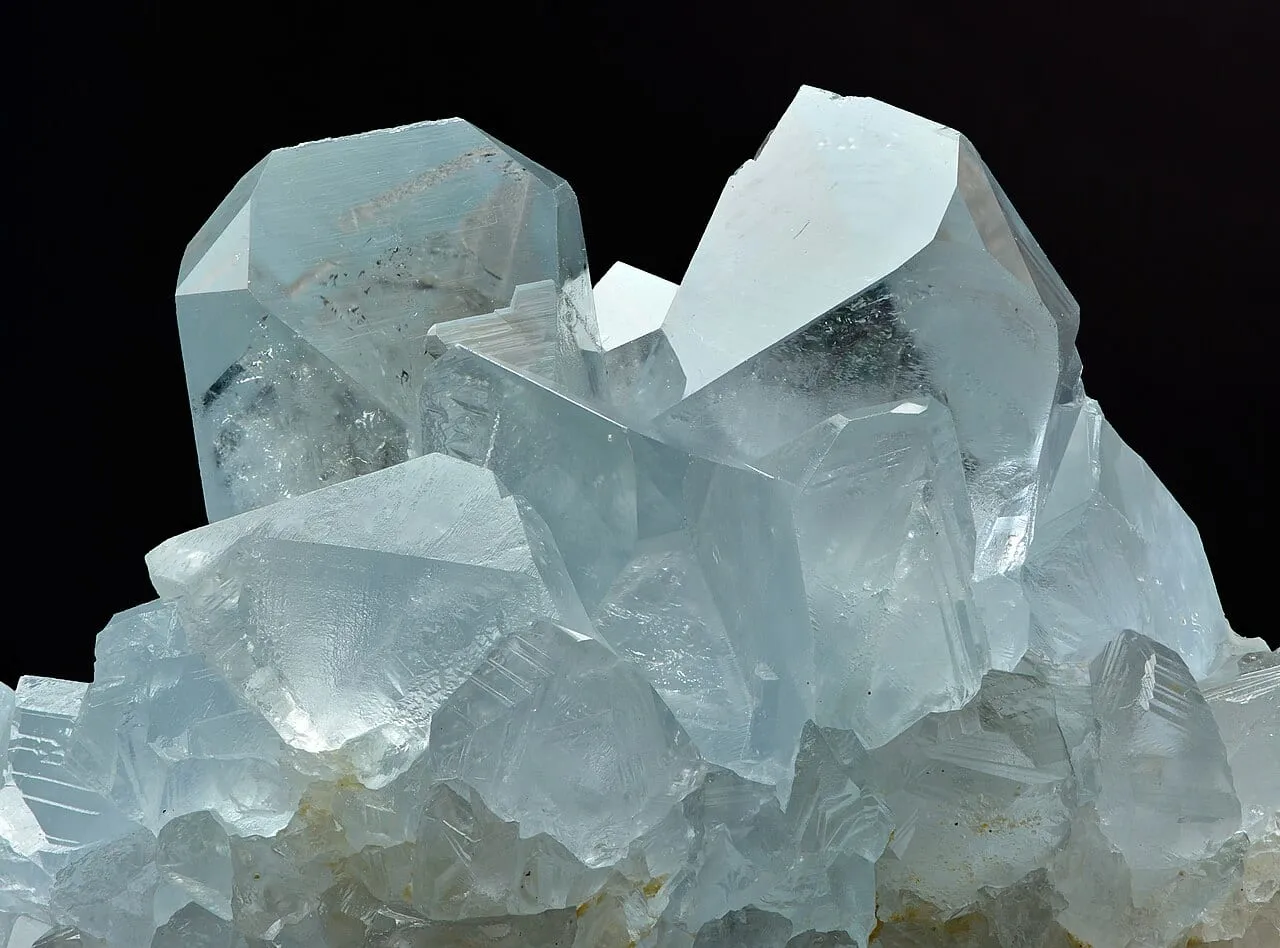
Celestine
A strontium mineral named after the sky, often forming pale blue crystals; the source of the red in fireworks.
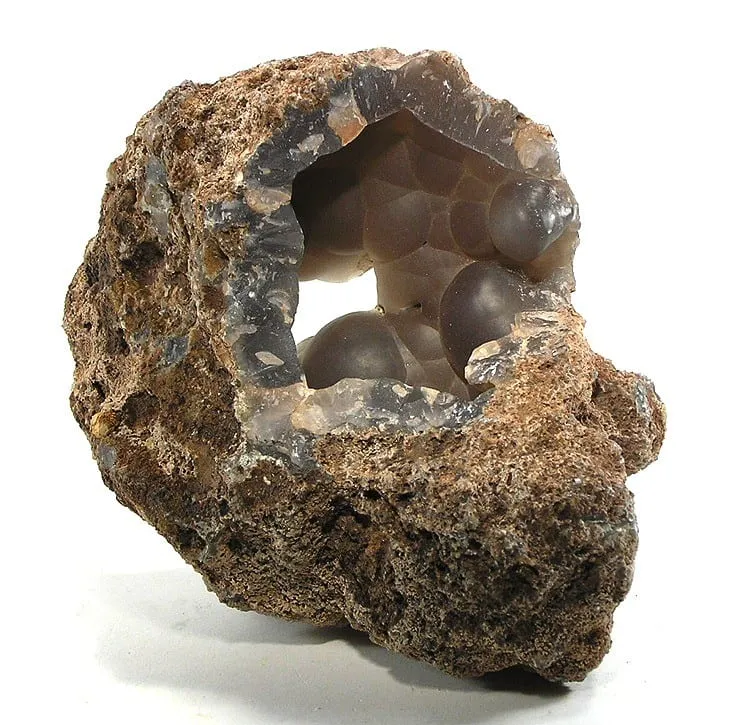
Chalcedony
A waxy-lustred stone made of quartz crystals far too small to see: the family name for agate, onyx and many other ornamental stones.
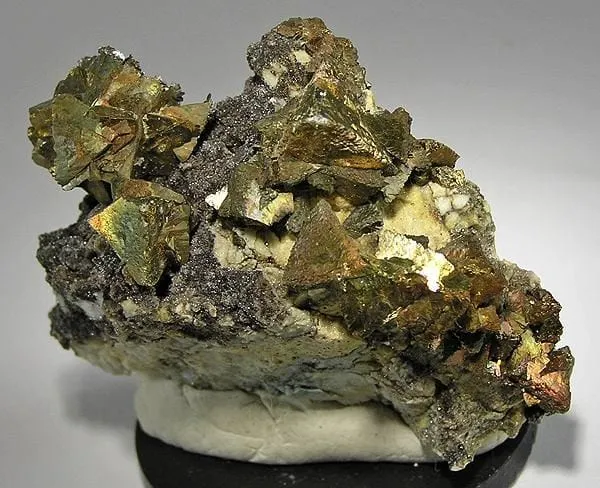
Chalcopyrite
The world’s most important source of copper: a brass-yellow sulfide that resembles gold and often tarnishes to rainbow colours.