Mineral
Variscite
AlPO₄·2H₂OVarisit
A green aluminium phosphate that looks like turquoise; made into beads since the Neolithic and named after the Vogtland in Germany.
Also known as: Utahlite (old name) · Variquoise (trade name for material that may be turquoise or variscite)
- Popularly: Semi-precious stone
- Gemstone
- Ornamental

In short
Variscite is a phosphate mineral containing aluminium, phosphorus and water (AlPO₄·2H₂O). Many people confuse it with turquoise, but variscite is usually greener. Its green colour comes from tiny amounts of trivalent chromium. It mostly occurs as fine-grained masses, nodules and crusts and is often veined with white.
Photos

How does it form?
Variscite is a secondary mineral: in the near-surface environment, phosphate-bearing waters react with aluminium-rich rocks and variscite is deposited directly from them. It mostly occurs as fine-grained masses, nodules, cavity fillings and crusts. On islands and in caves the phosphate can also come from the breakdown of guano (bird and bat droppings).
What is it used for?
- Jewellery and ornamental stone: Cabochons, beads and carvings are made from it; because of its intense green it is often used in silversmithing in place of turquoise.
- In history: Beads and pendants have been made from it since the Neolithic, and it was carved in Roman times as an imitation of emerald.
- Collecting: Nodules from Utah and crystallised specimens from some Nevada mines attract collectors.
Where does the colour come from?
Pure variscite is colourless. Its green comes from tiny amounts of trivalent chromium in the structure. The white veins are mostly crandallite, a calcium-aluminium phosphate mineral; the black web patterns of Nevada variscite come from the stone’s matrix.
The stone confused with turquoise
Variscite and turquoise look very much alike because of their intense green-blue colours and veined appearance; both occur as nodules and crusts and both are used in silver jewellery. Variscite is usually greener and turquoise bluer, but in-between shades are common. Because variscite is less well known than turquoise, it has at times been sold as turquoise or presented under vague names such as “variquoise”.
What determines its value?
Its value depends on the vividness and saturation of the colour (an even, deep emerald green is the most sought-after), the evenness of the vein and matrix pattern, and how well it takes a polish. Stones with white veins or a black web pattern are also liked for their patterns. Because it can be confused with turquoise and sold under names such as “variquoise”, it matters that the seller gives the stone's correct name.
This information is educational, not buying, selling or investment advice. Value varies enormously with quality and treatment.
How to recognise it
- 1
Its colour ranges from pale green through emerald green to bluish green; the lustre is between glassy and waxy. It often shows white veins (of the mineral crandallite).
- 2
Its hardness is between 3.5 and 4.5; a steel knife scratches it. Its specific gravity is about 2.6.
- 3
It is usually greener than turquoise, but bluish-green specimens are mistaken for turquoise and are hard to tell apart by eye; a gem laboratory is needed for a certain answer.
- 4
Variscite from Nevada, with its black spiderweb matrix, especially resembles green turquoise.
Fakes and imitations
What shops usually don’t tell you:
- Confusion with turquoise: Nevada variscite with black web veining is often taken for green turquoise. Material that may be turquoise or may be variscite has at times been sold under names such as “variquoise”.
Myths and misconceptions
MythStones called green turquoise are turquoise.
FactSome of them are variscite. Turquoise is a copper-bearing aluminium phosphate, while variscite is an aluminium phosphate without copper; they are separate minerals, and their colour, vein pattern and hardness can be close.
MythVariscite is a newly discovered, modern ornamental stone.
FactVariscite has been used in Europe since at least the Neolithic for beads and pendants and was carved in Roman times as an imitation of emerald. The mineral itself was described in 1837.
What is it believed to be good for?
This section reports beliefs; it is not health information. There is no scientific evidence for these claims and no stone replaces medical treatment.
The meanings people give this stone, and who holds them:
- Some news websites in Türkiye write that variscite is a “courage stone” that gives its wearer courage and confidence, brings peace and harmony to the heart, and protects against bad situations.
- The same articles say the stone reduces nervousness and stress, increases hope, and brings sleep to people who cannot sleep from tension if placed under the pillow.
- The same articles claim variscite is good for stomach complaints and bloating and has beneficial effects in some men's problems; crystal-therapy practitioners also link it to the heart chakra.
What science says
There is no scientific evidence that variscite gives courage, confidence or sleep, or that it helps the stomach or any other organ; stomach complaints, insomnia and sexual problems should be assessed by a doctor. Putting the stone in water and drinking it has no benefit either.
Did you know?
In Brittany, France, Neolithic burial mounds dated to between 4500 and 4000 BC have yielded many beads and pendants; the green stone they were made of was identified as variscite in the 19th century.
In Roman times variscite was carved into eight-sided prisms, drilled lengthways, to imitate six-sided emerald crystals as pendants.
Its name comes from Variscia, the old name of the Vogtland in Germany; the Variscan mountain-building event takes its name from the same word.
Where is it found?
Loading map…
- Vogtland (Messbach, near Oelsnitz), Saxony, Germany · Type localityThe district where the mineral was first found; its name comes from Variscia, the old name of the Vogtland, and it was described in 1837
- Gavà, Barcelona, Spain · Historic sourceOne of three Spanish deposits from which variscite was taken for beads and pendants in the Neolithic
- Encinasola, Huelva, Spain · Historic sourceOne of the Neolithic variscite deposits
- Lucin, Utah, USA · Major depositThe classic source of the variscite once called “utahlite”, used in jewellery
- Fairfield, Utah, USA · Major depositThe Little Green Monster mine in Clay Canyon yields large nodules of variscite
- Candelaria Hills, Esmeralda County, Nevada, USA · Known localityThe area that produces Nevada variscite with black spiderweb veining
Locations are approximate to protect sites. Red dots mark places in Türkiye. Open in the big map →
Frequently asked questions
What is variscite?
Variscite is a phosphate mineral containing aluminium, phosphorus and water (AlPO₄·2H₂O). Many people confuse it with turquoise, but variscite is usually greener. Its green colour comes from tiny amounts of trivalent chromium. It mostly occurs as fine-grained masses, nodules and crusts and is often veined with white.
What is variscite used for?
Jewellery and ornamental stone: Cabochons, beads and carvings are made from it; because of its intense green it is often used in silversmithing in place of turquoise. In history: Beads and pendants have been made from it since the Neolithic, and it was carved in Roman times as an imitation of emerald. Collecting: Nodules from Utah and crystallised specimens from some Nevada mines attract collectors.
How hard is variscite?
It has a hardness of 3.5–4.5 on the Mohs scale. A fingernail cannot scratch it, but a steel knife can. Its specific gravity is 2.57–2.61 g/cm³.
Where is variscite found?
Its best-known localities: Vogtland (Messbach, near Oelsnitz), Saxony, Germany; Lucin, Utah, USA; Fairfield, Utah, USA; Gavà, Barcelona, Spain; Encinasola, Huelva, Spain.
How can you tell if variscite is real?
Its colour ranges from pale green through emerald green to bluish green; the lustre is between glassy and waxy. It often shows white veins (of the mineral crandallite). Its hardness is between 3.5 and 4.5; a steel knife scratches it. Its specific gravity is about 2.6. It is usually greener than turquoise, but bluish-green specimens are mistaken for turquoise and are hard to tell apart by eye; a gem laboratory is needed for a certain answer. Confusion with turquoise: Nevada variscite with black web veining is often taken for green turquoise. Material that may be turquoise or may be variscite has at times been sold under names such as “variquoise”.
Is variscite valuable?
On the “street to diamond” value ladder it sits on step 5 of nine: Ornamental stone. Its value depends on the vividness and saturation of the colour (an even, deep emerald green is the most sought-after), the evenness of the vein and matrix pattern, and how well it takes a polish. Stones with white veins or a black web pattern are also liked for their patterns. Because it can be confused with turquoise and sold under names such as “variquoise”, it matters that the seller gives the stone's correct name.
What is variscite good for?
Some news websites in Türkiye write that variscite is a “courage stone” that gives its wearer courage and confidence, brings peace and harmony to the heart, and protects against bad situations. The same articles say the stone reduces nervousness and stress, increases hope, and brings sleep to people who cannot sleep from tension if placed under the pillow. The same articles claim variscite is good for stomach complaints and bloating and has beneficial effects in some men's problems; crystal-therapy practitioners also link it to the heart chakra. There is no scientific evidence that variscite gives courage, confidence or sleep, or that it helps the stomach or any other organ; stomach complaints, insomnia and sexual problems should be assessed by a doctor. Putting the stone in water and drinking it has no benefit either. This section reports beliefs; it is not health information. There is no scientific evidence for these claims and no stone replaces medical treatment.
Sources
- Handbook of Mineralogy: Variscite · Mineralogical Society of America
- Variscite · Wikipedia
- Variscite · Webmineral
- Gavà · Wikipedia
- Oelsnitz, Vogtland · Wikipedia
- Fairfield, Utah · Wikipedia
- Varisit Taşı Nedir Ve Ne İşe Yarar? Variscite (Cesaret) Taşı Nasıl Anlaşılır Ve Kullanılır? Varisit Taşı Faydaları Ve Özellikleri · Hürriyet Mahmure
External links
Draft: awaiting expert reviewReport an error ↗
On the same step
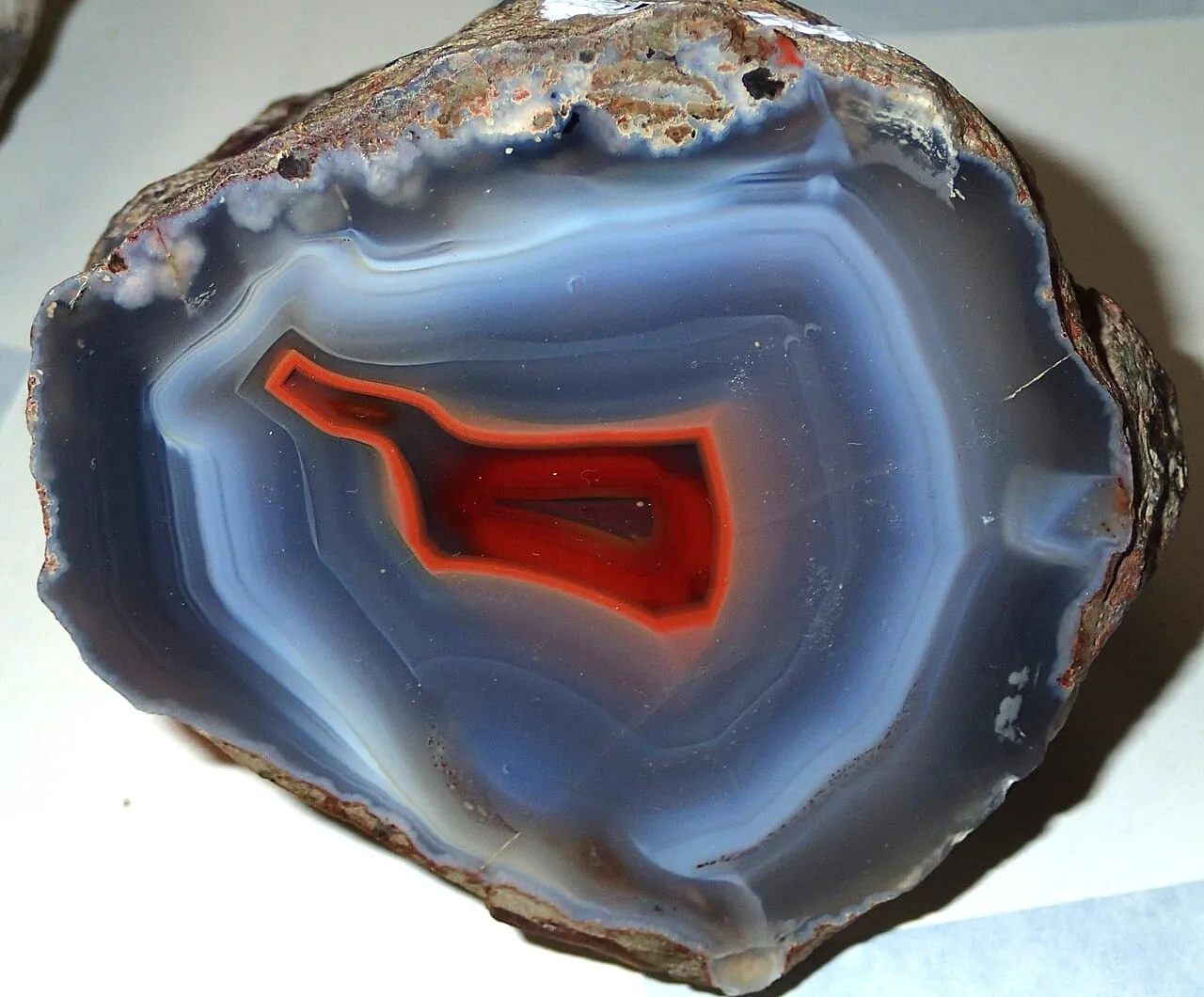
Agate
The banded variety of chalcedony: it grows layer by layer in hollows in volcanic rock and shows a new pattern every time it is cut.
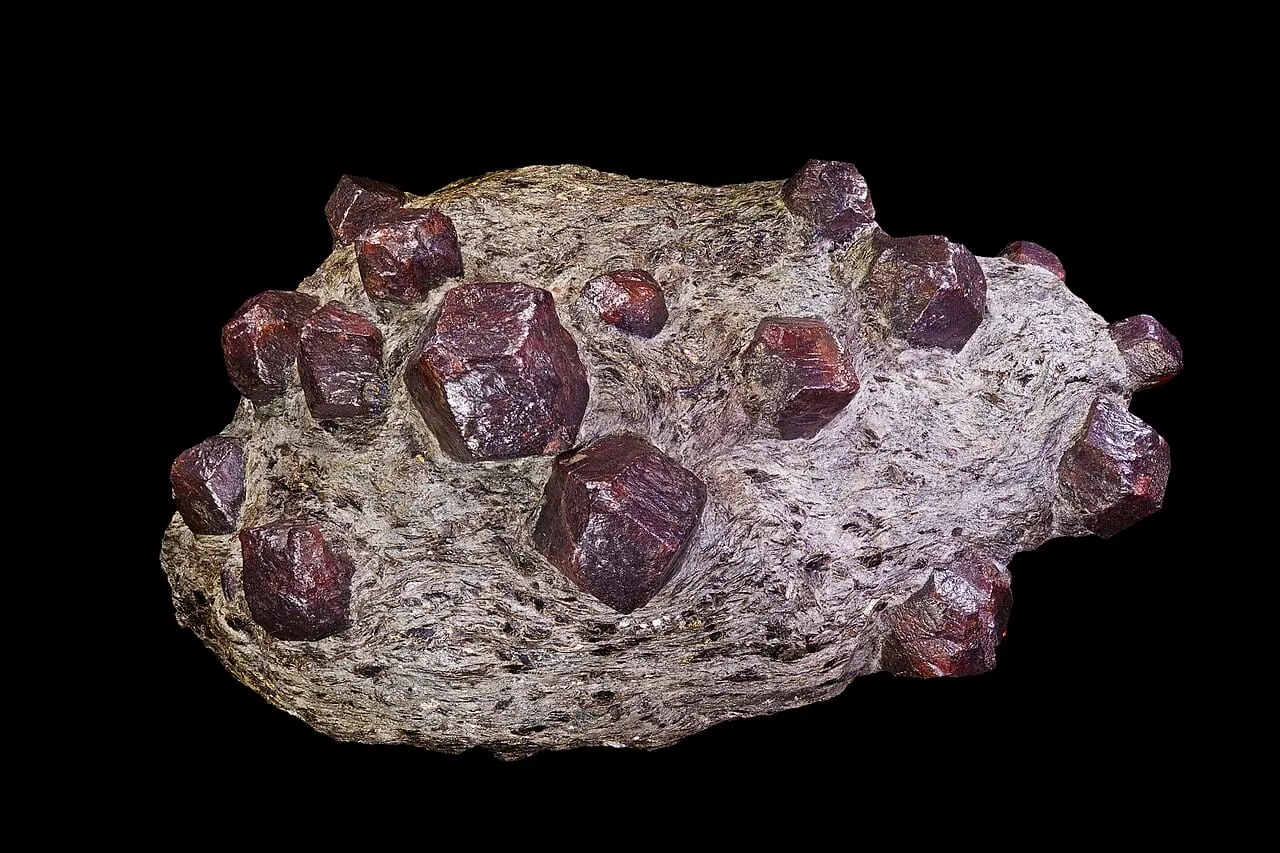
Almandine
The commonest garnet: a deep red, iron-rich stone named after the ancient city of Alabanda in Anatolia, used in jewellery and in sandpaper alike.
Amazonite
A turquoise-like green-blue feldspar: a variety of microcline worn as jewellery for more than three thousand years, but it can release lead.