Mineral
Vesuvianite
Ca₁₀(Mg,Fe)₂Al₄(SiO₄)₅(Si₂O₇)₂(OH,F)₄Vezüvyanit (idokras)
A many-coloured skarn mineral, green to blue, named after Mount Vesuvius; its jade-like massive variety is called “californite”.
Also known as: Idocrase · Californite (jade-like variety, also called California jade) · Cyprine (sky-blue variety)
- Popularly: Semi-precious stone
- Gemstone
- Ornamental
- Important in Türkiye

In short
Vesuvianite (idocrase) is a silicate mineral containing calcium, magnesium and aluminium. It takes its name from the crystals first found on Mount Vesuvius; Abraham Gottlob Werner described it under this name in 1795. Its colours range from yellow, green and brown to blue, violet and pink. It usually forms short pyramidal or long prismatic crystals in skarns, the rocks formed where limestone meets magma; its jade-like massive variety is called “californite” and its sky-blue variety “cyprine”.
Photos

How does it form?
Vesuvianite mostly forms in skarns: it appears as limestones are transformed by the heat and fluids of a magma, or by regional metamorphism. It is also found in garnetised gabbros, in mafic and ultramafic rocks and in serpentinites, and is uncommon in alkaline igneous rocks. It was first found on Mount Vesuvius, in blocks of rock within or beside the lavas.
What is it used for?
- Ornamental stone: Transparent, clean green and yellow crystals are cut as gemstones; the jade-like massive californite is polished and used as an ornamental and carving material.
- Collecting: Well-formed, many-faced crystals are sought after for mineral collections.
- Science: As part of the mineral assemblage in skarn deposits, it helps in understanding the conditions of rocks formed where limestone meets magma.
In Türkiye
In the Black Sea region, in the Camiboğazı skarn in the Gümüşhane area, well-crystallised vesuvianite, phlogopite and diopside occur where the Eocene Zigana Granitoid meets dolomitic limestone. According to the research, the skarn minerals formed at temperatures between 330 and 600 °C.
What determines its value?
As an ornamental stone the value of vesuvianite depends on colour (vivid green and the rarer blue or violet tones), translucency and clarity, quality of cut and size; the name of the locality also matters. In jade-like massive californite, evenness of colour and quality of polish are sought. Collectors value well-formed, bright, undamaged crystals, especially from famous localities such as the Jeffrey Mine in Canada.
This information is educational, not buying, selling or investment advice. Value varies enormously with quality and treatment.
How to recognise it
- 1
Tetragonal crystals: short pyramids or long prisms with a square cross-section; a single crystal can show nearly 30 different faces.
- 2
Its hardness is 6–7: a steel knife cannot scratch it. Its colour is mostly green, yellowish green or brown, and often changes in zones.
- 3
Its lustre is between glassy and resinous; its cleavage is very poor, and it breaks with a subconchoidal surface.
- 4
It is found in skarns, formed where limestone meets magma, together with garnet (grossular), diopside, wollastonite, epidote and calcite.
Fakes and imitations
What shops usually don’t tell you:
- The jade-like massive vesuvianite (californite) is sold as “California jade” or “American jade”; these names are misleading, because it is not true jade (nephrite or jadeite).
Myths and misconceptions
Myth“California jade” is a jade.
FactThe jade-like stone sold under this name is the massive variety of vesuvianite (californite); it is neither nephrite nor jadeite. It looks green like jade but is a different mineral.
MythVesuvianite is found only around Mount Vesuvius.
FactIt is named after Vesuvius, but fine crystals occur in skarn deposits all over the world: from Italy to Canada, Russia, the USA and Pakistan, and even Türkiye.
What is it believed to be good for?
This section reports beliefs; it is not health information. There is no scientific evidence for these claims and no stone replaces medical treatment.
The meanings people give this stone, and who holds them:
- Today crystal-therapy sources present vesuvianite as a stone that calms anger, claiming that it brings emotional balance and disperses repetitive negative thoughts.
- The same sources link the stone with the heart chakra, say that it makes it easier to express love, and note that it has been given as a gift to newlyweds.
What science says
None of these claims can be measured or tested; it has not been shown that a stone calms anger or disperses thoughts. If anger or anxiety makes daily life difficult, support should be sought from a professional. The truly interesting thing about vesuvianite is that it crystallised in rock blocks within or beside the lavas of Vesuvius, in rocks transformed by the heat of magma.
Did you know?
It has two names: Abraham Gottlob Werner named it “vesuvianite” in 1795 after Vesuvius, and René Just Haüy gave it the name “idocrase” in 1796; today both are in use.
The name “idocrase” is derived from the Greek words for “form” and “mixture”.
Where is it found?
Loading map…
- Vesuvius and Monte Somma, Campania, Italy · Type localityType locality; the mineral takes its name from the fine crystals found at Vesuvius
- Ala Valley, Piedmont, Italy · Known localityThe Ala Valley near Turin is known for fine vesuvianite crystals
- Jeffrey Mine, Val-des-Sources (Asbestos), Québec, Canada · Major deposit
- Mont Saint-Hilaire, Québec, Canada · Known locality
- Vilyuy River area, Sakha (Yakutia), Russia · Known localityThe “wiluite” variety is named after this area; the point marks the Chernyshevsky area
- Alchuri, Shigar Valley, Gilgit-Baltistan, Pakistan · Known locality
- Franklin, Sussex County, New Jersey, USA · Known localityThe blue “cyprine” variety
- Zermatt, Valais, Switzerland · Known locality
- Camiboğazı skarn deposit, Gümüşhane, Türkiye · Known localityWell-crystallised vesuvianite in skarn at the contact of the Zigana Granitoid with dolomitic limestone; the point marks the Gümüşhane area
Locations are approximate to protect sites. Red dots mark places in Türkiye. Open in the big map →
Frequently asked questions
What is vesuvianite?
Vesuvianite (idocrase) is a silicate mineral containing calcium, magnesium and aluminium. It takes its name from the crystals first found on Mount Vesuvius; Abraham Gottlob Werner described it under this name in 1795. Its colours range from yellow, green and brown to blue, violet and pink. It usually forms short pyramidal or long prismatic crystals in skarns, the rocks formed where limestone meets magma; its jade-like massive variety is called “californite” and its sky-blue variety “cyprine”.
What is vesuvianite used for?
Ornamental stone: Transparent, clean green and yellow crystals are cut as gemstones; the jade-like massive californite is polished and used as an ornamental and carving material. Collecting: Well-formed, many-faced crystals are sought after for mineral collections. Science: As part of the mineral assemblage in skarn deposits, it helps in understanding the conditions of rocks formed where limestone meets magma.
How hard is vesuvianite?
It has a hardness of 6–7 on the Mohs scale. It can scratch glass; a steel knife scratches it only with difficulty. Its specific gravity is 3.32–3.43 g/cm³.
Where is vesuvianite found?
Its best-known localities: Vesuvius and Monte Somma, Campania, Italy; Jeffrey Mine, Val-des-Sources (Asbestos), Québec, Canada; Ala Valley, Piedmont, Italy; Mont Saint-Hilaire, Québec, Canada; Vilyuy River area, Sakha (Yakutia), Russia.
Where is vesuvianite found in Türkiye?
Known localities in Türkiye: Camiboğazı skarn deposit, Gümüşhane, Türkiye.
How can you tell if vesuvianite is real?
Tetragonal crystals: short pyramids or long prisms with a square cross-section; a single crystal can show nearly 30 different faces. Its hardness is 6–7: a steel knife cannot scratch it. Its colour is mostly green, yellowish green or brown, and often changes in zones. Its lustre is between glassy and resinous; its cleavage is very poor, and it breaks with a subconchoidal surface. The jade-like massive vesuvianite (californite) is sold as “California jade” or “American jade”; these names are misleading, because it is not true jade (nephrite or jadeite).
Is vesuvianite valuable?
On the “street to diamond” value ladder it sits on step 5 of nine: Ornamental stone. As an ornamental stone the value of vesuvianite depends on colour (vivid green and the rarer blue or violet tones), translucency and clarity, quality of cut and size; the name of the locality also matters. In jade-like massive californite, evenness of colour and quality of polish are sought. Collectors value well-formed, bright, undamaged crystals, especially from famous localities such as the Jeffrey Mine in Canada.
What is vesuvianite good for?
Today crystal-therapy sources present vesuvianite as a stone that calms anger, claiming that it brings emotional balance and disperses repetitive negative thoughts. The same sources link the stone with the heart chakra, say that it makes it easier to express love, and note that it has been given as a gift to newlyweds. None of these claims can be measured or tested; it has not been shown that a stone calms anger or disperses thoughts. If anger or anxiety makes daily life difficult, support should be sought from a professional. The truly interesting thing about vesuvianite is that it crystallised in rock blocks within or beside the lavas of Vesuvius, in rocks transformed by the heat of magma. This section reports beliefs; it is not health information. There is no scientific evidence for these claims and no stone replaces medical treatment.
Sources
- Handbook of Mineralogy: Vesuvianite · Mineralogical Society of America
- Vesuvianite · Webmineral
- Vesuvianite · Wikipedia
- Formation of skarns at Gümüşhane (Northeastern Turkey) (Sipahi), Neues Jahrbuch für Mineralogie – Abhandlungen 188(2) · E. Schweizerbart, 2011
- Ala di Stura · Wikipedia
External links
Draft: awaiting expert reviewReport an error ↗
On the same step
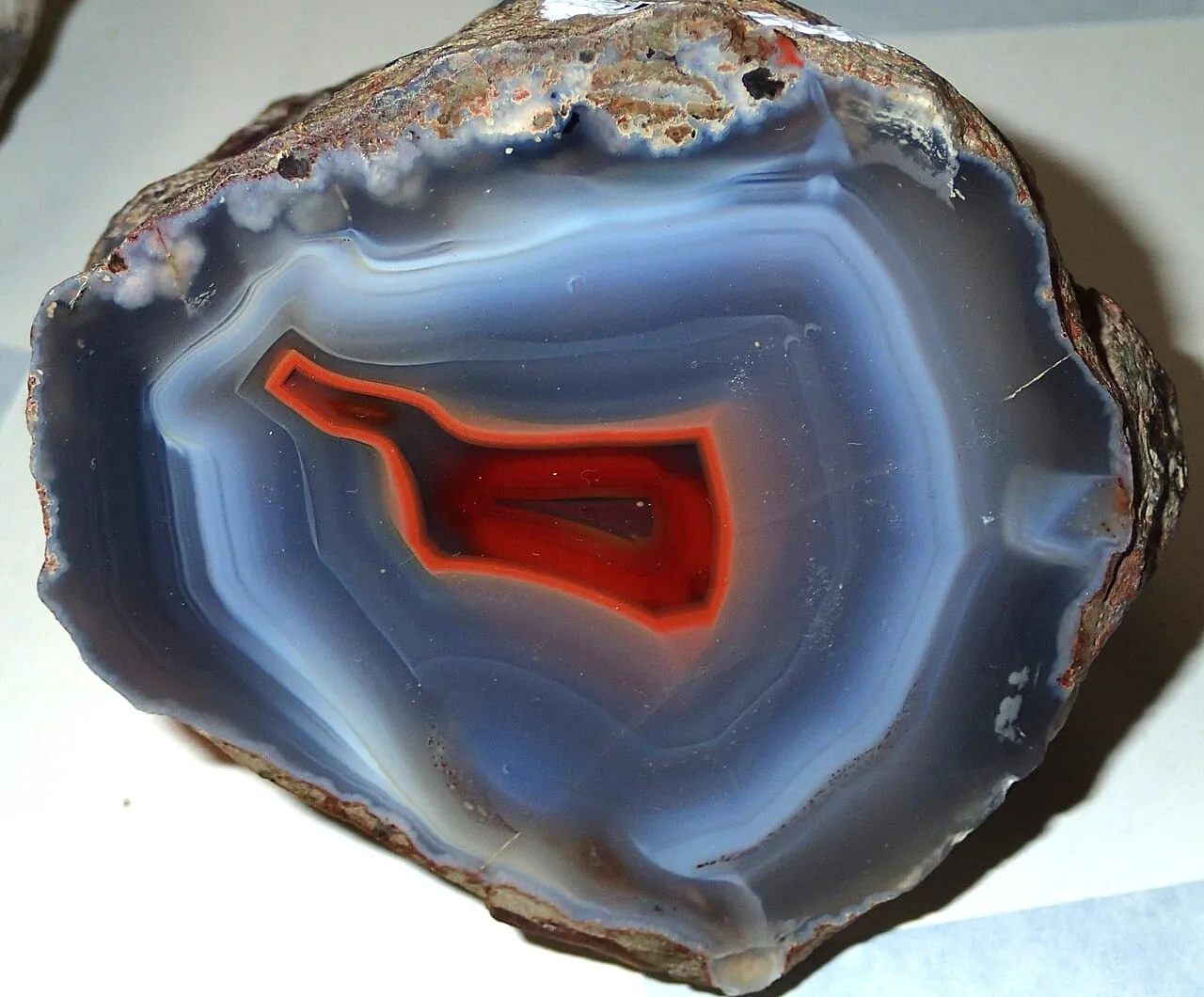
Agate
The banded variety of chalcedony: it grows layer by layer in hollows in volcanic rock and shows a new pattern every time it is cut.
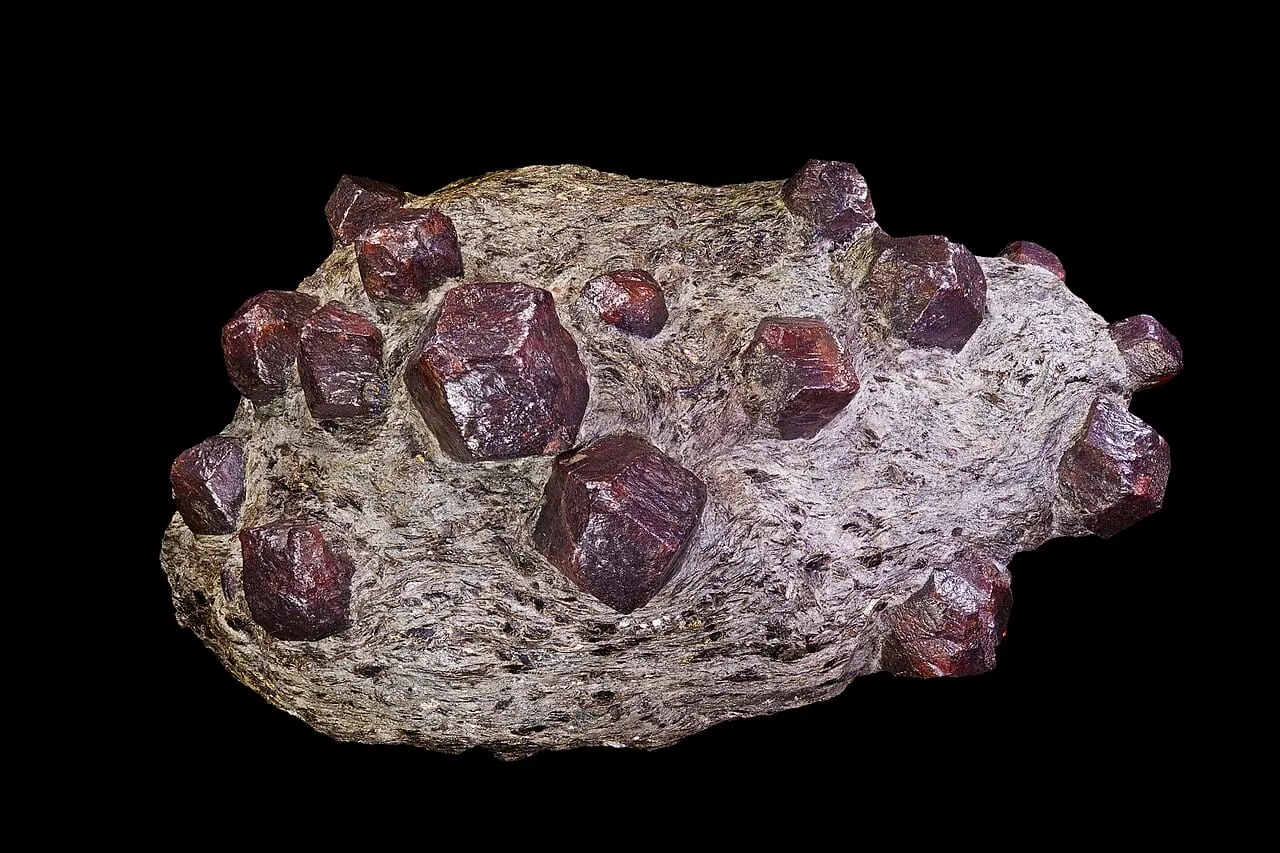
Almandine
The commonest garnet: a deep red, iron-rich stone named after the ancient city of Alabanda in Anatolia, used in jewellery and in sandpaper alike.
Amazonite
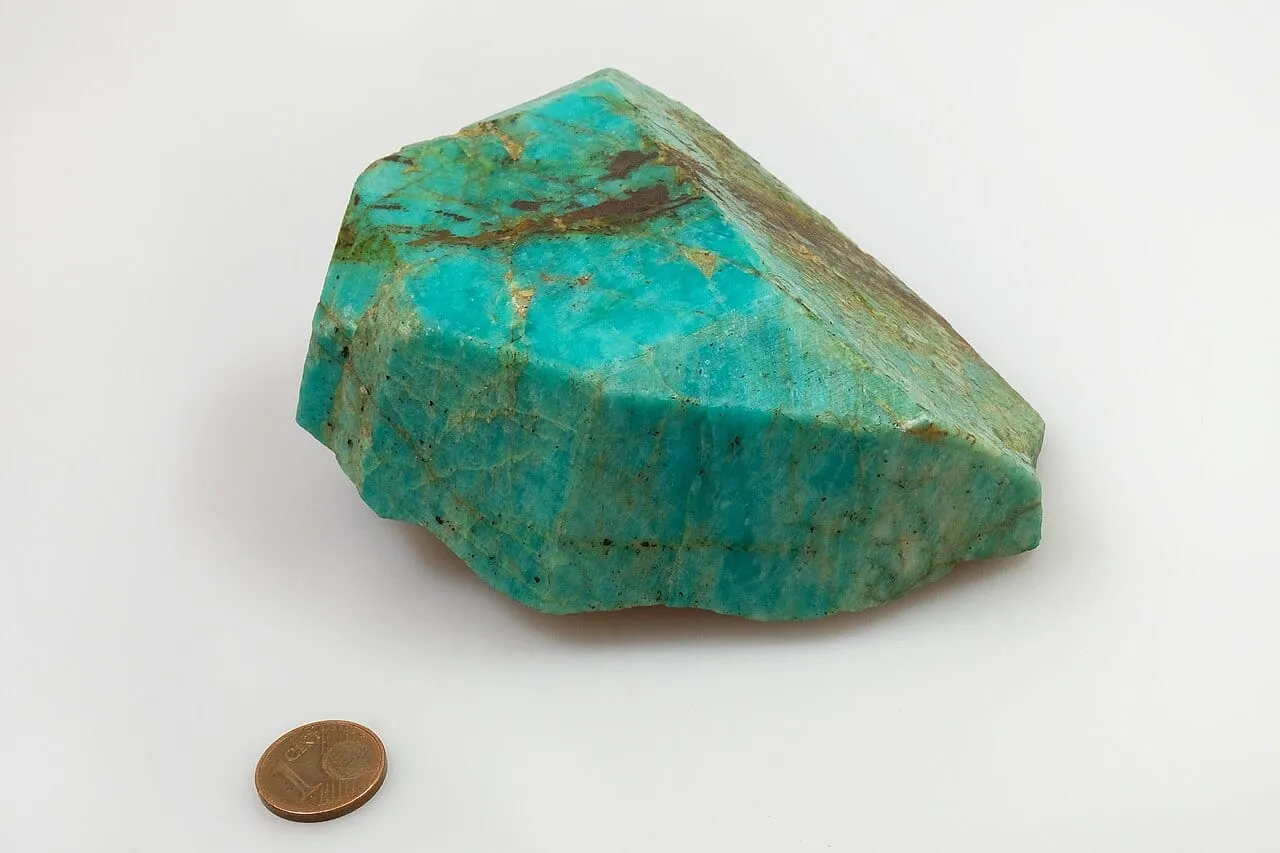
A turquoise-like green-blue feldspar: a variety of microcline worn as jewellery for more than three thousand years, but it can release lead.