Mineral
Titanite
CaTiSiO₅Titanit
A wedge-shaped mineral that splits light more strongly than diamond: yellow-green or brown, a bright but soft collector’s stone when cut.
Also known as: Sphene
- Popularly: Semi-precious stone
- Gemstone

In short
Titanite (formerly called sphene) is a mineral made of calcium, titanium, silicon and oxygen (CaTiSiO₅). The name sphene comes from the Greek sphen, “wedge”, and describes the wedge shape of its crystals. It occurs in green, yellow, brown and red shades; because it splits light into colours very strongly, a cut stone throws out more coloured flashes than a diamond. Its low hardness makes it a collector’s stone rather than a jewel for everyday wear.
Photos

How does it form?
Titanite is a common accessory mineral in intermediate and felsic plutonic rocks, pegmatites and Alpine cleft veins; it also occurs in gneisses and schists and in some skarns. It is usually found as millimetre-sized crystals in the rock; large, fine crystals are seen mostly in Alpine clefts and some pegmatites.
Its colour depends largely on its iron content: according to Wikipedia, crystals low in iron are green and yellow, those high in iron brown and black.
What is it used for?
- Jewellery and collecting: Cut titanite is very bright and throws coloured flashes, but because it is soft and brittle it has limited use in jewellery. It needs a protective setting and careful wear; rough crystals are among the specimens collectors seek.
- Geology: It is used to date metamorphic rocks by the uranium-lead method.
- Titanium: Although it contains titanium, MTA lists titanite among the less common titanium minerals of no economic value; for titanium, ilmenite and rutile are mined (see ilmenite and rutile).
The light of the stone
Titanite splits light into colours like a prism: according to Wikipedia its dispersion is 0.051, higher than diamond’s. It also shows strong pleochroism, meaning the colour changes when the stone is viewed from different directions (according to the Handbook of Mineralogy, from colourless to yellow and green, and from red to yellow-orange). These two properties explain the lively, shifting coloured sparkle of a well-cut sphene.
What determines its value?
Titanite’s value depends on its colour (green-yellow shades are the most sought after, browns less so), clarity, how well the cut disperses light, size and freedom from damage. Clean, large stones are scarce, and because the mineral is soft and prone to cleaving it is hard to cut. Sphene is generally untreated, but heating is reported to turn the colour red or orange, so it is worth asking whether the colour is natural. For rough crystals, form, colour, freedom from damage and well-known localities such as Pakistan or the Swiss Alps count.
This information is educational, not buying, selling or investment advice. Value varies enormously with quality and treatment.
How to recognise it
- 1
Crystals are often wedge-shaped, which is where the old name comes from. Some are flat, others short prisms.
- 2
It has a lustre between diamond-like and resinous and strong pleochroism: as you turn the stone, the colour shifts from colourless to yellow-green and from red to orange.
- 3
Its hardness is 5–5.5 and its specific gravity about 3.5–3.6: a steel knife can scratch it. It has good cleavage in one direction.
- 4
It occurs in igneous rocks such as granite and syenite, in gneisses and in Alpine cleft veins, with albite, chlorite, epidote and apatite; often as small, scattered crystals in the rock.
Fakes and imitations
What shops usually don’t tell you:
- Yellow-green sphene can be confused with stones such as chrysoberyl, golden beryl, topaz and zircon. What sets sphene apart is its very strong fire and low hardness; a sure identification needs gemmological testing.
Myths and misconceptions
MythSphene and titanite are two different stones.
FactThey are the same mineral: sphene is the old name, still used in the jewellery trade, and titanite is the official name adopted by the International Mineralogical Association in 1982.
MythBecause it sparkles more than diamond, sphene is as durable a ring stone as diamond.
FactTitanite splits light more strongly than diamond, but its hardness is only 5–5.5 (diamond’s is 10) and it has distinct cleavage. According to Wikipedia it has limited use in jewellery because of its softness and rarity; sellers recommend earrings and pendants, which take fewer knocks, rather than rings.
What is it believed to be good for?
This section reports beliefs; it is not health information. There is no scientific evidence for these claims and no stone replaces medical treatment.
The meanings people give this stone, and who holds them:
- Crystal-therapy websites claim that sphene calms, increases mental clarity and creativity, protects against negative “energy” and is linked to the “third-eye chakra”.
- The same websites claim that sphene reduces fever, muscle strain and tissue inflammation and supports the immune system.
What science says
There is no scientific evidence that sphene calms, clears the mind, or reduces fever, muscle strain or inflammation; “chakra” and “energy” claims cannot be measured. If fever, muscle pain or inflammation persists, a doctor should be consulted.
Did you know?
The old name sphene comes from the Greek sphen, “wedge”. The International Mineralogical Association made titanite the official name in 1982, but sphene is still widely used in the jewellery trade.
According to Wikipedia, titanite’s dispersion, its power to split light into colours (0.051), exceeds that of diamond, so well-cut stones show very pronounced coloured flashes.
Titanite is also used to date rocks: the ratio of uranium to lead in it works as a geological clock for the age of metamorphic rocks.
Where is it found?
Loading map…
- Haramosh Mountains (Tormiq Valley), Gilgit-Baltistan, Pakistan · Known localityWikipedia lists Pakistan among the known localities of titanite; a green crystal cluster from the Tormiq Valley illustrates the article (location given regionally, by Haramosh peak)
- St. Gotthard, Ticino, Switzerland · Historic sourceAccording to the Handbook of Mineralogy, one of the places in the Swiss Alps that give fine titanite specimens
- Tavetsch (Tujetsch), Graubünden, Switzerland · Known localityAccording to the Handbook, it gives fine specimens
- Zillertal, Tyrol, Austria · Known localityAccording to the Handbook, the Schwarzenstein and Rothenkopf mountains in the Zillertal give fine titanite specimens
- Arendal, Agder, Norway · Historic sourceThe Handbook of Mineralogy lists fine specimens from Arendal
- Khibiny Mountains, Kola Peninsula, Russia · Known localityAccording to the Handbook, the Khibiny and Lovozero massifs of the Kola Peninsula give fine titanite specimens; 477 minerals have been recorded in the Khibiny
- Capelinha, Minas Gerais, Brazil · Known localityAccording to the Handbook, Campo do Boa near Capelinha gives fine specimens (location given as Capelinha town)
- Eganville, Ontario, Canada · Known localityAccording to the Handbook, the Eganville area in Ontario is noted for titanite specimens
Locations are approximate to protect sites. Red dots mark places in Türkiye. Open in the big map →
Frequently asked questions
What is titanite?
Titanite (formerly called sphene) is a mineral made of calcium, titanium, silicon and oxygen (CaTiSiO₅). The name sphene comes from the Greek sphen, “wedge”, and describes the wedge shape of its crystals. It occurs in green, yellow, brown and red shades; because it splits light into colours very strongly, a cut stone throws out more coloured flashes than a diamond. Its low hardness makes it a collector’s stone rather than a jewel for everyday wear.
What is titanite used for?
Jewellery and collecting: Cut titanite is very bright and throws coloured flashes, but because it is soft and brittle it has limited use in jewellery. It needs a protective setting and careful wear; rough crystals are among the specimens collectors seek. Geology: It is used to date metamorphic rocks by the uranium-lead method. Titanium: Although it contains titanium, MTA lists titanite among the less common titanium minerals of no economic value; for titanium, ilmenite and rutile are mined (see ilmenite and rutile).
How hard is titanite?
It has a hardness of 5–5.5 on the Mohs scale. A fingernail cannot scratch it, but a steel knife can. Its specific gravity is 3.48–3.6 g/cm³.
Where is titanite found?
Its best-known localities: St. Gotthard, Ticino, Switzerland; Arendal, Agder, Norway; Haramosh Mountains (Tormiq Valley), Gilgit-Baltistan, Pakistan; Tavetsch (Tujetsch), Graubünden, Switzerland; Zillertal, Tyrol, Austria.
How can you tell if titanite is real?
Crystals are often wedge-shaped, which is where the old name comes from. Some are flat, others short prisms. It has a lustre between diamond-like and resinous and strong pleochroism: as you turn the stone, the colour shifts from colourless to yellow-green and from red to orange. Its hardness is 5–5.5 and its specific gravity about 3.5–3.6: a steel knife can scratch it. It has good cleavage in one direction. Yellow-green sphene can be confused with stones such as chrysoberyl, golden beryl, topaz and zircon. What sets sphene apart is its very strong fire and low hardness; a sure identification needs gemmological testing.
Is titanite valuable?
On the “street to diamond” value ladder it sits on step 6 of nine: Fine ornamental and collector stone. Titanite’s value depends on its colour (green-yellow shades are the most sought after, browns less so), clarity, how well the cut disperses light, size and freedom from damage. Clean, large stones are scarce, and because the mineral is soft and prone to cleaving it is hard to cut. Sphene is generally untreated, but heating is reported to turn the colour red or orange, so it is worth asking whether the colour is natural. For rough crystals, form, colour, freedom from damage and well-known localities such as Pakistan or the Swiss Alps count.
What is titanite good for?
Crystal-therapy websites claim that sphene calms, increases mental clarity and creativity, protects against negative “energy” and is linked to the “third-eye chakra”. The same websites claim that sphene reduces fever, muscle strain and tissue inflammation and supports the immune system. There is no scientific evidence that sphene calms, clears the mind, or reduces fever, muscle strain or inflammation; “chakra” and “energy” claims cannot be measured. If fever, muscle pain or inflammation persists, a doctor should be consulted. This section reports beliefs; it is not health information. There is no scientific evidence for these claims and no stone replaces medical treatment.
Sources
- Handbook of Mineralogy: Titanite · Mineralogical Society of America
- Titanite · Wikipedia
- Titanite (Webmineral) · Webmineral
- Sphene Gemstone Information · GemSelect
- Üretiminden ticari kullanımına titanyum (Yücel, MTA Doğal Kaynaklar ve Ekonomi Bülteni 26: 63–76) · MTA Genel Müdürlüğü, 2018
- Titanite - Tormiq valley, Haramosh Mts, Pakistan.jpg (specimen locality) · Wikimedia Commons
- Haramosh · Wikipedia
- Saint Gotthard Pass · Wikipedia
- Tujetsch · Wikipedia
- Zillertal · Wikipedia
- Arendal · Wikipedia
- Khibiny · Wikipedia
- Capelinha · Wikipedia
- Eganville, Ontario · Wikipedia
External links
Draft: awaiting expert reviewReport an error ↗
On the same step
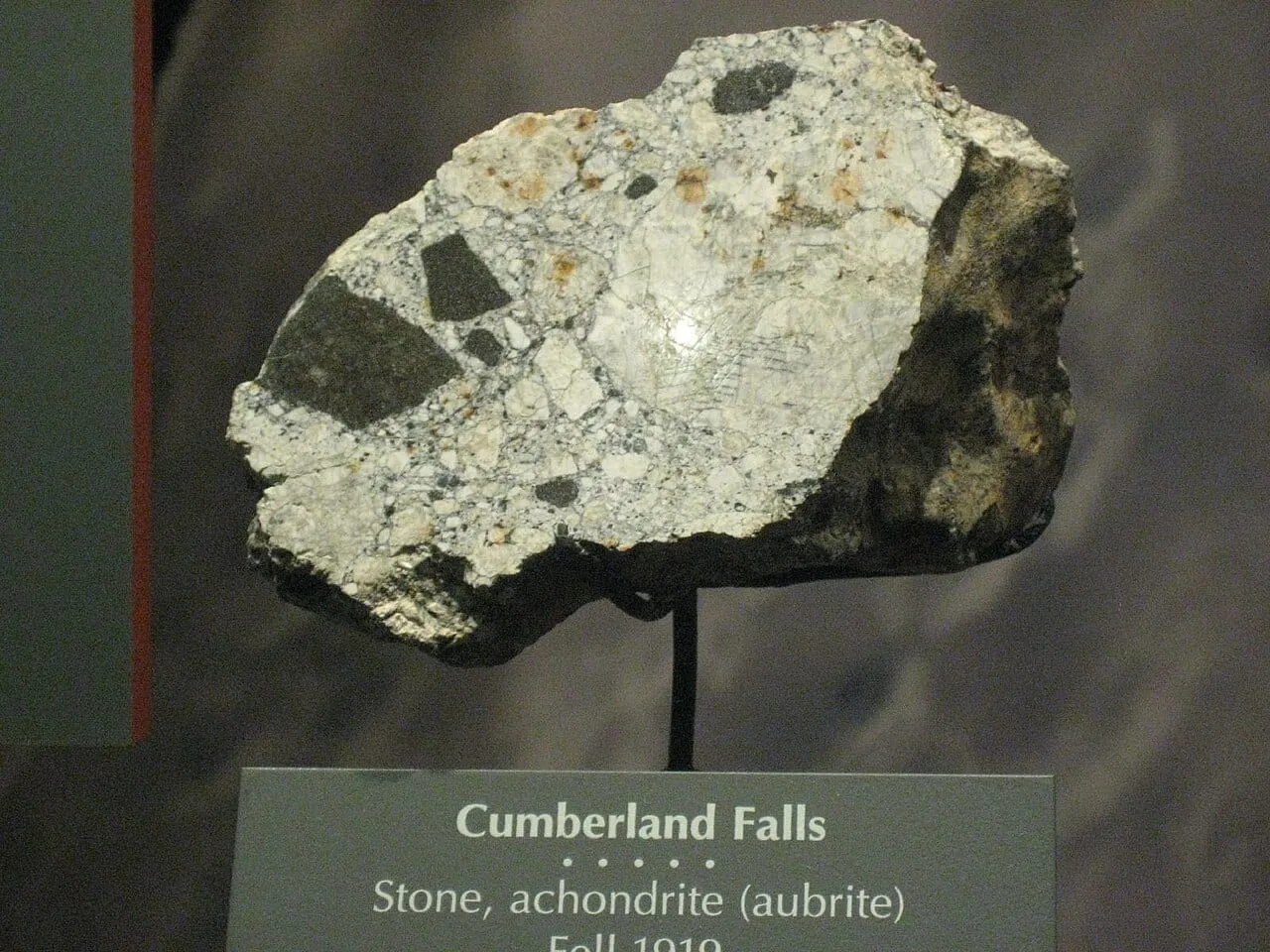
Achondrite
Stony meteorites with no chondrules: rock from melted asteroids, the Moon and Mars, and hard to recognise because they look like Earth rocks.
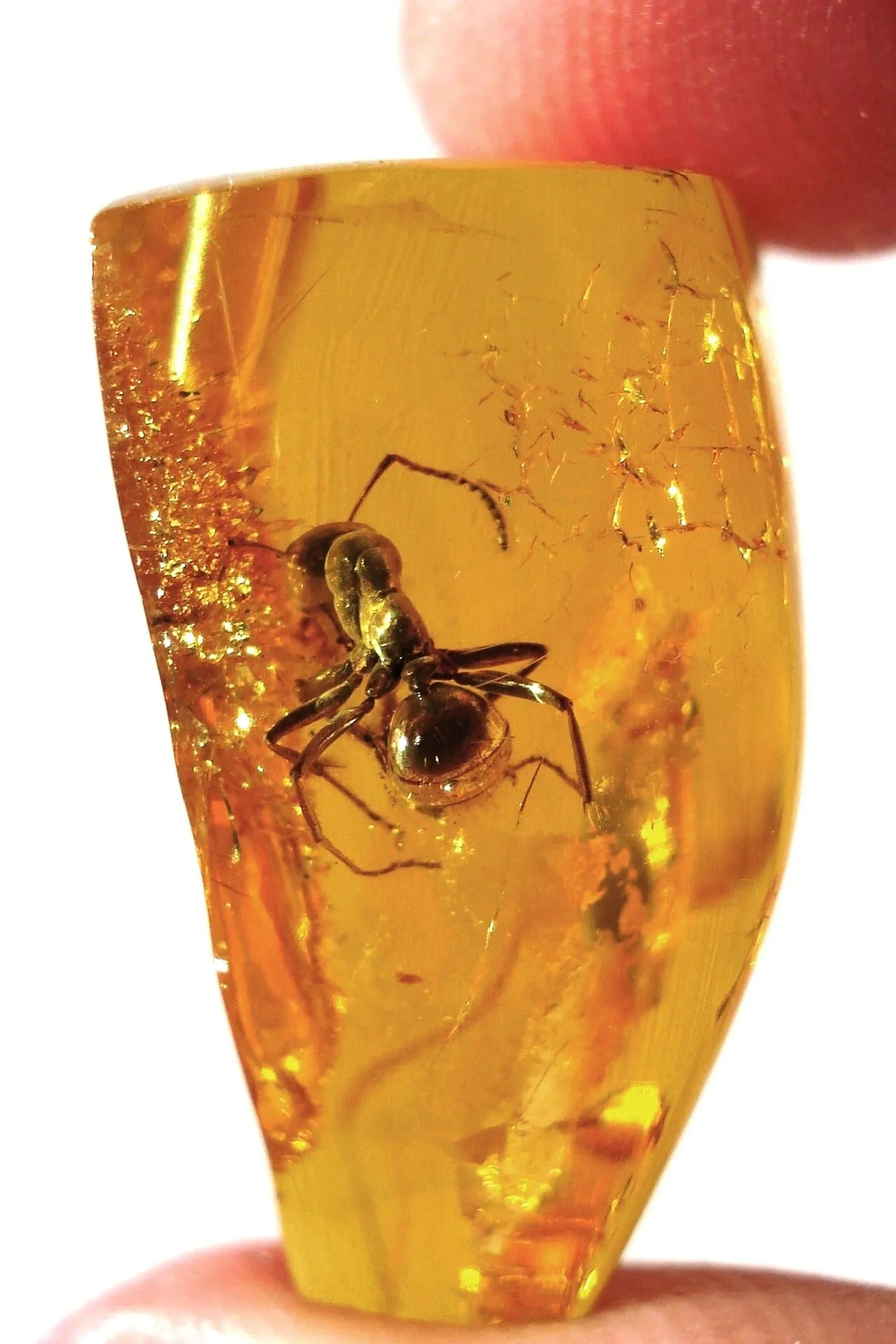
Amber
Tree resin fossilised over millions of years: a light, warm organic gem that sometimes holds prehistoric insects.
Ammolite
The rainbow-bright layer of fossil ammonite shell; of gem quality it comes only from the Canadian province of Alberta.