VarietyA variety of Zoisite
Thulite
(Ca,Mn)₂Al₃(SiO₄)(Si₂O₇)O(OH)Thulit
The pink, manganese-coloured variety of zoisite: named after the legendary northern land of Thule, and called the national stone of Norway.
Also known as: Rosaline
- Popularly: Semi-precious stone
In short
Thulite is the pink to pinkish red, manganese-bearing variety of the mineral zoisite. It is usually an opaque, massive stone, often mottled and veined with white quartz or calcite. Its type locality is Sauland in the Telemark region of Norway, and it takes its name from Thule, the legendary land that ancient writers placed at the far north of the world and that was identified with Norway. It is used as an ornamental stone for cabochons, beads and carvings; Britannica calls it the national stone of Norway.
Photos
How does it form?
Thulite, like zoisite in general, forms in metamorphic rocks: according to the Handbook of Mineralogy, zoisite typically occurs in schists formed when rocks fairly rich in calcium are transformed under moderate heat and pressure, and also in rocks such as eclogite and blueschist. What makes thulite different is the presence of manganese while the crystals grow: manganese takes the place of up to 2 percent of the calcium in zoisite and gives the stone its pink colour. Thulite usually forms massive bodies of densely packed crystals together with quartz and calcite, which is why it looks speckled or veined with white.
What is it used for?
- Jewellery: It is cut into cabochons and beads for pendants, bracelets and earrings.
- Carving and ornaments: Its massive texture suits small sculptures, ornaments and stone carvings; it was also used for the Oscar Wilde statue in Dublin.
- Collecting: Pieces found together with piemontite and quartz, with dark red specks, are kept in collections.
Name and Norway
Thulite was found north of Sauland in the Telemark region of Norway, beside the farm of Øvstebø near Kleppen. There it occurs in a large quartz vein in ancient rocks, together with blue cyprine (a variety of vesuvianite), calcite and tremolite. The sources differ on the date: Wikipedia gives 1820 as the year it was first identified, while an article in the journal of the Norwegian Geological Society states that thulite was described by Brooke in 1823. Norwegian Wikipedia says the Swedish scientist Anders Gustaf Ekeberg named the mineral after “Ultima Thule”, the northern edge of the world in ancient times, which was then believed to be Scandinavia. Norwegian Wikipedia says thulite has been found at about fifteen places in Norway, among them Lom, Leksvik and Tvedestrand.
Around the world
Outside Norway, thulite is found in the Tyrol region of Austria, in Mitchell County, North Carolina, and Okanogan County, Washington, in the United States, in the Otago region of New Zealand, and in Namibia. Some specimens from Namibia are greenish.
What determines its value?
The value of thulite depends most on a lively, even colour: a saturated, evenly spread pink is the most sought after; white specks and veins give the stone character but lower its value when there are too many. Because it is an opaque ornamental stone, buyers look at the size of the piece, the quality of the polish and the workmanship rather than carats. Telling genuine Norwegian thulite from the piemontite quartzite sold under the same name also matters; measuring the density is a useful guide.
This information is educational, not buying, selling or investment advice. Value varies enormously with quality and treatment.
How to recognise it
- 1
It is an opaque, pink to pinkish red stone, often mottled with white specks and streaks of quartz or calcite. Thin slices may look translucent when lit from behind.
- 2
Its hardness is 6–6.5 and its specific gravity about 3.1–3.4; the piemontite quartzite sold under the same name stays below 3.0.
- 3
It resembles rhodonite but lacks the black streaks common in rhodonite. It is harder than rhodochrosite and does not show its banding.
- 4
Clinothulite, the pink variety of clinozoisite, can only be told apart from thulite with advanced laboratory tests.
Fakes and imitations
What shops usually don’t tell you:
- Piemontite-muscovite quartzite: some of the stone sold as “thulite” from the Lom area of Norway is this rock. It shows blood-red specks in a nearly colourless quartzite and a glittering surface caused by mica; it is also sold as “red aventurine quartz”.
Myths and misconceptions
MythThulite is Norway's official national stone.
FactBritannica describes thulite as the national stone of Norway, but according to Norwegian Wikipedia the title is an unofficial choice that state institutions have not formally adopted.
MythEvery pink-red stone sold as “thulite” from Lom is thulite.
FactAccording to the EPI Institute, the good thulite deposits at Lom are exhausted, and much of the stone sold under the name is a rock made of piemontite, muscovite and quartz. It is lighter, glitters because of its mica and contains blood-red specks.
What is it believed to be good for?
This section reports beliefs; it is not health information. There is no scientific evidence for these claims and no stone replaces medical treatment.
The meanings people give this stone, and who holds them:
- Today crystal-therapy websites and stone sellers claim that thulite is linked to the heart chakra, boosts self-confidence and the courage to speak in public, brings joy and passion, and supports love and understanding in relationships.
- The same circles also claim that thulite helps people break bad habits and fight addiction.
What science says
There is no scientific evidence that thulite boosts self-confidence, joy or love, or helps in fighting addiction; for addiction, see a doctor or a specialist support service. The stone's pink colour comes only from the manganese in its crystals.
Did you know?
On the Oscar Wilde statue in Dublin (Danny Osborne, 1997), Wilde's torso is made of green nephrite jade from Canada and pink thulite from Norway.
According to Norwegian Wikipedia, the mineral was named by the Swedish scientist Anders Gustaf Ekeberg after “Ultima Thule”, which ancient geographers regarded as the edge of the world and which may have meant present-day Norway.
Thulite's pink colour comes from manganese, which takes the place of up to 2 percent of the calcium in the crystal.
Where is it found?
Loading map…
- Øvstebø (near Kleppen), Sauland, Hjartdal, Telemark, Norway · Type localityThulite's type locality: it occurs in a large quartz vein in Precambrian rocks together with blue cyprine (vesuvianite), calcite and tremolite
- Lom, Innlandet, Norway · Major depositToday thulite is mostly associated with this area in the trade; but according to the EPI Institute the good deposits are exhausted, and some stone sold from here as thulite is piemontite quartzite
- Tvedestrand, Agder, Norway · Known localityMassive pink thulite in an area known for rare minerals such as sunstone and xenotime
- Leksvik, Trøndelag, Norway · Known locality
- Mitchell County, North Carolina, USA · Known localityThe county of the Spruce Pine mining district
- Okanogan County, Washington, USA · Known locality
- Otago, South Island, New Zealand · Known localityThe source names only the region, so the point is at region level
Locations are approximate to protect sites. Red dots mark places in Türkiye. Open in the big map →
Frequently asked questions
What is thulite?
Thulite is the pink to pinkish red, manganese-bearing variety of the mineral zoisite. It is usually an opaque, massive stone, often mottled and veined with white quartz or calcite. Its type locality is Sauland in the Telemark region of Norway, and it takes its name from Thule, the legendary land that ancient writers placed at the far north of the world and that was identified with Norway. It is used as an ornamental stone for cabochons, beads and carvings; Britannica calls it the national stone of Norway.
What is thulite used for?
Jewellery: It is cut into cabochons and beads for pendants, bracelets and earrings. Carving and ornaments: Its massive texture suits small sculptures, ornaments and stone carvings; it was also used for the Oscar Wilde statue in Dublin. Collecting: Pieces found together with piemontite and quartz, with dark red specks, are kept in collections.
How hard is thulite?
It has a hardness of 6–6.5 on the Mohs scale. It can scratch glass; a steel knife scratches it only with difficulty. Its specific gravity is 3.1–3.38 g/cm³.
Where is thulite found?
Its best-known localities: Øvstebø (near Kleppen), Sauland, Hjartdal, Telemark, Norway; Lom, Innlandet, Norway; Tvedestrand, Agder, Norway; Leksvik, Trøndelag, Norway; Mitchell County, North Carolina, USA.
How can you tell if thulite is real?
It is an opaque, pink to pinkish red stone, often mottled with white specks and streaks of quartz or calcite. Thin slices may look translucent when lit from behind. Its hardness is 6–6.5 and its specific gravity about 3.1–3.4; the piemontite quartzite sold under the same name stays below 3.0. It resembles rhodonite but lacks the black streaks common in rhodonite. It is harder than rhodochrosite and does not show its banding. Piemontite-muscovite quartzite: some of the stone sold as “thulite” from the Lom area of Norway is this rock. It shows blood-red specks in a nearly colourless quartzite and a glittering surface caused by mica; it is also sold as “red aventurine quartz”.
Is thulite valuable?
On the “street to diamond” value ladder it sits on step 5 of nine: Ornamental stone. The value of thulite depends most on a lively, even colour: a saturated, evenly spread pink is the most sought after; white specks and veins give the stone character but lower its value when there are too many. Because it is an opaque ornamental stone, buyers look at the size of the piece, the quality of the polish and the workmanship rather than carats. Telling genuine Norwegian thulite from the piemontite quartzite sold under the same name also matters; measuring the density is a useful guide.
What is thulite good for?
Today crystal-therapy websites and stone sellers claim that thulite is linked to the heart chakra, boosts self-confidence and the courage to speak in public, brings joy and passion, and supports love and understanding in relationships. The same circles also claim that thulite helps people break bad habits and fight addiction. There is no scientific evidence that thulite boosts self-confidence, joy or love, or helps in fighting addiction; for addiction, see a doctor or a specialist support service. The stone's pink colour comes only from the manganese in its crystals. This section reports beliefs; it is not health information. There is no scientific evidence for these claims and no stone replaces medical treatment.
Family


Sources
- Thulite · Wikipedia
- The cyprin-thulite deposit at Øvstebø, near Kleppan in Sauland, Telemark, Norway (H. Neumann and S. Svinndal), Norsk Geologisk Tidsskrift 34 · Norwegian Geological Society
- Thulitt · Wikipedia (Norwegian)
- Thulite · Encyclopaedia Britannica
- The Gemstone Thulite · Minerals.net
- Lookalikes: thulitite and piemontite quartzite · EPI Institut für Edelstein-Prüfung
- Handbook of Mineralogy: Zoisite · Mineralogical Society of America
- Oscar Wilde Memorial Sculpture · Wikipedia
- Sauland · Wikipedia
- Fossbergom · Wikipedia
- Tvedestrand Municipality · Wikipedia
- Leksvik (village) · Wikipedia
- Mitchell County, North Carolina · Wikipedia
- Okanogan County, Washington · Wikipedia
- Otago · Wikipedia
External links
Draft: awaiting expert reviewReport an error
On the same step
Agate
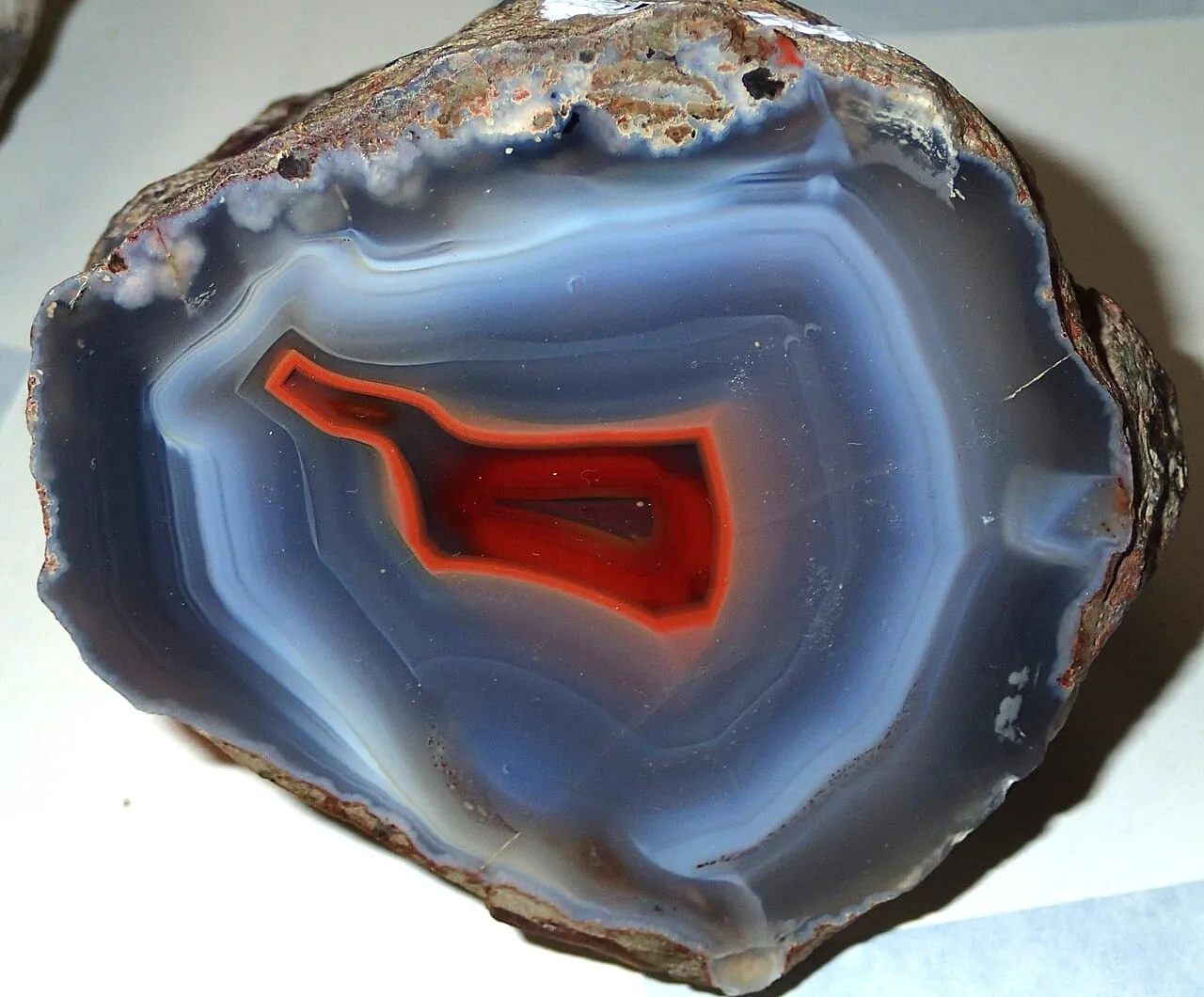
The banded variety of chalcedony: it grows layer by layer in hollows in volcanic rock and shows a new pattern every time it is cut.

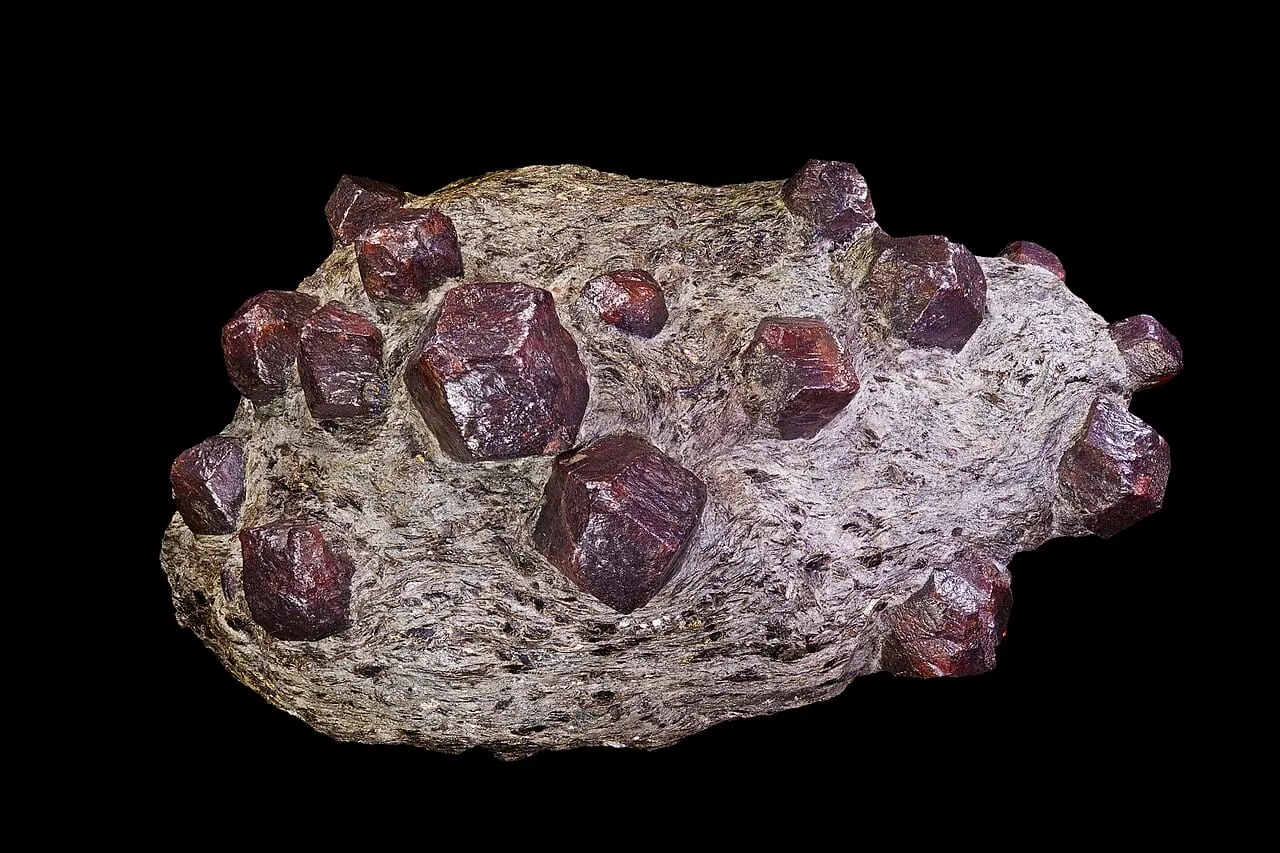
Almandine
The commonest garnet: a deep red, iron-rich stone named after the ancient city of Alabanda in Anatolia, used in jewellery and in sandpaper alike.
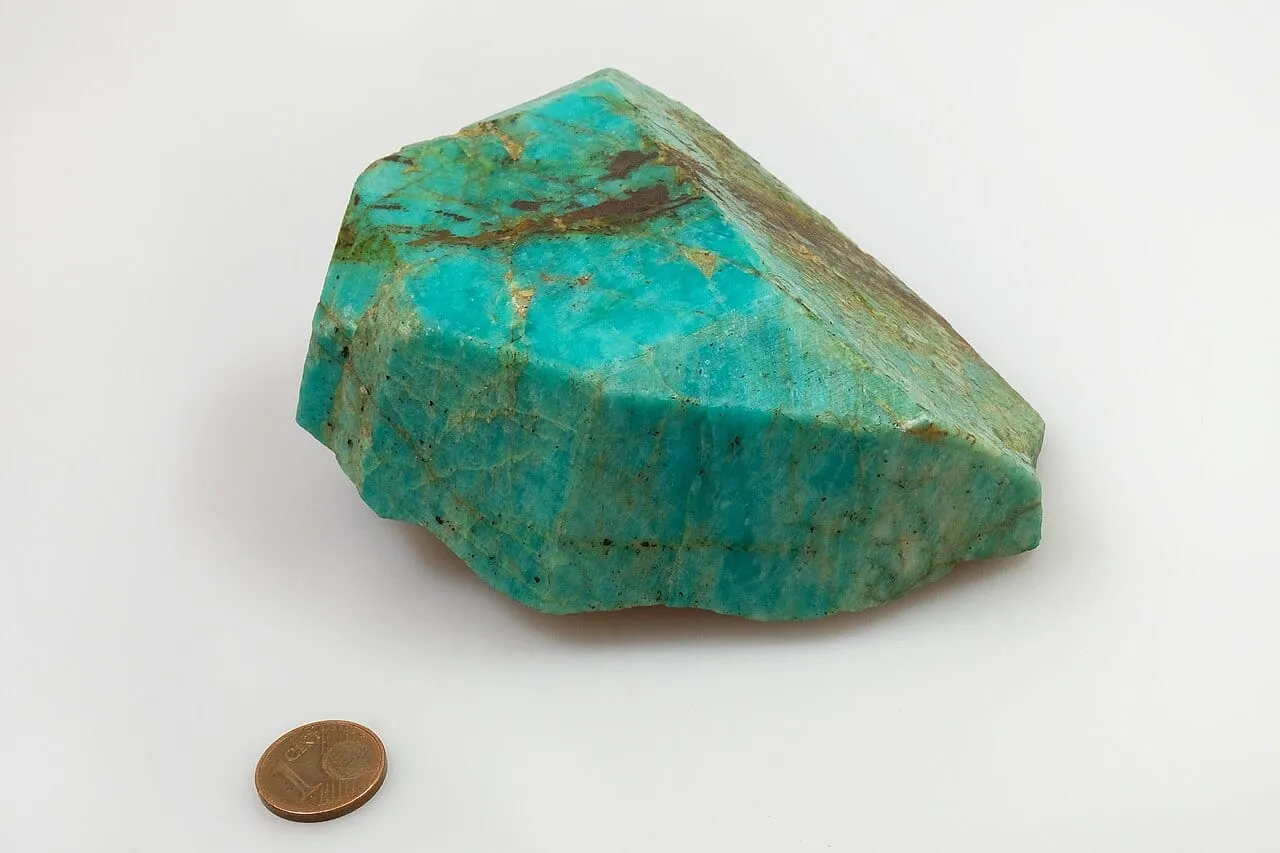
Amazonite
A turquoise-like green-blue feldspar: a variety of microcline worn as jewellery for more than three thousand years, but it can release lead.