VarietyA variety of Sapphire
Star sapphire
Al₂O₃Yıldız safir
A sapphire that, cut as a dome, shows a six-rayed star gliding across its surface as the light moves.
Also known as: Asteria (historical) · Black star sapphire (black variety)
- Popularly: Semi-precious stone
In short
Star sapphire is sapphire that shows a six-rayed star of light on its surface, thanks to extremely fine needle-like inclusions inside it. The effect is called asterism. The stone is cut as a dome (cabochon) to bring out the star. It can be blue, greyish blue, purple or black. Most of the world's famous star sapphires come from Sri Lanka, while black star sapphires come mainly from Thailand and Australia.
Photos
How does it form?
Like other sapphires, star sapphire is a crystal of corundum; the difference is that it contains very fine inclusions aligned in particular directions. These are mostly needles of rutile (titanium oxide), sometimes joined by other iron–titanium oxide minerals. Because of corundum’s crystal structure, the needles line up in three directions that cross at about 120 degrees. Each set of needles reflects light into a bright band, and the three bands overlap to form a six-rayed star.
Black star sapphires come from basalt-related deposits in Thailand and Australia. Star sapphires from Sri Lanka are recovered from secondary deposits, where rivers carried the crystals into gravel beds. Laboratories use the same principle: titanium-bearing corundum is grown first and then heated so that rutile needles precipitate inside it.
What is it used for?
- Jewellery: Star sapphire is set as a dome-cut stone in rings, necklaces and earrings; its hardness suits everyday wear.
- Collections and museums: Giant stones such as the Star of India, the Star of Bombay and the Star of Asia are on display in museums in New York and Washington.
- Talisman and ornament: It has been carried as a talisman through history; in 1913 the Greeks of America gave Prince Constantine a sword with a large star sapphire in its hilt.
How does the star show?
For the star to appear, the cutter has to orient the stone so that the dome is parallel to the plane of the needles; in a well-oriented stone the star sits in the middle of the dome. With few inclusions the star is faint; with too many the stone becomes cloudy. According to Kunz, grey and whitish stones often show a more distinct star than deep blue ones, because they contain more inclusions. GIA has reported black star sapphires from Thailand in which rutile needles produce a silvery white star and platelets of hematite and ilmenite a golden one, the two together giving a twelve-rayed star.
What determines its value?
In a star sapphire the star itself comes first: the six rays should be sharp, straight, equally long and centred on the stone. Body colour comes next: a saturated blue is the most valuable, while milky, greyish or very dark stones are worth less. The height and symmetry of the dome, size, and whether the stone has been heat-treated also matter. Because synthetic and treated stars are common, a laboratory report is decisive in valuing a stone.
This information is educational, not buying, selling or investment advice. Value varies enormously with quality and treatment.
How to recognise it
- 1
A dome-cut stone shows a six-rayed star; as the stone or the light source moves, the star glides across the surface. It is sharpest under a single point of light (sunlight, a torch).
- 2
Being a sapphire, it is very hard (Mohs 9) and heavy for its size.
- 3
In natural stones the star is often slightly hazy, the body colour milky or greyish, and colour bands may be visible. A very sharp, flawless star with very even colour can point to a synthetic.
- 4
Some black star sapphires show two overlapping stars, golden yellow and silvery white, which together form a twelve-rayed star.
Fakes and imitations
What shops usually don’t tell you:
- Synthetic star sapphire: the method was developed at the Linde company in the United States in 1947; titanium-bearing synthetic corundum is grown first and then heated to form rutile needles inside it. In early production the needles lie only in a layer near the surface.
- Heat treatment can dissolve the fine inclusions in a natural stone and weaken or alter the star. GIA has also documented large synthetic sapphires given a star by titanium diffusion into the surface. Treatments should be disclosed by the seller.
Myths and misconceptions
MythEvery sapphire that shows a star is natural.
FactSynthetic star sapphire has been made since the late 1940s, and in some synthetic stones a star is added afterwards by diffusing titanium into the surface. Telling a natural stone from a synthetic with certainty is a job for a laboratory.
MythThe famous Star of Asia at the Smithsonian came from the Mogok mines of Myanmar.
FactAccording to Wikipedia, this story was invented by the dealer Martin Ehrmann to raise the stone's value; later contact with the family of its original owners showed that the 330-carat stone was mined in Sri Lanka.
MythThe values reported in the news for giant star sapphires are firmly established.
FactValues given in the news for giant stones are usually estimates put forward by their owners or sellers. Wikipedia notes that the value claimed for the Star of Adam is disputed and that no sapphire in auction records has come close to it.
What is it believed to be good for?
This section reports beliefs; it is not health information. There is no scientific evidence for these claims and no stone replaces medical treatment.
The meanings people give this stone, and who holds them:
- According to the mineralogist George F. Kunz (1913), the people of Sri Lanka believed that the gliding star protected against witchcraft of every kind.
- Kunz reports that the three bars of the star sapphire were believed to stand for faith, hope and destiny, and that the stone was worn against ill omen and the evil eye; it was said to keep working for its first wearer even after changing hands.
- Kunz tells how the traveller Sir Richard Burton carried a large star sapphire as a talisman that he believed brought him luck and a good welcome; according to Anselmus de Boot in the 17th century, the Germans called the stone a “victory stone” (Siegstein).
What science says
There is no scientific evidence that star sapphire protects against witchcraft or the evil eye, or brings luck or victory. The star is a purely physical effect produced by light reflecting from fine rutile needles aligned in three directions inside the stone; the same effect can be made in a laboratory.
Did you know?
The 563.35-carat Star of India at the American Museum of Natural History in New York shows a star on both sides. It was stolen from the museum in 1964 and recovered in 1965 from a bus-station locker in Miami.
The 1,404.49-carat Star of Adam, found in the Ratnapura area of Sri Lanka in 2015, is described as the largest known blue star sapphire.
The 733-carat Black Star of Queensland was found in Queensland in 1938 by a teenager; his family used it as a doorstop for about ten years before realising its value.
Where is it found?
Loading map…
- Ratnapura, Sabaragamuwa, Sri Lanka · Major depositGem gravels; the Star of India, Star of Bombay and Star of Asia came from Sri Lanka, and the 1,404-carat Star of Adam was found at Ratnapura in 2015
- Mogok, Mandalay Region, Myanmar · Known localityGemdat lists many deposits in the Mogok area as star sapphire localities
- Bang Kha Cha, Chanthaburi, Thailand · Major depositFamous for black star sapphires from basalt-related deposits; the point is placed at the town of Chanthaburi
- Pailin, Cambodia · Historic sourceThe mines on the Thailand–Cambodia border are counted among black star sapphire sources; they are reported to have been largely exhausted by the late 1990s
- Central Queensland gemfields (Rubyvale, Sapphire, Anakie), Australia · Known localityAccording to GIA, black star sapphire occurs in Australia's basalt-related deposits; the 733-carat Black Star of Queensland was found in Queensland in 1938
Locations are approximate to protect sites. Red dots mark places in Türkiye. Open in the big map →
Frequently asked questions
What is star sapphire?
Star sapphire is sapphire that shows a six-rayed star of light on its surface, thanks to extremely fine needle-like inclusions inside it. The effect is called asterism. The stone is cut as a dome (cabochon) to bring out the star. It can be blue, greyish blue, purple or black. Most of the world's famous star sapphires come from Sri Lanka, while black star sapphires come mainly from Thailand and Australia.
What is star sapphire used for?
Jewellery: Star sapphire is set as a dome-cut stone in rings, necklaces and earrings; its hardness suits everyday wear. Collections and museums: Giant stones such as the Star of India, the Star of Bombay and the Star of Asia are on display in museums in New York and Washington. Talisman and ornament: It has been carried as a talisman through history; in 1913 the Greeks of America gave Prince Constantine a sword with a large star sapphire in its hilt.
How hard is star sapphire?
It has a hardness of 9 on the Mohs scale. It scratches glass and steel; a steel knife cannot scratch it. Its specific gravity is 3.98–4.1 g/cm³.
Where is star sapphire found?
Its best-known localities: Ratnapura, Sabaragamuwa, Sri Lanka; Bang Kha Cha, Chanthaburi, Thailand; Pailin, Cambodia; Mogok, Mandalay Region, Myanmar; Central Queensland gemfields (Rubyvale, Sapphire, Anakie), Australia.
How can you tell if star sapphire is real?
A dome-cut stone shows a six-rayed star; as the stone or the light source moves, the star glides across the surface. It is sharpest under a single point of light (sunlight, a torch). Being a sapphire, it is very hard (Mohs 9) and heavy for its size. In natural stones the star is often slightly hazy, the body colour milky or greyish, and colour bands may be visible. A very sharp, flawless star with very even colour can point to a synthetic. Synthetic star sapphire: the method was developed at the Linde company in the United States in 1947; titanium-bearing synthetic corundum is grown first and then heated to form rutile needles inside it. In early production the needles lie only in a layer near the surface.
Is star sapphire valuable?
On the “street to diamond” value ladder it sits on step 7 of nine: Precious stone. In a star sapphire the star itself comes first: the six rays should be sharp, straight, equally long and centred on the stone. Body colour comes next: a saturated blue is the most valuable, while milky, greyish or very dark stones are worth less. The height and symmetry of the dome, size, and whether the stone has been heat-treated also matter. Because synthetic and treated stars are common, a laboratory report is decisive in valuing a stone.
What is star sapphire good for?
According to the mineralogist George F. Kunz (1913), the people of Sri Lanka believed that the gliding star protected against witchcraft of every kind. Kunz reports that the three bars of the star sapphire were believed to stand for faith, hope and destiny, and that the stone was worn against ill omen and the evil eye; it was said to keep working for its first wearer even after changing hands. Kunz tells how the traveller Sir Richard Burton carried a large star sapphire as a talisman that he believed brought him luck and a good welcome; according to Anselmus de Boot in the 17th century, the Germans called the stone a “victory stone” (Siegstein). There is no scientific evidence that star sapphire protects against witchcraft or the evil eye, or brings luck or victory. The star is a purely physical effect produced by light reflecting from fine rutile needles aligned in three directions inside the stone; the same effect can be made in a laboratory. This section reports beliefs; it is not health information. There is no scientific evidence for these claims and no stone replaces medical treatment.
Family

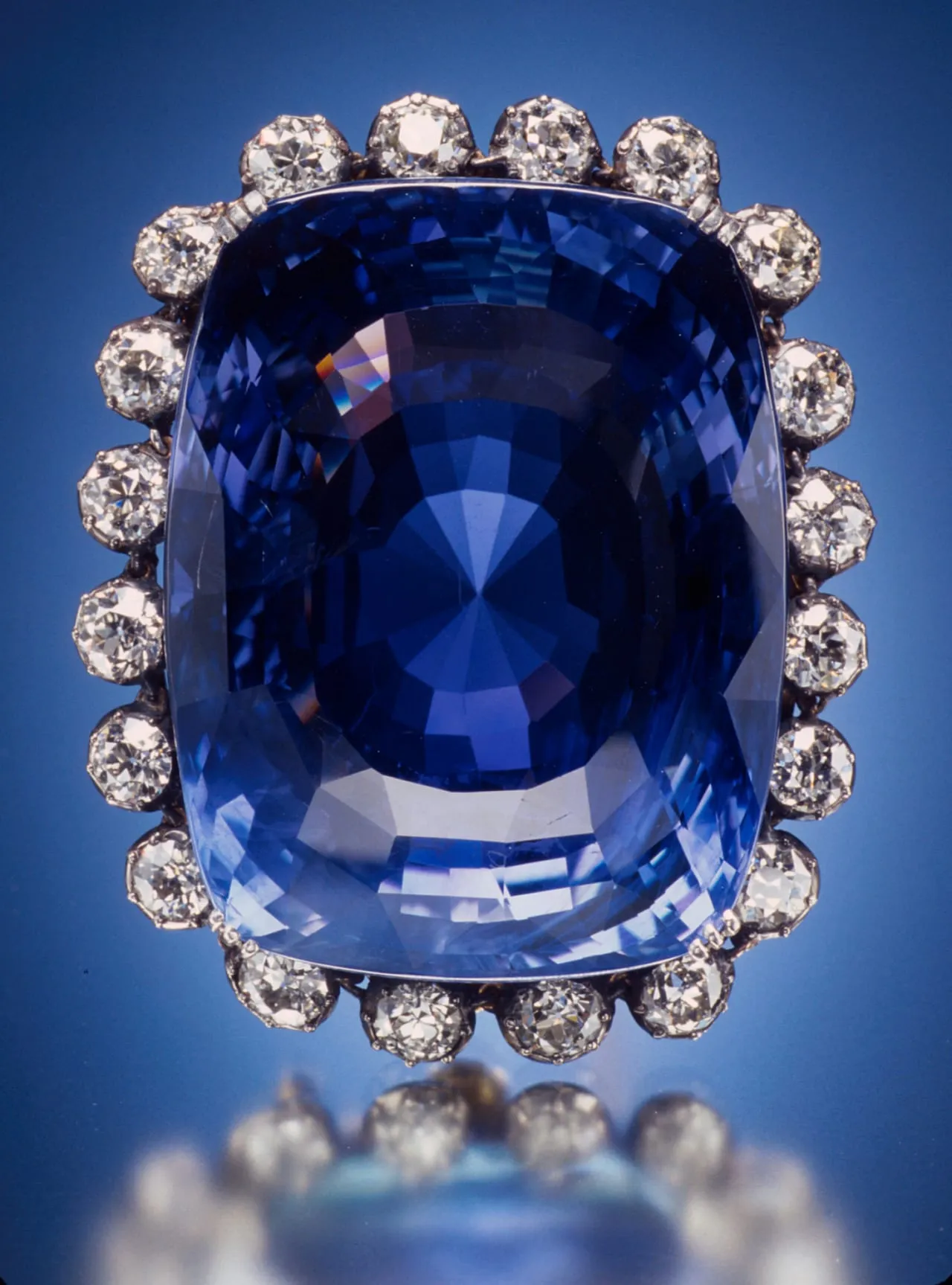


Sources
- Sapphire Description (Gem Encyclopedia) · GIA
- Sapphire (Star sapphire) · Wikipedia
- Gem News International: Twelve-rayed star sapphire from Thailand, Gems & Gemology 54(2) · GIA, 2018
- Synthetic Star Sapphires and Rubies Produced by Wiede's Carbidwerk, Freyung, Germany (Schmetzer, Gilg, Bernhardt), Gems & Gemology 53(3) · GIA, 2017
- Lab Notes: Large laboratory-grown star ruby and sapphire, Gems & Gemology 55(3) · GIA, 2019
- Star sapphire (gem) · Gemdat.org
- Black Star sapphire · Wikipedia
- Star of India (gem) · Wikipedia
- Star of India · American Museum of Natural History
- Star of Adam · Wikipedia
- Star of Asia · Wikipedia
- Star of Bombay · Wikipedia
- Black Star of Queensland · Wikipedia
- The Curious Lore of Precious Stones (G. F. Kunz) · J. B. Lippincott Company (Project Gutenberg), 1913
- Pailin province · Wikipedia
- Rubyvale, Queensland · Wikipedia
- Chanthaburi · Wikipedia
Draft: awaiting expert reviewReport an error
On the same step

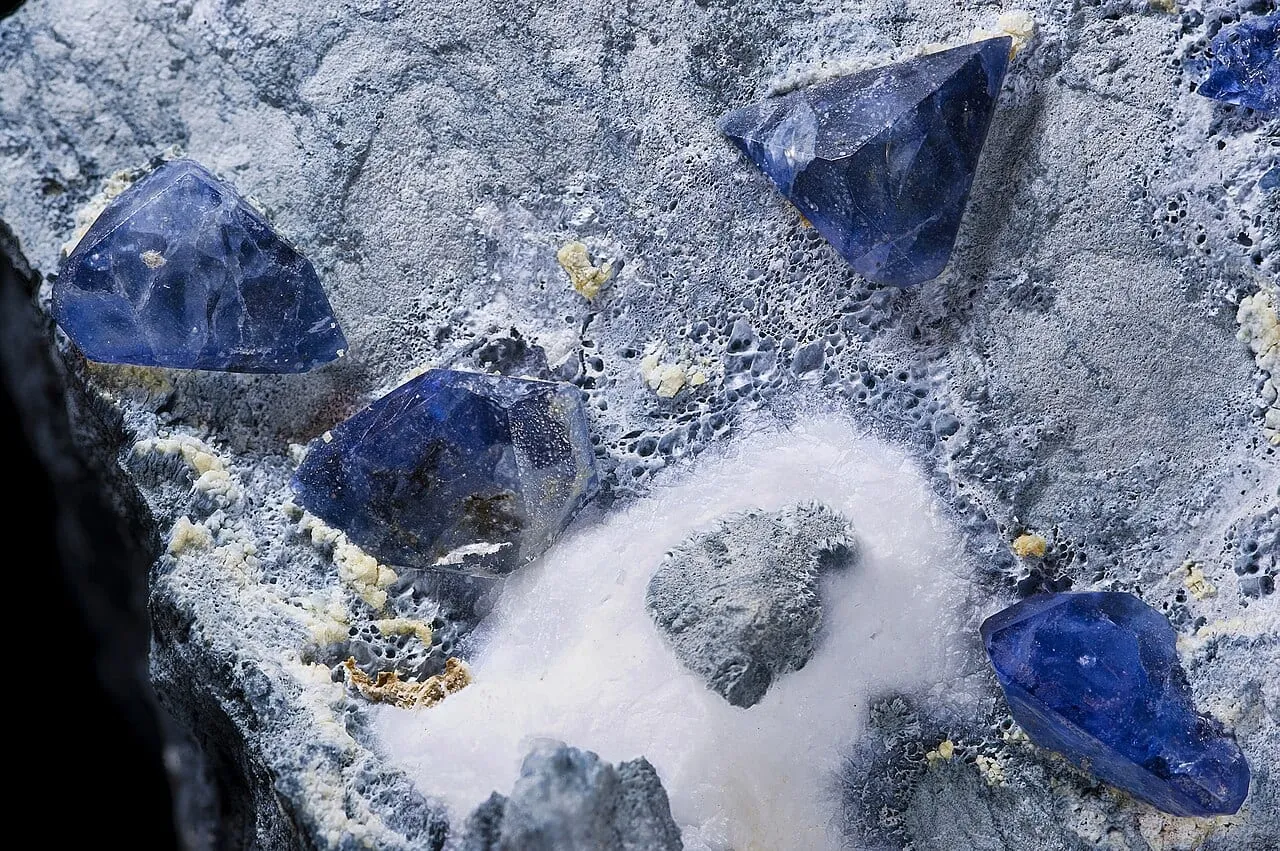
Benitoite
A sapphire-like blue stone whose gem crystals come from a single mine in the world: the official state gem of California.
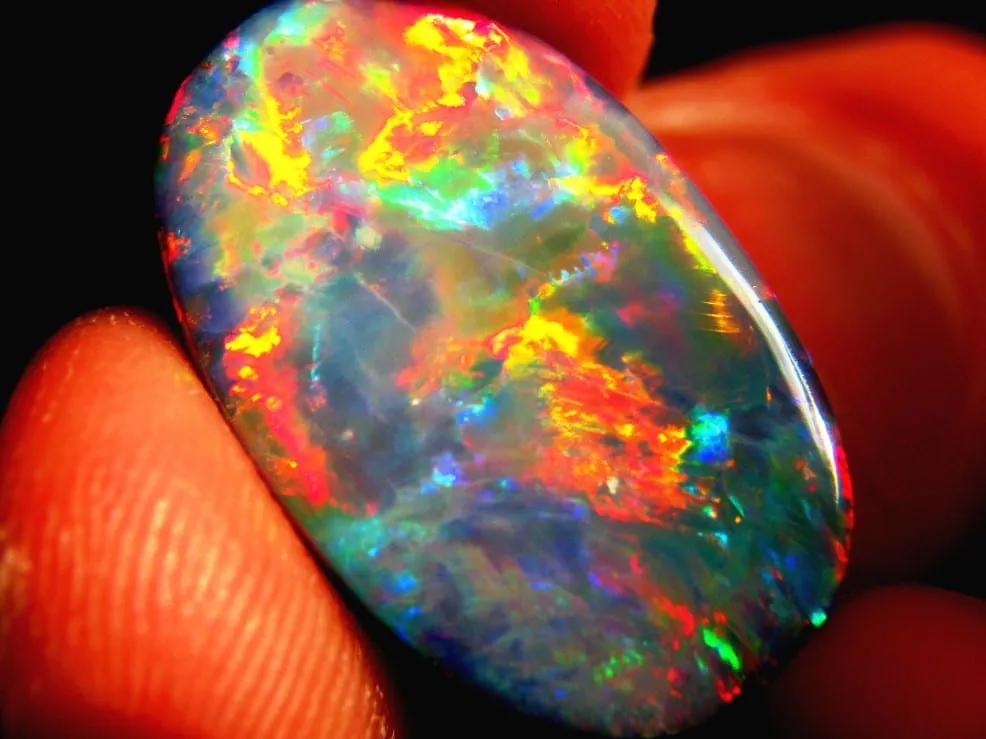
Black opal
Play-of-colour glowing against a dark grey or black body: the rarest and usually most valuable kind of opal, mostly from Lightning Ridge in Australia.
Cat's-eye chrysoberyl
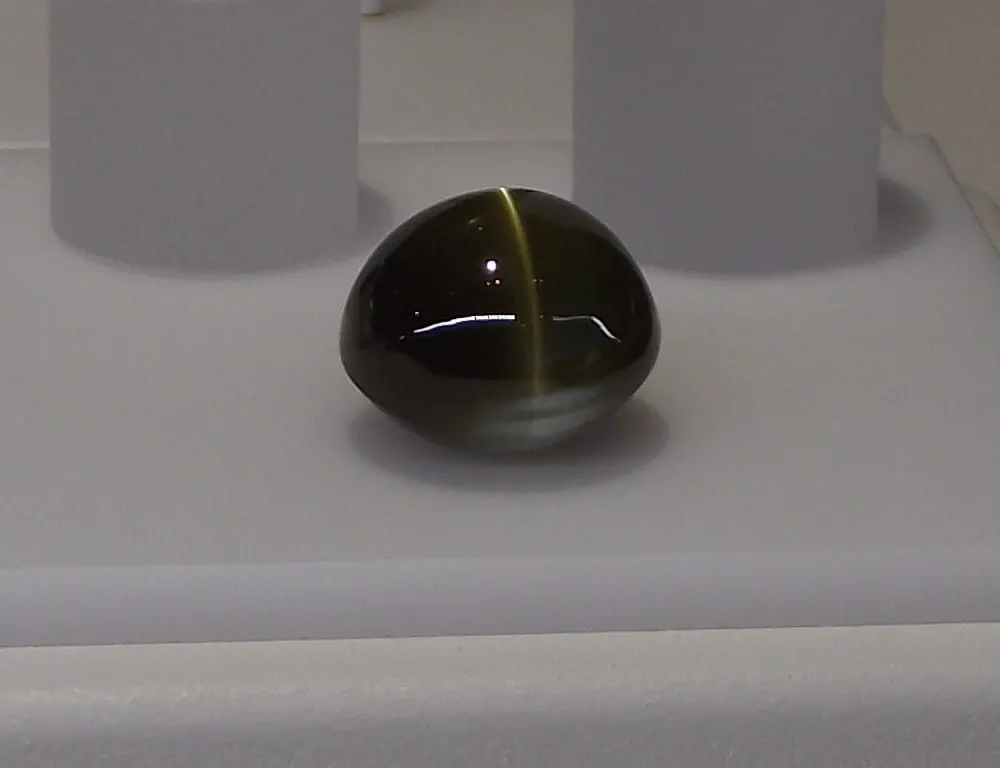
Chrysoberyl that shows a sharp band of light gliding across its domed surface: the gem meant when people simply say “cat's eye”.