Mineral
Sodalite
Na₈Al₆Si₆O₂₄Cl₂Sodalit
A white-veined, royal-blue ornamental stone, often confused with lapis lazuli because it looks so much like it.
Also known as: Hackmanite (the colour-changing variety)
- Popularly: Semi-precious stone
- Ornamental

In short
Sodalite is a blue mineral named after the sodium it contains. Its best-known form is royal-blue masses with white veins, which are made into cabochons, beads and decorative slabs. It resembles lapis lazuli but usually lacks pyrite and has a white, not blue, streak. The variety that changes colour on exposure to light is called hackmanite.
Photos

How does it form?
Sodalite forms in igneous rocks poor in silica, especially nepheline syenite and phonolite, as a vein filling and cavity mineral, together with minerals such as nepheline, cancrinite and natrolite. It is also found in cavities in blocks thrown out by volcanoes and in some metamorphosed limestone-type rocks. Massive sodalite is opaque, while its crystals are usually transparent or translucent.
What is it used for?
- Jewellery: Even blue sodalite is worked into cabochons and beads.
- Facing and inlay: Lower-grade material is mostly used for facing on buildings and objects and for inlay work.
- Science: Because the zeolite-like cage structure of sodalite can hold certain ions, similar synthetic materials are studied as containers for ions such as nitrate and iodide.
Where does the colour come from?
The characteristic blue of sodalite comes from clusters of sulphur (S₃⁻ and S₄) trapped inside its crystal framework. The variety called hackmanite changes colour with light (tenebrescence): freshly quarried hackmanite from Mont Saint-Hilaire and Greenland is pale to deep violet but quickly fades to greyish or greenish white. Hackmanite from Afghanistan and Myanmar starts creamy white and turns violet to pink-red in sunlight; kept in the dark, the colour fades again.
What determines its value?
What matters most in sodalite is the depth and evenness of the blue: material with saturated blue and few, tidy white veins is sought after for beads and cabochons, while lower-grade material is mostly used for facing and inlay work. Crack-free, large, well-polishing pieces are worth more. Fine sodalite occurs in only a few places, so the source of the stone also matters. Sodalite is a separate stone from lapis lazuli; selling it under the name lapis is deception.
This information is educational, not buying, selling or investment advice. Value varies enormously with quality and treatment.
How to recognise it
- 1
Its colour is a deep royal blue, often marked with white veins or patches. The blue is closer to a traditional royal blue than to the ultramarine of lapis.
- 2
Its streak (the colour of its powder) is white, not blue; in lapis lazuli it is blue.
- 3
The typical golden-yellow pyrite flecks of lapis are rarely seen in sodalite.
- 4
Its hardness is 5.5–6. It is brittle, and its six directions of poor cleavage may show as fine cracks inside the stone.
- 5
Most sodalite glows orange under ultraviolet light (fluorescence).
Fakes and imitations
What shops usually don’t tell you:
- Sodalite sold as lapis lazuli: because it resembles the more valuable lapis, it is sometimes sold as lapis; but its streak is white and it generally has no pyrite flecks.
- Dumortierite: blue dumortierite is sometimes mistaken for sodalite and has been used as imitation lapis.
Myths and misconceptions
MythSodalite is a cheap kind of lapis lazuli.
FactSodalite is a single mineral, while lapis lazuli is a rock made mainly of the mineral lazurite, with calcite and pyrite besides. Sodalite and lazurite are related minerals (they belong to the same group), but the blue of sodalite is closer to royal blue and that of lapis to ultramarine, and sodalite has a white streak.
What is it believed to be good for?
This section reports beliefs; it is not health information. There is no scientific evidence for these claims and no stone replaces medical treatment.
The meanings people give this stone, and who holds them:
- In Türkiye some news sites claim that sodalite clears the mind, improves concentration, strengthens self-confidence, calms excitement and lets a person express feelings and thoughts easily.
- The same sources also claim that sodalite helps with swollen, sore and inflamed throats and with nausea from travel or other causes, and helps people with depression and substance dependence.
- Crystal-therapy sources claim that sodalite supports the throat chakra and strengthens intuition and “psychic abilities”; in Türkiye sodalite is also known as the stone of Sagittarius.
What science says
There is no scientific evidence that sodalite clears the mind, improves concentration, helps inflamed throats, nausea or depression, frees anyone from dependence or strengthens intuition; for a sore throat, depression or dependence, see a doctor rather than relying on a stone. The blue colour of the stone itself comes, quite apart from these claims, from sulphur clusters in its crystal structure.
Did you know?
Sodalite was found in Greenland in 1811, but it did not become an important ornamental stone until large, fine deposits were discovered in Ontario, Canada, in 1891.
The people of the Caral culture of Peru are known to have traded for sodalite from the Collao altiplano of the Andes.
In his 1913 book, George F. Kunz gives sodalite as the stone for Canada in his list of stones that represent countries.
Where is it found?
Loading map…
- Ilímaussaq complex, Narsaq, Greenland · Type localitySodalite was described here in 1811; hackmanite is also known from this region
- Bancroft (Princess Sodalite Mine), Ontario, Canada · Major depositOne of the few places with fine sodalite; large deposits found in Ontario in 1891 made it an important ornamental stone
- Mont Saint-Hilaire, Quebec, Canada · Known localityFine-quality sodalite and hackmanite
- Ice River complex (near Golden), British Columbia, Canada · Known localityAn alkaline rock complex that contains sodalite
- Litchfield, Maine, USA · Known localityFine sodalite deposits
- Magnet Cove, Arkansas, USA · Known localityFine sodalite deposits
- Mount Vesuvius, Campania, Italy · Historic sourceTransparent, well-formed crystals in the lavas
- Northern Namibia (Kunene Region) · Known localityTransparent, well-formed crystals
- Khibiny Mountains, Kola Peninsula, Russia · Known localitySodalite in nepheline syenite massifs
- Mayen area (Bellerberg volcano), Eifel, Germany · Known localitySodalite in cavities of volcanic blocks
Locations are approximate to protect sites. Red dots mark places in Türkiye. Open in the big map →
Frequently asked questions
What is sodalite?
Sodalite is a blue mineral named after the sodium it contains. Its best-known form is royal-blue masses with white veins, which are made into cabochons, beads and decorative slabs. It resembles lapis lazuli but usually lacks pyrite and has a white, not blue, streak. The variety that changes colour on exposure to light is called hackmanite.
What is sodalite used for?
Jewellery: Even blue sodalite is worked into cabochons and beads. Facing and inlay: Lower-grade material is mostly used for facing on buildings and objects and for inlay work. Science: Because the zeolite-like cage structure of sodalite can hold certain ions, similar synthetic materials are studied as containers for ions such as nitrate and iodide.
How hard is sodalite?
It has a hardness of 5.5–6 on the Mohs scale. It can scratch glass; a steel knife scratches it only with difficulty. Its specific gravity is 2.27–2.33 g/cm³.
Where is sodalite found?
Its best-known localities: Ilímaussaq complex, Narsaq, Greenland; Bancroft (Princess Sodalite Mine), Ontario, Canada; Mount Vesuvius, Campania, Italy; Mont Saint-Hilaire, Quebec, Canada; Ice River complex (near Golden), British Columbia, Canada.
How can you tell if sodalite is real?
Its colour is a deep royal blue, often marked with white veins or patches. The blue is closer to a traditional royal blue than to the ultramarine of lapis. Its streak (the colour of its powder) is white, not blue; in lapis lazuli it is blue. The typical golden-yellow pyrite flecks of lapis are rarely seen in sodalite. Sodalite sold as lapis lazuli: because it resembles the more valuable lapis, it is sometimes sold as lapis; but its streak is white and it generally has no pyrite flecks.
Is sodalite valuable?
On the “street to diamond” value ladder it sits on step 5 of nine: Ornamental stone. What matters most in sodalite is the depth and evenness of the blue: material with saturated blue and few, tidy white veins is sought after for beads and cabochons, while lower-grade material is mostly used for facing and inlay work. Crack-free, large, well-polishing pieces are worth more. Fine sodalite occurs in only a few places, so the source of the stone also matters. Sodalite is a separate stone from lapis lazuli; selling it under the name lapis is deception.
What is sodalite good for?
In Türkiye some news sites claim that sodalite clears the mind, improves concentration, strengthens self-confidence, calms excitement and lets a person express feelings and thoughts easily. The same sources also claim that sodalite helps with swollen, sore and inflamed throats and with nausea from travel or other causes, and helps people with depression and substance dependence. Crystal-therapy sources claim that sodalite supports the throat chakra and strengthens intuition and “psychic abilities”; in Türkiye sodalite is also known as the stone of Sagittarius. There is no scientific evidence that sodalite clears the mind, improves concentration, helps inflamed throats, nausea or depression, frees anyone from dependence or strengthens intuition; for a sore throat, depression or dependence, see a doctor rather than relying on a stone. The blue colour of the stone itself comes, quite apart from these claims, from sulphur clusters in its crystal structure. This section reports beliefs; it is not health information. There is no scientific evidence for these claims and no stone replaces medical treatment.
Sources
- Handbook of Mineralogy: Sodalite · Mineralogical Society of America
- Sodalite · Wikipedia
- The Curious Lore of Precious Stones (G. F. Kunz) · J. B. Lippincott Company (Project Gutenberg), 1913
- Sodalit Taşı Nedir, Nasıl Oluşur? Sodalit Taşının Özellikleri, Anlamı Ve Faydaları Nelerdir? · Milliyet
External links
Draft: awaiting expert reviewReport an error ↗
On the same step
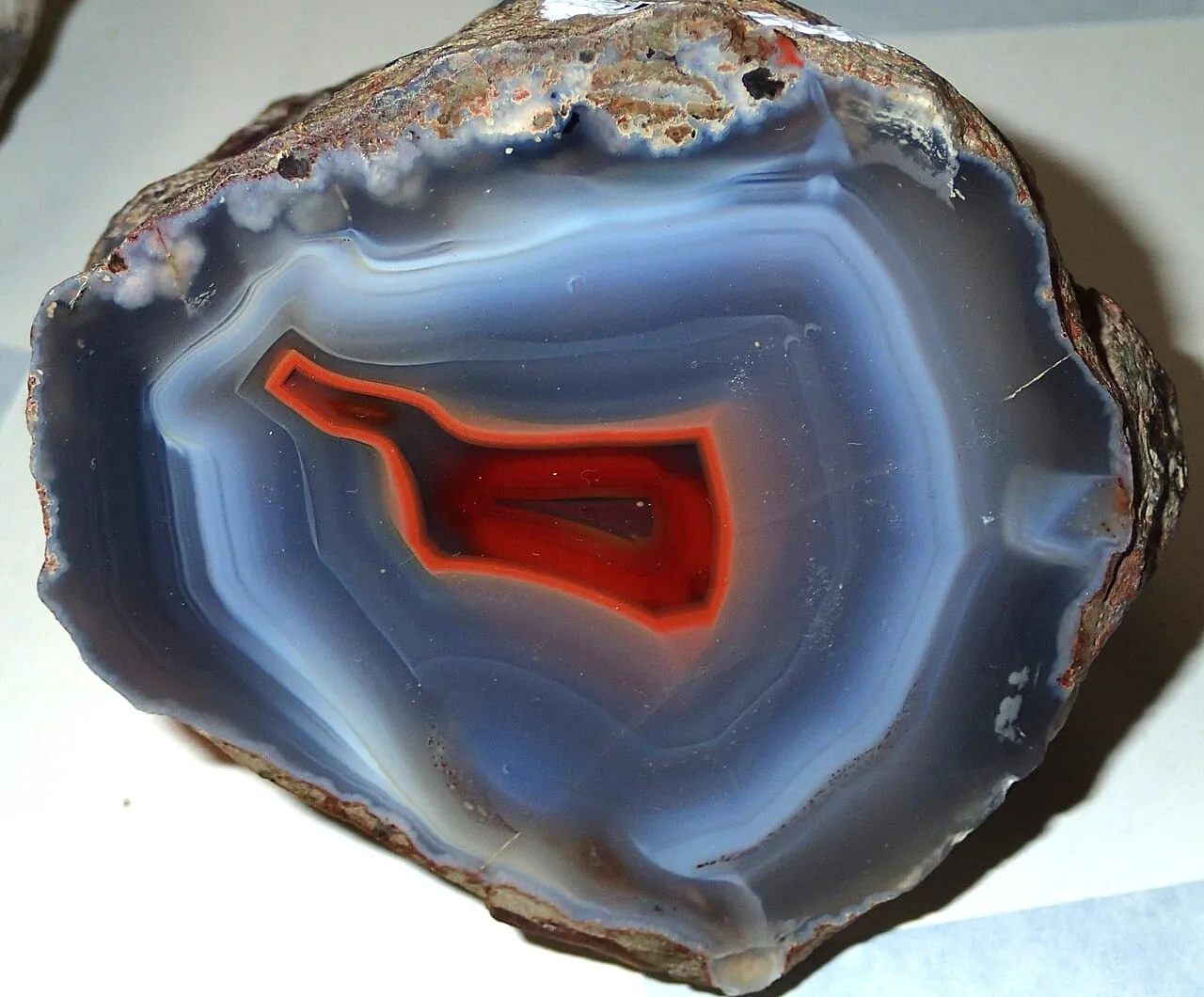
Agate
The banded variety of chalcedony: it grows layer by layer in hollows in volcanic rock and shows a new pattern every time it is cut.
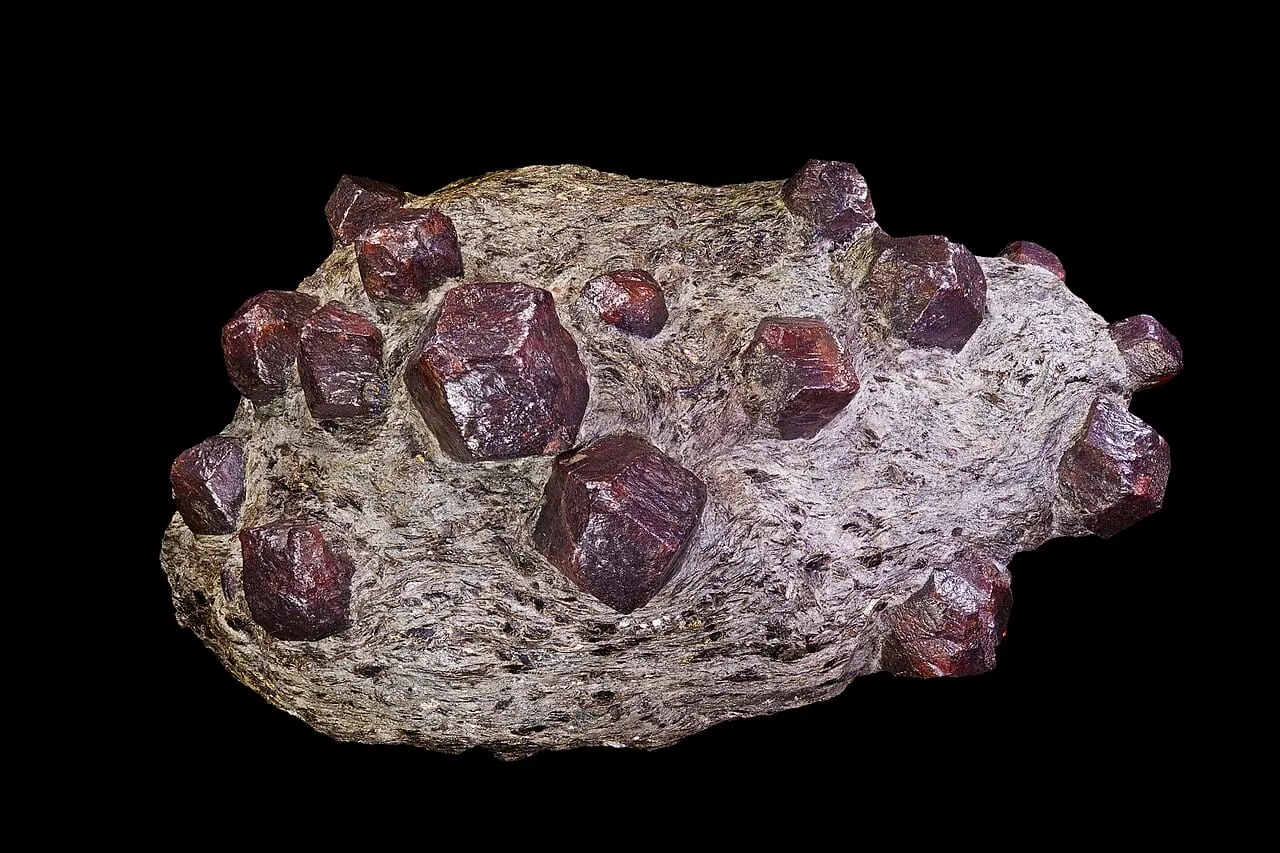
Almandine
The commonest garnet: a deep red, iron-rich stone named after the ancient city of Alabanda in Anatolia, used in jewellery and in sandpaper alike.
Amazonite
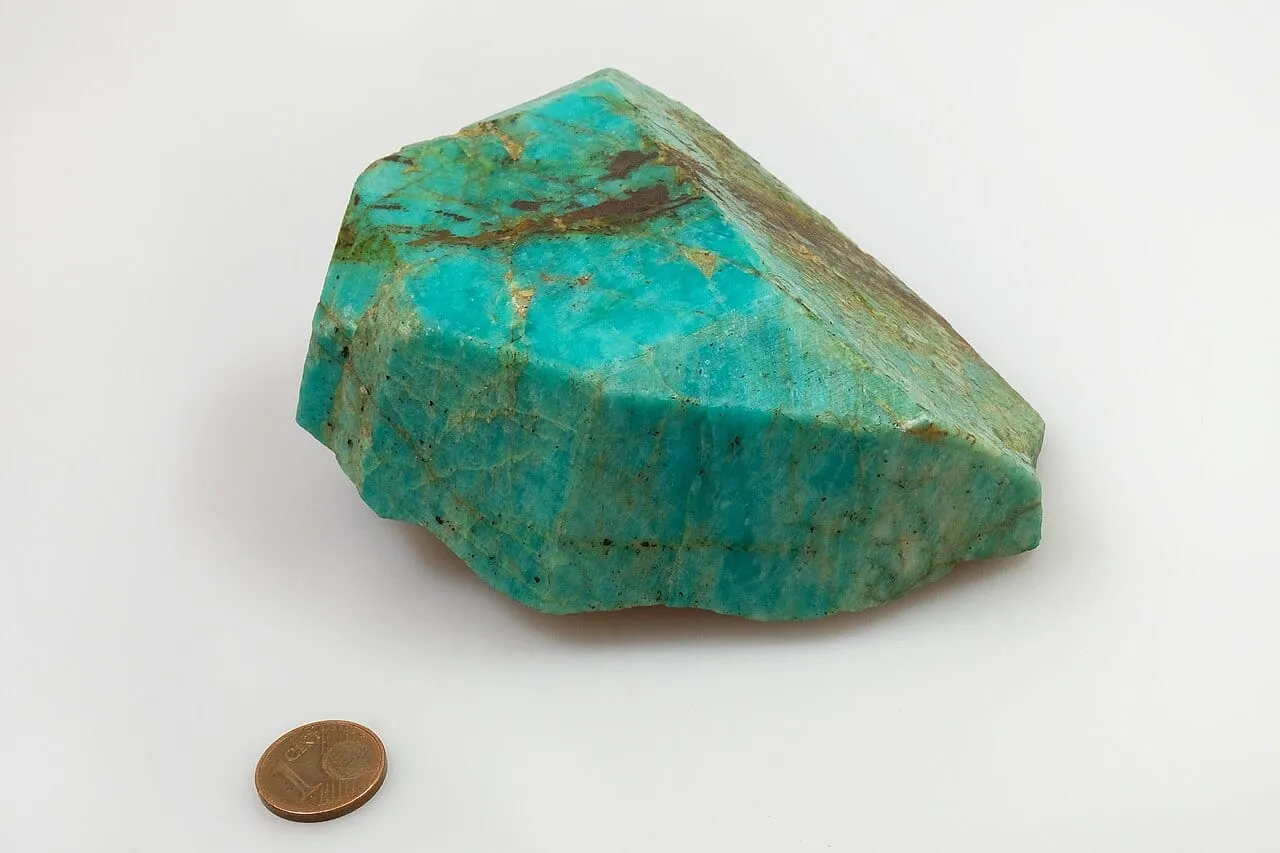
A turquoise-like green-blue feldspar: a variety of microcline worn as jewellery for more than three thousand years, but it can release lead.