Mineral
Spodumene
LiAlSi₂O₆Spodümen
The parent of pink kunzite and green hiddenite, and also one of the main ore minerals of the lithium used in batteries.
Also known as: Kunzite (pink to lilac variety) · Hiddenite (green variety) · Triphane (yellow variety)
- Popularly: Semi-precious stone
- Gemstone
- Ore
In short
Spodumene is a pyroxene mineral containing lithium and aluminium. It can be colourless, white, grey, yellow, pink, purple or green. Its pink-lilac variety is cut as the gem kunzite and its emerald-green variety as hiddenite. The mineral's main economic importance, however, is as a lithium ore: a large part of the world's lithium comes from spodumene in pegmatites, the coarse-grained rocks in which it grows.
How does it form?
Spodumene forms in lithium-rich granite pegmatites. A pegmatite is a coarse-grained rock that crystallises from the last, water-rich part of a magma as it cools slowly. Lithium is a scarce element in the Earth’s crust, but in such a lithium-rich final liquid spodumene crystallises along with minerals such as quartz, albite, mica and beryl. Crystals can grow very large; single spodumene crystals metres long have been reported from the Black Hills.
What is it used for?
- Lithium ore: Lithium is used mostly in rechargeable batteries; the USGS estimates that about 88% of world lithium use goes into batteries. Spodumene is an important source of this lithium: the crushed and separated ore is roasted at high temperature and converted chemically into lithium compounds.
- Ceramics and glass: Spodumene concentrate is used directly in making ceramics and glass, where it acts as a flux that lowers the melting temperature. It also goes into heat-resistant glass-ceramics such as Pyroceram.
- Jewellery: Clear, coloured crystals are cut as kunzite and hiddenite for rings and pendants. Its two cleavage directions make cutting and setting demanding.
Varieties
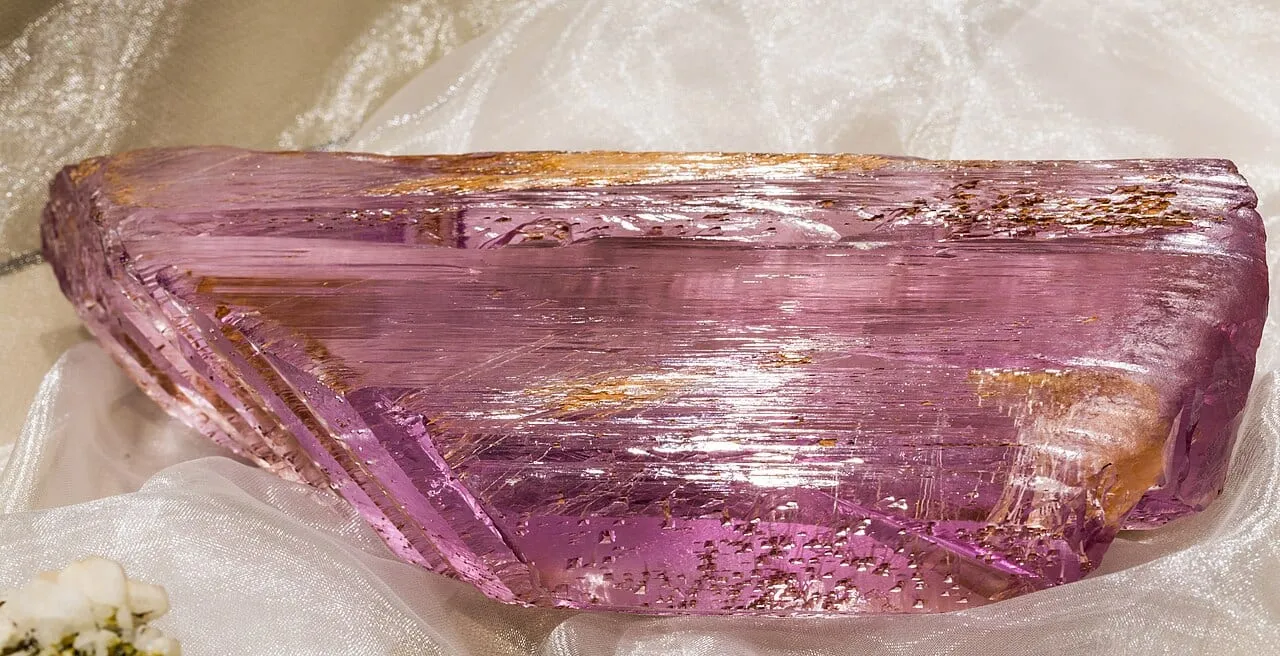
- Kunzite: The pink to lilac variety, coloured by traces of manganese. Its colour can fade in light. It is named after the mineralogist George F. Kunz.
- Hiddenite: The pale to emerald-green variety, coloured by chromium. It is named after William Earl Hidden.
- Triphane: The name for yellowish spodumene.
See the kunzite page for more.
What determines its value?
What spodumene is worth depends on how it is used. As a lithium ore, the factors are the lithium content of the rock, the size of the pegmatite deposit, the cost of separating the lithium from the rock and the demand from the battery market. As a gem, the vividness and saturation of colour, clarity, cut and size matter for kunzite and hiddenite; the colour of some varieties such as kunzite can fade in light, which also counts. Hiddenite is rarer than kunzite.
This information is educational, not buying, selling or investment advice. Value varies enormously with quality and treatment.
How to recognise it
- 1
It forms long, flattened prismatic crystals; the faces are striated along the length and often pitted with small triangular markings.
- 2
Its hardness is 6.5–7, close to quartz. But it has two perfect cleavages, so a hard knock splits it easily along those surfaces.
- 3
Pink-lilac kunzite and green hiddenite show strong pleochroism: the shade of colour changes when the stone is viewed from different directions.
- 4
It grows in pegmatites together with quartz, albite (a feldspar), mica and beryl. It can be mistaken by eye for other lithium minerals in the same rocks, such as petalite; a laboratory is needed for certain identification.
Fakes and imitations
What shops usually don’t tell you:
- Not every green spodumene sold as hiddenite is true hiddenite: the name belongs to material coloured by chromium, while green spodumene coloured by other substances is paler and is not counted as hiddenite.
- “Lithia emerald” was a name used for hiddenite in the late 19th century. Hiddenite is not emerald: it is spodumene, not beryl, and it is softer than emerald.
Myths and misconceptions
MythAll the lithium in batteries comes from salt lakes.
FactPart of the world's lithium comes from salty brines, but a large part comes from hard-rock mines that dig minerals such as spodumene. According to the USGS, Australia was the world's largest lithium producer in 2025, and Australian lithium comes from hard-rock mines.
MythHiddenite is a kind of emerald.
FactHiddenite is the green variety of spodumene, while emerald is the green variety of beryl. Both owe their colour to traces of chromium, but they are different minerals. Spodumene is softer (6.5–7) and, having two perfect cleavages, splits easily when struck.
Did you know?
Spodumene was first described in 1800 from the island of Utö in Sweden. The element lithium was found in 1817 in a mineral (petalite) from the same island; its name comes from the Greek lithos, “stone”.
A single spodumene crystal 14.3 metres long has been reported from the Black Hills of South Dakota, USA.
Its name comes from a Greek word meaning “ash-coloured”; raw spodumene is often dull, grey-white and unremarkable.
Where is it found?
Loading map…
- Utö, Södermanland, Sweden · Type localitySpodumene was first described in 1800 from a mine on this island; the element lithium was identified in 1817 in petalite from here
- Greenbushes, Western Australia · Major depositOne of the world's largest and highest-grade spodumene (lithium) mines
- Manono, Tanganyika Province, Democratic Republic of the Congo · Major depositA giant spodumene deposit in pegmatites, reported as one of the largest hard-rock spodumene deposits in the world
- Black Hills, South Dakota, USA · Historic sourceSingle crystals of more than 14 metres have been reported from pegmatites such as the Etta mine near Keystone
- Kings Mountain, North Carolina, USA · Historic sourceThe pegmatite district of the Foote mine, where spodumene is recorded
- Hiddenite, Alexander County, North Carolina, USA · Historic sourceWhere green hiddenite was first found around 1879; the town was renamed after the stone
- Pala district, San Diego County, California, USA · Known localityThe area where pink-lilac kunzite was found in 1902, known for the Pala Chief and White Queen mines
- Eastern Minas Gerais (around Itambacuri and Resplendor), Brazil · Known localityA pegmatite province producing kunzite and other coloured spodumene
- Nuristan Province, Afghanistan · Known localityIts pegmatites yield large, clear kunzite crystals
- Bikita, Masvingo Province, Zimbabwe · Known localityA pegmatite district where lithium minerals are mined
- Tanco mine, Bernic Lake, Manitoba, Canada · Known localitySpodumene is mined from a rare-element pegmatite
Locations are approximate to protect sites. Red dots mark places in Türkiye. Open in the big map →
Frequently asked questions
What is spodumene?
Spodumene is a pyroxene mineral containing lithium and aluminium. It can be colourless, white, grey, yellow, pink, purple or green. Its pink-lilac variety is cut as the gem kunzite and its emerald-green variety as hiddenite. The mineral's main economic importance, however, is as a lithium ore: a large part of the world's lithium comes from spodumene in pegmatites, the coarse-grained rocks in which it grows.
What is spodumene used for?
Lithium ore: Lithium is used mostly in rechargeable batteries; the USGS estimates that about 88% of world lithium use goes into batteries. Spodumene is an important source of this lithium: the crushed and separated ore is roasted at high temperature and converted chemically into lithium compounds. Ceramics and glass: Spodumene concentrate is used directly in making ceramics and glass, where it acts as a flux that lowers the melting temperature. It also goes into heat-resistant glass-ceramics such as Pyroceram.
How hard is spodumene?
It has a hardness of 6.5–7 on the Mohs scale. It scratches glass and steel; a steel knife cannot scratch it. Its specific gravity is 3.03–3.23 g/cm³.
Where is spodumene found?
Its best-known localities: Utö, Södermanland, Sweden; Greenbushes, Western Australia; Manono, Tanganyika Province, Democratic Republic of the Congo; Black Hills, South Dakota, USA; Kings Mountain, North Carolina, USA.
How can you tell if spodumene is real?
It forms long, flattened prismatic crystals; the faces are striated along the length and often pitted with small triangular markings. Its hardness is 6.5–7, close to quartz. But it has two perfect cleavages, so a hard knock splits it easily along those surfaces. Pink-lilac kunzite and green hiddenite show strong pleochroism: the shade of colour changes when the stone is viewed from different directions. Not every green spodumene sold as hiddenite is true hiddenite: the name belongs to material coloured by chromium, while green spodumene coloured by other substances is paler and is not counted as hiddenite.
Is spodumene valuable?
On the “street to diamond” value ladder it sits on step 5 of nine: Ornamental stone. What spodumene is worth depends on how it is used. As a lithium ore, the factors are the lithium content of the rock, the size of the pegmatite deposit, the cost of separating the lithium from the rock and the demand from the battery market. As a gem, the vividness and saturation of colour, clarity, cut and size matter for kunzite and hiddenite; the colour of some varieties such as kunzite can fade in light, which also counts. Hiddenite is rarer than kunzite.
Varieties

Sources
- Handbook of Mineralogy: Spodumene · Mineralogical Society of America
- Spodumene · Wikipedia
- Hiddenite · Wikipedia
- Mineral Commodity Summaries 2026: Lithium · U.S. Geological Survey, 2026
- Kunzite Description (Gem Encyclopedia) · GIA
- Lithium · Wikipedia
- Pala, California · Wikipedia
External links
Draft: awaiting expert reviewReport an error ↗
On the same step
Agate
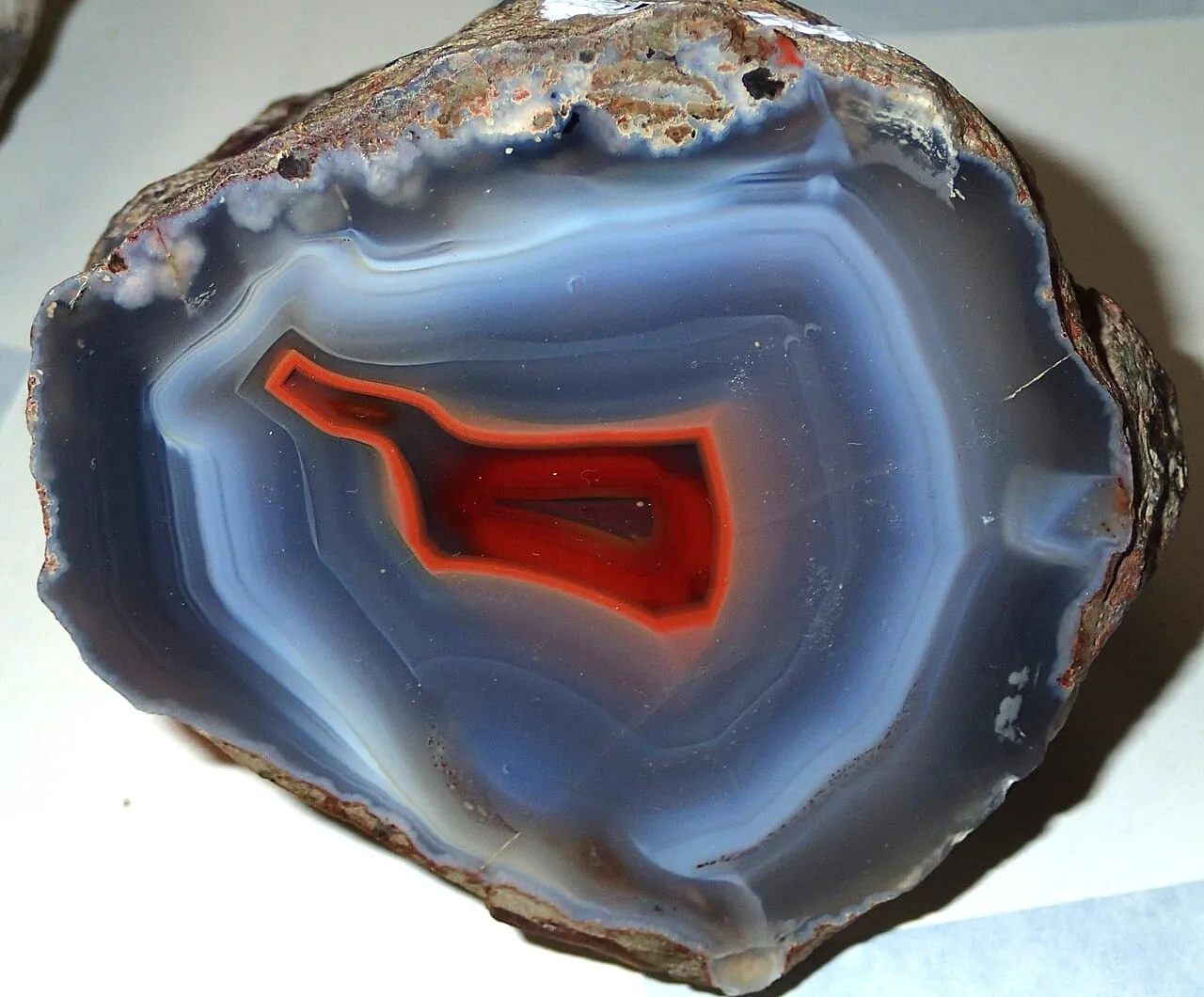
The banded variety of chalcedony: it grows layer by layer in hollows in volcanic rock and shows a new pattern every time it is cut.
Almandine
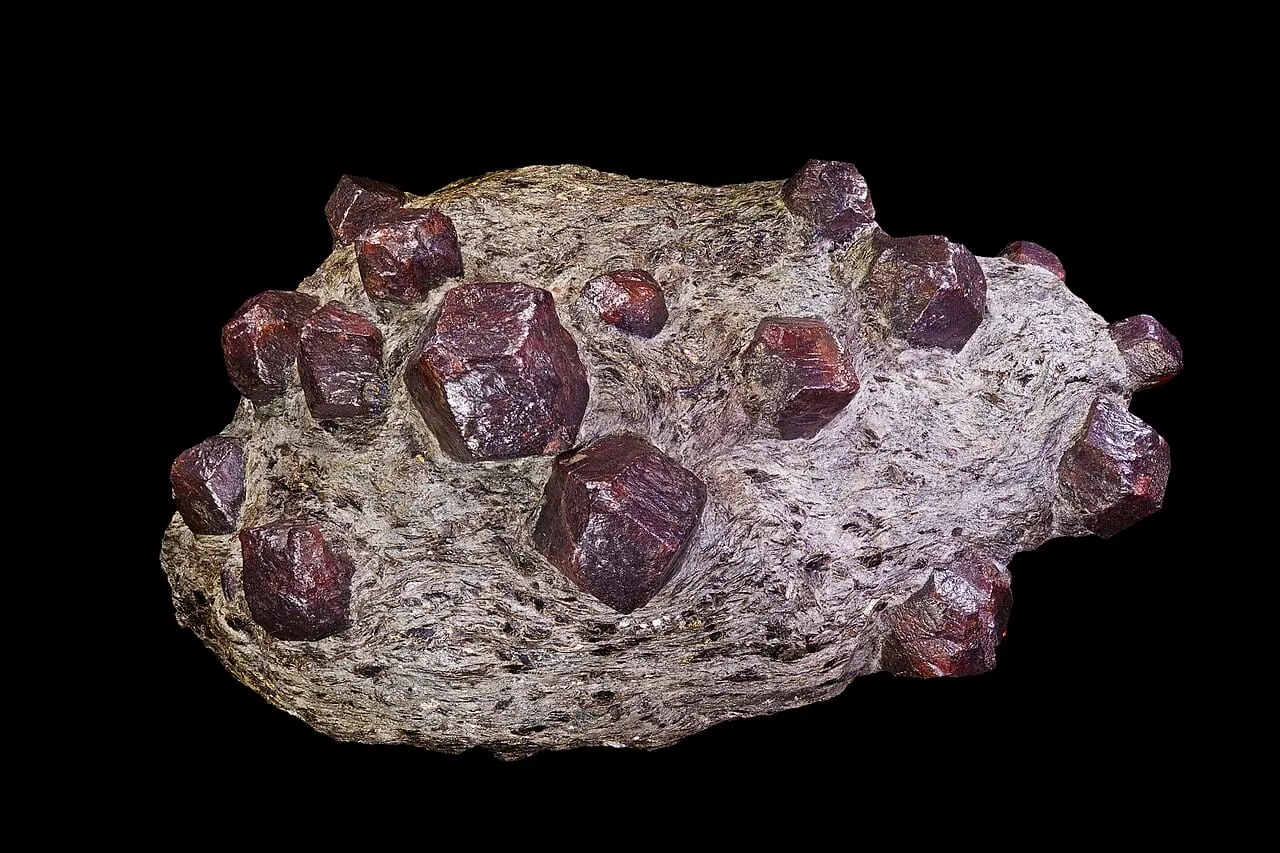
The commonest garnet: a deep red, iron-rich stone named after the ancient city of Alabanda in Anatolia, used in jewellery and in sandpaper alike.
Amazonite
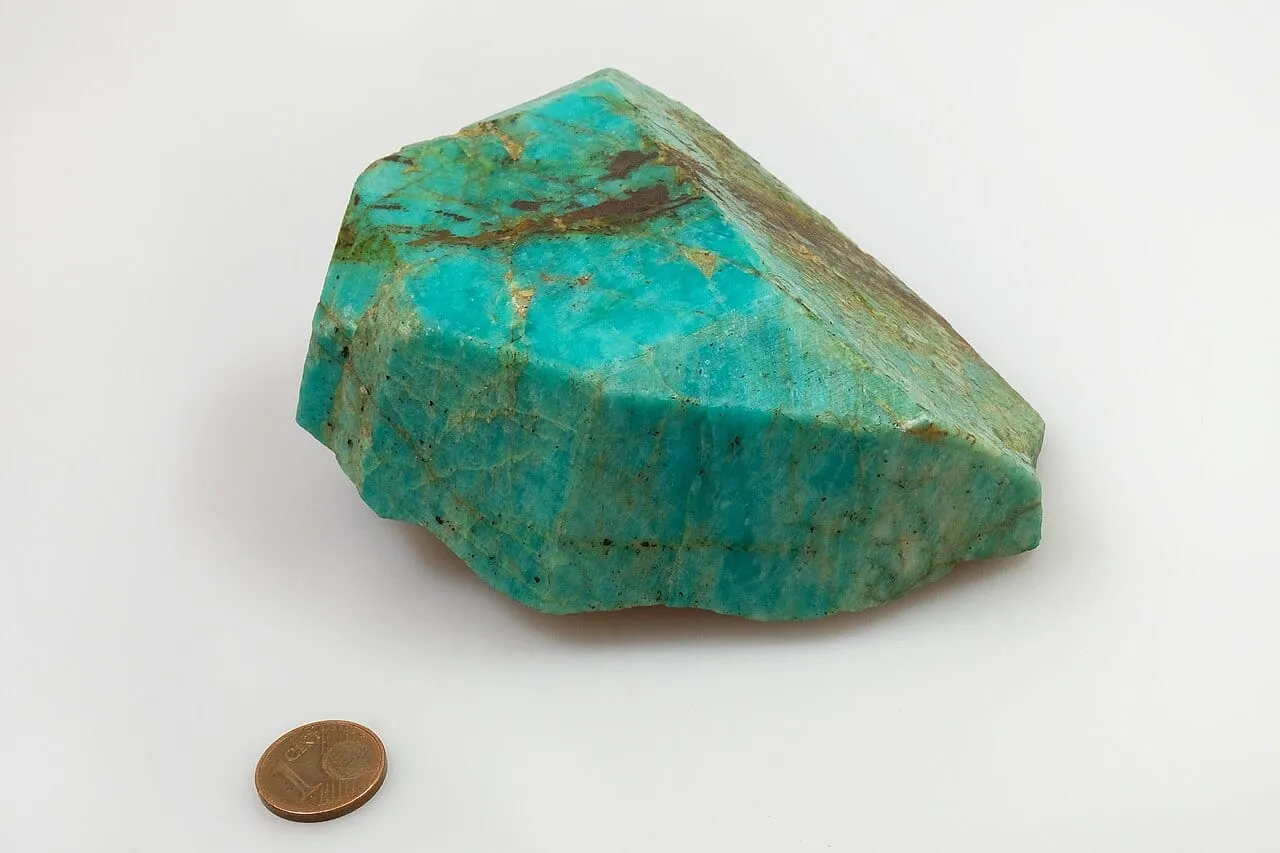
A turquoise-like green-blue feldspar: a variety of microcline worn as jewellery for more than three thousand years, but it can release lead.