VarietyA variety of Sodalite
Hackmanite
Na₈Al₆Si₆O₂₄Cl₂Hackmanit
The sodalite that changes colour with light: a rare collector's stone that turns pink to violet under ultraviolet light or sunlight and fades again in the dark.
- Popularly: Semi-precious stone
In short
Hackmanite is the variety of sodalite that changes colour in response to light. Exposed to ultraviolet light or sunlight, it deepens to pink, purple or violet; kept in the dark, the colour fades again. This property is called tenebrescence, and the change can be repeated again and again. Because it is far scarcer than ordinary blue sodalite, it is regarded as a collector's stone.
Photos
How does it form?
Like sodalite, hackmanite forms in silica-poor, sodium-rich igneous rocks, especially nepheline syenites. These rocks form when magmas too poor in silica to make quartz cool slowly underground. Hackmanite often grows within the same mass as ordinary sodalite that does not change colour.
The colour change is thought to be linked to traces of sulfur in the crystal structure: GIA researchers found traces of sulfur in every sample they examined from Myanmar and Afghanistan. Ultraviolet light causes a temporary change in the structure and the stone darkens; visible light or heat reverses it and the stone fades.
What is it used for?
- Collecting and jewellery: Transparent pieces are faceted like gems and opaque ones are cut as cabochons. Because it is brittle, pendants and brooches are recommended over rings and bracelets.
- Mineral collections: Pieces that change colour and glow under an ultraviolet lamp are favourites in collections of fluorescent minerals.
- Science and technology: At the University of Turku in Finland, researchers work with synthetic hackmanite made in the laboratory. They are testing it in indicators that measure the sun’s ultraviolet rays, in reusable X-ray imaging sheets and in radiation meters for space stations.
How does the colour change?
How the stone reacts to light depends on where it comes from. Freshly dug hackmanite from Greenland and from Mont Saint-Hilaire in Canada is pale to deep violet, but the colour quickly fades in light to greyish or greenish white. Hackmanite from Afghanistan and Myanmar starts creamy white and turns violet or pinkish red in sunlight; kept in the dark, the colour fades again. Short-wave ultraviolet light speeds the change up. Burmese hackmanite can darken in seconds and fade over days, while Afghan pieces may darken within minutes and fade much faster.
What determines its value?
Hackmanite is far scarcer than ordinary sodalite and is a collector's stone. Its value depends mostly on how strong the colour change is, and on transparency and clarity: stones clear enough to facet are rare and the most sought after. Few inclusions, bright fluorescence and size also matter. Material from Afghanistan is generally cleaner and glows more strongly than that from Myanmar, and because the stone is brittle, freedom from cracks also affects value.
This information is educational, not buying, selling or investment advice. Value varies enormously with quality and treatment.
How to recognise it
- 1
Its defining feature is tenebrescence: after a few seconds or minutes under an ultraviolet lamp its colour deepens noticeably to pink, purple or violet, and it stays that way for a while after the lamp is switched off.
- 2
Under long-wave ultraviolet light it glows a bright yellowish orange (fluorescence); some pieces give off a faint glow for a short time after the lamp goes off.
- 3
With a hardness of 5.5–6, a steel knife scratches it only with difficulty. It is brittle and does not stand up well to knocks.
- 4
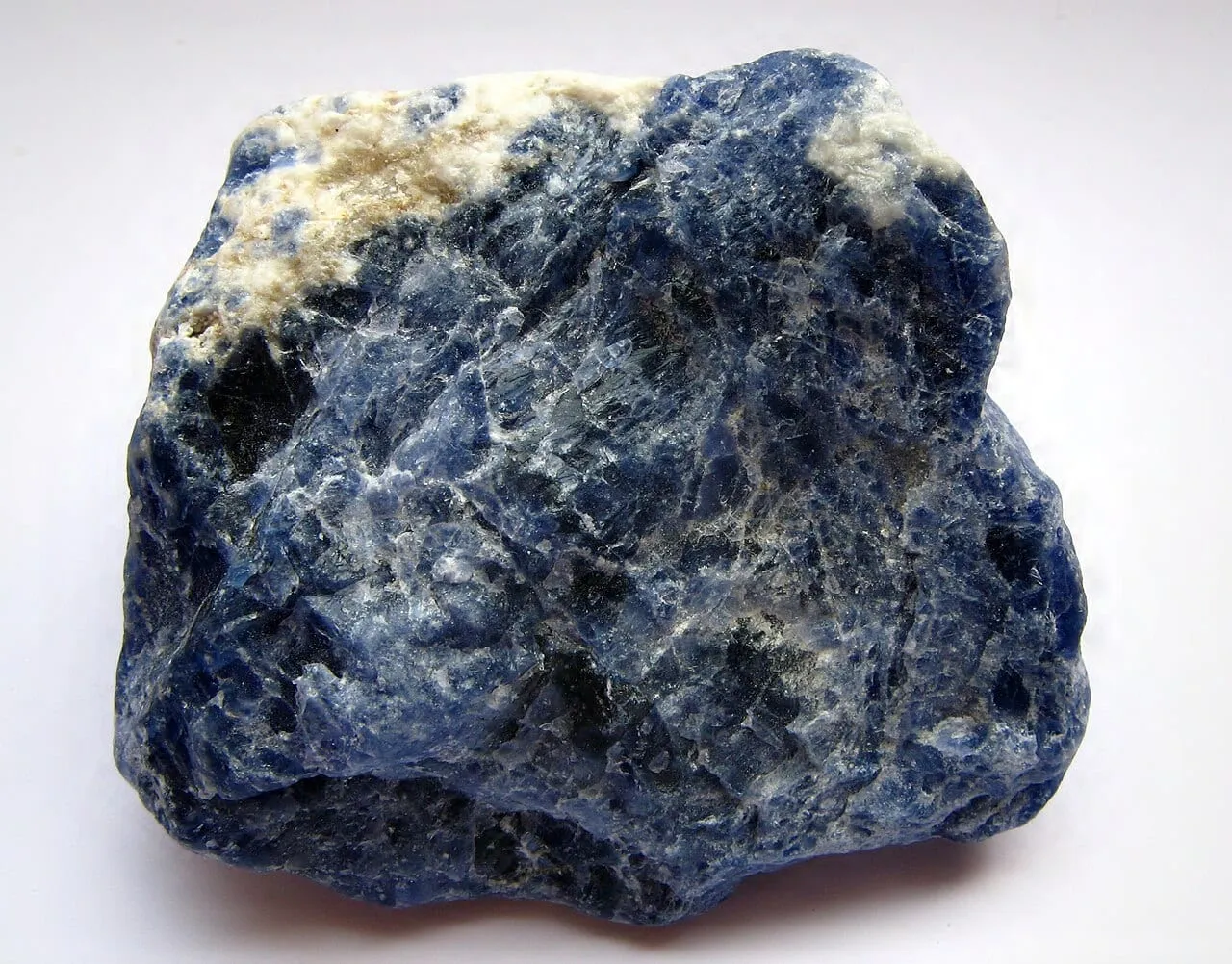
It usually occurs as translucent to opaque masses intergrown with ordinary, non-colour-changing sodalite; transparent pieces fit for faceting are rare.
Fakes and imitations
What shops usually don’t tell you:
- Synthetic hackmanite made in the laboratory changes colour just like the natural stone. It is produced for scientific research; making sure a stone on sale is natural requires a gem laboratory.
Myths and misconceptions
MythHackmanite is a separate mineral from sodalite.
FactHackmanite is not a separate mineral but a variety of sodalite. The only thing that sets it apart from ordinary sodalite is its colour change in light, and the two are often intergrown in the same piece.
MythHackmanite's colour change is the same thing as its glow under ultraviolet light.
FactThe glow, called fluorescence, is seen only while the lamp is on. Tenebrescence is a change in the stone's own colour: after the lamp is switched off the stone keeps its deeper colour for a while and fades only with time or in light.
Did you know?
Heated above 500 °C, hackmanite permanently loses its ability to change colour and stays in its “faded” state.
Hackmanite from Greenland and Mont Saint-Hilaire is violet when freshly dug and fades quickly in light. Hackmanite from Afghanistan and Myanmar does the opposite: it starts creamy white and turns violet or pinkish red in sunlight.
The stone is named after the Finnish geologist Victor Hackman (1866–1941), who studied the rocks of the Kola Peninsula.
Where is it found?
Loading map…
- Kola Peninsula, Murmansk Oblast, Russia · Historic sourceThe Finnish geologist Victor Hackman, after whom it is named, studied the peninsula's nepheline syenites in the 1890s; according to the University of Turku, hackmanite was discovered here.
- Ilímaussaq complex, Narsaq, Greenland · Historic sourceHackmanite that is pale to deep violet when freshly dug but quickly fades to greyish or greenish white.
- Mont Saint-Hilaire, Quebec, Canada · Major depositA famous mineral locality known for its hackmanite; the first transparent, gem-quality hackmanite was also found in Quebec.
- Kokcha Valley, Badakhshan, Afghanistan · Major depositHackmanite that starts creamy white and turns violet or pink in light, often clean enough to facet.
- Mogok, Mandalay Region, Myanmar · Major depositHackmanite with more inclusions, weaker fluorescence and slower fading than the Afghan material.
Locations are approximate to protect sites. Red dots mark places in Türkiye. Open in the big map →
Frequently asked questions
What is hackmanite?
Hackmanite is the variety of sodalite that changes colour in response to light. Exposed to ultraviolet light or sunlight, it deepens to pink, purple or violet; kept in the dark, the colour fades again. This property is called tenebrescence, and the change can be repeated again and again. Because it is far scarcer than ordinary blue sodalite, it is regarded as a collector's stone.
What is hackmanite used for?
Collecting and jewellery: Transparent pieces are faceted like gems and opaque ones are cut as cabochons. Because it is brittle, pendants and brooches are recommended over rings and bracelets. Mineral collections: Pieces that change colour and glow under an ultraviolet lamp are favourites in collections of fluorescent minerals. Science and technology: At the University of Turku in Finland, researchers work with synthetic hackmanite made in the laboratory.
How hard is hackmanite?
It has a hardness of 5.5–6 on the Mohs scale. It can scratch glass; a steel knife scratches it only with difficulty. Its specific gravity is 2.27–2.33 g/cm³.
Where is hackmanite found?
Its best-known localities: Mont Saint-Hilaire, Quebec, Canada; Kokcha Valley, Badakhshan, Afghanistan; Mogok, Mandalay Region, Myanmar; Kola Peninsula, Murmansk Oblast, Russia; Ilímaussaq complex, Narsaq, Greenland.
How can you tell if hackmanite is real?
Its defining feature is tenebrescence: after a few seconds or minutes under an ultraviolet lamp its colour deepens noticeably to pink, purple or violet, and it stays that way for a while after the lamp is switched off. Under long-wave ultraviolet light it glows a bright yellowish orange (fluorescence); some pieces give off a faint glow for a short time after the lamp goes off. With a hardness of 5.5–6, a steel knife scratches it only with difficulty. It is brittle and does not stand up well to knocks. Synthetic hackmanite made in the laboratory changes colour just like the natural stone. It is produced for scientific research; making sure a stone on sale is natural requires a gem laboratory.
Is hackmanite valuable?
On the “street to diamond” value ladder it sits on step 6 of nine: Fine ornamental and collector stone. Hackmanite is far scarcer than ordinary sodalite and is a collector's stone. Its value depends mostly on how strong the colour change is, and on transparency and clarity: stones clear enough to facet are rare and the most sought after. Few inclusions, bright fluorescence and size also matter. Material from Afghanistan is generally cleaner and glows more strongly than that from Myanmar, and because the stone is brittle, freedom from cracks also affects value.
Family


Sources
- Hackmanite/Sodalite from Myanmar and Afghanistan (D. Kondo & D. Beaton), Gems & Gemology 45(1) · Gemological Institute of America (GIA), 2009
- Hackmanite: The Sodalite That Responds to UV Light (B. Branstrator), Gem Focus · Gemworld International (GemGuide), 2023
- Sodalite · Wikipedia
- Hackmanite (Gemology, 16.64) · LibreTexts Geosciences
- Hackmanite is a miracle material (University of Turku) · Times Higher Education
- Victor Hackman · Wikipedia (Suomi)
- Kola Peninsula · Wikipedia
- Badakhshan province · Wikipedia
Draft: awaiting expert reviewReport an error
On the same step
Achondrite
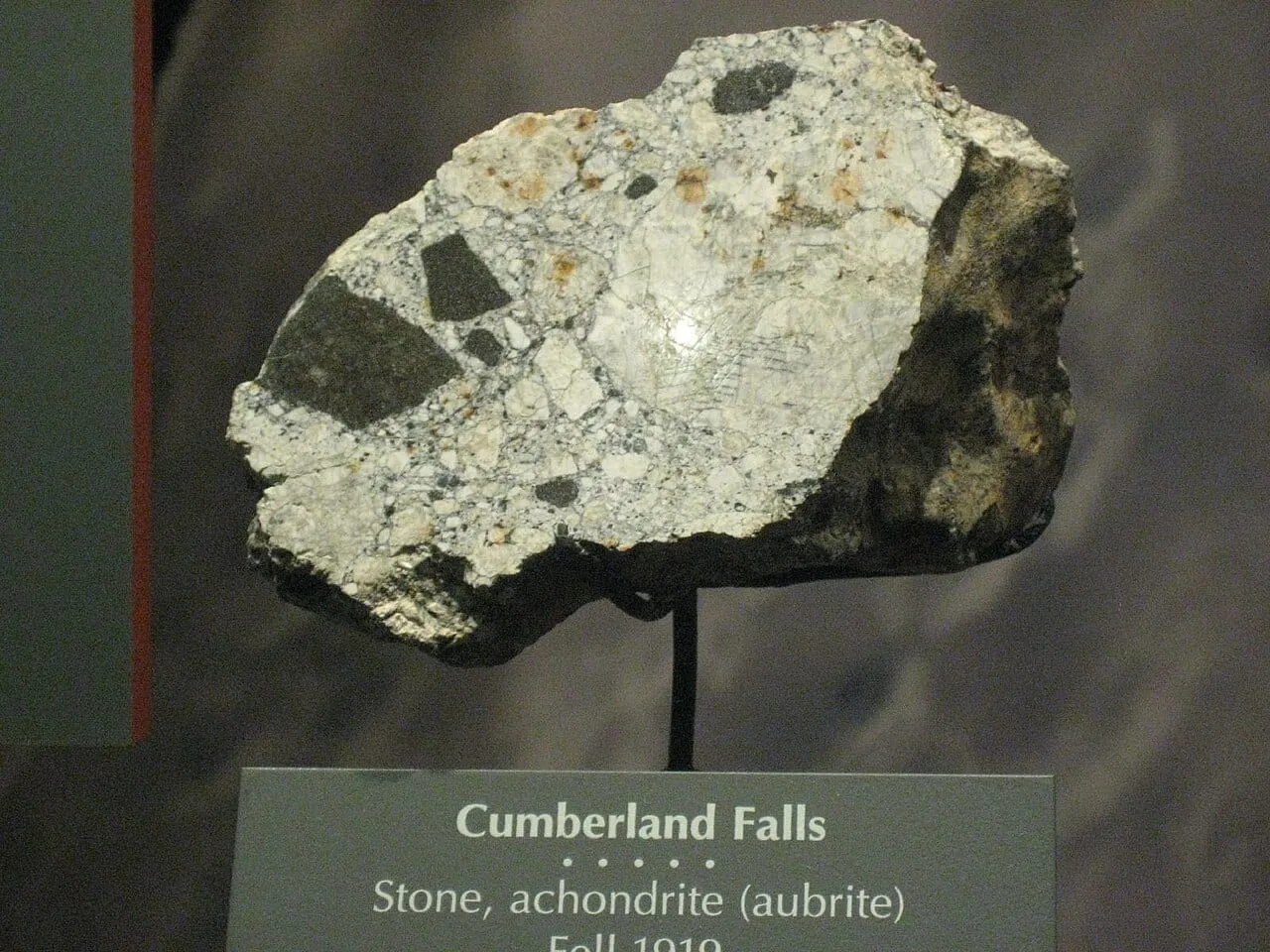
Stony meteorites with no chondrules: rock from melted asteroids, the Moon and Mars, and hard to recognise because they look like Earth rocks.
Amber
Tree resin fossilised over millions of years: a light, warm organic gem that sometimes holds prehistoric insects.
Ammolite
The rainbow-bright layer of fossil ammonite shell; of gem quality it comes only from the Canadian province of Alberta.