VarietyA variety of Obsidian
Snowflake obsidian
Kar tanesi obsidiyen
A kind of obsidian: black volcanic glass scattered with white spots that look like snowflakes.
- Popularly: Semi-precious stone
- Ornamental
In short
Snowflake obsidian is the kind of black obsidian that contains round white or grey-white spots. These spots are small, radially arranged clusters of crystals of cristobalite, a silica mineral. Like all obsidian it is volcanic glass, and the spots are the trace of the glass slowly beginning to crystallise. It is made into cabochons, beads and small ornaments.
Photos
How does it form?
Snowflake obsidian forms like other obsidian, when silica-rich lava cools very quickly at the surface and hardens into glass. Obsidian is a glass without an ordered crystal structure (a mineraloid), and glass tends to crystallise slowly; this is called devitrification.
In snowflake obsidian this crystallisation starts at certain points inside the glass: thin, needle-shaped crystals of cristobalite grow outwards from a centre and form spherical clusters (spherulites). These clusters show up as white or grey-white spots and give the stone its “snowflake” pattern.
What is it used for?
Snowflake obsidian is an ornamental stone. It is cut into cabochons (polished domes), beads, spheres and small carvings, and tumbled pieces are common too. Because it is brittle like glass, it should be used with care in jewellery that takes knocks, such as rings.
Where is it found?
Snowflake obsidian occurs in only some of the volcanic areas where obsidian is found. The obsidian field around Black Spring in the Black Rock Desert of Utah, USA, is one of them; rhyolite, pumice and obsidian erupted there about 2.5 million years ago. Glass Buttes in Oregon is one of the world’s largest obsidian deposits, known for many kinds of obsidian including snowflake, rainbow and gold-sheen. In the Mexican state of Jalisco the area around Tequila and Magdalena is the centre of the country’s obsidian mining, and snowflake obsidian is mined there as well.
What determines its value?
The beauty of the pattern matters most for snowflake obsidian: the contrast between the black background and the white spots, and an even, regular spread and good size of the spots, are what buyers look for. Crack-free, large pieces, a cut that shows the spots to best advantage, and a good polish count too. Obsidian is an abundant natural glass, so the snowflake kind is not an expensive stone either.
This information is educational, not buying, selling or investment advice. Value varies enormously with quality and treatment.
How to recognise it
- 1
Round white or grey-white spots, arranged radially from a centre like snowflakes, are scattered through a black, glassy stone.
- 2
The spots are inside the glass, not painted or scratched on the surface.
- 3
Its hardness is close to that of window glass (about 5–5.5); a steel file can scratch it.
- 4
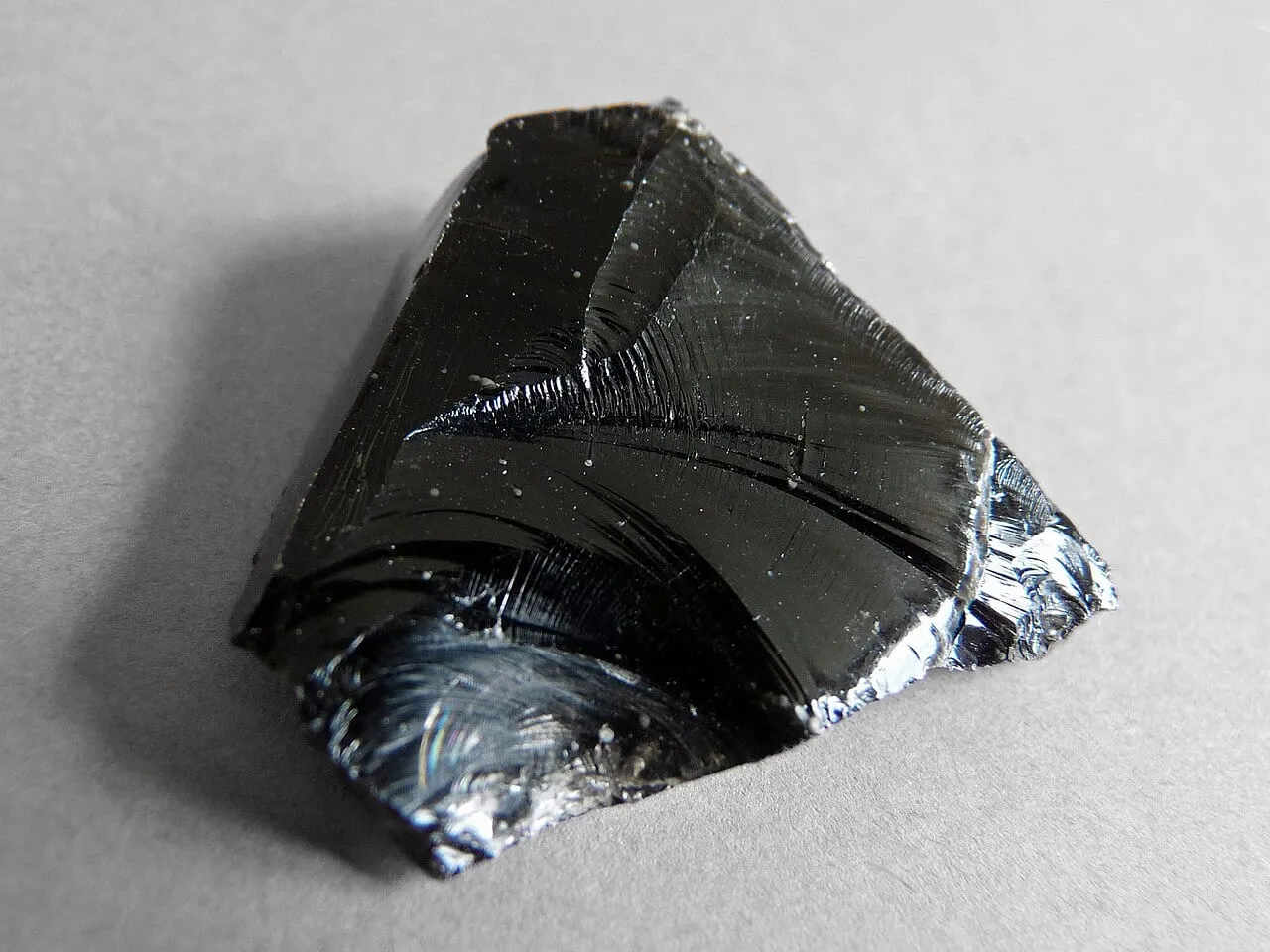
When broken it makes curved, shell-like surfaces and very sharp edges; thin edges held up to the light look brownish or greyish and translucent.
Fakes and imitations
What shops usually don’t tell you:
- Black bottle glass can look like obsidian, but round air bubbles, mould marks or a perfectly uniform look give it away.
Safety
The edges of raw or broken obsidian can be sharper than a razor blade and easily cause deep cuts. Wear safety glasses and gloves when breaking or knapping it.
Myths and misconceptions
MythThe white spots in snowflake obsidian are quartz or feldspar crystals.
FactThe spots are spherical clusters (spherulites) of cristobalite, a silica mineral. Cristobalite is made of the same elements as quartz but has a different crystal structure; it is the form of silica that is stable at high temperature.
MythSnowflake obsidian is a different kind of stone from obsidian.
FactSnowflake obsidian is the trade name for obsidian that contains grey-white spherulites in the glass; the stone itself is obsidian.
What is it believed to be good for?
This section reports beliefs; it is not health information. There is no scientific evidence for these claims and no stone replaces medical treatment.
The meanings people give this stone, and who holds them:
- Today crystal-therapy sources say that the black-and-white pattern of snowflake obsidian symbolises the balance of light and darkness, and claim that the stone brings balance to body, mind and spirit, calms, and helps people let go of stressful thought patterns.
- In Türkiye, some stone sellers and lifestyle websites say that snowflake obsidian absorbs negative energy and forms a protective shield, balances the root chakra, reduces stress and anxiety, and improves focus.
What science says
The contrast between the black background and the white spots is a physical result of cristobalite crystals forming inside the glass; there is no scientific evidence that it symbolises balance or protection, absorbs negative energy, or reduces stress or anxiety. Anyone with lasting anxiety should see a doctor. The edges of raw or broken obsidian are razor-sharp, so such pieces should not be rubbed over the skin.
Did you know?
Glass is not stable over geological time: obsidian very slowly turns into fine-grained crystals. The snowflakes show this change beginning, which is why obsidian older than the Miocene (about 23 million years) is rare.
Snowflake obsidian from the Mexican state of Jalisco is linked to a large volcanic eruption about 95,000 years ago, while the obsidian of the Black Rock Desert in Utah is about 2.5 million years old.
Where is it found?
Loading map…
- Black Rock Desert (Black Spring area), Millard County, Utah, USA · Major depositObsidian left by volcanic eruptions about 2.5 million years ago; snowflake obsidian is one of the kinds collected in this area
- Glass Buttes, Lake County, Oregon, USA · Major depositOne of the world's largest obsidian deposits; many kinds occur, including snowflake, rainbow and gold-sheen
- Magdalena area (El Trapiche), Jalisco, Mexico · Major depositObsidian linked to an eruption about 95,000 years ago; the centre of obsidian mining in Mexico
Locations are approximate to protect sites. Red dots mark places in Türkiye. Open in the big map →
Frequently asked questions
What is snowflake obsidian?
Snowflake obsidian is the kind of black obsidian that contains round white or grey-white spots. These spots are small, radially arranged clusters of crystals of cristobalite, a silica mineral. Like all obsidian it is volcanic glass, and the spots are the trace of the glass slowly beginning to crystallise. It is made into cabochons, beads and small ornaments.
What is snowflake obsidian used for?
Snowflake obsidian is an ornamental stone. It is cut into cabochons (polished domes), beads, spheres and small carvings, and tumbled pieces are common too. Because it is brittle like glass, it should be used with care in jewellery that takes knocks, such as rings.
How hard is snowflake obsidian?
It has a hardness of 5–5.5 on the Mohs scale. A fingernail cannot scratch it, but a steel knife can. Its specific gravity is 2.35–2.6 g/cm³.
Where is snowflake obsidian found?
Its best-known localities: Black Rock Desert (Black Spring area), Millard County, Utah, USA; Glass Buttes, Lake County, Oregon, USA; Magdalena area (El Trapiche), Jalisco, Mexico.
How can you tell if snowflake obsidian is real?
Round white or grey-white spots, arranged radially from a centre like snowflakes, are scattered through a black, glassy stone. The spots are inside the glass, not painted or scratched on the surface. Its hardness is close to that of window glass (about 5–5.5); a steel file can scratch it. Black bottle glass can look like obsidian, but round air bubbles, mould marks or a perfectly uniform look give it away.
Is snowflake obsidian valuable?
On the “street to diamond” value ladder it sits on step 5 of nine: Ornamental stone. The beauty of the pattern matters most for snowflake obsidian: the contrast between the black background and the white spots, and an even, regular spread and good size of the spots, are what buyers look for. Crack-free, large pieces, a cut that shows the spots to best advantage, and a good polish count too. Obsidian is an abundant natural glass, so the snowflake kind is not an expensive stone either.
What is snowflake obsidian good for?
Today crystal-therapy sources say that the black-and-white pattern of snowflake obsidian symbolises the balance of light and darkness, and claim that the stone brings balance to body, mind and spirit, calms, and helps people let go of stressful thought patterns. In Türkiye, some stone sellers and lifestyle websites say that snowflake obsidian absorbs negative energy and forms a protective shield, balances the root chakra, reduces stress and anxiety, and improves focus. The contrast between the black background and the white spots is a physical result of cristobalite crystals forming inside the glass; there is no scientific evidence that it symbolises balance or protection, absorbs negative energy, or reduces stress or anxiety. Anyone with lasting anxiety should see a doctor. The edges of raw or broken obsidian are razor-sharp, so such pieces should not be rubbed over the skin. This section reports beliefs; it is not health information. There is no scientific evidence for these claims and no stone replaces medical treatment.
Is snowflake obsidian dangerous?
The edges of raw or broken obsidian can be sharper than a razor blade and easily cause deep cuts. Wear safety glasses and gloves when breaking or knapping it.
Family

.jpg)
Sources
- Obsidian · Wikipedia
- Obsidian · LibreTexts Geosciences (Gemology)
- Obsidian (Gesteinsgalerie) · Carl von Ossietzky Universität Oldenburg, ICBM
- The Rockhounder: Obsidian in the Black Rock Desert, Millard County · Utah Geological Survey
- Glass Buttes · Wikipedia
- Mexican Obsidian of Jalisco (B. McKay) · Rock & Gem Magazine, 2026
- Magdalena, Jalisco · Wikipedia
External links
Draft: awaiting expert reviewReport an error ↗
On the same step
Agate
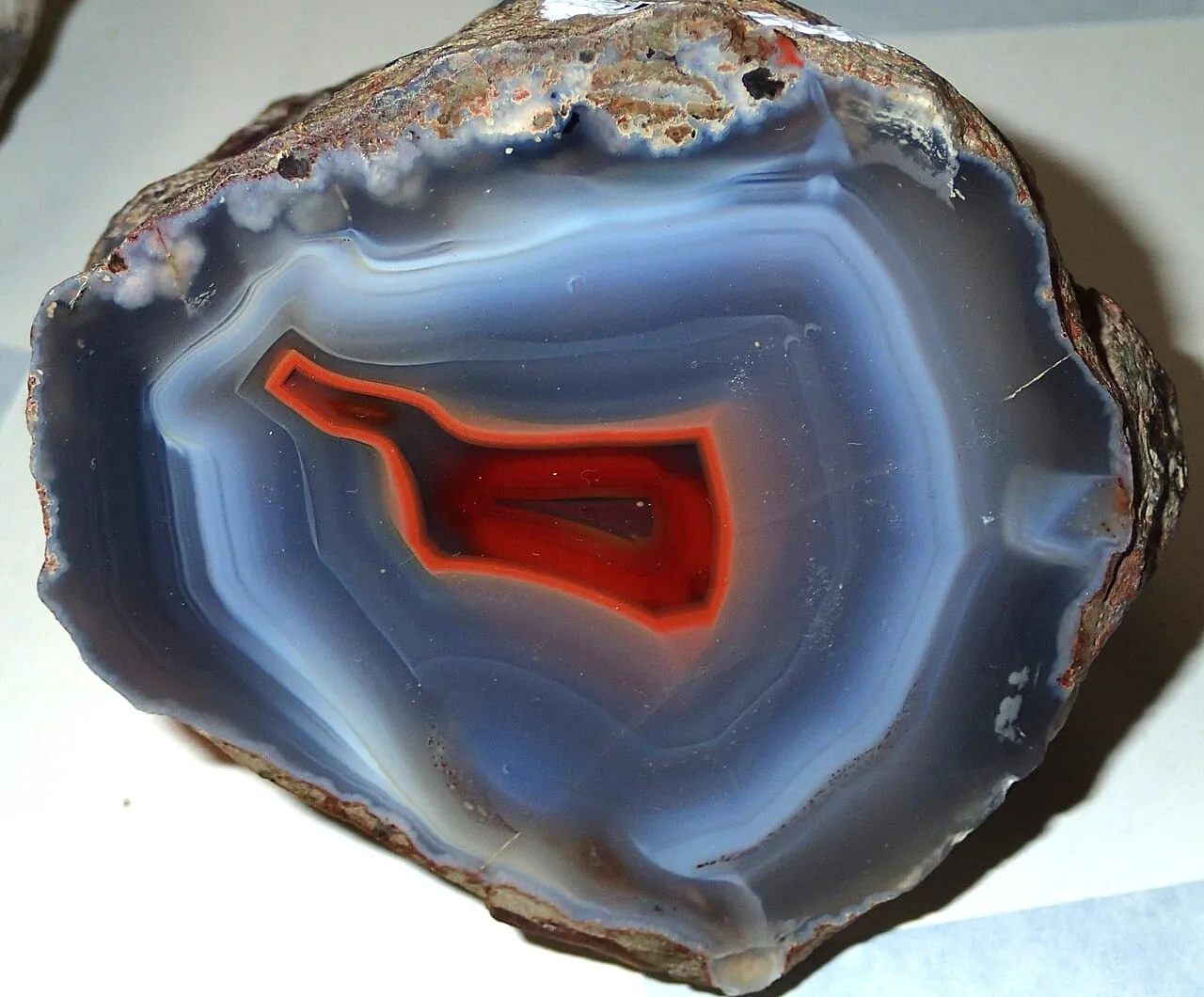
The banded variety of chalcedony: it grows layer by layer in hollows in volcanic rock and shows a new pattern every time it is cut.
Almandine
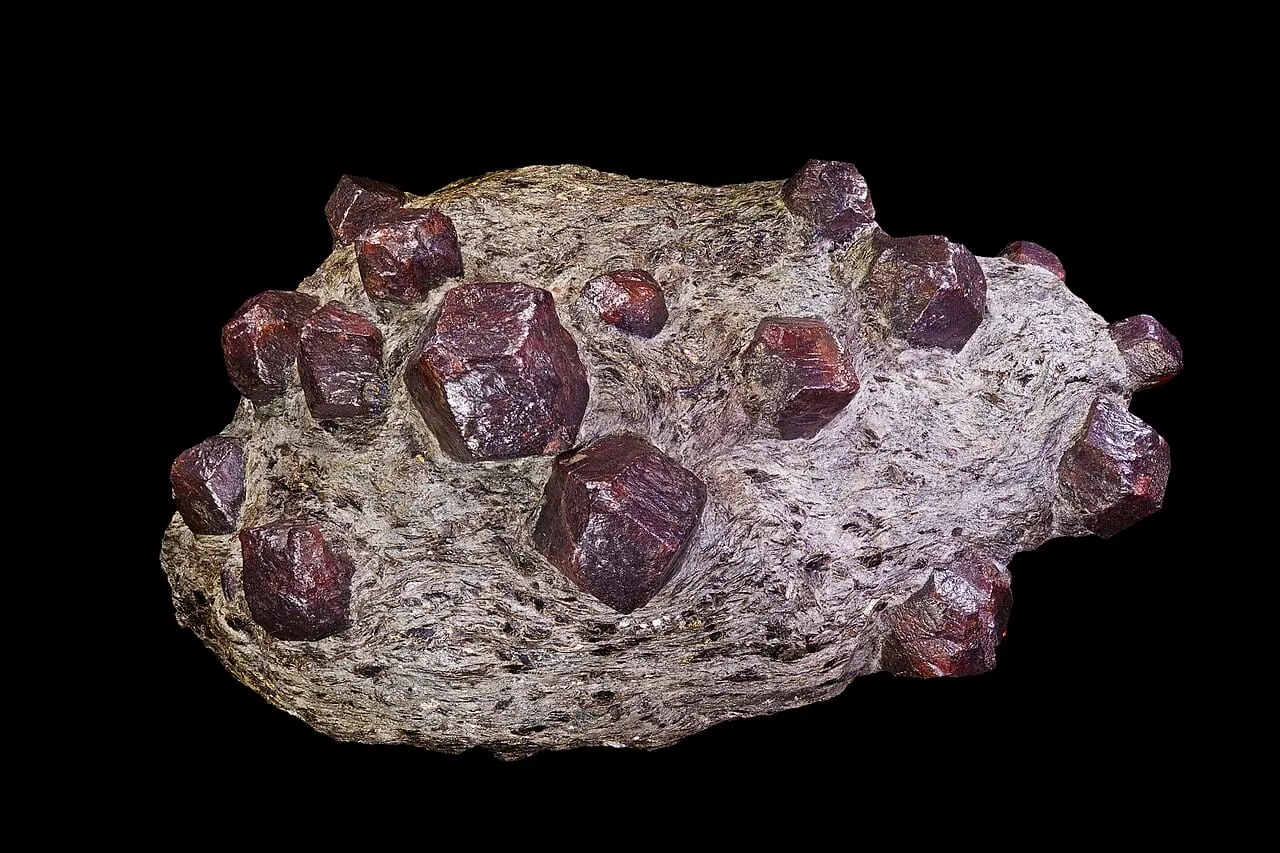
The commonest garnet: a deep red, iron-rich stone named after the ancient city of Alabanda in Anatolia, used in jewellery and in sandpaper alike.
Amazonite
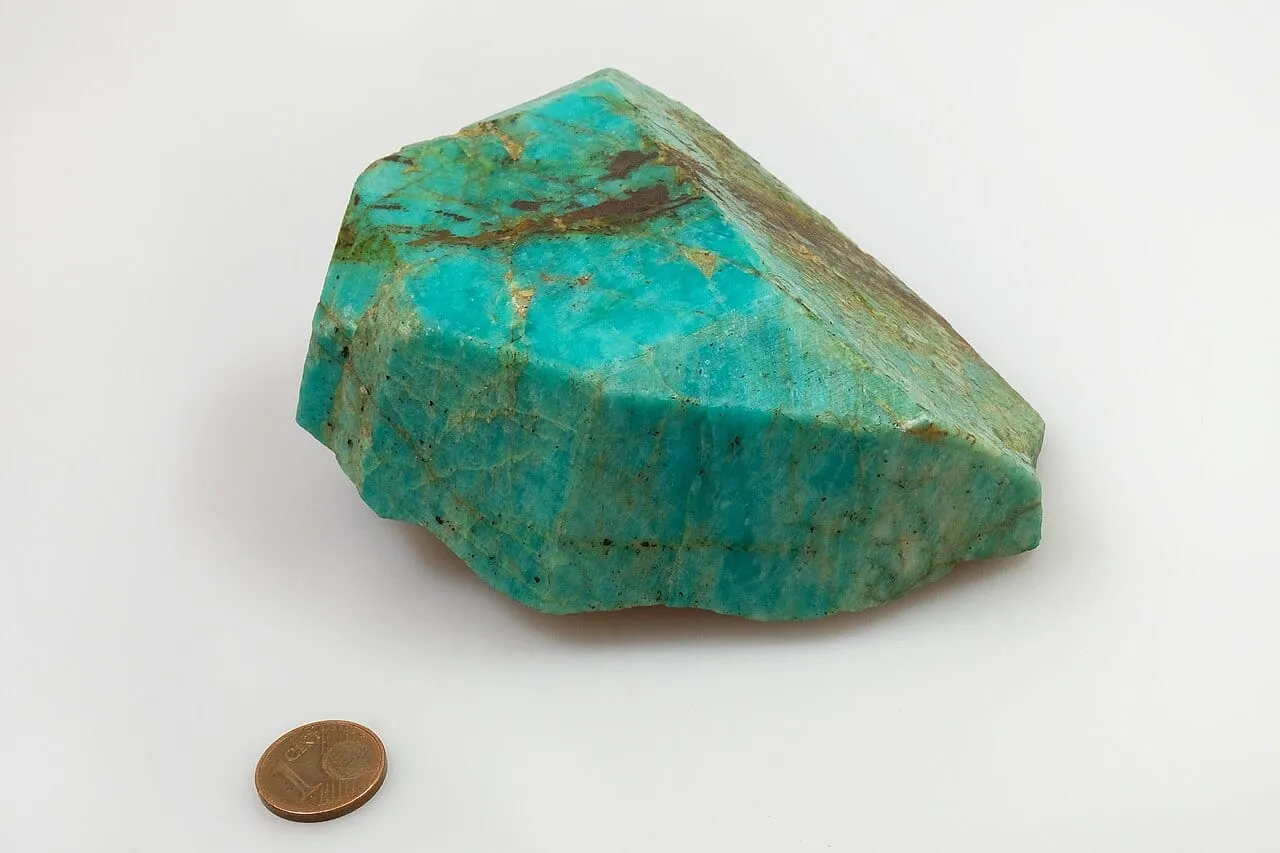
A turquoise-like green-blue feldspar: a variety of microcline worn as jewellery for more than three thousand years, but it can release lead.