VarietyA variety of Tiger's eye
Pietersite
SiO₂Pietersit
A rare stone with blue and gold flashes flowing in every direction like brush strokes: a brecciated relative of tiger's eye from Namibia and China.
Also known as: Tempest stone · Eagle's eye
- Popularly: Semi-precious stone
In short
Pietersite is an ornamental stone with a brecciated texture, made of angular fragments in blue-grey, golden yellow, brown and brownish red. Like tiger's eye, it contains crocidolite (blue asbestos) fibres embedded in fine-grained quartz, and these fibres create its shimmer. But because the fibres point in a different direction in each fragment, the light does not move as a single band, as in tiger's eye, but as irregular flashes flowing every which way like brush strokes. It is named after Sid Pieters, the mineral dealer who found it in Namibia in 1962. Its only known sources are Namibia and China.
Photos
How does it form?
Pietersite contains the same minerals as tiger’s eye, crocidolite fibres embedded in fine-grained quartz and chalcedony, but it formed in a very different way. South African tiger’s eye grew as flat cracks, opened by movements of the Earth’s crust, filled with quartz and crocidolite. A study published in GIA’s journal in 2010 proposed instead that Namibian pietersite is a “solution breccia”. First, silica-rich water moving through cobbles of dolomite (a carbonate rock) partly dissolved the dolomite and left rounded clusters of chalcedony in its place. Later, sodium-bearing water seeped in, chalcedony reacted with hematite, and crocidolite fibres formed.
Because silica did not replace the rock evenly, the fibres lined up in a different direction in each patch. This is where the “chaotic shimmer” that sets pietersite apart from tiger’s eye comes from. In the last stage part of the crocidolite turned into iron oxides such as hematite and goethite; this change went further in Chinese pietersite, which is why its shimmer is weaker.
What is it used for?
- Jewellery: it is mostly cut as cabochons and made into pendants, ring stones and earrings.
- Decorative objects: it is sold as decorative slices, carvings and polished palm stones to hold in the hand.
- Collecting: because it is rare and comes from only two countries, collectors seek it out.
Discovery and deposits
Pietersite is named after Sid Pieters, a Namibian who traded in minerals for more than sixty years. Pieters found the stone in 1962 near the town of Outjo in northern Namibia. According to the Vienna Gem Center, for 30 years the only source was Hopewell Farm, about 40 km north-east of Outjo. In 1996 the minable stock in Namibia was reported to be largely depleted.
The Chinese deposit is in Xichuan County, Henan Province. There the stone was found in 1966 and mined in the 1970s and 1980s, but it reached the market only in the 1990s. Although both workings appear to be closed, material from both sources still turns up on the market. For the formation of tiger’s eye see the tiger’s eye page, and for its blue form the hawk’s eye page.
What determines its value?
Pietersite is a rare stone: it has only two known sources, and according to a GIA study published in 2010 both mines appear to be closed; the minable stock in Namibia was reported to be largely depleted in the 1990s. Its value depends mostly on how vivid and widespread the shimmer is, how well the blue and golden colours go together, and how striking the pattern is. Namibian pietersite is generally considered superior to material from China because of its more vivid colours. Crack-free, well-polished pieces whose shimmer has not been dulled by iron oxides are the most sought after.
This information is educational, not buying, selling or investment advice. Value varies enormously with quality and treatment.
How to recognise it
- 1
Turned in the light, the shimmer does not glide as one band; it flashes on and off separately in angular fragments facing different ways, recalling a stormy sky or paint strokes flowing in many directions.
- 2
Angular fragments from a few millimetres to about a centimetre across can be seen, with white flecks of calcite or veins of colourless chalcedony between them.
- 3
Namibian pietersite is dominated by blue-grey and golden yellow areas; Chinese pietersite has an overall jasper-like brownish red colour and a weaker shimmer.
- 4
It is as hard as quartz: it scratches glass, and a steel knife cannot scratch it.
Safety
Pietersite contains fibres of crocidolite, an asbestos mineral. Because the fibres are locked inside hard quartz, wearing and handling polished stones is harmless. Dust produced when cutting, grinding or sanding rough material, however, should not be inhaled: work wet and wear a suitable dust mask.
Myths and misconceptions
MythPietersite formed when pieces of tiger's eye and hawk's eye were broken and stuck back together.
FactPietersite contains the same minerals as tiger's eye, but according to a 2010 GIA study it formed under very different conditions: Namibian pietersite is a “solution breccia” that grew in dolomite cobbles partly dissolved by groundwater and replaced by silica, and its crocidolite fibres formed later in the process.
MythPietersite shimmers because quartz replaced asbestos fibres and copied their shape.
FactDespite this popular assumption, the GIA researchers found no sign of quartz copying the fibres in pietersite; the shimmer comes from real crocidolite fibres embedded in the quartz.
What is it believed to be good for?
This section reports beliefs; it is not health information. There is no scientific evidence for these claims and no stone replaces medical treatment.
The meanings people give this stone, and who holds them:
- Crystal-therapy sources claim that pietersite holds “the keys to the kingdom of heaven”; the phrase is also repeated in a magazine article published in Namibia.
- The same sources claim that the stone supports willpower and strengthens a person's inner guidance and ability to recognise truths.
What science says
There is no scientific evidence that pietersite strengthens willpower, intuition or spiritual insight; its “stormy” look comes from asbestos fibres lying in different directions and reflecting light. Rough stone contains asbestos fibres, so it should not be cut or ground into powder at home.
Did you know?
Sid Pieters found the stone in 1962 while prospecting near Outjo: he took a small but very heavy rock coated in white limestone back to his workshop and split it open.
Pieters registered the stone in the mineral records of Great Britain in 1964; pietersite only came to market in the 1970s.
Chinese pietersite was discovered in 1966 by geologists prospecting for crocidolite, an asbestos mineral.
Under ultraviolet light most Namibian pietersite glows green, while in Chinese pietersite only the calcite areas glow white. The difference helps tell the two sources apart.
Where is it found?
Loading map…
- Hopewell Farm near Outjo, Kunene Region, Namibia · Type localityWhere Sid Pieters found the stone in 1962; the farm lies about 40 km north-east of Outjo and was the only source for 30 years. The point marks the town of Outjo.
- Xichuan County, Nanyang, Henan, China · Major depositChinese pietersite was found in 1966 by geologists prospecting for crocidolite, mined in the 1970s and 1980s, and reached the market in the 1990s
Locations are approximate to protect sites. Red dots mark places in Türkiye. Open in the big map →
Frequently asked questions
What is pietersite?
Pietersite is an ornamental stone with a brecciated texture, made of angular fragments in blue-grey, golden yellow, brown and brownish red. Like tiger's eye, it contains crocidolite (blue asbestos) fibres embedded in fine-grained quartz, and these fibres create its shimmer. But because the fibres point in a different direction in each fragment, the light does not move as a single band, as in tiger's eye, but as irregular flashes flowing every which way like brush strokes. It is named after Sid Pieters, the mineral dealer who found it in Namibia in 1962. Its only known sources are Namibia and China.
What is pietersite used for?
Jewellery: it is mostly cut as cabochons and made into pendants, ring stones and earrings. Decorative objects: it is sold as decorative slices, carvings and polished palm stones to hold in the hand. Collecting: because it is rare and comes from only two countries, collectors seek it out.
How hard is pietersite?
It has a hardness of 7 on the Mohs scale. It scratches glass and steel; a steel knife cannot scratch it. Its specific gravity is 2.5–2.74 g/cm³.
Where is pietersite found?
Its best-known localities: Hopewell Farm near Outjo, Kunene Region, Namibia; Xichuan County, Nanyang, Henan, China.
How can you tell if pietersite is real?
Turned in the light, the shimmer does not glide as one band; it flashes on and off separately in angular fragments facing different ways, recalling a stormy sky or paint strokes flowing in many directions. Angular fragments from a few millimetres to about a centimetre across can be seen, with white flecks of calcite or veins of colourless chalcedony between them. Namibian pietersite is dominated by blue-grey and golden yellow areas; Chinese pietersite has an overall jasper-like brownish red colour and a weaker shimmer.
Is pietersite valuable?
On the “street to diamond” value ladder it sits on step 6 of nine: Fine ornamental and collector stone. Pietersite is a rare stone: it has only two known sources, and according to a GIA study published in 2010 both mines appear to be closed; the minable stock in Namibia was reported to be largely depleted in the 1990s. Its value depends mostly on how vivid and widespread the shimmer is, how well the blue and golden colours go together, and how striking the pattern is. Namibian pietersite is generally considered superior to material from China because of its more vivid colours. Crack-free, well-polished pieces whose shimmer has not been dulled by iron oxides are the most sought after.
What is pietersite good for?
Crystal-therapy sources claim that pietersite holds “the keys to the kingdom of heaven”; the phrase is also repeated in a magazine article published in Namibia. The same sources claim that the stone supports willpower and strengthens a person's inner guidance and ability to recognise truths. There is no scientific evidence that pietersite strengthens willpower, intuition or spiritual insight; its “stormy” look comes from asbestos fibres lying in different directions and reflecting light. Rough stone contains asbestos fibres, so it should not be cut or ground into powder at home. This section reports beliefs; it is not health information. There is no scientific evidence for these claims and no stone replaces medical treatment.
Is pietersite dangerous?
Pietersite contains fibres of crocidolite, an asbestos mineral. Because the fibres are locked inside hard quartz, wearing and handling polished stones is harmless. Dust produced when cutting, grinding or sanding rough material, however, should not be inhaled: work wet and wear a suitable dust mask.
Family


Sources
- A microstructural study of pietersite from Namibia and China (K. Hu & P. J. Heaney), Gems & Gemology 46(4) · GIA, 2010
- Pietersite · Wikipedia
- Pietersite · Vienna Gem Center (edelsteine.at), Gemstone lexicon
- Pietersite (E. Jenkins), Flamingo magazine, September 2011 · Travel News Namibia, 2011
- Outjo · Wikipedia
- Xichuan County · Wikipedia
- Hawk's Eye Gemstone Information · GemSelect
External links
Draft: awaiting expert reviewReport an error
On the same step
Achondrite
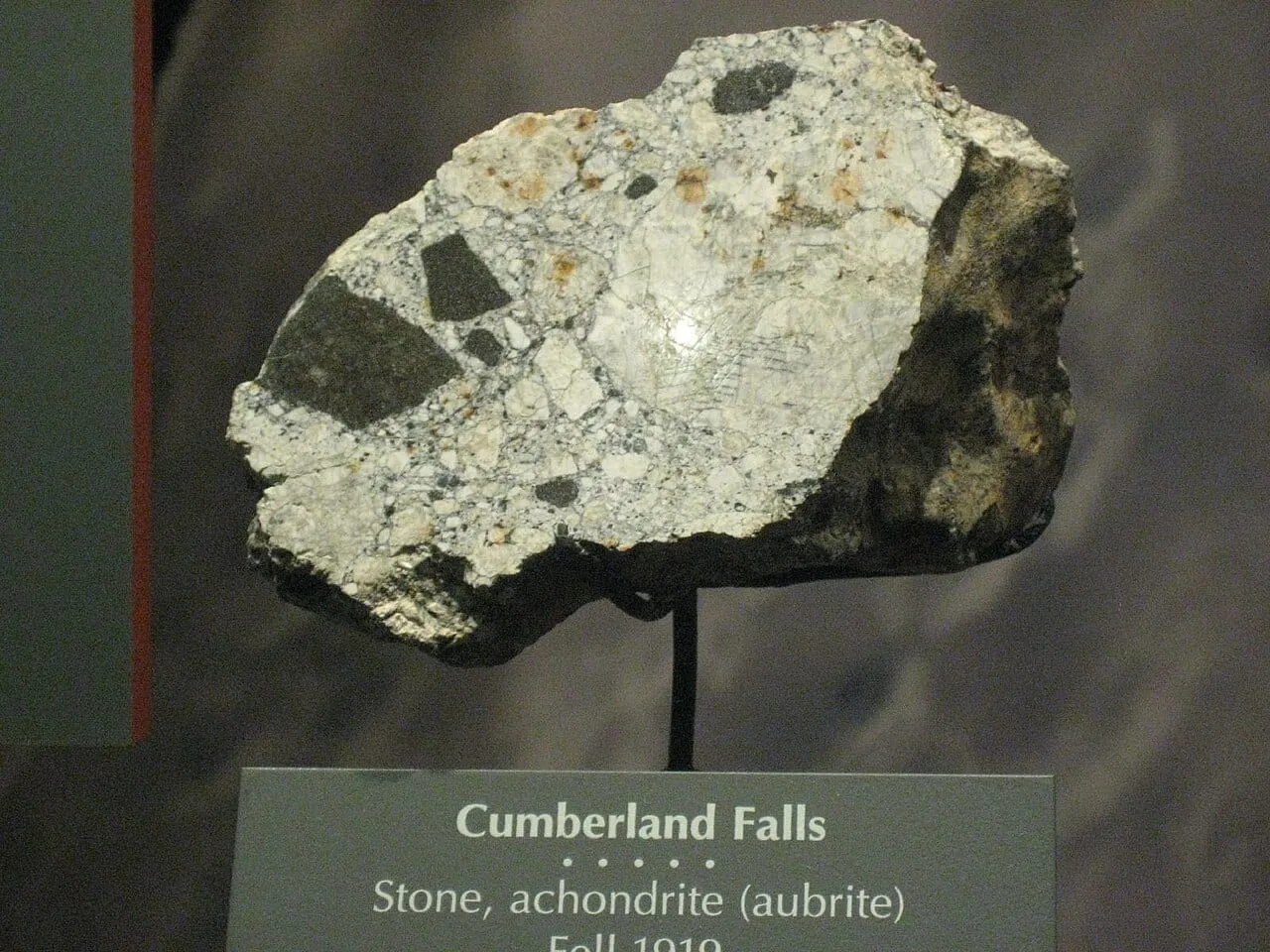
Stony meteorites with no chondrules: rock from melted asteroids, the Moon and Mars, and hard to recognise because they look like Earth rocks.
Amber
Tree resin fossilised over millions of years: a light, warm organic gem that sometimes holds prehistoric insects.
Ammolite
The rainbow-bright layer of fossil ammonite shell; of gem quality it comes only from the Canadian province of Alberta.