Mineral
Rhodochrosite
MnCO₃Rodokrozit
The rose-red manganese carbonate and national stone of Argentina; it is so soft that it is only rarely faceted.
Also known as: Inca Rose (banded pink material from Argentina) · Rosa del Inca
- Popularly: Semi-precious stone
- Gemstone
- Ornamental

In short
Rhodochrosite is a carbonate mineral made of manganese and carbon (MnCO₃). Its name comes from the Greek words for “rose” and “coloring”. Pure rhodochrosite is rose-red; as calcium and iron creep in, the colour fades through pale pink to brown. It is the national stone of Argentina and the official state mineral of Colorado.
Photos

How does it form?
Rhodochrosite mostly forms in veins of hot water at low to moderate temperatures (hydrothermal veins), together with minerals such as calcite, siderite, fluorite and baryte and with silver, lead and zinc ores. It is known from old silver mines such as Cavnic in Romania. It is less common in metamorphic rocks, in carbonate-rich igneous rocks (carbonatites) and in sediments. Because it forms mixing series with siderite and calcite, traces of calcium, iron or magnesium lighten its colour; pure rhodochrosite is rare.
What is it used for?
- Manganese ore: Manganese is an important ingredient of low-cost stainless steels, many tool steels and some aluminium alloys. Rhodochrosite is one of the main ores of manganese.
- Ornamental stone and jewellery: Banded material is made into cabochons, beads and small carvings. Because it is soft and has perfect cleavage, it is only rarely seen as a faceted stone.
- Collecting: Vivid red, well-formed crystals are among the most sought-after mineral specimens in the world.
The national stone of Argentina
Argentina regards rhodochrosite as its “national stone”, and Colorado made it the official state mineral in 2002. The pink-and-white banded material from the Capillitas mine in Argentina’s Catamarca region is sold as “Inca Rose” (Rosa del Inca). The name is a trade name; no reliable historical source is given for the Inca stories it is based on.
What determines its value?
Colour saturation is the main factor: vivid red and rose-pink are the most sought-after, while pale or brownish stones are worth less. Faceting-quality crystals that are transparent, flawless and large are extremely rare, which makes them highly prized among collectors. In Argentine banded material, sharp bands, a regular pattern and the absence of cracks count. Because the stone is soft and cleaves easily, the quality of cutting and workmanship also matters, and with so many imitations around it is important that the seller states that the stone is natural.
This information is educational, not buying, selling or investment advice. Value varies enormously with quality and treatment.
How to recognise it
- 1
It is soft (hardness 3.5–4): a steel knife scratches it easily. That is one way to tell it from rhodonite, which is also pink but much harder.
- 2
Material from Argentina shows concentric pink and white bands when cut; in slices of stalactites the rings nest inside each other.
- 3
It has perfect cleavage in three directions; its crystals are rhombohedra, shaped like leaning boxes, and are often twinned.
- 4
Bright, transparent, vivid red crystals are collector's pieces; most banded masses are translucent to opaque.
Fakes and imitations
What shops usually don’t tell you:
- Rhodonite: this manganese silicate is also pink and is easily confused with rhodochrosite, but it is distinctly harder.
- Pressed imitation: in 2019 GIA described a rhodochrosite imitation made of pressed gibbsite (aluminium hydroxide) powder for the red parts and calcite for the white bands, joined with resin. It is much lighter than the real stone (specific gravity about 2), has a simpler pattern and weaker lustre, and fluoresces under long-wave ultraviolet light.
Safety
Holding or wearing polished rhodochrosite is not a problem. But because it contains manganese, the dust from cutting, grinding and polishing should not be breathed in; the stone should be worked wet, a dust mask worn, and the stone kept out of the mouth. Manganese poisoning is seen mainly in miners and in people working in manganese smelting.
Myths and misconceptions
MythRhodochrosite and rhodonite are the same stone.
FactBoth are pink, but they are different minerals: rhodochrosite is a manganese carbonate and rhodonite a manganese silicate. Rhodochrosite is distinctly softer than rhodonite.
MythRhodochrosite is a tough ornamental stone that can be worn every day.
FactIts hardness is only 3.5–4 and it has perfect cleavage in three directions, so it scratches and can split when knocked. According to GIA, faceted rhodochrosite can be worn in jewellery only with special care.
MythEvery pink and white banded stone is natural rhodochrosite.
FactImitation banded stones are also made by joining pressed gibbsite and calcite powder with resin; they are told apart by specific gravity, lustre and their reaction to ultraviolet light.
What is it believed to be good for?
This section reports beliefs; it is not health information. There is no scientific evidence for these claims and no stone replaces medical treatment.
The meanings people give this stone, and who holds them:
- Today crystal-therapy practitioners claim that rhodochrosite is linked to the heart chakra, increases love and compassion, and “heals” emotional wounds.
- Some news websites in Türkiye write that rhodochrosite balances blood pressure, is good for asthma, breathing problems and the kidneys, and is “a very good antidepressant”.
- The same articles say the stone strengthens memory, relieves stress, helps one reach joy and happiness in meditation, and balances masculine and feminine energy.
What science says
There is no scientific evidence that rhodochrosite affects blood pressure, breathing, the kidneys or mood; conditions such as asthma, high blood pressure or depression should be monitored and treated by a doctor. Rhodochrosite is a manganese mineral: its dust should not be breathed in and the stone should not be put in water to make a drinkable “elixir”; breathing too much manganese over a long time can damage the nervous system.
Did you know?
The mineral was first described in 1813 from a sample from the silver mines of Cavnic in Romania.
Manganese carbonate disrupted the amalgamation process once used to concentrate silver ores, so rock rich in it was often thrown onto the mine dump.
The Sweet Home mine in Colorado is the source of famous crystals such as the “Alma King” and the “Alma Rose”, which are on display in museums and collections around the world.
Where is it found?
Loading map…
- Cavnic, Maramureș, Romania · Type localityThe mineral was first described in 1813 from a sample from the silver mines here
- Capillitas, Andalgalá, Catamarca, Argentina · Major depositFamous deposit of banded pink-and-white ornamental rhodochrosite, the material behind Argentina's national stone
- Sweet Home mine, Alma, Colorado, USA · Major depositA silver mine famous for large, transparent, vivid red crystals, source of the “Alma King” and “Alma Rose” specimens
- Hotazel and Kuruman area, Northern Cape, South Africa · Major depositThe Hotazel and N'Chwaning mines produce exceptional crystals
- Butte, Montana, USA · Historic sourceThe Emma mine is one of the older known localities for rhodochrosite
- Mont Saint-Hilaire, Quebec, Canada · Known localityKnown for large twinned crystals
- Kovdor, Murmansk Oblast, Russia · Known localityOccurs in the carbonatite massif of the Kola Peninsula
- Pasto Bueno, Ancash, Peru · Known localityThe Huallapón mine yields large crystals
Locations are approximate to protect sites. Red dots mark places in Türkiye. Open in the big map →
Frequently asked questions
What is rhodochrosite?
Rhodochrosite is a carbonate mineral made of manganese and carbon (MnCO₃). Its name comes from the Greek words for “rose” and “coloring”. Pure rhodochrosite is rose-red; as calcium and iron creep in, the colour fades through pale pink to brown. It is the national stone of Argentina and the official state mineral of Colorado.
What is rhodochrosite used for?
Manganese ore: Manganese is an important ingredient of low-cost stainless steels, many tool steels and some aluminium alloys. Rhodochrosite is one of the main ores of manganese. Ornamental stone and jewellery: Banded material is made into cabochons, beads and small carvings. Because it is soft and has perfect cleavage, it is only rarely seen as a faceted stone. Collecting: Vivid red, well-formed crystals are among the most sought-after mineral specimens in the world.
How hard is rhodochrosite?
It has a hardness of 3.5–4 on the Mohs scale. A fingernail cannot scratch it, but a steel knife can. Its specific gravity is 3.45–3.7 g/cm³.
Where is rhodochrosite found?
Its best-known localities: Cavnic, Maramureș, Romania; Capillitas, Andalgalá, Catamarca, Argentina; Sweet Home mine, Alma, Colorado, USA; Hotazel and Kuruman area, Northern Cape, South Africa; Butte, Montana, USA.
How can you tell if rhodochrosite is real?
It is soft (hardness 3.5–4): a steel knife scratches it easily. That is one way to tell it from rhodonite, which is also pink but much harder. Material from Argentina shows concentric pink and white bands when cut; in slices of stalactites the rings nest inside each other. It has perfect cleavage in three directions; its crystals are rhombohedra, shaped like leaning boxes, and are often twinned. Rhodonite: this manganese silicate is also pink and is easily confused with rhodochrosite, but it is distinctly harder.
Is rhodochrosite valuable?
On the “street to diamond” value ladder it sits on step 6 of nine: Fine ornamental and collector stone. Colour saturation is the main factor: vivid red and rose-pink are the most sought-after, while pale or brownish stones are worth less. Faceting-quality crystals that are transparent, flawless and large are extremely rare, which makes them highly prized among collectors. In Argentine banded material, sharp bands, a regular pattern and the absence of cracks count. Because the stone is soft and cleaves easily, the quality of cutting and workmanship also matters, and with so many imitations around it is important that the seller states that the stone is natural.
What is rhodochrosite good for?
Today crystal-therapy practitioners claim that rhodochrosite is linked to the heart chakra, increases love and compassion, and “heals” emotional wounds. Some news websites in Türkiye write that rhodochrosite balances blood pressure, is good for asthma, breathing problems and the kidneys, and is “a very good antidepressant”. The same articles say the stone strengthens memory, relieves stress, helps one reach joy and happiness in meditation, and balances masculine and feminine energy. There is no scientific evidence that rhodochrosite affects blood pressure, breathing, the kidneys or mood; conditions such as asthma, high blood pressure or depression should be monitored and treated by a doctor. Rhodochrosite is a manganese mineral: its dust should not be breathed in and the stone should not be put in water to make a drinkable “elixir”; breathing too much manganese over a long time can damage the nervous system. This section reports beliefs; it is not health information. There is no scientific evidence for these claims and no stone replaces medical treatment.
Is rhodochrosite dangerous?
Holding or wearing polished rhodochrosite is not a problem. But because it contains manganese, the dust from cutting, grinding and polishing should not be breathed in; the stone should be worked wet, a dust mask worn, and the stone kept out of the mouth. Manganese poisoning is seen mainly in miners and in people working in manganese smelting.
Sources
- Handbook of Mineralogy: Rhodochrosite · Mineralogical Society of America
- Rhodochrosite · Wikipedia
- Gem Rhodochrosite from the Sweet Home Mine, Colorado, Gems & Gemology 33(2) · GIA, 1997
- Pressed Gibbsite and Calcite as a Rhodochrosite Imitation, Gems & Gemology 55(3) · GIA, 2019
- Rhodochrosite · Webmineral
- Sweet Home Mine · Wikipedia
- Cavnic · Wikipedia
- Hotazel · Wikipedia
- Manganese poisoning · Wikipedia
- Rodokrozit Taşının Faydaları Nelerdir? Rodokrozit Taşı Özellikleri Nelerdir, Ne İşe Yarar? · Sabah, 2022
External links
Draft: awaiting expert reviewReport an error ↗
On the same step
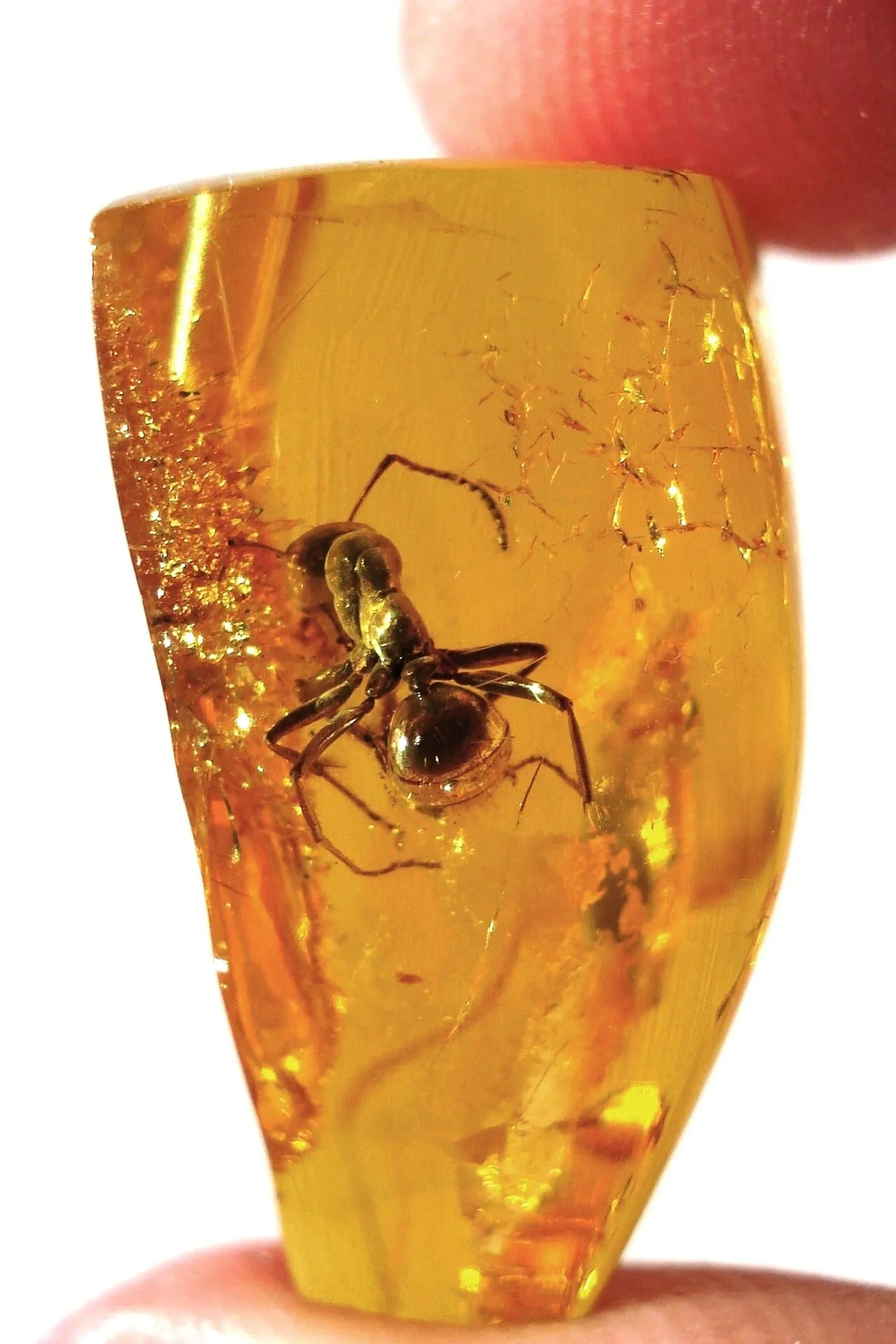
Amber
Tree resin fossilised over millions of years: a light, warm organic gem that sometimes holds prehistoric insects.
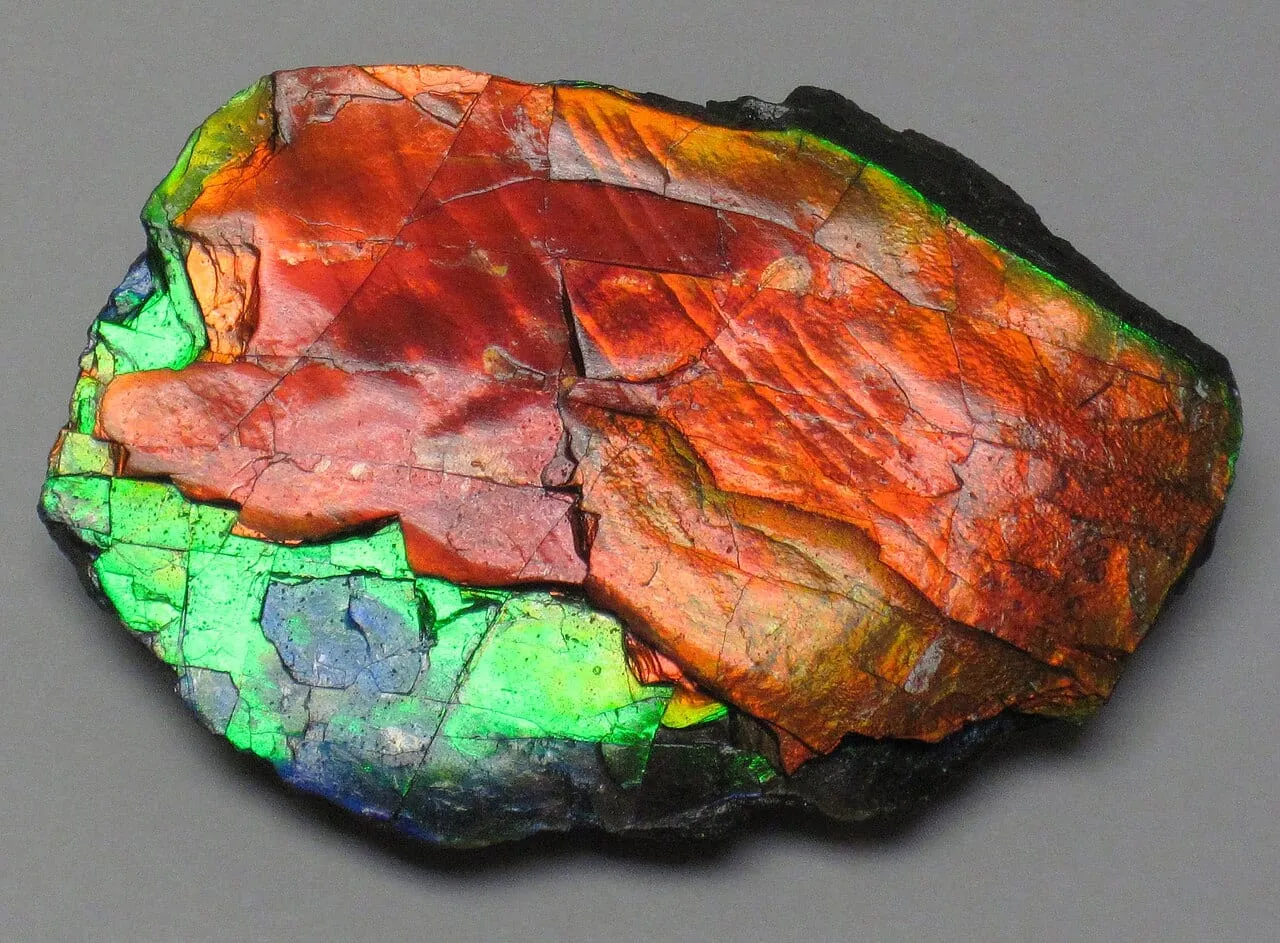
Ammolite
The rainbow-bright layer of fossil ammonite shell; of gem quality it comes only from the Canadian province of Alberta.
Aquamarine
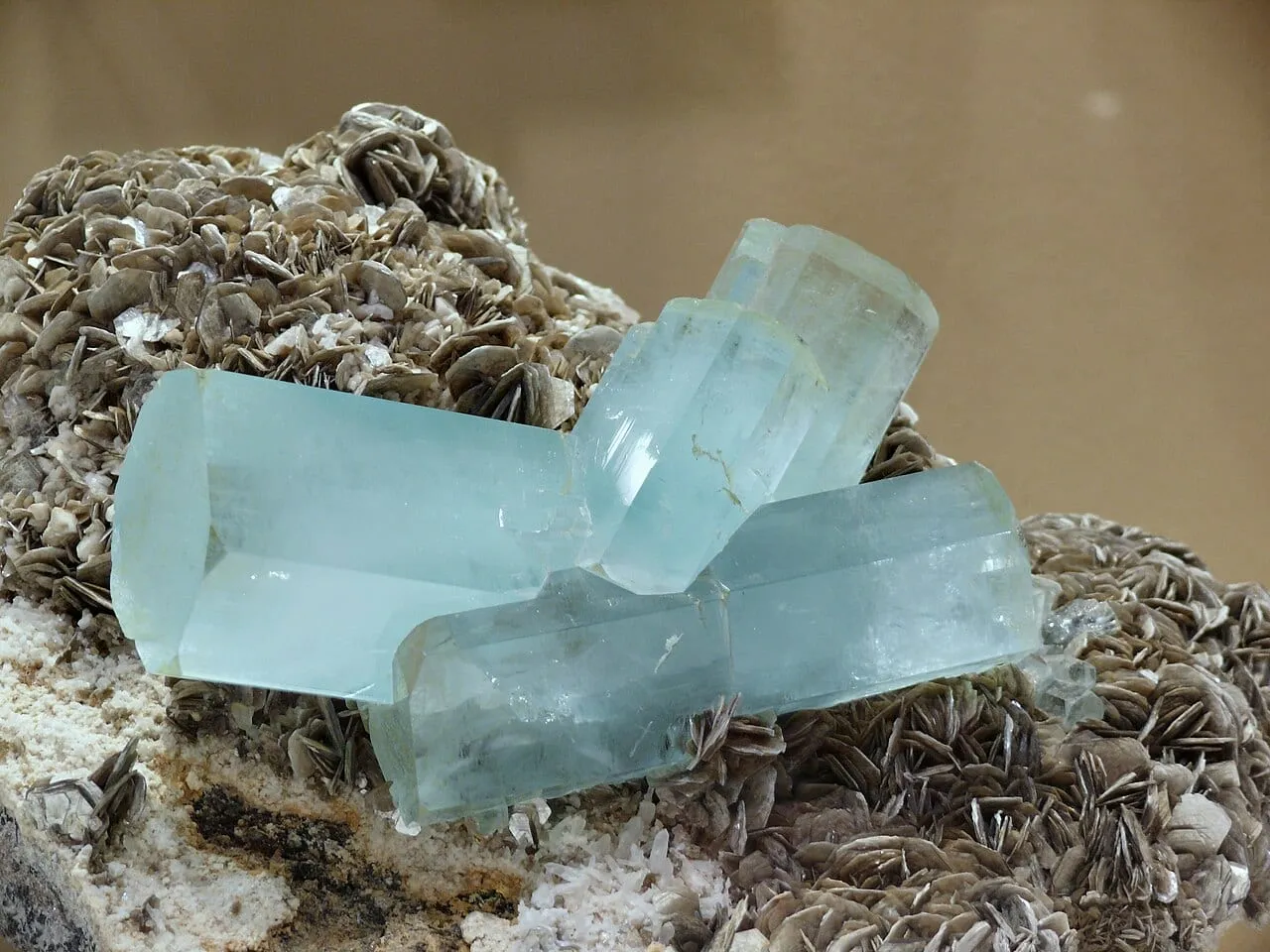
The blue member of the beryl family, named after seawater: often found as large, clear, nearly flawless crystals.