Meteorite
Lunar meteorite
Ay göktaşı
Pieces of the Moon thrown off its surface by impacts that reached Earth on their own: the only Moon rocks we have apart from those brought back by spacecraft.
Also known as: Moon meteorite
- Popularly: Meteorite

In short
Lunar meteorites are fragments of the Moon that impacts blasted off its surface and that later fell to Earth. Most are feldspar-rich breccias from the lunar highlands. At the end of 2024, 714 stones had been recognised, with a total mass of about 1,159 kg, and none has ever been seen to fall. About one in every thousand newly found meteorites is lunar.
Photos

How does it form?
When a large enough body hits the Moon, part of the impact debris escapes the Moon’s gravity and is thrown into space. Most lunar meteorites were launched by impacts that made craters a few kilometres across or smaller. Most of the fragments go into orbit around Earth and fall to it after a journey that can last from a few years to tens of thousands of years. All known lunar meteorites left the Moon within the past 20 million years, and most of them less than 100,000 years ago.
No lunar meteorite has ever been seen to fall; every one is a find. Their lunar origin is shown by comparing their mineral, chemical and isotopic composition with the Moon rocks brought back by the Apollo missions.
What is it used for?
Lunar meteorites have no everyday use; their value is scientific:
- Samples from other parts of the Moon: The Apollo missions brought back samples from only six places on the Moon, and the Luna probes from a few more. Lunar meteorites may come from elsewhere on the Moon; for example, the source of Sayh al Uhaymir 169 has been proposed to lie near the crater Lalande.
- The Moon’s crust and history: The ages of lunar rocks run from about 3.16 billion years for basalts to about 4.44 billion years for highland rocks, which helps to show how the Moon’s crust formed.
- A dry crust: Lunar rocks contain no water-bearing minerals and are poor in volatile elements, which shows how different the Moon’s history is from that of Earth’s crust.
- Museums and collections: Cut and polished slices and small pieces are displayed in museums and collections.
Main types
- Highland breccias: All lunar meteorites from the pale lunar highlands are anorthositic breccias. Highland rocks are 60–99% plagioclase. Most known lunar meteorites belong to this group.
- Mare basalts: About 5% of lunar meteorites are unbrecciated basalts or closely related gabbros and diabases. They are dark and look like Earth basalt.
- Unusual compositions: Sayh al Uhaymir 169 is an exceptional specimen, very rich in potassium, thorium, phosphorus and rare-earth elements.
Lunar meteorites are achondrites: for the other groups see the achondrite page, and for stones from another planet the Martian meteorite page.
Where are they found?
Lunar meteorites are found in dry regions: on Antarctic ice, in the Sahara of northern Africa and in the desert of Oman, and at least one is known from Australia (Calcalong Creek). Most have been found in the Sahara and Oman, and since 2010 most have been found in northern Africa. In deserts, dark stones show up against pale ground, and the dry climate preserves them well.
Why are they hard to recognise?
Lunar meteorites look like Earth rocks to the naked eye, and on desert finds the fusion crust has often weathered away. The conclusive evidence is the presence of the special isotopes that cosmic rays leave behind. So any stone said to be a lunar meteorite needs a laboratory report and a registered name. To work out whether a stone is a meteorite at all, see the Is my stone valuable? guide.
What determines its value?
Lunar meteorites are very rare: about one in a thousand newly found meteorites is lunar, and that rarity is the main factor in their value. First, a laboratory must confirm that the stone really comes from the Moon and its name must be registered in the Meteoritical Society’s database. Unbrecciated basalts (about 5%) and stones of unusual composition such as Sayh al Uhaymir 169 are more sought after. Because pieces are mostly traded as small slices, the name and paperwork of the stone they came from matter more than anything else, and some pieces sold as lunar meteorites are ordinary Earth rock.
This information is educational, not buying, selling or investment advice. Value varies enormously with quality and treatment.
How to recognise it
- 1
You cannot recognise one by eye: even an expert usually cannot identify a lunar meteorite just by looking. The proof is the mineral and chemical composition, compared with Moon rocks from the Apollo and Luna missions, and the special isotopes that cosmic rays leave behind; these can only be measured in a laboratory.
- 2
Cut open, a stone from the highlands looks like a breccia: angular white and light-grey feldspar fragments in a dark grey matrix. Basalts from the lunar maria (“seas”) are dark and look more like basalt.
- 3
Many lunar meteorites have a thin fusion crust, but on stones that lay in the desert for a long time it has weathered away; the lack of a crust does not rule out a lunar meteorite, and its presence does not prove one.
- 4
Lunar rocks contain no water-bearing minerals and are poor in volatile elements, which helps a laboratory tell them apart from Earth rocks. A genuine lunar meteorite has a registered name and class in the database of the Meteoritical Society.
Fakes and imitations
What shops usually don’t tell you:
- Earth rocks (“meteorwrongs”): according to meteorite expert Randy Korotev, some buy-and-sell sites list more “lunar meteorites” that are ordinary Earth rocks than genuine ones. Basalt, breccia and pale rocks cannot be told from a lunar meteorite by eye.
- Moonstone: the name is similar, but it is a different thing. [Moonstone](/en/stones/moonstone/) is a feldspar with a bluish sheen and has nothing to do with the Moon.
- Martian meteorites and HED meteorites: these are basalt-like too and cannot be told from lunar meteorites by eye; only laboratory measurements reveal where they came from. See the [Martian meteorite](/en/stones/martian-meteorite/) and [eucrite (HED meteorites)](/en/stones/eucrite/) pages.
- Undocumented “moon rock” pieces: be wary of any piece sold without a name, a class and a documented source; “it came from the Moon” is not evidence.
Myths and misconceptions
MythThe only Moon rocks on Earth are the ones the Apollo astronauts brought back.
FactThe Apollo missions returned 382 kg of Moon rock between 1969 and 1972, but 714 stones that fell to Earth on their own from the Moon had also been recognised by the end of 2024. They have been found on Antarctic ice and in the Sahara and Omani deserts.
MythA lunar meteorite is a grey stone that looks like the Moon’s surface; you can tell at a glance.
FactLunar meteorites look very much like Earth rocks. As meteorite expert Randy Korotev puts it, even for an expert it is not usually possible to identify one just by looking; cosmic-ray isotopes and laboratory analyses settle the matter.
What is it believed to be good for?
This section reports beliefs; it is not health information. There is no scientific evidence for these claims and no stone replaces medical treatment.
The meanings people give this stone, and who holds them:
- Today some crystal-healing sellers claim that lunar meteorites balance the third-eye and crown chakras and are suited to setting intentions and meditating during the phases of the Moon.
What science says
Lunar meteorites are made of minerals such as plagioclase, pyroxene and olivine, which also occur in Earth rocks. There is no scientific evidence that these minerals or the stone carry “moon energy” or affect the wearer; chakras and similar ideas cannot be measured. Moreover, some pieces sold as “moon rocks” are not even genuine lunar meteorites.
Did you know?
Allan Hills 81005, the first meteorite recognised as lunar, was a small 31.4 g stone found in Antarctica in January 1982. Brian Mason of the Smithsonian noticed that it looked unlike any known meteorite and resembled the Apollo samples; its lunar origin was announced in 1983.
Japanese researchers had in fact collected Yamato 791197 in 1979, about two years before ALHA 81005. Its lunar origin was only recognised in 1984.
According to NASA’s guidebook, the roughly 382 kg of Moon rock brought back by the Apollo missions is the property of the United States Government and is loaned to researchers through a controlled programme. Lunar meteorites, by contrast, are stones that fell to Earth by themselves; the known ones weigh about three times as much as the Apollo samples (about 1,159 kg).
Where is it found?
Loading map…
- Allan Hills, Transantarctic Mountains, Antarctica · Historic sourceALHA 81005, a 31.4 g stone found by the ANSMET team in January 1982, was the first meteorite recognised as coming from the Moon.
- Yamato Mountains (Queen Fabiola Mountains), Queen Maud Land, Antarctica · Historic sourceThe area where Japanese expeditions collect meteorites. Yamato 791197 (52 g), collected on 20 November 1979, was gathered before ALHA 81005 but only recognised as lunar in 1984.
- Dar al Gani, Libya · Major depositA limestone plateau about 200 km long in the Libyan Sahara; by July 2001, 869 meteorites (687 kg in all) had been collected. Lunar meteorites such as Dar al Gani 400 (found in 1998, about 1.4 kg) come from here.
- Sayh al Uhaymir, Oman · Known localitySayh al Uhaymir 169, a 206 g stone found on 16 January 2002, is an unusual lunar meteorite very rich in thorium, phosphorus and rare-earth elements; its source has been proposed to lie near the lunar crater Lalande.
- Dhofar, Oman · Known localityThe plains of Dhofar and Al Wusta, south of the Rub' al Khali (Empty Quarter), had yielded about 5,000 meteorites by mid-2009. The lunar meteorite Dhofar 025 (found in 2000; 772 g with its paired stones) comes from here.
Locations are approximate to protect sites. Red dots mark places in Türkiye. Open in the big map →
Frequently asked questions
What is lunar meteorite?
Lunar meteorites are fragments of the Moon that impacts blasted off its surface and that later fell to Earth. Most are feldspar-rich breccias from the lunar highlands. At the end of 2024, 714 stones had been recognised, with a total mass of about 1,159 kg, and none has ever been seen to fall. About one in every thousand newly found meteorites is lunar.
What is lunar meteorite used for?
Lunar meteorites have no everyday use; their value is scientific: Samples from other parts of the Moon: The Apollo missions brought back samples from only six places on the Moon, and the Luna probes from a few more. Lunar meteorites may come from elsewhere on the Moon; for example, the source of Sayh al Uhaymir 169 has been proposed to lie near the crater Lalande. The Moon’s crust and history: The ages of lunar rocks run from about 3.16 billion years for basalts to about 4.44 billion years for highland rocks, which helps to show how the Moon’s crust formed.
How hard is lunar meteorite?
It has a hardness of 5.5–7 on the Mohs scale. It can scratch glass; a steel knife scratches it only with difficulty. Its specific gravity is 2.7–3.4 g/cm³.
Where is lunar meteorite found?
Its best-known localities: Dar al Gani, Libya; Allan Hills, Transantarctic Mountains, Antarctica; Yamato Mountains (Queen Fabiola Mountains), Queen Maud Land, Antarctica; Sayh al Uhaymir, Oman; Dhofar, Oman.
How can you tell if lunar meteorite is real?
You cannot recognise one by eye: even an expert usually cannot identify a lunar meteorite just by looking. The proof is the mineral and chemical composition, compared with Moon rocks from the Apollo and Luna missions, and the special isotopes that cosmic rays leave behind; these can only be measured in a laboratory. Cut open, a stone from the highlands looks like a breccia: angular white and light-grey feldspar fragments in a dark grey matrix. Basalts from the lunar maria (“seas”) are dark and look more like basalt. Many lunar meteorites have a thin fusion crust, but on stones that lay in the desert for a long time it has weathered away; the lack of a crust does not rule out a lunar meteorite, and its presence does not prove one. Earth rocks (“meteorwrongs”): according to meteorite expert Randy Korotev, some buy-and-sell sites list more “lunar meteorites” that are ordinary Earth rocks than genuine ones. Basalt, breccia and pale rocks cannot be told from a lunar meteorite by eye.
Is lunar meteorite valuable?
On the “street to diamond” value ladder it sits on step 7 of nine: Precious stone. Lunar meteorites are very rare: about one in a thousand newly found meteorites is lunar, and that rarity is the main factor in their value. First, a laboratory must confirm that the stone really comes from the Moon and its name must be registered in the Meteoritical Society’s database. Unbrecciated basalts (about 5%) and stones of unusual composition such as Sayh al Uhaymir 169 are more sought after. Because pieces are mostly traded as small slices, the name and paperwork of the stone they came from matter more than anything else, and some pieces sold as lunar meteorites are ordinary Earth rock.
What is lunar meteorite good for?
Today some crystal-healing sellers claim that lunar meteorites balance the third-eye and crown chakras and are suited to setting intentions and meditating during the phases of the Moon. Lunar meteorites are made of minerals such as plagioclase, pyroxene and olivine, which also occur in Earth rocks. There is no scientific evidence that these minerals or the stone carry “moon energy” or affect the wearer; chakras and similar ideas cannot be measured. Moreover, some pieces sold as “moon rocks” are not even genuine lunar meteorites. This section reports beliefs; it is not health information. There is no scientific evidence for these claims and no stone replaces medical treatment.
Sources
- Lunar meteorites (R. L. Korotev) · Washington University in St. Louis, Some Meteorite Information
- Lunar meteorites · Buseck Center for Meteorite Studies, Arizona State University
- Lunar meteorite · Wikipedia
- List of lunar meteorites · Wikipedia
- Moon rock · Wikipedia
- Allan Hills 81005 · Wikipedia
- Yamato 791197 · Wikipedia
- Queen Fabiola Mountains · Wikipedia
- Dar al Gani · Wikipedia
- Sayh al Uhaymir 169 · Wikipedia
- Dhofar Governorate · Wikipedia
- Meteorite · Wikipedia
- Lunar Sample Information · NASA Astromaterials Acquisition and Curation Office, Johnson Space Center
- Lunar Sample Allocation Guidebook · NASA Astromaterials Acquisition and Curation Office, Johnson Space Center
- Handbook of Mineralogy: Anorthite · Mineralogical Society of America
- Handbook of Mineralogy: Augite · Mineralogical Society of America
- Handbook of Mineralogy: Pigeonite · Mineralogical Society of America
- Handbook of Mineralogy: Forsterite · Mineralogical Society of America
External links
Draft: awaiting expert reviewReport an error ↗
On the same step

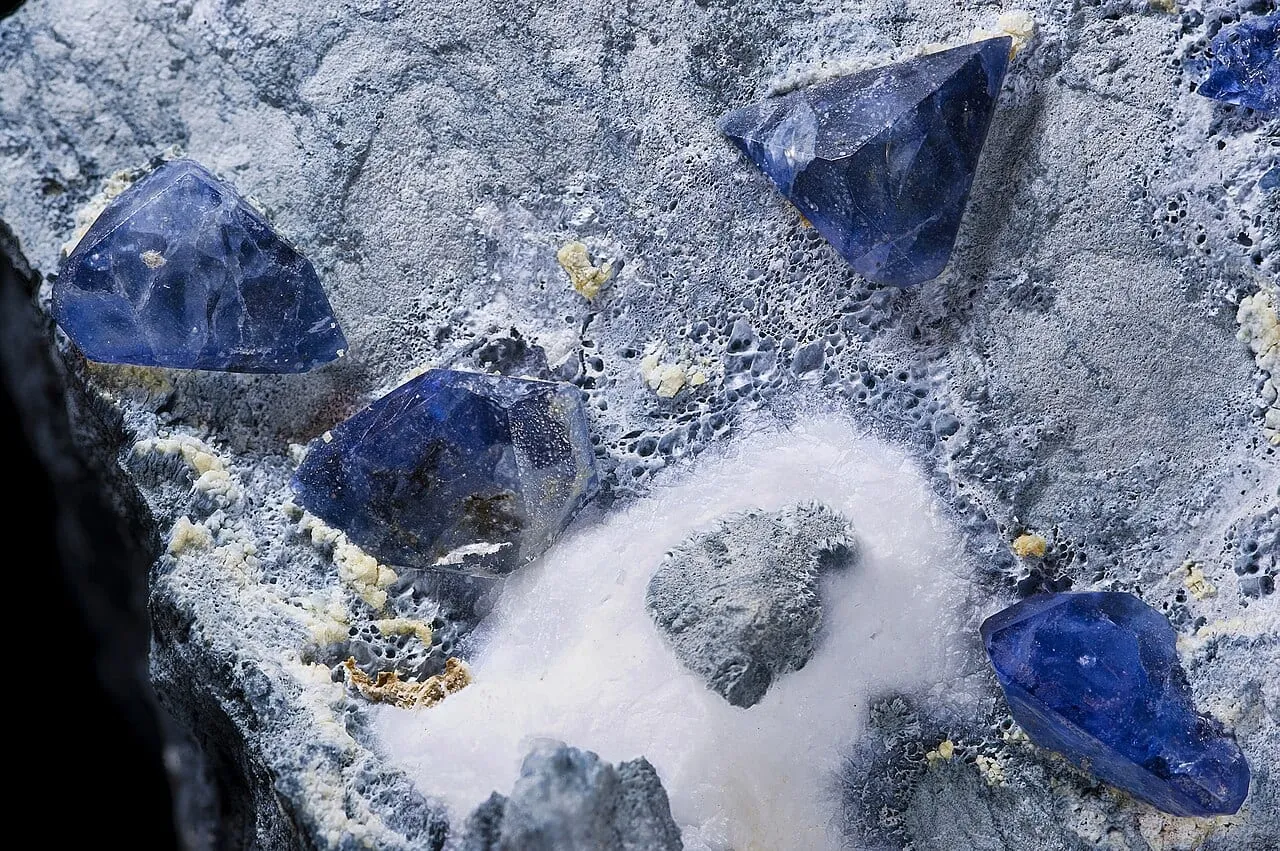
Benitoite
A sapphire-like blue stone whose gem crystals come from a single mine in the world: the official state gem of California.
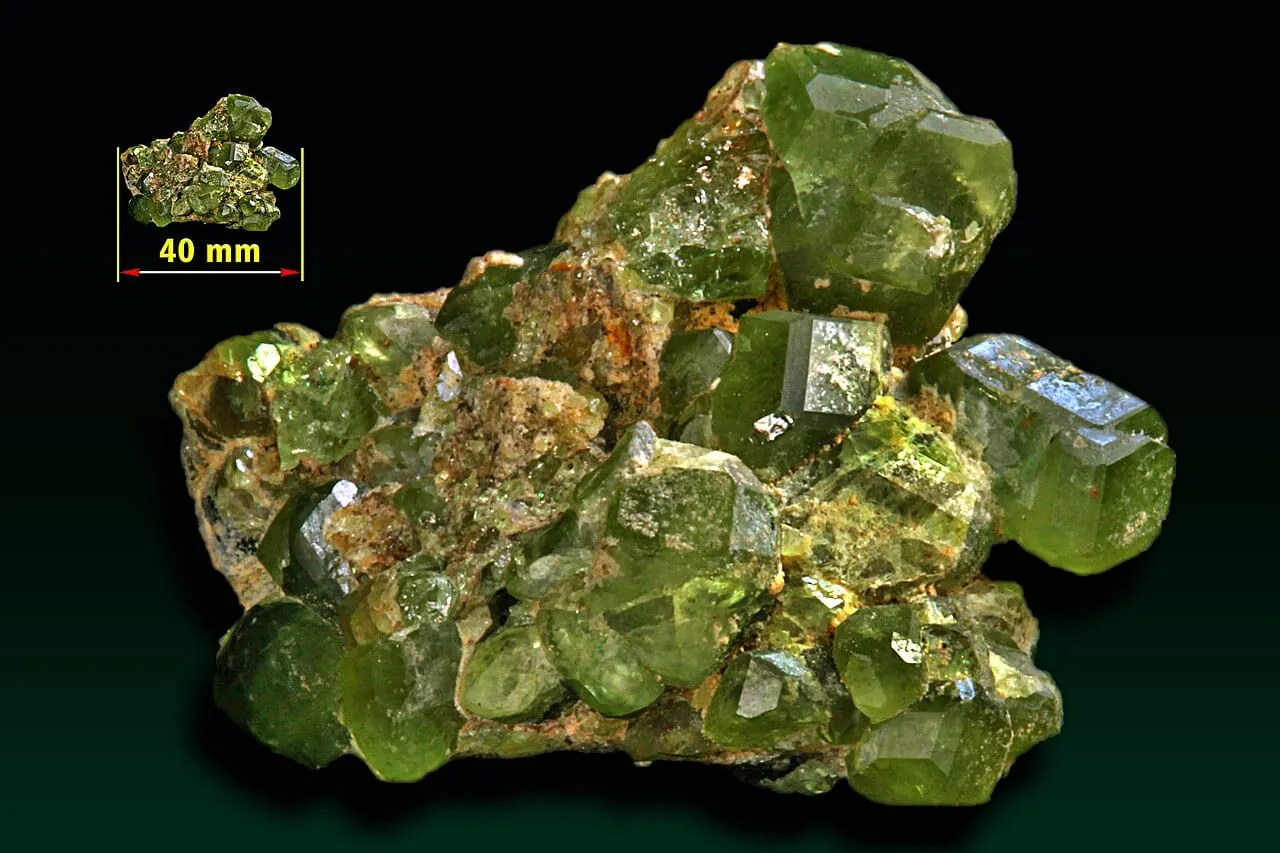
Demantoid
Its name means “diamond-like”: an emerald-green garnet that splits light more than diamond does, known since the 1850s from the Urals; a rare and valuable stone.
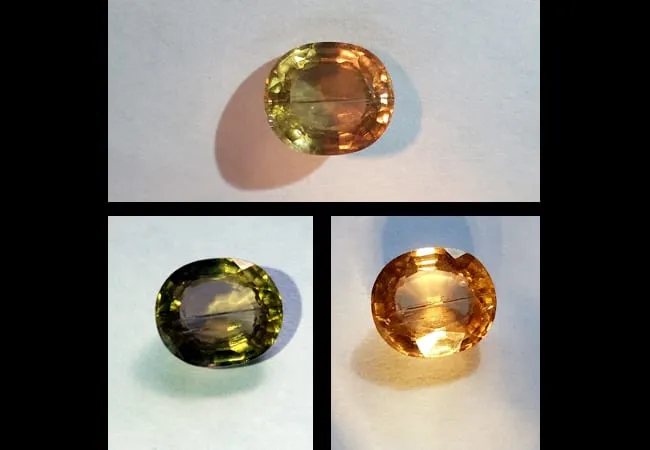
Diaspore
A rare mineral that looks greenish in daylight and pinkish under incandescent light; gem-quality material comes almost only from Muğla.