Rock
Jasper
Jasper
A fine-grained silica rock, opaque and coloured red, yellow, brown or green by iron oxide and other impurities.
Also known as: Picture jasper (patterned kinds)
- Popularly: Semi-precious stone
- Gemstone
- Ornamental
- Important in Türkiye

In short
Jasper is an opaque silica rock made of very fine-grained quartz and chalcedony. It is most often red, yellow, brown or green, and its common red colour comes from iron oxide. It breaks with a smooth surface and takes a very good polish, which is why seals, vases and jewellery have been made from it for thousands of years. Sources describe jasper sometimes as a variety of chert (the flint-type rock) and sometimes as a rock containing chalcedony.
Photos

How does it form?
Jasper forms as silica-rich sediments or volcanic ash harden; its colours and patterns come from the make-up of this original material. Hot waters circulating through the rock are thought to be needed as well. Minerals spreading along cracks can create branching, plant-like patterns (dendrites). Jasper is also the main component of the silica-rich layers of banded iron formations; the red bands in these formations are jasper.
What is it used for?
- Ornamental stone and jewellery: it takes an excellent polish, so vases, jewellery, seals and snuff boxes are made from it.
- Touchstone: black jasper was used to test the purity of gold and silver alloys. The colour of the streak an alloy leaves when rubbed on the stone shows its gold content.
- History: jasper was a favourite stone of the ancient world; its name can be traced in Arabic, Persian, Hebrew, Assyrian, Greek and Latin.
Kinds of jasper
Naming jasper varieties is difficult: names often come from the place where a stone is found (“Bruneau”, “Lahontan”), sometimes from its look (“autumn”, “porcelain”). “Picture jaspers”, whose cut faces show picture-like patterns, are found all over the world. Examples are the Purbalingga district of Indonesia, Biggs jasper from Oregon and Bruneau jasper from Idaho in the United States, and the blue-green jasper from Ettutkan Mountain in Bashkortostan, Russia.
Rock or variety?
Sources define jasper in different ways. English Wikipedia calls it an opaque rock; Britannica calls it an opaque, dense variety of chert; Turkish Wikipedia lists it as an impure variety of chalcedony. This page treats jasper as a rock that is closely related to chert and often contains chalcedony.
In Türkiye
Ornamental stones such as agate, chalcedony, chrysoprase and jasper are extracted in Tokat, and workshops in Zile, Tokat city centre and Artova work them (Şenol, 2023). The Küre Encyclopedia says Anatolia is rich in the diversity and quality of its jasper, and mentions volcanic-origin occurrences in the Aegean and Central Anatolia and the Topçam Formation in Tokat.
What determines its value?
The value of jasper depends on the vividness of its colour and the beauty of its pattern, on whether it is free of cracks and cavities, and on the quality of its polish. It is generally a plentiful, inexpensive ornamental stone; “picture jaspers”, whose cut faces show picture-like patterns, and coloured kinds tied to particular deposits are more sought after. Trade names such as “ocean” or “forest fire” usually describe a place or a look and do not name a separate kind of stone.
This information is educational, not buying, selling or investment advice. Value varies enormously with quality and treatment.
How to recognise it
- 1
It is completely opaque; no light passes even through thin edges, which is the easiest way to tell it from translucent chalcedony.
- 2
Its hardness is 6.5–7: it scratches glass, and a steel knife cannot scratch it.
- 3
It breaks with a smooth surface; a broken face looks dull, but it shines when polished.
- 4
Its colour is often not uniform: it may be spotted, banded or veined, and pieces whose cut face shows landscape- or picture-like patterns are called “picture jasper”.
Fakes and imitations
What shops usually don’t tell you:
- Basanite (Lydian stone, touchstone): one of the names used for black, jasper-like stones; one kind is a black variety of jasper, the other a black volcanic rock close to basalt. It was used as a touchstone for testing the purity of gold and silver alloys.
Myths and misconceptions
MythThe jasper described by ancient writers and in sacred texts is the same as today’s jasper.
FactThe ancient iaspis was often translucent and green, and was compared with emerald; it may have included nephrite and chalcedonies like chrysoprase. Today the name jasper is used only for opaque silica.
MythNames such as “ocean”, “dalmatian” and “ghost” are separate jasper minerals.
FactThey are trade names that describe a colour, a pattern or a place, not mineral species. Sources call many of them “fanciful” names, and different materials can be sold under the same one.
What is it believed to be good for?
This section reports beliefs; it is not health information. There is no scientific evidence for these claims and no stone replaces medical treatment.
The meanings people give this stone, and who holds them:
- According to Lithica, a fourth-century author, the gods were believed to answer the prayers of whoever wore polished grass-green jasper with rain; Damigeron adds that the stone served this purpose only if properly consecrated.
- In the same period jasper was believed to drive away evil spirits and to protect the wearer from the bites of venomous creatures; a German author of the 11th or 12th century recommends laying the stone on a snake bite.
- In Türkiye, some news and crystal-therapy sites claim that jasper protects against the evil eye and other bad influences, symbolises honesty and helps control outbursts of anger.
- The same sources also claim that jasper eases blood circulation, strengthens the immune system and helps with stomach and liver complaints.
What science says
There is no scientific evidence that jasper brings rain, drives away evil spirits, draws out venom, or improves blood circulation, immunity, the stomach or the liver. George F. Kunz traces the snake-bite belief to the idea that the stone draws the poison into itself. A snake bite needs immediate medical help, not a stone; stomach, liver and heart-and-vessel problems need a doctor’s supervision.
Did you know?
The name comes from the Greek iaspis, meaning “spotted or speckled stone”; the word goes back to Semitic languages (Hebrew yashpeh, Akkadian yashupu).
In Mehrgarh, green jasper was made into bow-drill bits in the 4th–5th millennium BC, and on Minoan Crete jasper seals were carved around 1800 BC at the palace of Knossos.
Where is it found?
Loading map…
- Purbalingga district, Central Java, Indonesia · Known localityA known source of patterned “picture jasper”
- Biggs area, Oregon, USA · Known localitySource of the finely patterned picture jasper called “Biggs jasper”
- Bruneau River canyon, Idaho, USA · Known locality“Bruneau jasper” is named after this canyon
- Ynys Llanddwyn, Wales · Known localityOne of the places where patterned jasper can be seen
- Sibay (Ettutkan Mountain), Bashkortostan, Russia · Known localityA deposit of blue-green jasper in the southern Urals; Britannica lists the Urals among the main sources of jasper
- Sicily, Italy · Historic sourceBritannica lists the Urals, North Africa, Germany and Sicily among the main sources of jasper; no exact site is given
- Tokat, Türkiye · Known localityOrnamental stones such as jasper, agate, chalcedony and chrysoprase are extracted in Tokat and worked in workshops in Zile, Tokat city and Artova
Locations are approximate to protect sites. Red dots mark places in Türkiye. Open in the big map →
Frequently asked questions
What is jasper?
Jasper is an opaque silica rock made of very fine-grained quartz and chalcedony. It is most often red, yellow, brown or green, and its common red colour comes from iron oxide. It breaks with a smooth surface and takes a very good polish, which is why seals, vases and jewellery have been made from it for thousands of years. Sources describe jasper sometimes as a variety of chert (the flint-type rock) and sometimes as a rock containing chalcedony.
What is jasper used for?
Ornamental stone and jewellery: it takes an excellent polish, so vases, jewellery, seals and snuff boxes are made from it. Touchstone: black jasper was used to test the purity of gold and silver alloys. The colour of the streak an alloy leaves when rubbed on the stone shows its gold content. History: jasper was a favourite stone of the ancient world; its name can be traced in Arabic, Persian, Hebrew, Assyrian, Greek and Latin.
How hard is jasper?
It has a hardness of 6.5–7 on the Mohs scale. It scratches glass and steel; a steel knife cannot scratch it. Its specific gravity is 2.5–2.9 g/cm³.
Where is jasper found?
Its best-known localities: Sicily, Italy; Purbalingga district, Central Java, Indonesia; Biggs area, Oregon, USA; Bruneau River canyon, Idaho, USA; Ynys Llanddwyn, Wales.
Where is jasper found in Türkiye?
Known localities in Türkiye: Tokat, Türkiye.
How can you tell if jasper is real?
It is completely opaque; no light passes even through thin edges, which is the easiest way to tell it from translucent chalcedony. Its hardness is 6.5–7: it scratches glass, and a steel knife cannot scratch it. It breaks with a smooth surface; a broken face looks dull, but it shines when polished. Basanite (Lydian stone, touchstone): one of the names used for black, jasper-like stones; one kind is a black variety of jasper, the other a black volcanic rock close to basalt. It was used as a touchstone for testing the purity of gold and silver alloys.
Is jasper valuable?
On the “street to diamond” value ladder it sits on step 5 of nine: Ornamental stone. The value of jasper depends on the vividness of its colour and the beauty of its pattern, on whether it is free of cracks and cavities, and on the quality of its polish. It is generally a plentiful, inexpensive ornamental stone; “picture jaspers”, whose cut faces show picture-like patterns, and coloured kinds tied to particular deposits are more sought after. Trade names such as “ocean” or “forest fire” usually describe a place or a look and do not name a separate kind of stone.
What is jasper good for?
According to Lithica, a fourth-century author, the gods were believed to answer the prayers of whoever wore polished grass-green jasper with rain; Damigeron adds that the stone served this purpose only if properly consecrated. In the same period jasper was believed to drive away evil spirits and to protect the wearer from the bites of venomous creatures; a German author of the 11th or 12th century recommends laying the stone on a snake bite. In Türkiye, some news and crystal-therapy sites claim that jasper protects against the evil eye and other bad influences, symbolises honesty and helps control outbursts of anger. The same sources also claim that jasper eases blood circulation, strengthens the immune system and helps with stomach and liver complaints. There is no scientific evidence that jasper brings rain, drives away evil spirits, draws out venom, or improves blood circulation, immunity, the stomach or the liver. George F. Kunz traces the snake-bite belief to the idea that the stone draws the poison into itself. A snake bite needs immediate medical help, not a stone; stomach, liver and heart-and-vessel problems need a doctor’s supervision. This section reports beliefs; it is not health information. There is no scientific evidence for these claims and no stone replaces medical treatment.
Sources
- Jasper · Wikipedia
- Jasper · Vikipedi
- Jasper · Encyclopaedia Britannica
- Taşın ekonomiye kazandırılması: Tokat'ta süs taşı işlemeciliği (Şenol) · Marmara Üniversitesi, 2023
- Jasper Taşı (O. Kanpolat) · Küre Ansiklopedi, 2025
- Jasper taşı faydaları, jasper taşı özellikleri nelerdir, ne işe yarar? · Sabah, 2022
- The Curious Lore of Precious Stones (G. F. Kunz) · J. B. Lippincott Company (Project Gutenberg), 1913
External links
Draft: awaiting expert reviewReport an error ↗
On the same step
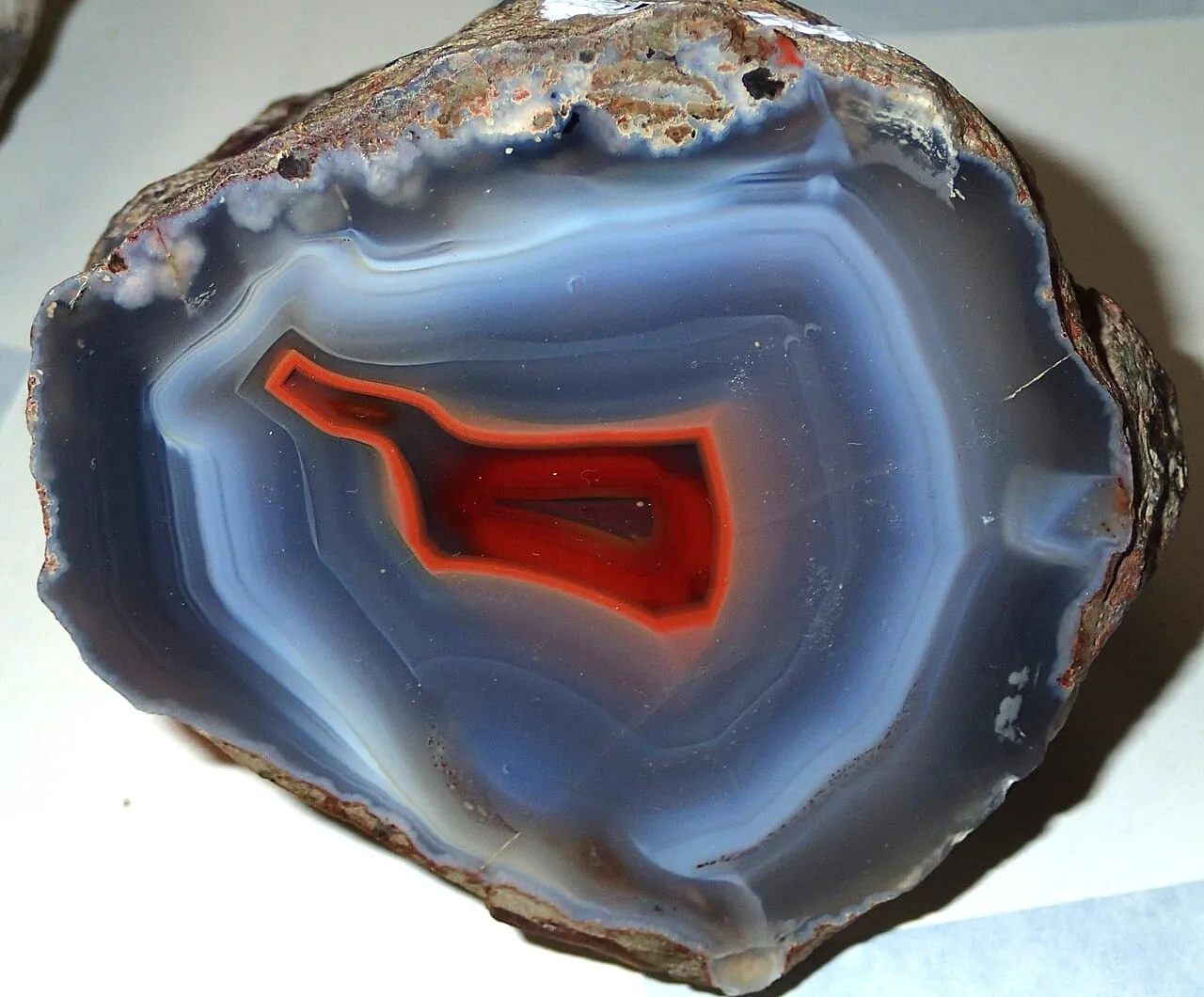
Agate
The banded variety of chalcedony: it grows layer by layer in hollows in volcanic rock and shows a new pattern every time it is cut.

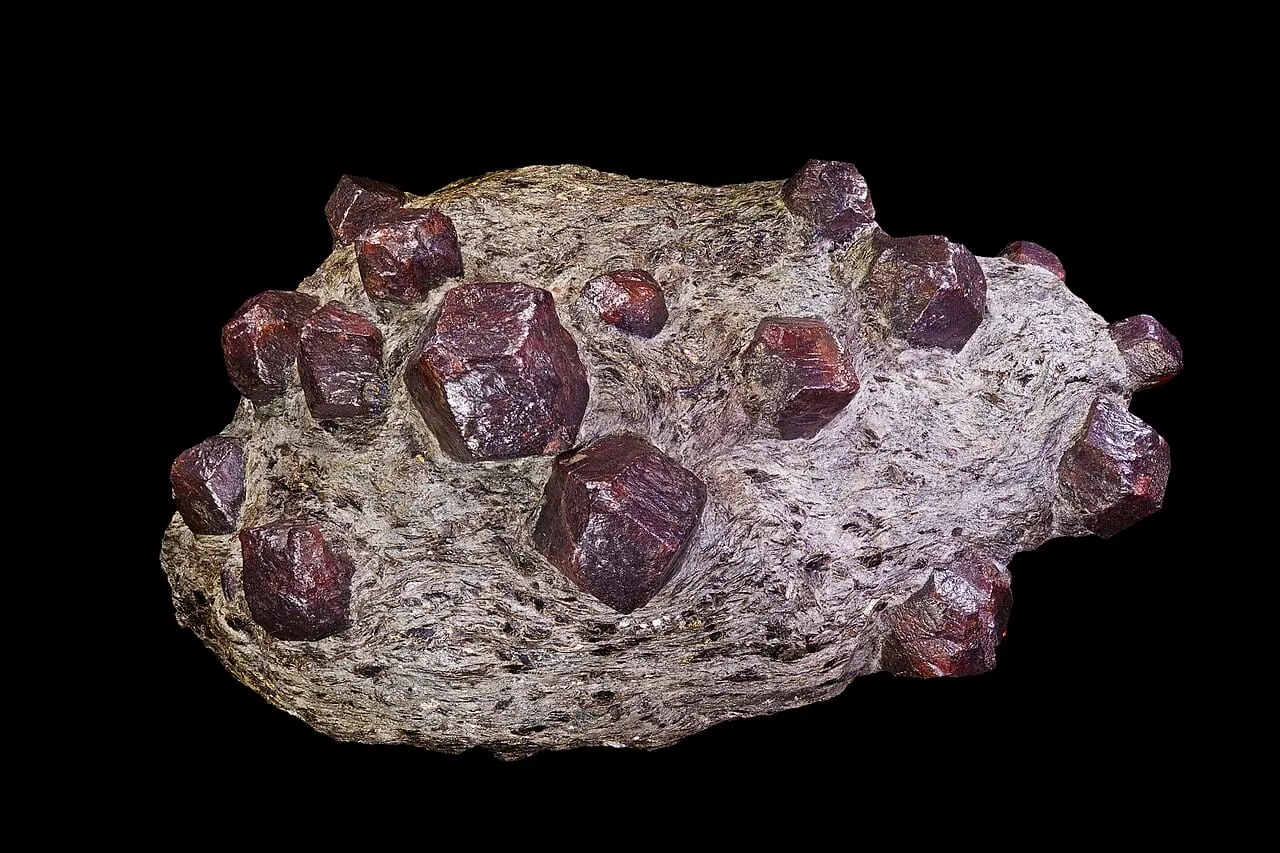
Almandine
The commonest garnet: a deep red, iron-rich stone named after the ancient city of Alabanda in Anatolia, used in jewellery and in sandpaper alike.
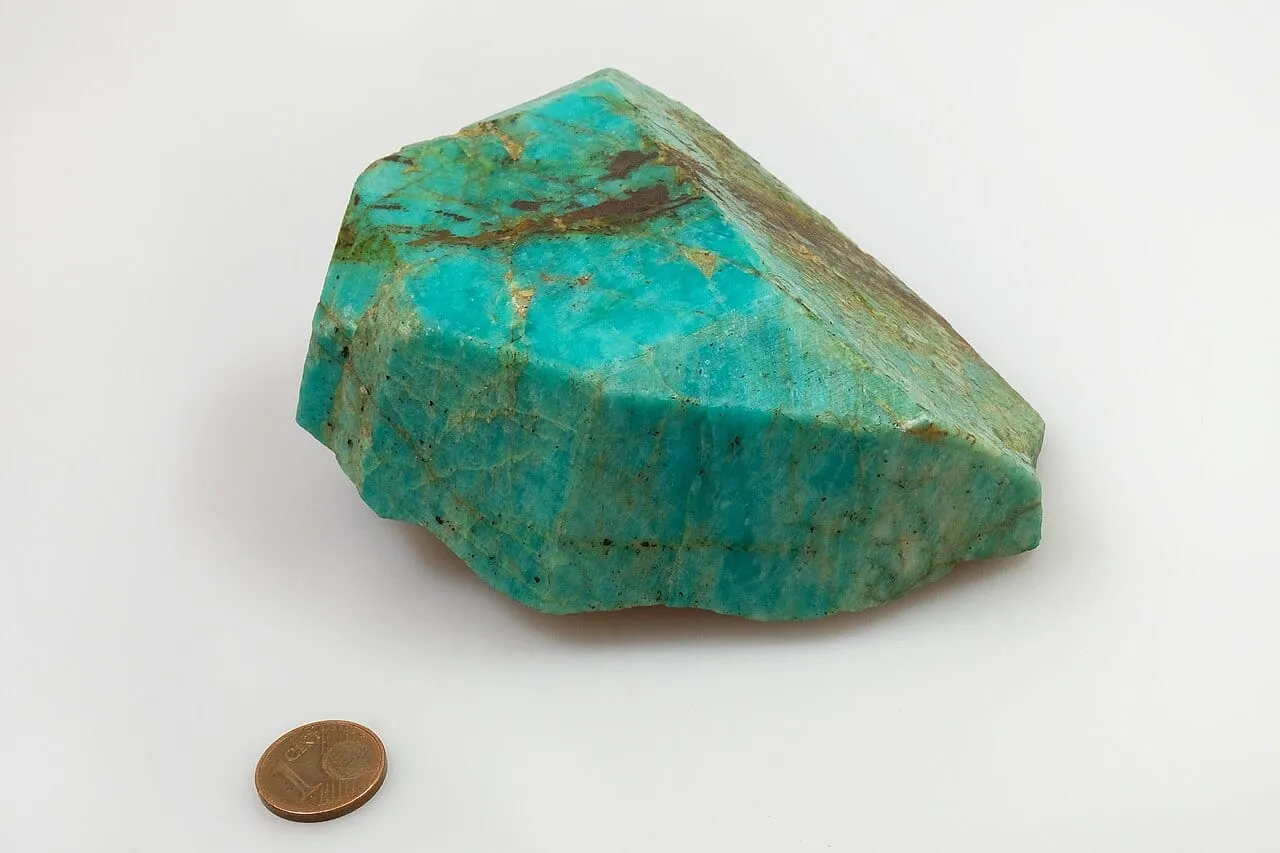
Amazonite
A turquoise-like green-blue feldspar: a variety of microcline worn as jewellery for more than three thousand years, but it can release lead.