VarietyA variety of Cordierite
Iolite
(Mg,Fe)₂Al₄Si₅O₁₈İyolit
The blue-violet gem form of cordierite: its colour changes with the viewing direction, and it is linked with the story of the “Viking compass”.
Also known as: Water sapphire · Dichroite (old name)
- Popularly: Semi-precious stone
- Gemstone
In short
Iolite is the transparent, violetish-blue, gem-quality variety of the mineral cordierite. Its best-known feature is strong pleochroism: the same stone looks violet-blue from one direction and yellowish grey from another. It is sometimes used as an inexpensive look-alike for sapphire, but it is a different mineral and noticeably softer than sapphire.
Photos
How does it form?
Iolite is the name given to transparent, clean crystals of cordierite; like cordierite, it generally forms when aluminium-rich rocks are transformed by heat and pressure (metamorphism). It takes its colour from iron built into the crystal. As in Sri Lanka, when rocks wear away, iolite also collects in river gravels. According to GIA, Sri Lanka, India, Madagascar, Brazil, Norway, Kenya and Tanzania are among the countries that produce iolite.
What is it used for?
Iolite is used as a gem: it is set as a faceted stone in rings, pendants and earrings. Because its blue resembles sapphire, it is sometimes used as an inexpensive look-alike for sapphire; but it is much softer than sapphire and, having a cleavage in one direction, should be worn with care in rings. Raw crystals are also sought after by collectors.
Pleochroism and the “Viking compass”
The most striking feature of iolite is that it shows different colours from different directions: looked at from one direction a stone is violet-blue, from another yellowish grey. This is why it used to be called dichroite, meaning “two-coloured rock”.
This property gave rise to the story that iolite may have been the Vikings’ “sunstone”: part of the light from the sky is polarised, because it is scattered by air molecules, and the direction of polarisation is at right angles to the direction of the sun; a pleochroic stone such as iolite can show this direction through a change of colour, and so could help find the sun’s direction even when it is hidden by fog. But this is only a hypothesis; which mineral the sunstone of the sagas was is not known.
What determines its value?
The most sought-after iolite is saturated, evenly coloured violetish blue. Because the pleochroism is strong, value also depends on the stone having been cut in the right direction. According to GIA, fine stones over 5 carats are rare, and a limited supply of uniform quality has held back wide marketing of the gem. Iolite is rarely treated; because of its low melting point it cannot be taken to the high temperatures used on corundum.
This information is educational, not buying, selling or investment advice. Value varies enormously with quality and treatment.
How to recognise it
- 1
Its colour is violetish blue; depending on the viewing direction it ranges from pale violet to dark violet, blue-grey and yellowish brown.
- 2
Its hardness is 7–7.5, but it has one distinct cleavage direction, so it can break when knocked in jewellery such as rings.
- 3
Its colour depends on the direction of cutting: cut the wrong way, a blue iolite can look colourless or yellow, so cutters orient the crystal with care.
- 4
Its blue can resemble sapphire or tanzanite, and it can be confused with them; a gem laboratory is needed to tell them apart for certain.
Myths and misconceptions
MythThe Vikings found their way at sea with iolite.
FactThe Norse sagas mention a “sunstone”, but which mineral it was is not known. Some researchers have suggested a light-polarising mineral such as iolite (cordierite) or Iceland spar (calcite), but there is no firm evidence from the Viking age. A piece found in 2002 in the wreck of a ship that sank in 1592, beside a navigational instrument, is Iceland spar, and what it was used for is uncertain.
MythIolite is a kind of sapphire.
FactDespite the name “water sapphire”, iolite is not related to sapphire: sapphire is the mineral corundum and is very hard (9), while iolite is cordierite (7–7.5) and has a cleavage.
What is it believed to be good for?
This section reports beliefs; it is not health information. There is no scientific evidence for these claims and no stone replaces medical treatment.
The meanings people give this stone, and who holds them:
- Today crystal-therapy practitioners claim that iolite sharpens intuition and vision, makes decisions easier, eases worry and tension, brings restful sleep and vivid dreams, and reduces nightmares.
- In Türkiye some stone sellers call iolite a “stone of intuition and inner compass” and claim that it helps in moving away from addictions.
- Crystal-therapy circles also claim that iolite lessens the effects of alcohol and helps the liver, stomach and intestines recover, and that it helps with migraine and fever.
What science says
There is no scientific evidence that iolite sharpens intuition, improves sleep, frees anyone from addiction or helps with ailments such as liver trouble, migraine or fever; for addiction and lasting illness, see a doctor rather than relying on a stone. The “Viking compass” is also not proven history but a hypothesis.
Did you know?
Its name comes from the Greek ios, “violet”.
The largest known iolite crystal was found in Wyoming, USA, and weighs more than 24,000 carats (about 4.8 kg).
When tanzanite was first found, gemologists suspected that it might be cordierite.
Where is it found?
Loading map…
- Ratnapura area (gem gravels), Sabaragamuwa, Sri Lanka · Historic sourceIolite has long been recovered from the gem-bearing gravels
- Belemboky mine, Tsiombe, Madagascar · Major depositAccording to GIA, a significant iolite deposit was found in Madagascar in 1994
- Coimbatore area, Tamil Nadu, India · Known localityThe Handbook of Mineralogy names cordierite around Coimbatore and Tiruchirappalli in Tamil Nadu
- Novo Cruzeiro, Minas Gerais, Brazil · Known localityIolite crystals from the Minas Gerais pegmatite region
- Harts Range, Northern Territory, Australia · Known localityA cordierite area named in the Handbook of Mineralogy; iolite is abundant in the Northern Territory
- Yellowknife area, Northwest Territories, Canada · Known localityIolite is reported from the Yellowknife area
- Haddam, Middlesex County, Connecticut, USA · Known localityConnecticut is one of the US states from which iolite is reported
Locations are approximate to protect sites. Red dots mark places in Türkiye. Open in the big map →
Frequently asked questions
What is iolite?
Iolite is the transparent, violetish-blue, gem-quality variety of the mineral cordierite. Its best-known feature is strong pleochroism: the same stone looks violet-blue from one direction and yellowish grey from another. It is sometimes used as an inexpensive look-alike for sapphire, but it is a different mineral and noticeably softer than sapphire.
What is iolite used for?
Iolite is used as a gem: it is set as a faceted stone in rings, pendants and earrings. Because its blue resembles sapphire, it is sometimes used as an inexpensive look-alike for sapphire; but it is much softer than sapphire and, having a cleavage in one direction, should be worn with care in rings. Raw crystals are also sought after by collectors.
How hard is iolite?
It has a hardness of 7–7.5 on the Mohs scale. It scratches glass and steel; a steel knife cannot scratch it. Its specific gravity is 2.57–2.66 g/cm³.
Where is iolite found?
Its best-known localities: Belemboky mine, Tsiombe, Madagascar; Ratnapura area (gem gravels), Sabaragamuwa, Sri Lanka; Coimbatore area, Tamil Nadu, India; Novo Cruzeiro, Minas Gerais, Brazil; Harts Range, Northern Territory, Australia.
How can you tell if iolite is real?
Its colour is violetish blue; depending on the viewing direction it ranges from pale violet to dark violet, blue-grey and yellowish brown. Its hardness is 7–7.5, but it has one distinct cleavage direction, so it can break when knocked in jewellery such as rings. Its colour depends on the direction of cutting: cut the wrong way, a blue iolite can look colourless or yellow, so cutters orient the crystal with care.
Is iolite valuable?
On the “street to diamond” value ladder it sits on step 5 of nine: Ornamental stone. The most sought-after iolite is saturated, evenly coloured violetish blue. Because the pleochroism is strong, value also depends on the stone having been cut in the right direction. According to GIA, fine stones over 5 carats are rare, and a limited supply of uniform quality has held back wide marketing of the gem. Iolite is rarely treated; because of its low melting point it cannot be taken to the high temperatures used on corundum.
What is iolite good for?
Today crystal-therapy practitioners claim that iolite sharpens intuition and vision, makes decisions easier, eases worry and tension, brings restful sleep and vivid dreams, and reduces nightmares. In Türkiye some stone sellers call iolite a “stone of intuition and inner compass” and claim that it helps in moving away from addictions. Crystal-therapy circles also claim that iolite lessens the effects of alcohol and helps the liver, stomach and intestines recover, and that it helps with migraine and fever. There is no scientific evidence that iolite sharpens intuition, improves sleep, frees anyone from addiction or helps with ailments such as liver trouble, migraine or fever; for addiction and lasting illness, see a doctor rather than relying on a stone. The “Viking compass” is also not proven history but a hypothesis. This section reports beliefs; it is not health information. There is no scientific evidence for these claims and no stone replaces medical treatment.
Family

.jpg)
Sources
- Iolite Description (Gem Encyclopedia) · GIA
- Cordierite · Wikipedia
- Handbook of Mineralogy: Cordierite · Mineralogical Society of America
- Sunstone (medieval) · Wikipedia
- Cordiérite var. iolite 1 (locality: Belemboky mine, Tsiombe, Madagascar) · Wikimedia Commons
- Cordiérite var. iolite 6 (locality: Novo Cruzeiro, Minas Gerais, Brazil) · Wikimedia Commons


External links
Draft: awaiting expert reviewReport an error ↗
On the same step
Agate
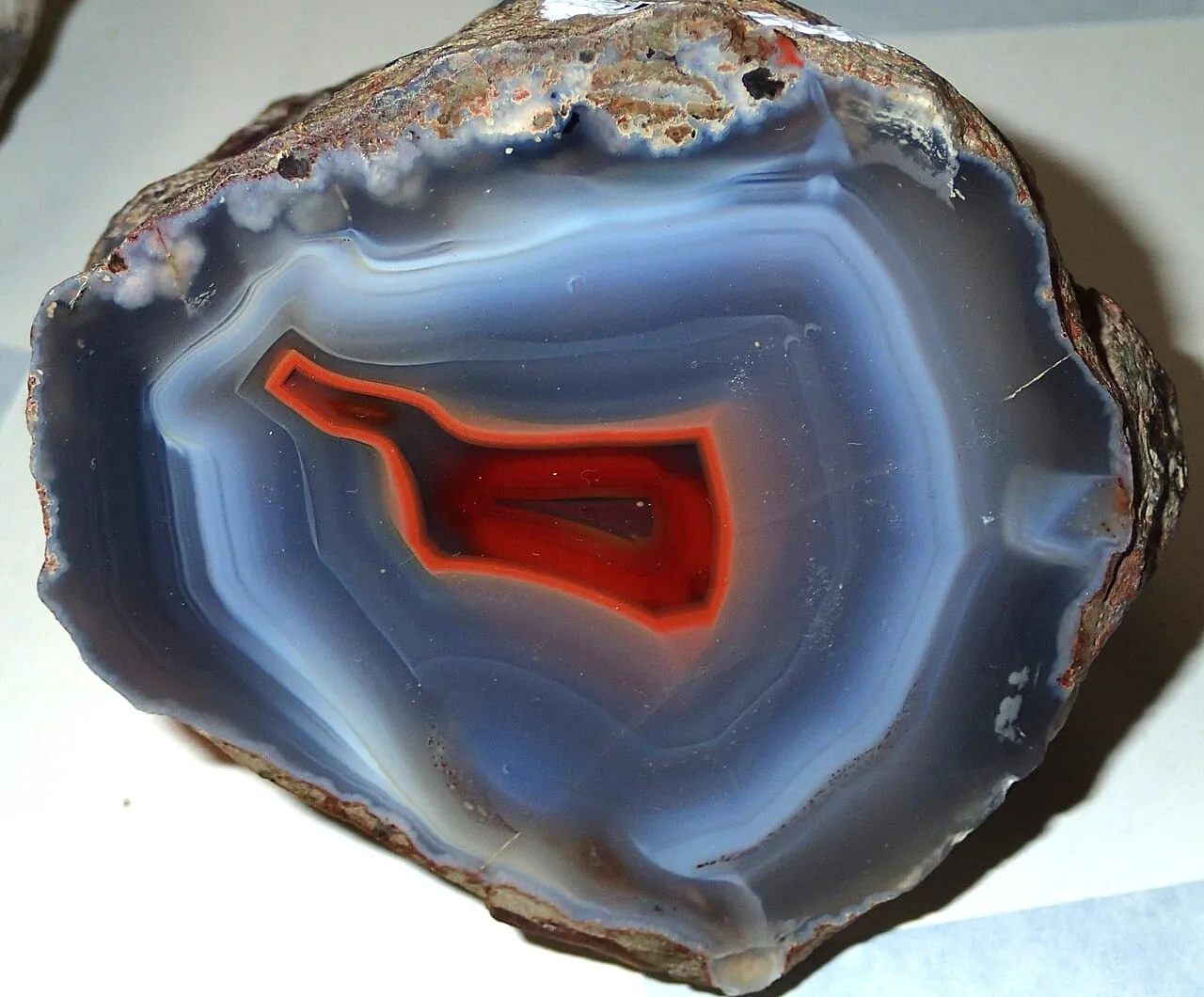
The banded variety of chalcedony: it grows layer by layer in hollows in volcanic rock and shows a new pattern every time it is cut.
Almandine
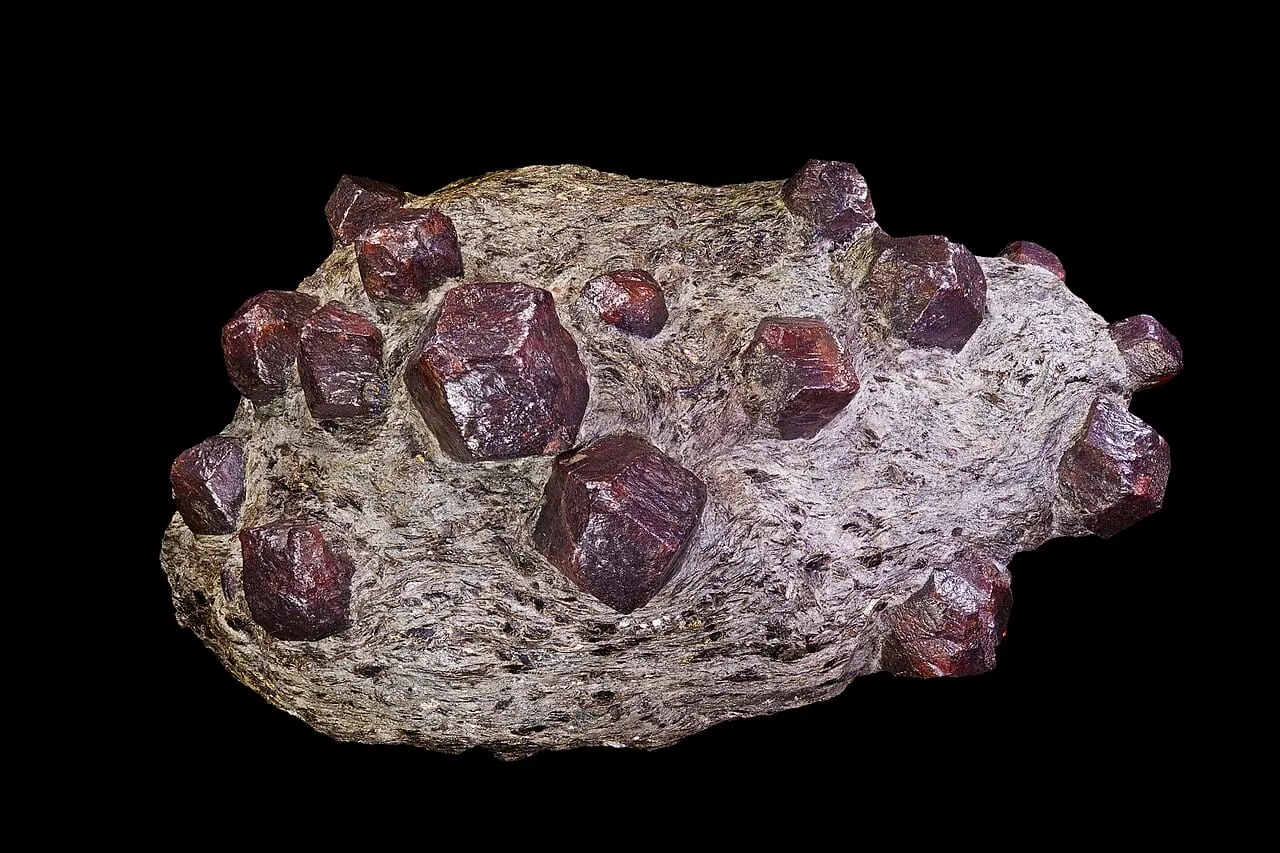
The commonest garnet: a deep red, iron-rich stone named after the ancient city of Alabanda in Anatolia, used in jewellery and in sandpaper alike.
Amazonite
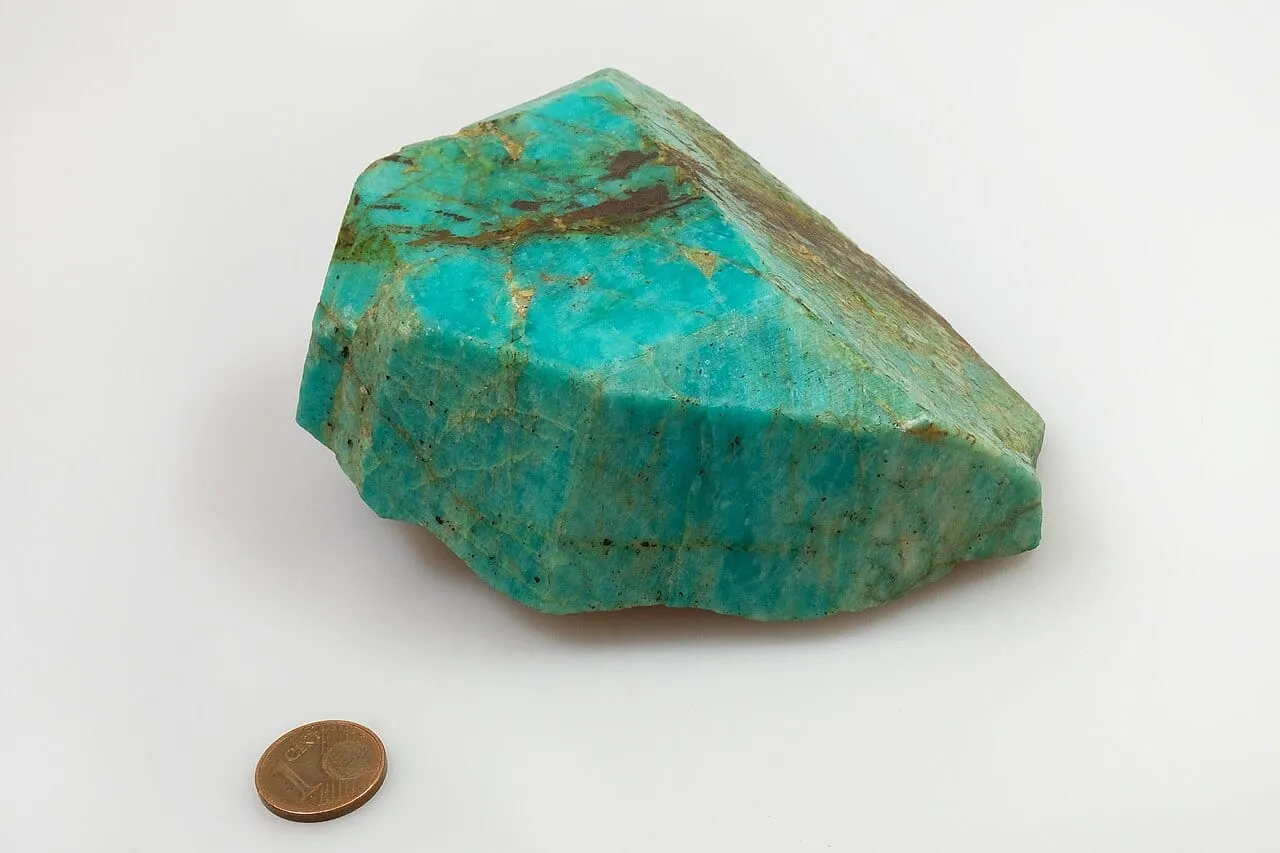
A turquoise-like green-blue feldspar: a variety of microcline worn as jewellery for more than three thousand years, but it can release lead.