Mineral
Halite (rock salt)
NaClHalit (kaya tuzu)
Table salt as a mineral: soft, soluble in water, breaking into cubes and lying underground in thick layers.
Also known as: Rock salt · Common salt
- Everyday
- Industrial
- Important in Türkiye
_-_Kopalnia_soli_Wieliczka,_Polska.jpg)
In short
Halite is a mineral made of sodium and chlorine; it is the same substance as the salt we add to food. When sea or lake water evaporates, the salt left behind settles out as halite crystals. Salt left by seas that dried up millions of years ago is found today underground as thick layers of rock salt.
How does it form?
Halite is an evaporite mineral, formed as salty water evaporates. In hot, dry climates, as water evaporates from closed lakes, lagoons or basins partly cut off from the sea, first gypsum and then halite settles out. Over time these layers are buried and build rock-salt deposits that can be hundreds of metres thick. Because salt is lighter than the rocks above it and can flow very slowly under pressure, it sometimes rises upwards to form salt domes.
In Türkiye
Lake Tuz (Tuz Gölü) in Central Anatolia is very shallow; when its water recedes in summer it leaves a vast salt crust, which is harvested. A large share of Türkiye’s salt comes from here. In Çankırı, salt is mined as rock salt from a large underground salt cave. Nationalised by the Ottoman state in 1861, its product was registered in 2023 as a protected designation of origin under the name “Çankırı Kaya Tuzu”.
What is it used for?
- Food: It seasons and preserves food.
- Chemical industry: It is the raw material for making chlorine and sodium hydroxide (caustic soda).
- Winter roads: It is spread on roads to prevent icing.
How to recognise it
- 1
It has perfect cleavage in three directions at right angles, so it breaks into little cubes.
- 2
It dissolves in water: a small piece dropped into a glass of water slowly disappears. This easily separates it from similar-looking calcite and fluorite.
- 3
It is soft (hardness 2–2.5) and feels light in the hand (specific gravity about 2.2).
- 4
It tastes salty, but never try to identify unknown minerals by tasting them, because some minerals are toxic.
Fakes and imitations
What shops usually don’t tell you:
- The pink salt sold as “Himalayan salt” is in fact rock salt from mines such as Khewra in Pakistan’s Salt Range; it owes its pink colour to tiny amounts of iron compounds. The special health benefits claimed for it have no scientific support.
- Claims that salt lamps purify the air or improve health have not been scientifically proven.
- Natural blue and purple halite exists, but some vividly coloured salt crystals may be dyed; ask the seller.
Did you know?
Its name comes from the Greek “hals”, meaning salt.
In the Wieliczka salt mine in Poland, miners carved chapels and statues out of rock salt deep underground.
Where is it found?
Loading map…
- Wieliczka, Lesser Poland, Poland · Historic sourceRock-salt mine worked for centuries; a UNESCO World Heritage Site together with Bochnia
- Khewra, Salt Range, Punjab, Pakistan · Major depositSource of the pink rock salt sold as “Himalayan salt”
- Stassfurt, Saxony-Anhalt, Germany · Historic sourceClassic district known for its salt and potash deposits
- Lake Tuz (Tuz Gölü), Türkiye · Major depositVery shallow salt lake; the salt crust left as the water recedes in summer is harvested
- Çankırı, Türkiye · Known localityRock salt mined from a salt cave; “Çankırı Kaya Tuzu” was registered as a protected designation of origin in 2023
Locations are approximate to protect sites. Red dots mark places in Türkiye. Open in the big map →
Sources
- Handbook of Mineralogy: Halite · Mineralogical Society of America
- Lake Tuz · Encyclopaedia Britannica
- Çankırı Kaya Tuzu — Coğrafi işaret tescil belgesi (No. 1377, menşe adı) · TÜRKPATENT, 2023
External links
Draft: awaiting expert reviewReport an error ↗
On the same step
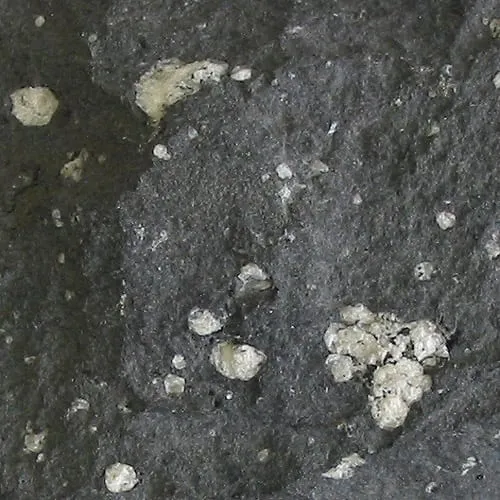
Andesite
The rock of volcanic arcs, named after the Andes — and the pink-grey stone of Ankara Castle.
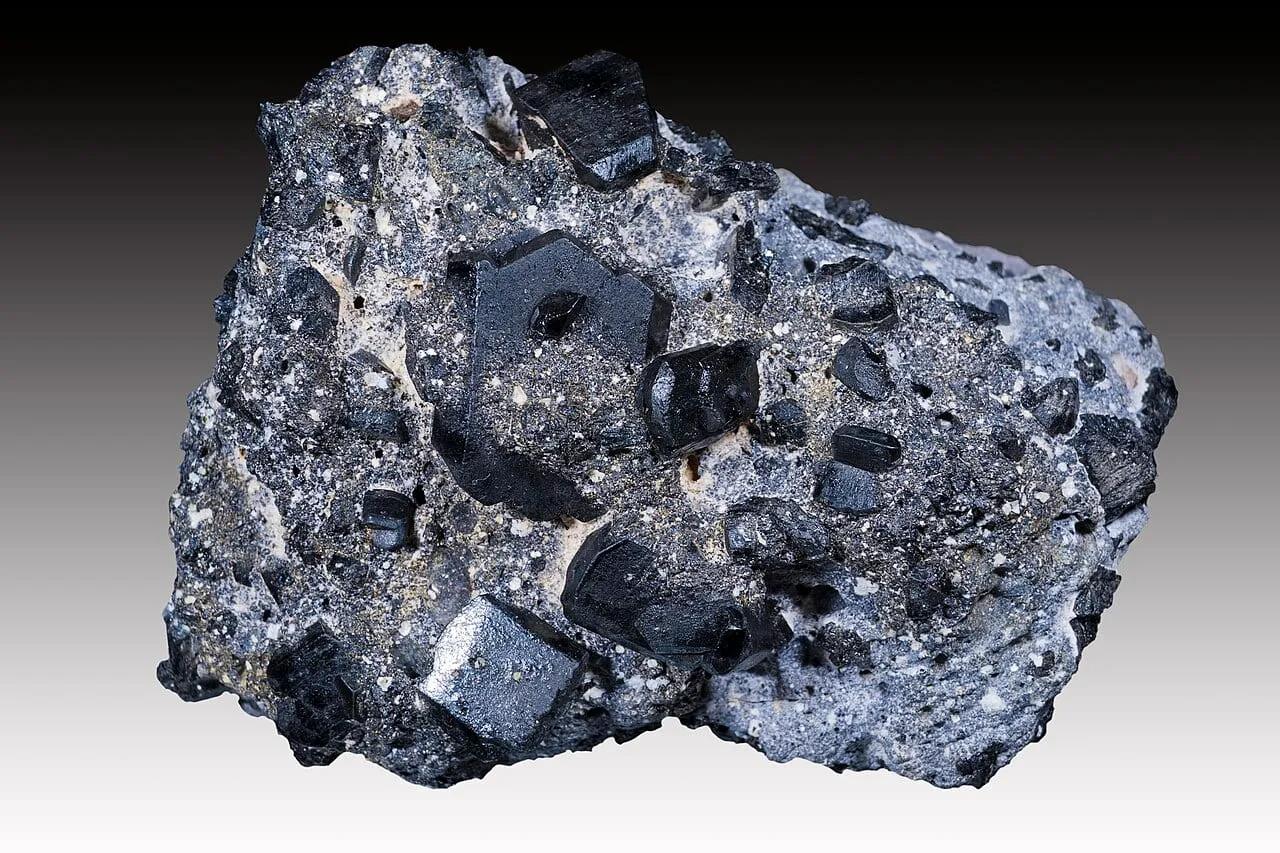
Augite (pyroxene)
The most common pyroxene, which darkens basalt and gabbro: inconspicuous, yet one of the key building blocks of Earth’s crust.
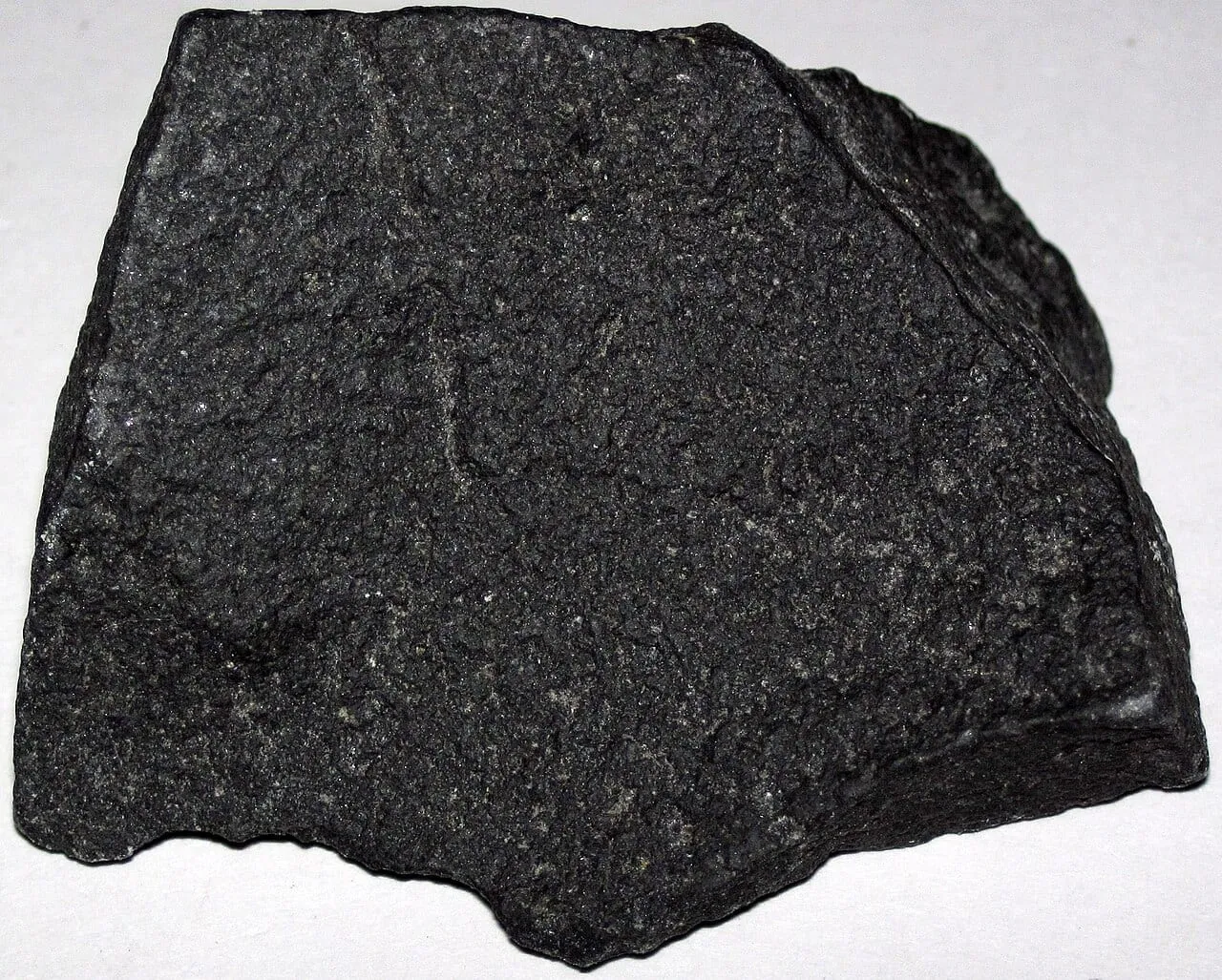
Basalt
The rock of the ocean floors and the Moon’s dark plains — the most common volcanic rock on Earth.