Mineral
Actinolite
Ca₂(Mg,Fe)₅Si₈O₂₂(OH)₂Aktinolit
A green amphibole that grows like rays: a raw material of nephrite jade and cat's-eye stones; its fibrous form is asbestos.
Also known as: Actinolite asbestos (fibrous form)
- Popularly: Common stone
- Handle with care
- Important in Türkiye

In short
Actinolite is an amphibole mineral containing calcium, magnesium and iron, and it forms a series with tremolite. Because of its iron it is darker and brighter green than tremolite, and it forms ray-like or bladed, sometimes fibrous crystals. Its name comes from the Greek aktis, “ray”. Its finely interlocked fibres make nephrite jade, and its variety that reflects light in a band gives the “cat's-eye” stone; its splittable fibrous form is counted as asbestos and is dangerous.
Photos

How does it form?
Actinolite forms in the low-grade regional or contact metamorphism of magnesium-carbonate, mafic and ultramafic rocks; in blueschists it also occurs with glaucophane. It appears in the contact zones where a magma heats the surrounding rocks, in the transformation of magnesium-rich limestones. In some rocks it replaces pyroxene, forming “uralite”.
What is it used for?
- Jade (nephrite): Nephrite, formed by the interlocking of fine actinolite and tremolite fibres, is one of the two kinds of jade (see the Jade page).
- Cat’s-eye: Translucent to opaque green actinolite that reflects light in a band (chatoyancy) is cut as cabochons and used as an ornamental stone.
- Collecting: Green, ray-like bundles of crystals find a place in mineral collections.
- As asbestos: Its fibrous form was formerly mined as asbestos; today this use is banned or restricted because of the health risk.
In Türkiye
In the Black Sea region, in the skarn deposits of the Gümüşhane area (Camiboğazı), in rocks formed where limestone meets magma, actinolite occurs with tremolite, andradite garnet, epidote and magnetite. In the asbestos-bearing “white soil” (“ak toprak”) that was used to plaster houses in some Anatolian villages, fibrous actinolite has been found together with tremolite and chrysotile; in a study of 15 villages the fibres people were exposed to were reported to be mainly tremolite or mixtures of tremolite, actinolite and chrysotile.
What determines its value?
Actinolite is a very common mineral and is often worthless. As an ornamental stone its value depends on colour and toughness in nephrite jade, and in cat's-eye stone on how sharp the band of reflected light is, on translucency and on the quality of the cut. Collectors look for long, well-formed, undamaged bundles of crystals; fibrous (asbestos) specimens are not recommended because of the health risk.
This information is educational, not buying, selling or investment advice. Value varies enormously with quality and treatment.
How to recognise it
- 1
Bundles of long bladed or ray-like crystals, from pale to dark and greyish green; darker than tremolite.
- 2
Its hardness is 5–6: a steel knife scratches it only with difficulty. It has good cleavage in two directions; a broken crystal shows surfaces meeting at about 56° and 124°.
- 3
It is found in low-grade metamorphic rocks together with chlorite, epidote, talc and albite, and can accompany glaucophane in blueschists.
- 4
It resembles hornblende, from the same amphibole family; telling the two apart often needs a microscope or chemical analysis.
Fakes and imitations
What shops usually don’t tell you:
- Fibrous actinolite can be confused with tremolite and other types of asbestos; only a laboratory can say which it is. All are classed as carcinogenic.
- Not every bundle of long green crystals is actinolite; other green minerals such as tourmaline and epidote can look similar. An expert is needed for certain identification.
Safety
When actinolite is fibrous (asbestos) it is, like other types of asbestos, carcinogenic to humans (IARC Group 1). When airborne fibres are inhaled they can cause lung cancer, mesothelioma and asbestosis, often only decades later. Do not break, cut or sand rocks of fine, silky fibrous actinolite and do not breathe their dust; do not grind the stone to drink it and do not make stone water. Collection specimens should be kept in a sealed, labelled container. In Türkiye the production, placing on the market and use of asbestos and asbestos-containing products has been banned since 31 December 2010.
Myths and misconceptions
MythActinolite is a harmless ornamental stone with nothing to do with asbestos.
FactThe fibrous form of actinolite is one of the six types of asbestos and, according to IARC, carcinogenic to humans. The dust and fibres released in cutting, sanding and grinding must not be inhaled.
MythActinolite and nephrite jade are the same thing.
FactActinolite is a single mineral, whereas nephrite is a very tough rock in which fine tremolite and actinolite fibres are tightly interlocked.
What is it believed to be good for?
This section reports beliefs; it is not health information. There is no scientific evidence for these claims and no stone replaces medical treatment.
The meanings people give this stone, and who holds them:
- Today crystal-therapy sources present actinolite as a powerful “protection stone”, claiming that it bandages the “wounds” left by illness and stress and shields people from negative influences.
- The same sources link actinolite with the heart chakra and say that it deepens calm in meditation, emotional balance and compassion.
What science says
None of these claims can be measured or tested. The really notable thing about actinolite is that its fibrous form is asbestos: so the stone should not be ground to powder, no stone water or elixir should be made from it, and the dust from cutting it must not be inhaled. For illness or stress, seek medical support.
Did you know?
Its name comes from the Greek aktis, “ray”, and points to the mineral's fibrous structure.
In some rocks actinolite replaces pyroxene; the product of this change is called “uralite”.
Where is it found?
Loading map…
- Mount Greiner, Zillertal, Tyrol, Austria · Known locality
- Zermatt, Valais, Switzerland · Known locality
- Arendal, Agder, Norway · Known locality
- Mogok, Mandalay Region, Myanmar · Known localityGem-quality actinolite
- Gouverneur, St. Lawrence County, New York, USA · Known locality
- Ural Mountains, Russia · Known locality
- Gundagai (Jones Creek area), New South Wales, Australia · Historic sourceA former asbestos (fibrous actinolite) mining area
- Camiboğazı skarn deposit, Gümüşhane, Türkiye · Known localityOccurs with andradite garnet, epidote and magnetite in the skarn deposits of the Black Sea region; the point marks the Gümüşhane area
Locations are approximate to protect sites. Red dots mark places in Türkiye. Open in the big map →
Frequently asked questions
What is actinolite?
Actinolite is an amphibole mineral containing calcium, magnesium and iron, and it forms a series with tremolite. Because of its iron it is darker and brighter green than tremolite, and it forms ray-like or bladed, sometimes fibrous crystals. Its name comes from the Greek aktis, “ray”. Its finely interlocked fibres make nephrite jade, and its variety that reflects light in a band gives the “cat's-eye” stone; its splittable fibrous form is counted as asbestos and is dangerous.
What is actinolite used for?
Jade (nephrite): Nephrite, formed by the interlocking of fine actinolite and tremolite fibres, is one of the two kinds of jade (see the Jade page). Cat's-eye: Translucent to opaque green actinolite that reflects light in a band (chatoyancy) is cut as cabochons and used as an ornamental stone. Collecting: Green, ray-like bundles of crystals find a place in mineral collections. As asbestos: Its fibrous form was formerly mined as asbestos; today this use is banned or restricted because of the health risk.
How hard is actinolite?
It has a hardness of 5–6 on the Mohs scale. It can scratch glass; a steel knife scratches it only with difficulty. Its specific gravity is 3.03–3.24 g/cm³.
Where is actinolite found?
Its best-known localities: Gundagai (Jones Creek area), New South Wales, Australia; Mount Greiner, Zillertal, Tyrol, Austria; Zermatt, Valais, Switzerland; Arendal, Agder, Norway; Mogok, Mandalay Region, Myanmar.
Where is actinolite found in Türkiye?
Known localities in Türkiye: Camiboğazı skarn deposit, Gümüşhane, Türkiye.
How can you tell if actinolite is real?
Bundles of long bladed or ray-like crystals, from pale to dark and greyish green; darker than tremolite. Its hardness is 5–6: a steel knife scratches it only with difficulty. It has good cleavage in two directions; a broken crystal shows surfaces meeting at about 56° and 124°. It is found in low-grade metamorphic rocks together with chlorite, epidote, talc and albite, and can accompany glaucophane in blueschists. Fibrous actinolite can be confused with tremolite and other types of asbestos; only a laboratory can say which it is. All are classed as carcinogenic.
Is actinolite valuable?
On the “street to diamond” value ladder it sits on step 2 of nine: Raw material by the tonne. Actinolite is a very common mineral and is often worthless. As an ornamental stone its value depends on colour and toughness in nephrite jade, and in cat's-eye stone on how sharp the band of reflected light is, on translucency and on the quality of the cut. Collectors look for long, well-formed, undamaged bundles of crystals; fibrous (asbestos) specimens are not recommended because of the health risk.
What is actinolite good for?
Today crystal-therapy sources present actinolite as a powerful “protection stone”, claiming that it bandages the “wounds” left by illness and stress and shields people from negative influences. The same sources link actinolite with the heart chakra and say that it deepens calm in meditation, emotional balance and compassion. None of these claims can be measured or tested. The really notable thing about actinolite is that its fibrous form is asbestos: so the stone should not be ground to powder, no stone water or elixir should be made from it, and the dust from cutting it must not be inhaled. For illness or stress, seek medical support. This section reports beliefs; it is not health information. There is no scientific evidence for these claims and no stone replaces medical treatment.
Is actinolite dangerous?
When actinolite is fibrous (asbestos) it is, like other types of asbestos, carcinogenic to humans (IARC Group 1). When airborne fibres are inhaled they can cause lung cancer, mesothelioma and asbestosis, often only decades later. Do not break, cut or sand rocks of fine, silky fibrous actinolite and do not breathe their dust; do not grind the stone to drink it and do not make stone water. Collection specimens should be kept in a sealed, labelled container. In Türkiye the production, placing on the market and use of asbestos and asbestos-containing products has been banned since 31 December 2010.
Sources
- Handbook of Mineralogy: Actinolite · Mineralogical Society of America
- Actinolite · Webmineral
- Actinolite · Wikipedia
- IARC Monographs Volume 100C: Arsenic, Metals, Fibres, and Dusts (Asbestos) · International Agency for Research on Cancer (WHO), 2012
- Asbestos Ban in Turkey! (Kazan-Allen) · International Ban Asbestos Secretariat, 2010
- Environmental asbestos exposure in rural Turkey and risk of lung cancer (Metintaş et al.), International Journal of Environmental Health Research 22: 468–479 · PubMed, 2012
- Formation of skarns at Gümüşhane (Northeastern Turkey) (Sipahi), Neues Jahrbuch für Mineralogie – Abhandlungen 188(2) · E. Schweizerbart, 2011
External links
Draft: awaiting expert reviewReport an error ↗
On the same step
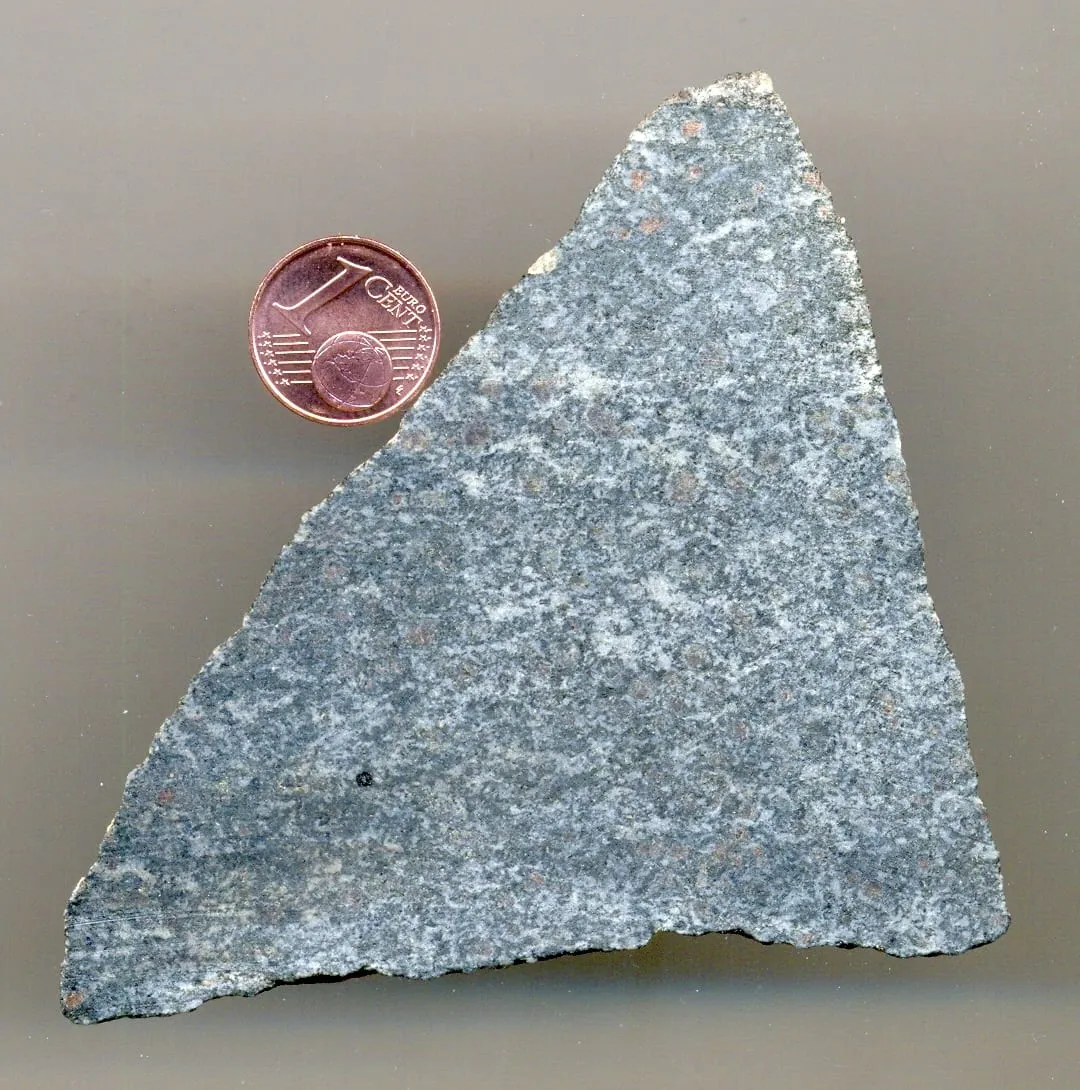
Amphibolite
A dark, heavy, salt-and-pepper metamorphic rock: basalt or gabbro transformed at depth; the stone of Neolithic axes.
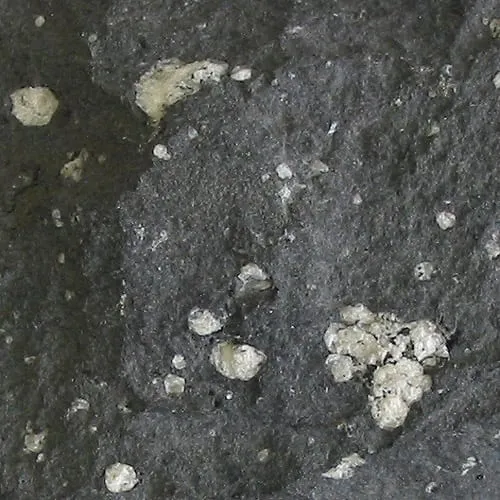
Andesite
The rock of volcanic arcs, named after the Andes — and the pink-grey stone of Ankara Castle.
Augite (pyroxene)
The most common pyroxene, which darkens basalt and gabbro: inconspicuous, yet one of the key building blocks of Earth’s crust.