VarietyA variety of Gypsum
Desert rose
CaSO₄·2H₂OÇöl gülü
A rose-like cluster of gypsum (or baryte) crystals that grows in desert sand; its “petals” hold grains of sand between them.
Also known as: Sand rose · Sahara rose · Gypsum rose · Selenite rose · Baryte rose · Rose rock (baryte roses of Oklahoma)
- Popularly: Common stone
- Ornamental
In short
A desert rose is a cluster of platy crystals that looks like a rose blossom and grows in arid, sandy settings, trapping grains of sand as it forms. They are made of either gypsum or baryte; this page takes the gypsum rose as its basis. It is sand-coloured, taking a rusty tone where iron oxide is present. It is sold as a souvenir; the baryte roses of Oklahoma are the state's official rock.
Photos
How does it form?
A desert rose forms in arid, sandy settings, for example as a shallow salty basin evaporates. As water rich in calcium and sulfate evaporates within the sand, flat crystals grow and take in the surrounding grains of sand; the crystals arrange themselves in a circle like a rose blossom. The sand trapped inside or coating the crystals varies with the local setting, and where iron oxide is present the rose takes a rusty tone. The baryte roses of Oklahoma formed in a similar way, with baryte crystallising in a sandy setting.
What is it used for?
- Souvenirs and ornaments: In the Sahara, for example around the Chott el Djerid salt lake in Tunisia, local people extract desert roses and sell them to tourists, which gives the area a sustainable income.
- Collecting: Regular, sound, large clusters are sought by mineral collectors.
- Inspiration: The building of the National Museum of Qatar was designed inspired by the desert rose.
What determines its value?
The value of a desert rose depends on a regular, complete rose shape, the size of the cluster, the soundness and sharp edges of the “petals”, the colour of the sand (sand, beige or rusty tones) and freedom from damage. Because the petals are thin and brittle, large sound clusters are scarce. Whether it is gypsum or baryte and where it comes from (the Sahara, Oklahoma and so on) also matter to collectors; pieces whose edges have been whitened with a flame or repaired have lost their natural look.
This information is educational, not buying, selling or investment advice. Value varies enormously with quality and treatment.
How to recognise it
- 1
It is a rose-shaped cluster: grains of sand sit between the flat, plate-like “petals” and on their surface. Its size runs from pea-sized to about 10 cm.
- 2
A gypsum rose is soft, scratched by a fingernail (hardness 1.5–2) and light; the edges of its petals are usually sharper and better defined than those of a baryte rose. The ID card on this page is for the gypsum rose.
- 3
A baryte rose is harder (hardness 3–3.5), is not scratched by a fingernail and is much heavier (specific gravity about 4.5); it feels distinctly heavy in the hand compared with a gypsum rose of the same size.
- 4
Other bladed evaporite minerals, such as celestine, can also form rosette clusters; hardness and specific gravity help tell them apart, and a laboratory gives a certain answer.
Fakes and imitations
What shops usually don’t tell you:
- Flame-whitened edges: the edges of some gypsum roses from Chihuahua are reported to be heated with a torch to whiten them and hide damage; the heat drives off the gypsum's water, so the edges turn white. In an untreated gypsum rose the edges are colourless or sand-coloured.
- Sold as “selenite”: in places the desert rose is also called a “selenite rose”, but selenite is the transparent crystalline variety of gypsum, while a desert rose is an opaque cluster containing sand.
Myths and misconceptions
MythA desert rose is a plant of the desert turned to stone.
FactA desert rose is not a fossil but a cluster of minerals formed by gypsum or baryte crystals growing in sand. The name “desert rose” is also used for a plant called Adenium, but the two have nothing to do with each other.
MythA desert rose and selenite are the same thing.
FactA desert rose is an opaque, rose-shaped cluster of gypsum with sand in it, while selenite is the transparent crystalline variety of gypsum. Some sources and sellers use the same name for both, but they look different and form differently.
MythAll desert roses are gypsum.
FactSome desert roses are baryte; the “rose rock” of Oklahoma is one example. Baryte is harder than gypsum and much heavier.
What is it believed to be good for?
This section reports beliefs; it is not health information. There is no scientific evidence for these claims and no stone replaces medical treatment.
The meanings people give this stone, and who holds them:
- Some news websites in Türkiye treat the desert rose as the same as selenite and also call it “desert stone”; these articles claim that it reduces stress, anxiety and worry, gives peace, clears the mind in meditation and yoga, and drives away negative energy and gives positive energy.
- The same articles say that keeping a desert rose at home brings abundance and blessing, strengthens bones, eases menstrual cramps and back pain, and improves sleep and skin.
What science says
There is no scientific evidence that a desert rose reduces stress, gives energy, or affects bones or pain; lasting pain and menstrual cramps call for a doctor. In these articles the desert rose is treated as selenite, whereas a desert rose is a cluster of crystals of either gypsum or baryte with sand in it. A gypsum rose dissolves slowly in water, so it should not be left soaking.
Did you know?
The “rose rock” of Oklahoma formed about 250 million years ago, when baryte crystallised around grains of quartz sand as the shallow sea covering the area drew back. It was chosen as the official state rock in 1968.
The largest rose recorded by the Oklahoma Geological Survey was 43 cm across and weighed 57 kg; clusters a metre tall and weighing more than 450 kg have also been found.
The French architect Jean Nouvel designed the building of the National Museum of Qatar inspired by the desert rose.
Where is it found?
Loading map…
- Chott el Djerid, Tozeur, Tunisia · Major depositLarge numbers of desert roses are found around the salt lake; local people extract them and sell them to tourists
- Ghadames, Libya · Known localityThe part of the Sahara next to Tunisia and Algeria
- Abqaiq, Eastern Province, Saudi Arabia · Known locality
- Noble, Oklahoma, USA · Known localityThe baryte roses called “rose rock” occur in the Permian Garber Sandstone; official rock of Oklahoma since 1968
- Ahumada Playa, Chihuahua, Mexico · Known localityGypsum roses in an old playa-lake deposit in the Samalayuca Desert
Locations are approximate to protect sites. Red dots mark places in Türkiye. Open in the big map →
Frequently asked questions
What is desert rose?
A desert rose is a cluster of platy crystals that looks like a rose blossom and grows in arid, sandy settings, trapping grains of sand as it forms. They are made of either gypsum or baryte; this page takes the gypsum rose as its basis. It is sand-coloured, taking a rusty tone where iron oxide is present. It is sold as a souvenir; the baryte roses of Oklahoma are the state's official rock.
What is desert rose used for?
Souvenirs and ornaments: In the Sahara, for example around the Chott el Djerid salt lake in Tunisia, local people extract desert roses and sell them to tourists, which gives the area a sustainable income. Collecting: Regular, sound, large clusters are sought by mineral collectors. Inspiration: The building of the National Museum of Qatar was designed inspired by the desert rose.
How hard is desert rose?
It has a hardness of 1.5–2 on the Mohs scale. It is soft enough to scratch with a fingernail. Its specific gravity is 2.31–2.33 g/cm³.
Where is desert rose found?
Its best-known localities: Chott el Djerid, Tozeur, Tunisia; Ghadames, Libya; Abqaiq, Eastern Province, Saudi Arabia; Noble, Oklahoma, USA; Ahumada Playa, Chihuahua, Mexico.
How can you tell if desert rose is real?
It is a rose-shaped cluster: grains of sand sit between the flat, plate-like “petals” and on their surface. Its size runs from pea-sized to about 10 cm. A gypsum rose is soft, scratched by a fingernail (hardness 1.5–2) and light; the edges of its petals are usually sharper and better defined than those of a baryte rose. The ID card on this page is for the gypsum rose. A baryte rose is harder (hardness 3–3.5), is not scratched by a fingernail and is much heavier (specific gravity about 4.5); it feels distinctly heavy in the hand compared with a gypsum rose of the same size. Flame-whitened edges: the edges of some gypsum roses from Chihuahua are reported to be heated with a torch to whiten them and hide damage; the heat drives off the gypsum's water, so the edges turn white. In an untreated gypsum rose the edges are colourless or sand-coloured.
Is desert rose valuable?
On the “street to diamond” value ladder it sits on step 3 of nine: Building and industrial stone. The value of a desert rose depends on a regular, complete rose shape, the size of the cluster, the soundness and sharp edges of the “petals”, the colour of the sand (sand, beige or rusty tones) and freedom from damage. Because the petals are thin and brittle, large sound clusters are scarce. Whether it is gypsum or baryte and where it comes from (the Sahara, Oklahoma and so on) also matter to collectors; pieces whose edges have been whitened with a flame or repaired have lost their natural look.
What is desert rose good for?
Some news websites in Türkiye treat the desert rose as the same as selenite and also call it “desert stone”; these articles claim that it reduces stress, anxiety and worry, gives peace, clears the mind in meditation and yoga, and drives away negative energy and gives positive energy. The same articles say that keeping a desert rose at home brings abundance and blessing, strengthens bones, eases menstrual cramps and back pain, and improves sleep and skin. There is no scientific evidence that a desert rose reduces stress, gives energy, or affects bones or pain; lasting pain and menstrual cramps call for a doctor. In these articles the desert rose is treated as selenite, whereas a desert rose is a cluster of crystals of either gypsum or baryte with sand in it. A gypsum rose dissolves slowly in water, so it should not be left soaking. This section reports beliefs; it is not health information. There is no scientific evidence for these claims and no stone replaces medical treatment.
Family


Sources
- Desert rose (crystal) · Wikipedia
- Selenite (gypsum) · Wikipedia
- Handbook of Mineralogy: Gypsum · Mineralogical Society of America
- Handbook of Mineralogy: Baryte · Mineralogical Society of America
- Gypsum roses (Ahumada Playa, Chihuahua, Mexico) (J. St. John) · Wikimedia Commons
- National Museum of Qatar · Wikipedia
- Chott el Djerid · Wikipedia
- Ahumada Municipality · Wikipedia
- Huzur veren Selenit taşı özellikleri ve faydaları · TGRT Haber, 2024
_1_(23855422425).jpg)
External links
Draft: awaiting expert reviewReport an error ↗
On the same step
Albite
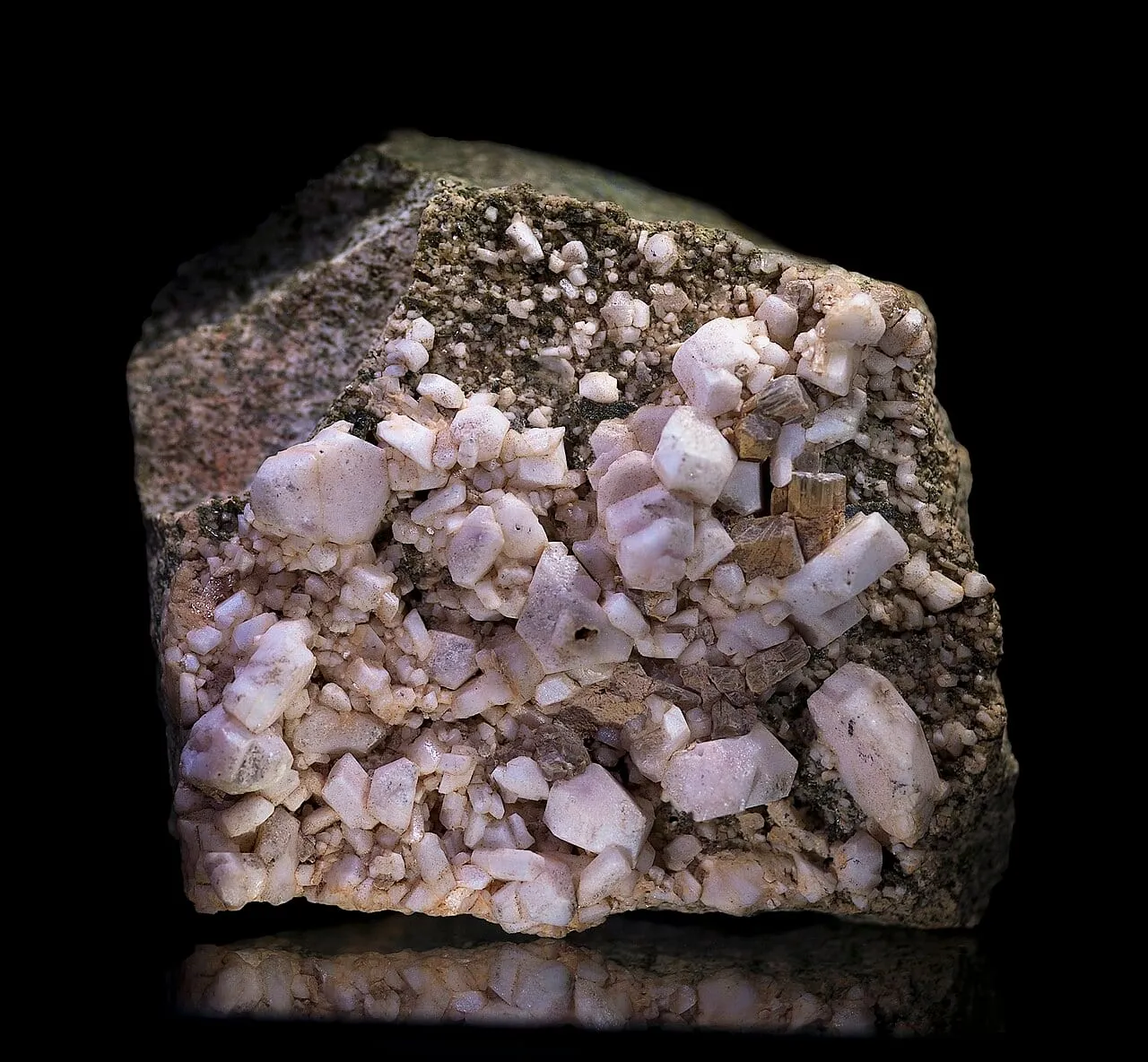
The white, sodium end of the feldspars: with its deposits at Çine–Milas, a glass and ceramics raw material that makes Türkiye one of the world’s main feldspar producers.
Anhydrite
Gypsum without its water: a calcium sulfate mineral, whose blue-grey Peruvian form is sold as “angelite”.
Apatite
A mineral cousin of our teeth and bones, the source of the phosphorus in fertilisers, and number 5 on the Mohs scale.