Mineral
Anatase
TiO₂Anataz
Rutile's sibling in titanium dioxide: its sharp, stretched double pyramids turn into rutile when heated.
Also known as: Octahedrite (old name)
- Popularly: Common stone

In short
Anatase is a mineral made of titanium and oxygen (titanium dioxide, TiO₂). It has the same composition as rutile and brookite but a different crystal structure; of these, rutile is the most stable and common. Its crystals are usually sharp, elongated double pyramids with an adamantine or metallic lustre. René Just Haüy named it in 1801 from the Ancient Greek anatasis, “stretching out”, after its elongated crystals.
Photos

How does it form?
Anatase is usually a secondary mineral, formed from the alteration of other titanium-bearing minerals. In Alpine-type crevices it crystallises from titanium carried by hot water solutions out of the surrounding gneiss or schist. It also occurs in igneous and metamorphic rocks, pegmatites and carbonatites, and because it is durable it is common as a detrital grain in sands. It occurs with brookite, rutile, titanite, ilmenite, hematite and quartz. Its crystals can grow up to 3.75 cm.
According to the Handbook of Mineralogy, anatase is a very widespread mineral, found at many places in Alpine crevices across the Swiss, French, Italian and Austrian Alps. Binn and Cavradi in Graubünden, Switzerland, yield large crystals; Hardangervidda and Gudbrandsdalen in Norway are also among its known localities.
What is it used for?
- Collecting: Its sharp double-pyramid crystals are sought by collectors.
- Titanium source: Large amounts occur in carbonatite deposits in Brazil.
- Science and technology: Thin films of titanium dioxide are used on self-cleaning, anti-fog glass that works under ultraviolet light.
What determines its value?
Anatase is valued as a collector's mineral. Collectors look for sharp, lustrous, large double-pyramid crystals, especially from the Binn valley in Switzerland, Oisans in France and Hardangervidda in Norway. Industrial titanium dioxide is mostly supplied from other titanium minerals and by synthesis.
This information is educational, not buying, selling or investment advice. Value varies enormously with quality and treatment.
How to recognise it
- 1
Its crystals are usually sharp, elongated double pyramids; sometimes tabular.
- 2
Brown, pale yellow, reddish brown, indigo or black; adamantine or metallic lustre.
- 3
Light-coloured crystals are transparent; dark ones look nearly opaque.
- 4
Hardness 5.5–6; streak white to pale yellow.
- 5
Found in Alpine-type crevices with quartz, rutile, brookite, ilmenite, hematite and titanite.
Fakes and imitations
What shops usually don’t tell you:
- Rutile and brookite have the same composition as anatase (TiO₂); rutile usually forms long prisms or needles, while anatase forms sharp double pyramids. A certain distinction is made in the laboratory.
Myths and misconceptions
MythAnatase's metallic lustre shows it is pure titanium metal.
FactAnatase is not a metal but an oxide of titanium with oxygen (TiO₂). Its dark crystals can shine like metal, but its streak is white to pale yellow.
Did you know?
Heated to between 550 and about 1000 °C, anatase turns into the more stable rutile.
Glass coated with a thin film of titanium dioxide does not fog up and cleans itself under ultraviolet light.
Some carbonatite deposits in the Brazilian states of Minas Gerais and Pará hold anatase amounting to 500 million tons in total.
Where is it found?
Loading map…
- Binn valley (Binntal), Valais, Switzerland · Major depositLarge honey-yellow to brown pyramidal crystals attached to the walls of crevices in gneiss
- Le Bourg-d'Oisans, Isère, France · Known localityAnatase crystals in crevices in granite and mica schist
- Hardangervidda, Ullensvang, Norway · Known localityYields fine crystals, according to the Handbook of Mineralogy
Locations are approximate to protect sites. Red dots mark places in Türkiye. Open in the big map →
Frequently asked questions
What is anatase?
Anatase is a mineral made of titanium and oxygen (titanium dioxide, TiO₂). It has the same composition as rutile and brookite but a different crystal structure; of these, rutile is the most stable and common. Its crystals are usually sharp, elongated double pyramids with an adamantine or metallic lustre. René Just Haüy named it in 1801 from the Ancient Greek anatasis, “stretching out”, after its elongated crystals.
Are anatase and rutile the same thing?
They have the same composition: both are titanium dioxide (TiO₂). But their atoms are arranged differently, so they have different crystal shapes and properties. Four forms of titanium dioxide occur in nature: anatase, rutile, brookite and akaogiite. Rutile is the most stable; anatase turns into rutile when heated.
What is anatase used for?
Collecting: Its sharp double-pyramid crystals are sought by collectors. Titanium source: Large amounts occur in carbonatite deposits in Brazil. Science and technology: Thin films of titanium dioxide are used on self-cleaning, anti-fog glass that works under ultraviolet light.
How hard is anatase?
It has a hardness of 5.5–6 on the Mohs scale. It can scratch glass; a steel knife scratches it only with difficulty. Its specific gravity is 3.79–3.97 g/cm³.
Where is anatase found?
Its best-known localities: Binn valley (Binntal), Valais, Switzerland; Le Bourg-d'Oisans, Isère, France; Hardangervidda, Ullensvang, Norway.
How can you tell if anatase is real?
Its crystals are usually sharp, elongated double pyramids; sometimes tabular. Brown, pale yellow, reddish brown, indigo or black; adamantine or metallic lustre. Light-coloured crystals are transparent; dark ones look nearly opaque. Rutile and brookite have the same composition as anatase (TiO₂); rutile usually forms long prisms or needles, while anatase forms sharp double pyramids. A certain distinction is made in the laboratory.
Is anatase valuable?
On the “street to diamond” value ladder it sits on step 2 of nine: Raw material by the tonne. Anatase is valued as a collector's mineral. Collectors look for sharp, lustrous, large double-pyramid crystals, especially from the Binn valley in Switzerland, Oisans in France and Hardangervidda in Norway. Industrial titanium dioxide is mostly supplied from other titanium minerals and by synthesis.
Sources
- Anatase · Wikipedia
- Handbook of Mineralogy: Anatase · Mineralogical Society of America
External links
ReviewedLast checked: 4 October 2026
On the same step
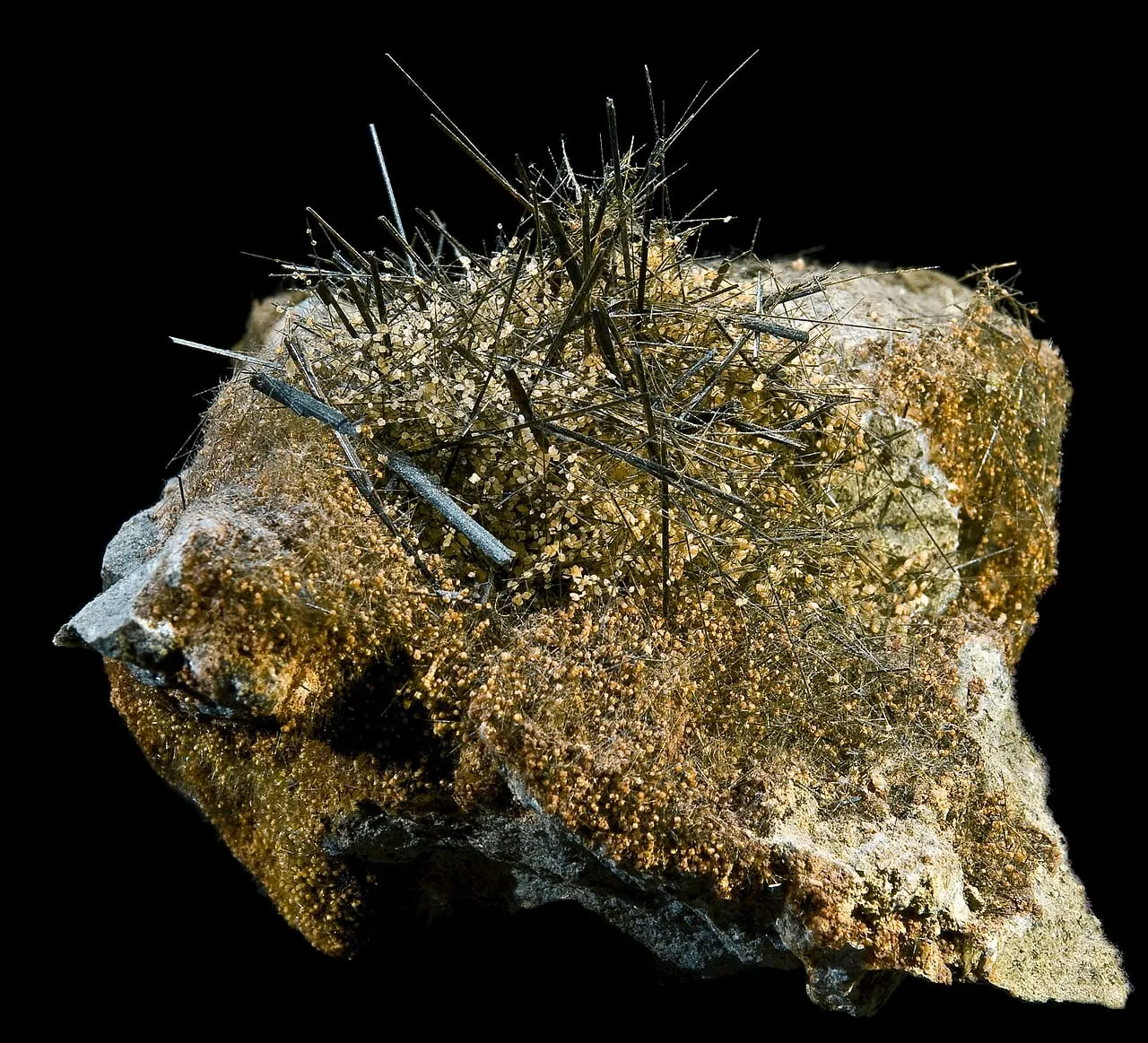
Actinolite
A green amphibole that grows like rays: a raw material of nephrite jade and cat's-eye stones; its fibrous form is asbestos.
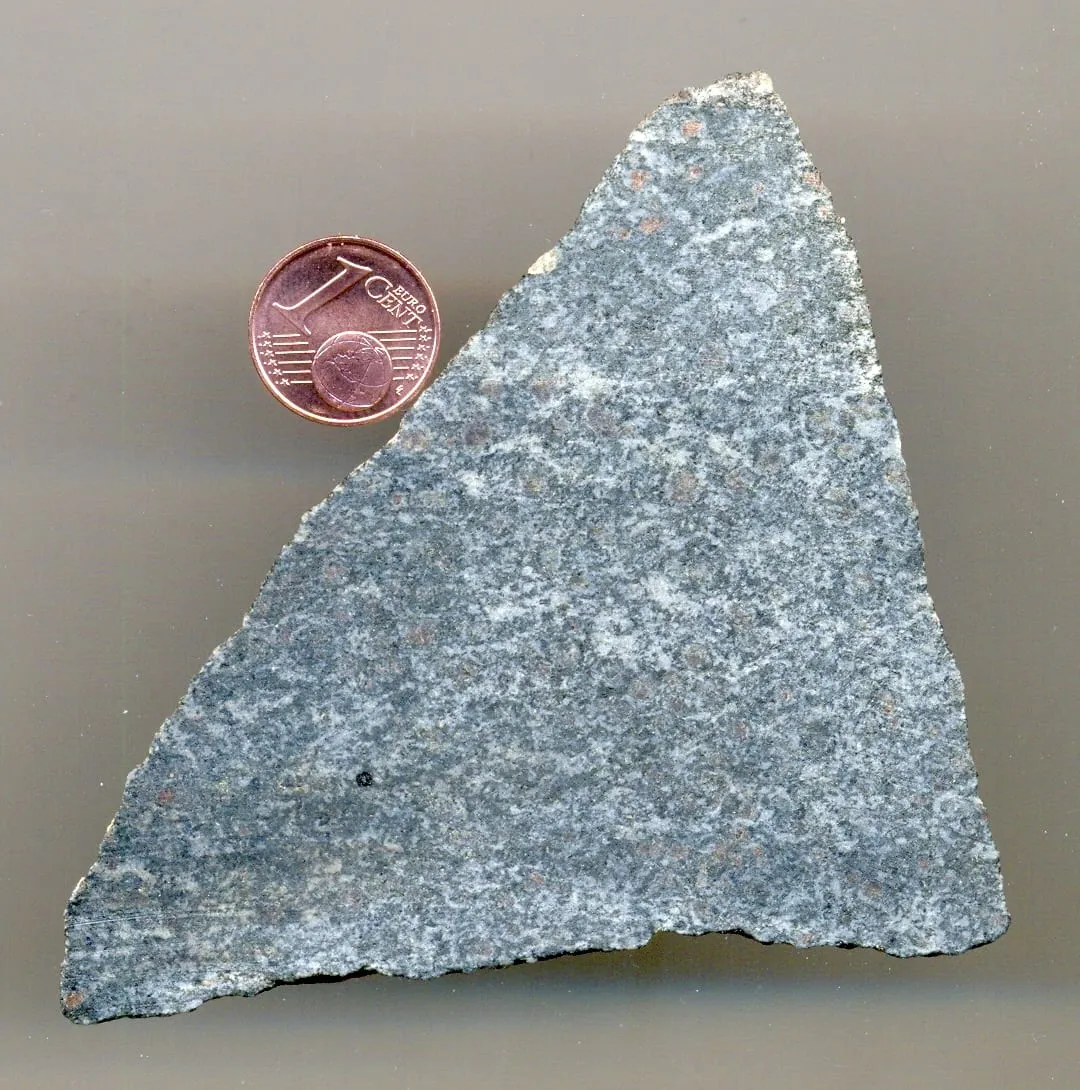
Amphibolite
A dark, heavy, salt-and-pepper metamorphic rock: basalt or gabbro transformed at depth; the stone of Neolithic axes.
Andesite
The rock of volcanic arcs, named after the Andes — and the pink-grey stone of Ankara Castle.