Mineral
Crocoite
PbCrO₄Krokoit
The lead chromate that grows as slender saffron-coloured crystals: the element chromium was discovered in it.
Also known as: Siberian red lead (old name)
- Popularly: Common stone

In short
Crocoite is a mineral made of lead and chromium (lead chromate, PbCrO₄). It forms bright red-orange, long, slender, needle-like crystals. It is an uncommon mineral that forms in the parts of lead deposits exposed to air, where the deposits lie next to chromium-bearing rocks. It was found in Russia's Ural Mountains in the 1760s, and the element chromium was discovered in its specimens in 1797. Its name comes from krokos, Ancient Greek for “saffron”. The finest specimens in the world come from the Australian island of Tasmania.
Photos
_2012-07-20.jpg)
How does it form?
Crocoite is an uncommon secondary mineral: it forms in the oxidised zone of lead deposits, the part near the surface exposed to air and groundwater, where the deposits lie next to chromium-bearing rocks. The lead comes from the deposit, the chromium from the surrounding chromium-bearing rocks. Some specimens may even have formed after mining began, in the opened tunnels. It occurs with pyromorphite, vanadinite, wulfenite, cerussite, anglesite, quartz and iron oxides. Its crystals can reach 15 cm long; their tips are often hollow or incomplete.
What is it used for?
- The discovery of chromium: The element chromium was discovered in crocoite specimens.
- Pigment: After Pallas recognised its potential in the 18th century, crocoite was used as a paint pigment in the Ural region. Today’s chrome yellow pigment, however, is made artificially from the more plentiful chromite.
- Collecting: Its bright red-orange sprays of crystals make it stand out among collector minerals.
What determines its value?
Crocoite is valued not as an ore but as a collector's mineral. Collectors look for vividly coloured, lustrous, slender and unbroken sprays of crystals, especially from Tasmania's Adelaide and Dundas Extended mines. Because the crystals are very delicate and can lose their brilliance under ultraviolet light, specimens are stored with care, away from light.
This information is educational, not buying, selling or investment advice. Value varies enormously with quality and treatment.
How to recognise it
- 1
Forms bright red-orange or orange, long prismatic or needle-like crystals, often in radiating sprays or tangled clusters.
- 2
Its streak (the powder it leaves on unglazed porcelain) is yellow-orange.
- 3
It has an adamantine lustre; the crystals are transparent to translucent.
- 4
Soft (Mohs 2.5–3) and heavy (specific gravity about 6).
- 5
Under ultraviolet light it loses some of its translucency and brilliance.
Fakes and imitations
What shops usually don’t tell you:
- Orange-red vanadinite and wulfenite also occur in lead deposits; vanadinite, however, forms hexagonal prisms and wulfenite thin square plates, while crocoite forms long, slender, needle-like crystals.
Safety
Crocoite is toxic: it contains both lead and hexavalent chromium. Lead builds up in the body and can permanently harm the brain and nervous system, especially in children; according to the World Health Organization, there is no level of lead exposure known to be without harmful effects. Wash your hands after handling specimens and keep them out of reach of children. Do not put crocoite in your mouth, grind or heat it, put it in drinking water or breathe its dust.
Myths and misconceptions
MythThe chromium in crocoite makes it as harmless as the chromium in stainless steel.
FactThe chromium in crocoite is hexavalent chromium, and the mineral also contains lead; crocoite is therefore toxic. Never put it in your mouth or breathe its dust, and wash your hands after handling it.
Did you know?
Johann Gottlob Lehmann found this orange-red mineral in the Berezovsk mines of the Ural Mountains and called it “Siberian red lead”. Peter Simon Pallas visited the same place in 1770 and recognised its potential as a paint pigment.
In 1797 Louis Nicolas Vauquelin isolated a new metal from crocoite specimens. The element chromium takes its name from the Greek khroma, “colour”, because many of its compounds are intensely coloured.
Crocoite is Tasmania's official mineral emblem.
Its composition is identical to the artificial pigment “chrome yellow”. Chrome yellow once coloured American school buses and European postal vehicles; its use has since declined because it contains lead and chromium.
Where is it found?
Loading map…
- Dundas, Tasmania, Australia · Major depositThe nearby Adelaide mine is probably the prime source of crocoite in the world; the Extended and Red Lead mines have also yielded exceptional crystals
- Berezovsk mines, near Yekaterinburg, Ural Mountains, Russia · Type localityCrocoite was found here in the 1760s and called “Siberian red lead”; the element chromium was discovered in specimens from this mine
- Leadhills, Lanarkshire, Scotland · Known localityThe Handbook of Mineralogy records crocoite in the Hopeful vein here
Locations are approximate to protect sites. Red dots mark places in Türkiye. Open in the big map →
Frequently asked questions
What is crocoite?
Crocoite is a mineral made of lead and chromium (lead chromate, PbCrO₄). It forms bright red-orange, long, slender, needle-like crystals. It is an uncommon mineral that forms in the parts of lead deposits exposed to air, where the deposits lie next to chromium-bearing rocks. It was found in Russia's Ural Mountains in the 1760s, and the element chromium was discovered in its specimens in 1797. Its name comes from krokos, Ancient Greek for “saffron”. The finest specimens in the world come from the Australian island of Tasmania.
How was the element chromium discovered?
Thanks to crocoite, the orange-red mineral found in the Ural Mountains in the 1760s and known as “Siberian red lead”. The French chemist Louis Nicolas Vauquelin treated crocoite specimens to obtain chromium oxide first, and in 1797 he isolated metallic chromium. He is therefore regarded as the discoverer of chromium.
What is crocoite used for?
The discovery of chromium: The element chromium was discovered in crocoite specimens. Pigment: After Pallas recognised its potential in the 18th century, crocoite was used as a paint pigment in the Ural region. Today's chrome yellow pigment, however, is made artificially from the more plentiful chromite. Collecting: Its bright red-orange sprays of crystals make it stand out among collector minerals.
How hard is crocoite?
It has a hardness of 2.5–3 on the Mohs scale. A fingernail cannot scratch it, but a steel knife can. Its specific gravity is 6–6.1 g/cm³.
Where is crocoite found?
Its best-known localities: Berezovsk mines, near Yekaterinburg, Ural Mountains, Russia; Dundas, Tasmania, Australia; Leadhills, Lanarkshire, Scotland.
How can you tell if crocoite is real?
Forms bright red-orange or orange, long prismatic or needle-like crystals, often in radiating sprays or tangled clusters. Its streak (the powder it leaves on unglazed porcelain) is yellow-orange. It has an adamantine lustre; the crystals are transparent to translucent. Orange-red vanadinite and wulfenite also occur in lead deposits; vanadinite, however, forms hexagonal prisms and wulfenite thin square plates, while crocoite forms long, slender, needle-like crystals.
Is crocoite valuable?
On the “street to diamond” value ladder it sits on step 4 of nine: Fine dimension stone and ore. Crocoite is valued not as an ore but as a collector's mineral. Collectors look for vividly coloured, lustrous, slender and unbroken sprays of crystals, especially from Tasmania's Adelaide and Dundas Extended mines. Because the crystals are very delicate and can lose their brilliance under ultraviolet light, specimens are stored with care, away from light.
Is crocoite dangerous?
Crocoite is toxic: it contains both lead and hexavalent chromium. Lead builds up in the body and can permanently harm the brain and nervous system, especially in children; according to the World Health Organization, there is no level of lead exposure known to be without harmful effects. Wash your hands after handling specimens and keep them out of reach of children. Do not put crocoite in your mouth, grind or heat it, put it in drinking water or breathe its dust.
Sources
- Crocoite · Wikipedia
- Handbook of Mineralogy: Crocoite · Mineralogical Society of America
- Chromium · Wikipedia
- Dundas, Tasmania · Wikipedia
- Lead poisoning (fact sheet) · World Health Organization
External links
ReviewedLast checked: 4 October 2026
On the same step
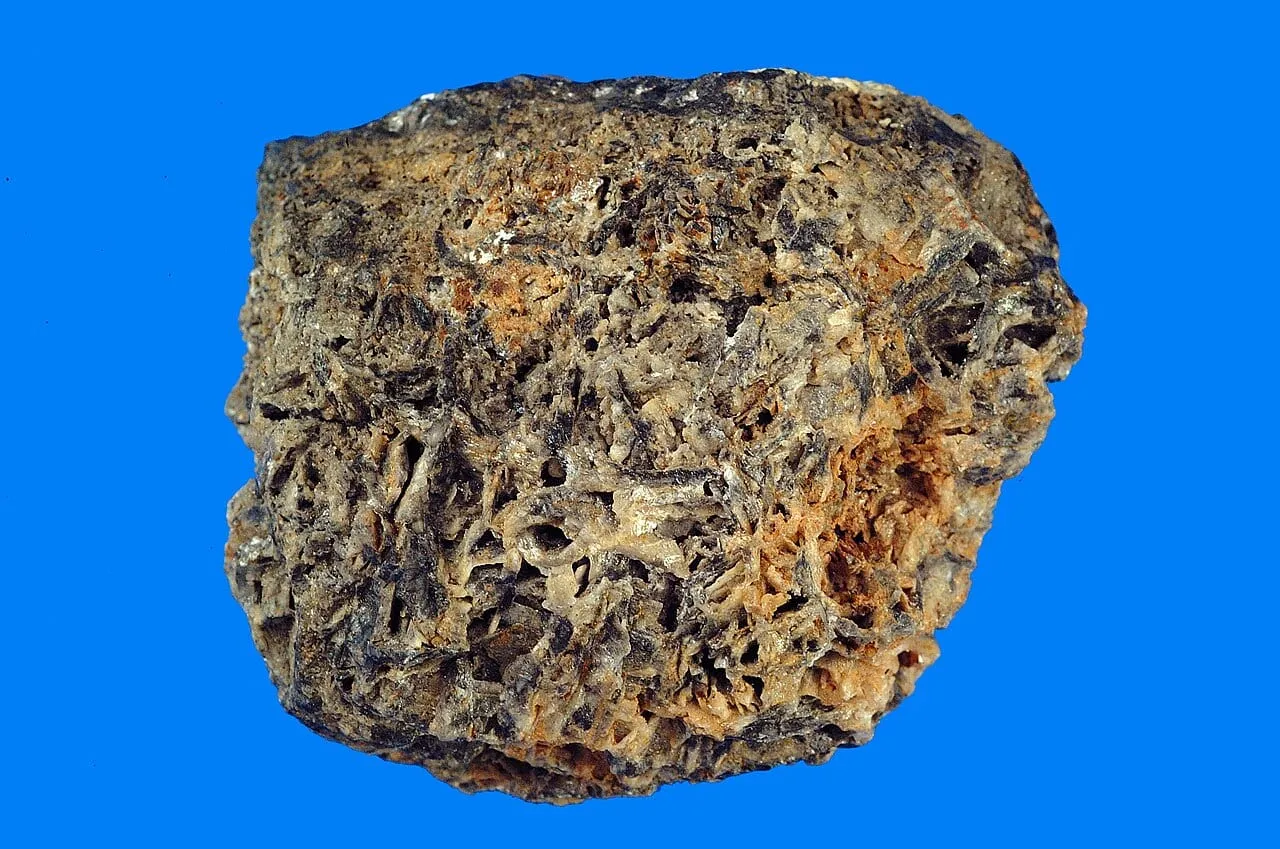
Anglesite
A heavy lead sulfate mineral with a diamond-like shine that grows as a crust around galena; it is named after the island of Anglesey in Wales.
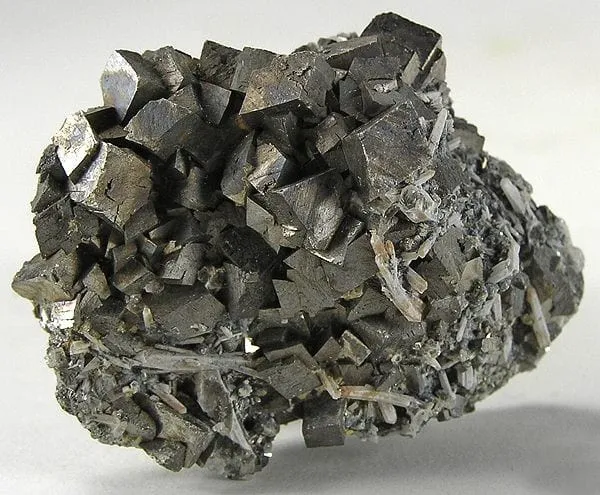
Arsenopyrite
A widespread silvery-grey sulfide containing arsenic: it smells of garlic when struck and is poisonous.
Banded iron formation
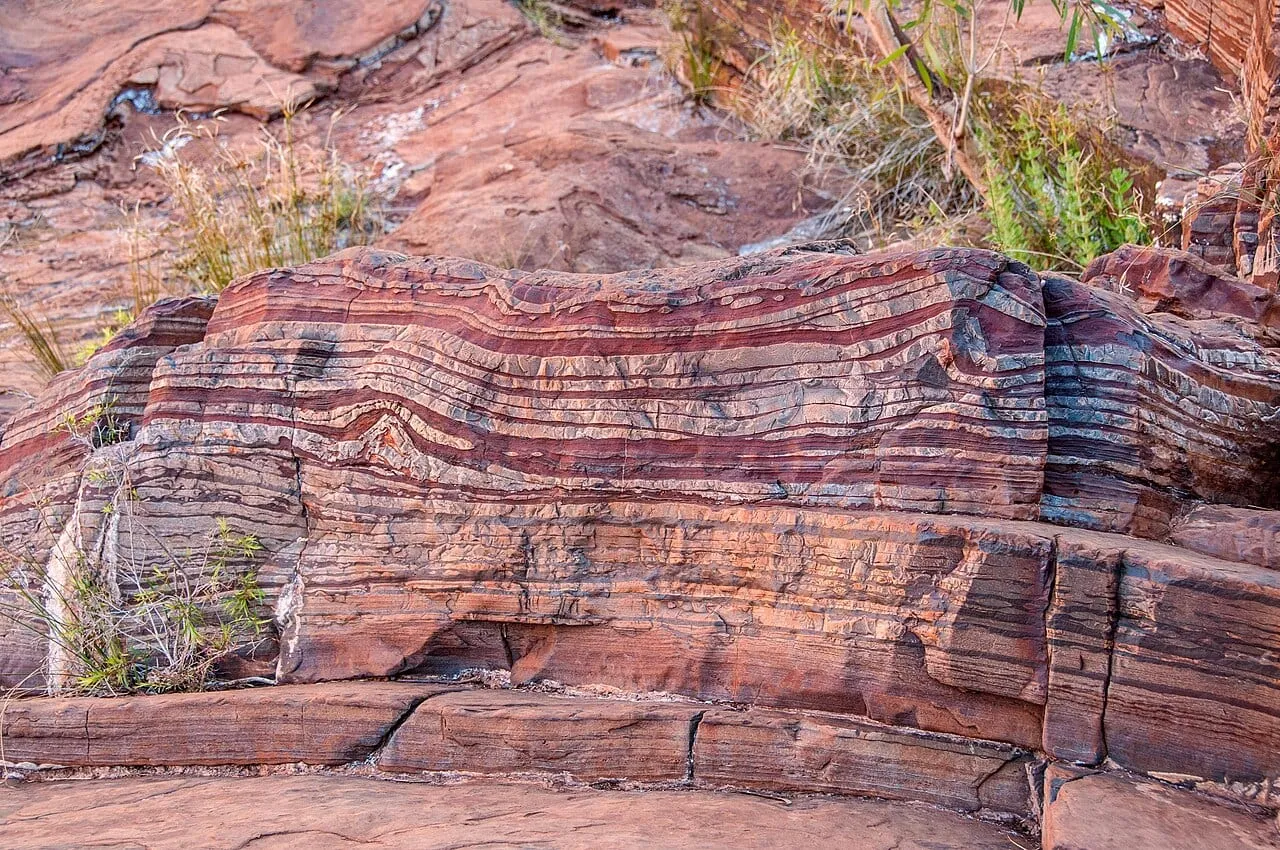
An ancient rock of alternating iron-oxide and chert bands: the record of oxygen beginning to build up on Earth, and the main source of iron ore.