Mineral
Chrysoberyl
BeAl₂O₄Krizoberil
Its name sounds like beryl but it is a separate mineral: harder than topaz, softer than corundum, and the parent of alexandrite and cat's-eye.
Also known as: Alexandrite (colour-change variety) · Cat's-eye, cymophane (chatoyant variety)
- Popularly: Semi-precious stone
- Gemstone
In short
Chrysoberyl is a mineral made of beryllium, aluminium and oxygen (BeAl₂O₄). The “beryl” in its name leads people to confuse it with beryl, but its composition and structure are different. At 8.5 on the Mohs scale it sits between corundum (9) and topaz (8). It is cut as a gem in three main forms: ordinary yellowish-green chrysoberyl, colour-changing alexandrite, and cat's-eye, which shows a sharp band of light gliding across the stone.
How does it form?
Chrysoberyl forms mostly in pegmatites: veins of rock in which large crystals grow from the last water- and rare-element-rich fluids left by a cooling magma. It also grows in the surrounding rocks (mica schist, dolomitic marble) when beryllium- and aluminium-rich fluids from the pegmatite react with them. Because it is hard and chemically resistant, it collects in river sands and gravels when rocks wear away, together with diamond, corundum, topaz, spinel, garnet and tourmaline. Much of the chrysoberyl mined in Brazil and Sri Lanka comes from such deposits (placers), where river transport has rounded the crystals’ edges.
What is it used for?
- Jewellery: Its hardness and toughness make it suitable for rings, earrings and necklaces. There are three forms: ordinary yellowish-green stone (usually faceted), colour-changing alexandrite, and cat’s-eye cut as a dome (cabochon).
- Collecting: Trillings and other well-formed crystals are sought by museums and collectors.
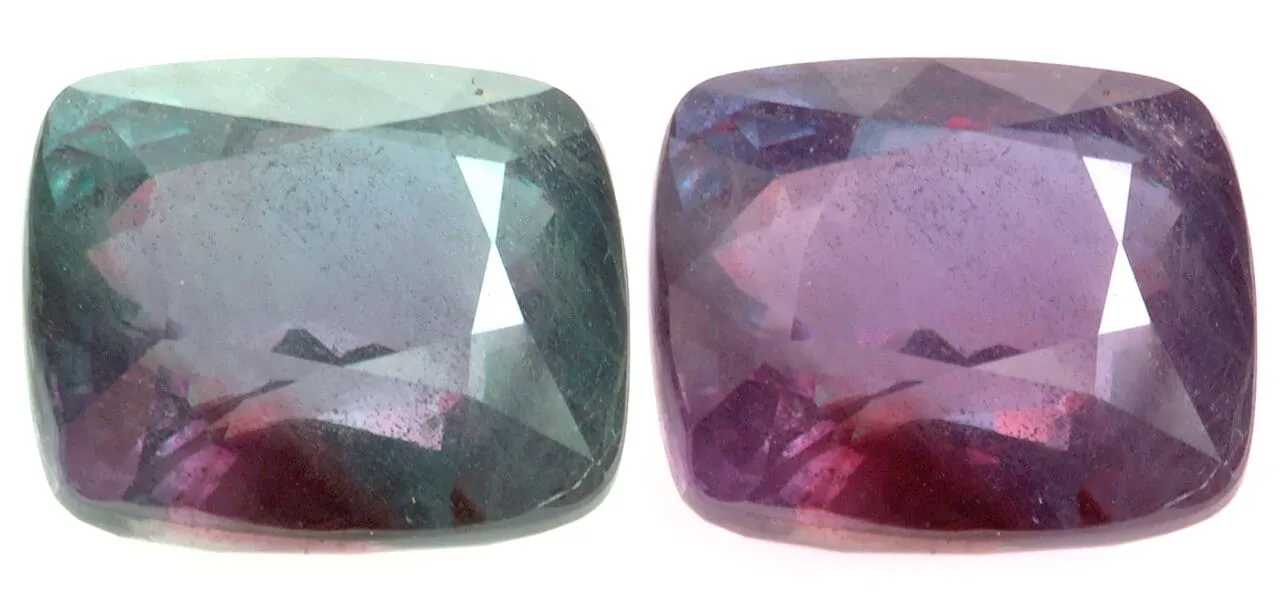
- Light and colour: The alexandrite effect is the best-known example of one stone showing different colours in different light, and the cat’s-eye effect shows light reflecting from fine inclusions inside a crystal.
Where does the colour come from?
Pure chrysoberyl is colourless. The yellow colour comes from traces of iron; the colour change of alexandrite comes from chromium replacing some of the aluminium in the crystal structure (see the alexandrite page). The cat’s-eye effect needs very fine needle-like inclusions or hollow tubes in the crystal, lined up parallel to its long axis; when the stone is cut as a dome across them, a single band of light appears.
Three forms
In gemmology chrysoberyl is split into three main types: ordinary yellowish-green chrysoberyl, cat’s-eye (cymophane) and alexandrite. Ordinary chrysoberyl is fairly plentiful; cat’s-eye makes up a small share of the output wherever chrysoberyl is found; alexandrite is much rarer because it needs chromium. A cat’s-eye that also shows the alexandrite effect is called an “alexandrite cat’s-eye” and is extremely rare.
What determines its value?
Its variety matters most: alexandrite with a strong colour change and cat's-eye with a sharp, bright band of light running down the middle are far more valuable than ordinary yellowish-green chrysoberyl. In ordinary stones colour saturation, clarity and cut count; chrysoberyl is usually clean, so eye-visible inclusions lower the value. Large stones with good colour are rare. Synthetics and imitations are common, so a laboratory report confirming that a stone is natural is sought, especially for alexandrite.
This information is educational, not buying, selling or investment advice. Value varies enormously with quality and treatment.
How to recognise it
- 1
It is very hard (8.5): it scratches topaz and quartz; harder stones such as corundum (ruby, sapphire) and diamond scratch it.
- 2
Crystals are flat or short prisms with striated faces. Cyclic twins of three crystals joined at 120°, called trillings and hexagonal in outline, are typical.
- 3
Its specific gravity is about 3.7, so it feels distinctly heavier than a quartz or beryl of the same size.
- 4
The colour runs from yellowish green to brownish green. If it changes colour between daylight and lamplight it may be alexandrite; if a band of light glides across a domed stone it is cat's-eye. A gem laboratory is needed for a firm identification.
Fakes and imitations
What shops usually don’t tell you:
- Synthetic chrysoberyl, especially synthetic alexandrite, is made by flux, pulling (Czochralski) and hydrothermal methods. Hydrothermal stones have the same physical and chemical properties as natural ones.
- Some stones sold as “synthetic alexandrite” are really corundum coloured with elements such as vanadium, or colour-change spinel; they are not chrysoberyl, only alexandrite simulants.
- The name “cat's-eye” on its own is used only for chrysoberyl; other stones are named with their mineral, as in “quartz cat's-eye” or “ruby cat's-eye”.
- In Victorian and Edwardian times yellowish-green chrysoberyl was called “chrysolite”, a name also used for olivine (peridot); it caused confusion and is no longer used in gemmology.
Myths and misconceptions
MythChrysoberyl is a kind of beryl.
FactDespite the similar names they are separate minerals: chrysoberyl is a beryllium aluminium oxide (BeAl₂O₄), while beryl is a silicate (Be₃Al₂Si₆O₁₈). Chrysoberyl is harder (8.5, against 7.5–8 for beryl), and all they share is that both contain beryllium, aluminium and oxygen.
MythAny stone showing a band of light like a glint in an eye is a “cat's-eye”.
FactQuartz, tourmaline, scapolite, corundum and other stones can show the cat's-eye effect too. In the gem trade the name “cat's-eye” on its own is reserved for chrysoberyl; the others are named together with their mineral.
What is it believed to be good for?
This section reports beliefs; it is not health information. There is no scientific evidence for these claims and no stone replaces medical treatment.
The meanings people give this stone, and who holds them:
- According to Kunz, the people of Ceylon (Sri Lanka) used cat's-eye chrysoberyl as a charm against evil spirits.
- Kunz writes that Eastern peoples believed stones showing a moving band of light or a star (cat's-eye, star sapphire, star ruby) brought good fortune to the wearer.
- Today crystal-therapy sources claim that cat's-eye chrysoberyl is a protective talisman and, because of its golden tones, brings wealth.
What science says
There is no scientific evidence that chrysoberyl protects against evil spirits or the evil eye, or that it brings luck or wealth. The cat's-eye effect is an optical phenomenon caused by very fine, parallel needle-like inclusions in the crystal reflecting light.
Did you know?
Its name comes from the Greek words for “gold” (khrysos) and “beryl” (beryllos); all it shares with beryl is that both contain beryllium, aluminium and oxygen.
Cat's-eye became fashionable at the end of the 19th century when the Duke of Connaught gave a cat's-eye ring as an engagement token; until then it had mostly sat in mineral and gem collections.
Where is it found?
Loading map…
- Takovaya (Tokovaya) River emerald mines, near Malysheva, Sverdlovsk Oblast, Russia · Historic sourceThe Ural emerald mines where alexandrite was first found in the 1830s
- Ratnapura, Sabaragamuwa, Sri Lanka · Major depositChrysoberyl is abundant in the gem-bearing gravel placers
- Teófilo Otoni, Minas Gerais, Brazil · Major depositPart of the Minas Gerais pegmatite province; chrysoberyl comes from many places in Brazil
- Colatina area, Espírito Santo, Brazil · Known localityOne of the places the Handbook of Mineralogy cites for exceptional chrysoberyl crystals
- Lake Alaotra area, Madagascar · Known localityThe Handbook of Mineralogy cites the Miakanjovato area near the lake as a chrysoberyl locality
- Masvingo (Fort Victoria) area, Zimbabwe · Known localityA locality also known for alexandrite crystals
- Near Golden, Jefferson County, Colorado, USA · Known localityWhere the Handbook of Mineralogy took its analysed sample
Locations are approximate to protect sites. Red dots mark places in Türkiye. Open in the big map →
Frequently asked questions
What is chrysoberyl?
Chrysoberyl is a mineral made of beryllium, aluminium and oxygen (BeAl₂O₄). The “beryl” in its name leads people to confuse it with beryl, but its composition and structure are different. At 8.5 on the Mohs scale it sits between corundum (9) and topaz (8). It is cut as a gem in three main forms: ordinary yellowish-green chrysoberyl, colour-changing alexandrite, and cat's-eye, which shows a sharp band of light gliding across the stone.
What is chrysoberyl used for?
Jewellery: Its hardness and toughness make it suitable for rings, earrings and necklaces. There are three forms: ordinary yellowish-green stone (usually faceted), colour-changing alexandrite, and cat's-eye cut as a dome (cabochon). Collecting: Trillings and other well-formed crystals are sought by museums and collectors. Light and colour: The alexandrite effect is the best-known example of one stone showing different colours in different light, and the cat's-eye effect shows light reflecting from fine inclusions inside a crystal.
How hard is chrysoberyl?
It has a hardness of 8.5 on the Mohs scale. It scratches glass and steel; a steel knife cannot scratch it. Its specific gravity is 3.69–3.75 g/cm³.
Where is chrysoberyl found?
Its best-known localities: Ratnapura, Sabaragamuwa, Sri Lanka; Teófilo Otoni, Minas Gerais, Brazil; Takovaya (Tokovaya) River emerald mines, near Malysheva, Sverdlovsk Oblast, Russia; Colatina area, Espírito Santo, Brazil; Lake Alaotra area, Madagascar.
How can you tell if chrysoberyl is real?
It is very hard (8.5): it scratches topaz and quartz; harder stones such as corundum (ruby, sapphire) and diamond scratch it. Crystals are flat or short prisms with striated faces. Cyclic twins of three crystals joined at 120°, called trillings and hexagonal in outline, are typical. Its specific gravity is about 3.7, so it feels distinctly heavier than a quartz or beryl of the same size. Synthetic chrysoberyl, especially synthetic alexandrite, is made by flux, pulling (Czochralski) and hydrothermal methods. Hydrothermal stones have the same physical and chemical properties as natural ones.
Is chrysoberyl valuable?
On the “street to diamond” value ladder it sits on step 6 of nine: Fine ornamental and collector stone. Its variety matters most: alexandrite with a strong colour change and cat's-eye with a sharp, bright band of light running down the middle are far more valuable than ordinary yellowish-green chrysoberyl. In ordinary stones colour saturation, clarity and cut count; chrysoberyl is usually clean, so eye-visible inclusions lower the value. Large stones with good colour are rare. Synthetics and imitations are common, so a laboratory report confirming that a stone is natural is sought, especially for alexandrite.
What is chrysoberyl good for?
According to Kunz, the people of Ceylon (Sri Lanka) used cat's-eye chrysoberyl as a charm against evil spirits. Kunz writes that Eastern peoples believed stones showing a moving band of light or a star (cat's-eye, star sapphire, star ruby) brought good fortune to the wearer. Today crystal-therapy sources claim that cat's-eye chrysoberyl is a protective talisman and, because of its golden tones, brings wealth. There is no scientific evidence that chrysoberyl protects against evil spirits or the evil eye, or that it brings luck or wealth. The cat's-eye effect is an optical phenomenon caused by very fine, parallel needle-like inclusions in the crystal reflecting light. This section reports beliefs; it is not health information. There is no scientific evidence for these claims and no stone replaces medical treatment.
Varieties

Sources
- Handbook of Mineralogy: Chrysoberyl · Mineralogical Society of America
- Chrysoberyl Mineral Data · Webmineral
- Alexandrite Description (Gem Encyclopedia) · GIA
- Alexandrite Quality Factors · GIA
- Chrysoberyl · Wikipedia
- Malysheva, Sverdlovsk Oblast · Wikipedia
- The Curious Lore of Precious Stones (G. F. Kunz) · J. B. Lippincott Company; Project Gutenberg, 1913
External links
Draft: awaiting expert reviewReport an error ↗
On the same step
Amber
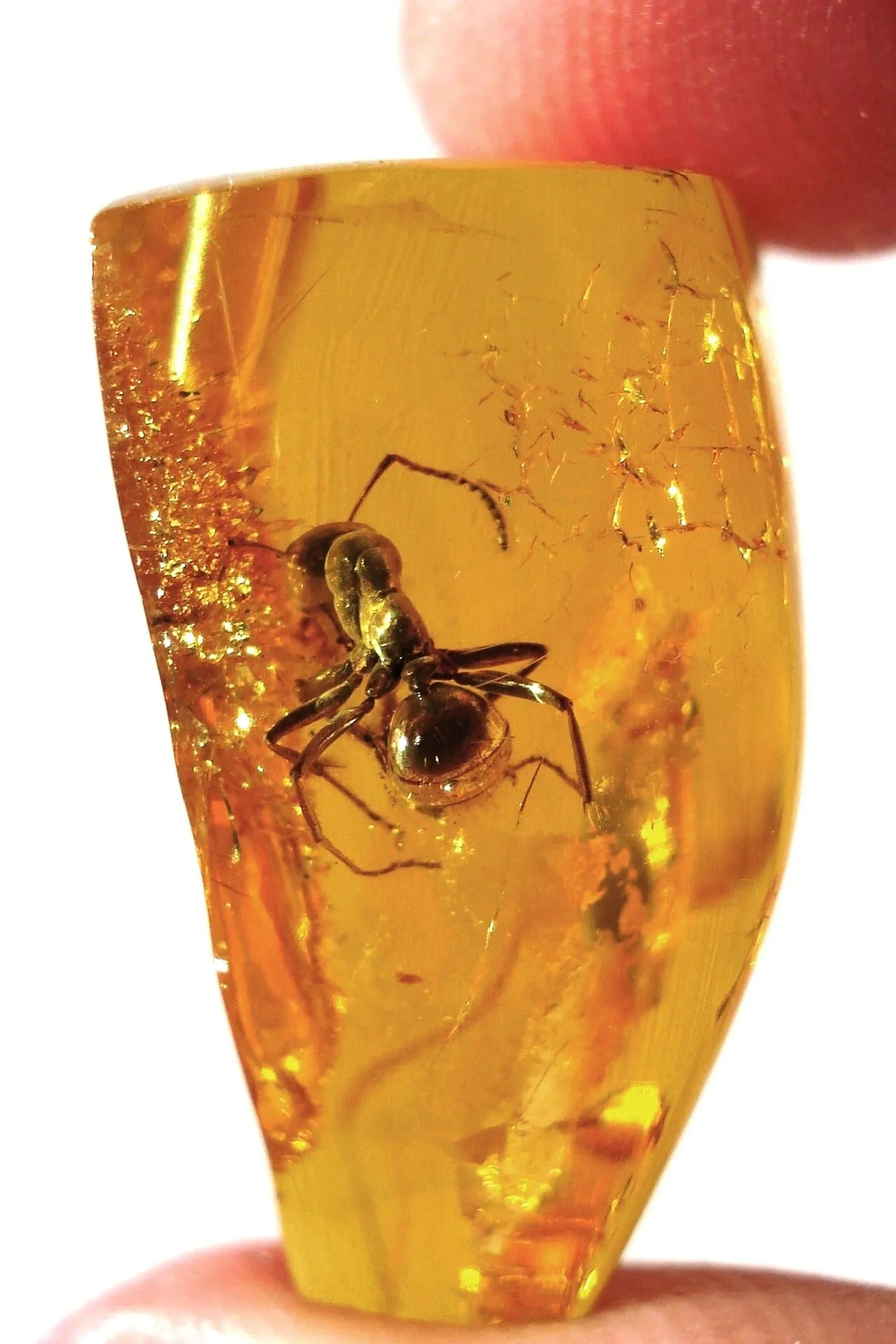
Tree resin fossilised over millions of years: a light, warm organic gem that sometimes holds prehistoric insects.
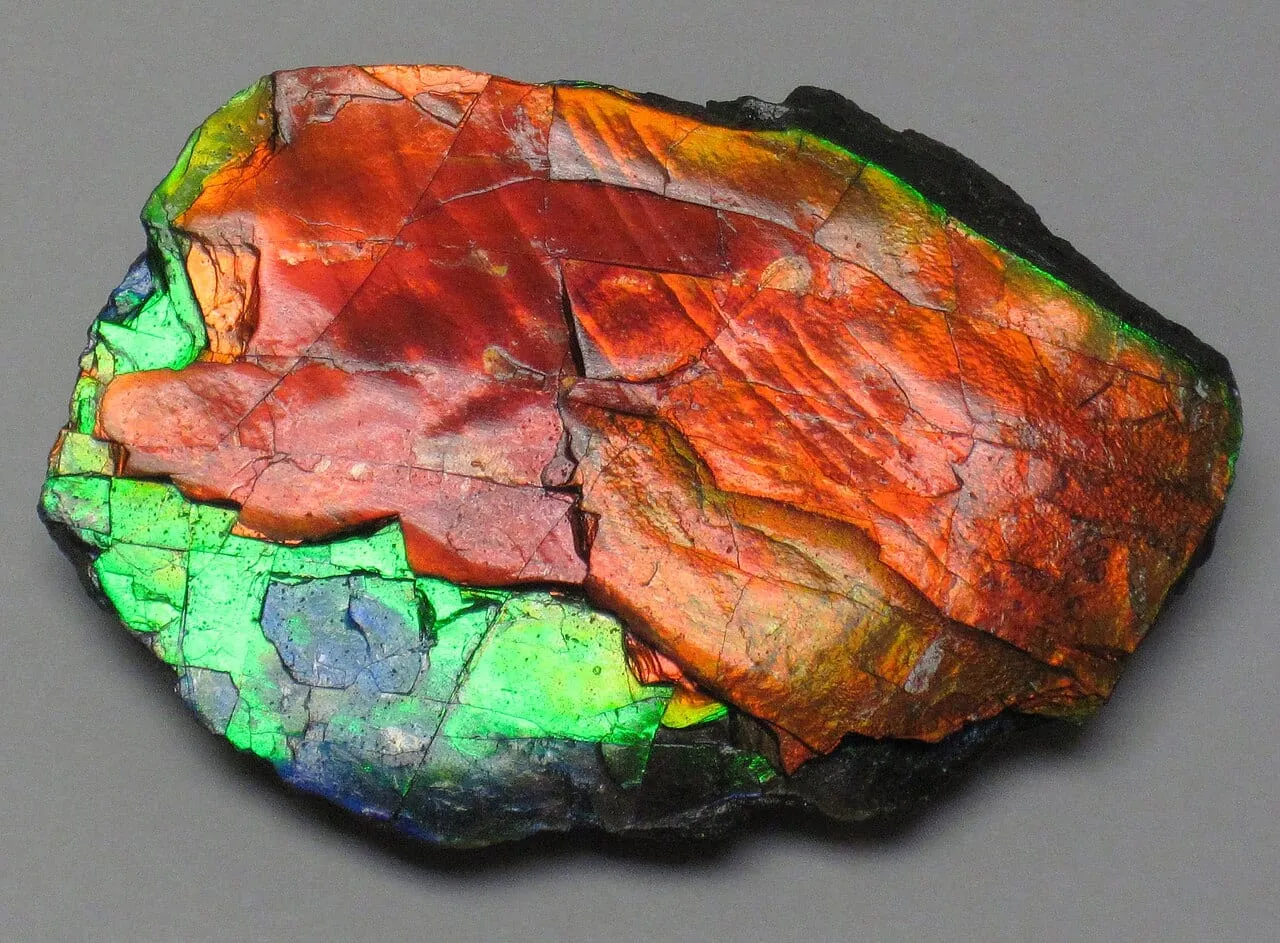
Ammolite
The rainbow-bright layer of fossil ammonite shell; of gem quality it comes only from the Canadian province of Alberta.

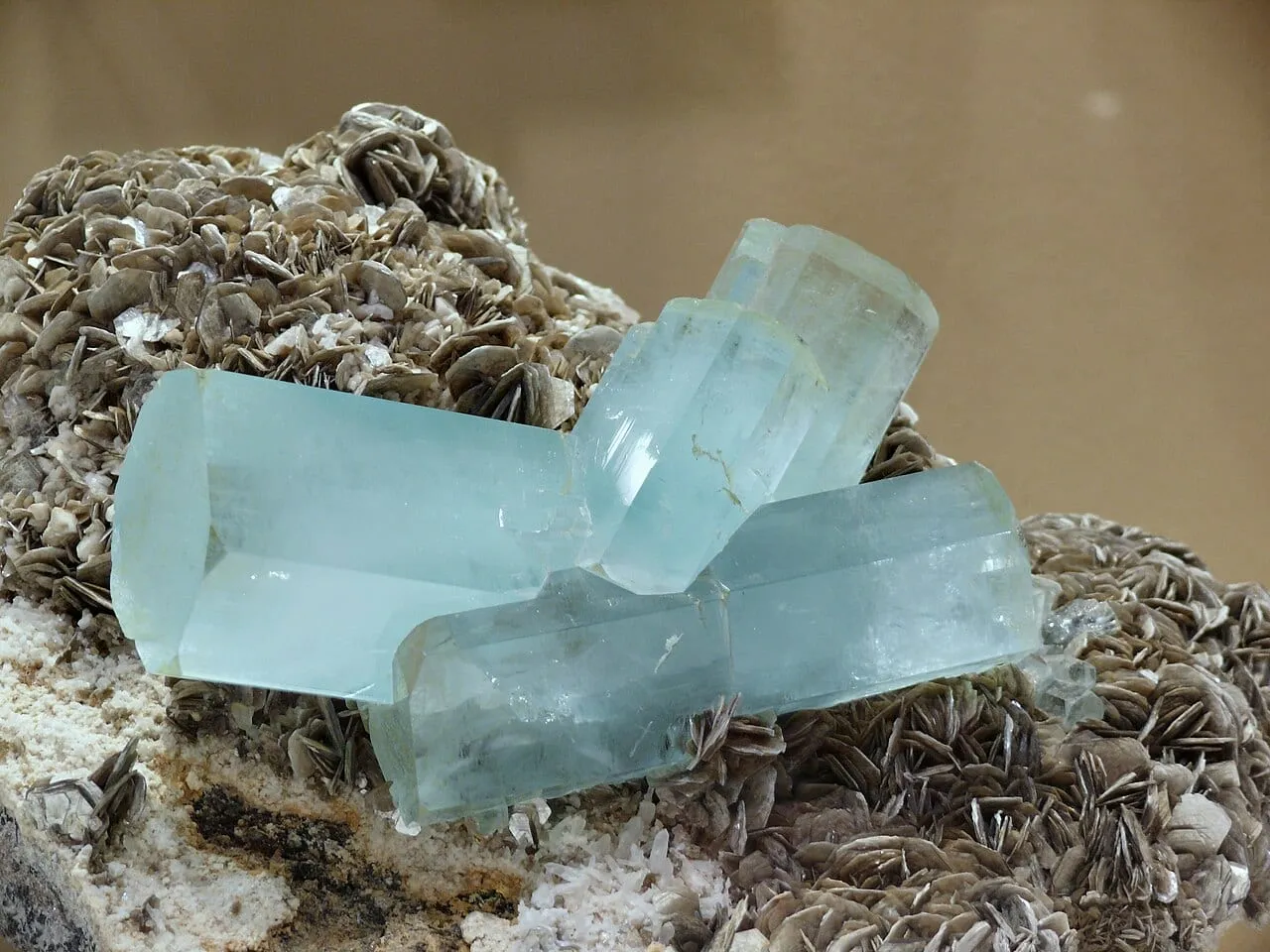
Aquamarine
The blue member of the beryl family, named after seawater: often found as large, clear, nearly flawless crystals.