Mineral
Stibnite
Sb₂S₃Antimonit (stibnit)
The main ore of antimony: a soft, lead-grey mineral that grows long, striated, sword-like crystals with a metallic shine.
Also known as: Antimonite · Antimony glance
- Ore
- Handle with care
- Important in Türkiye

In short
Stibnite is a lead-grey mineral made of antimony and sulfur. It often forms long, shiny needle- or sword-shaped crystals that spread out like fans. It is the most important ore of the element antimony, but antimony compounds are toxic, so it must be handled with care.
How does it form?
Stibnite occurs in veins formed where relatively low-temperature hydrothermal fluids cooled in cracks in rock. Quartz, calcite and pyrite usually accompany it, and in some deposits it is found with cinnabar, realgar and gold. The world’s largest antimony deposit is Xikuangshan in Hunan Province, China. The magnificent crystal groups from the Ichinokawa mine in Japan are counted among the most famous mineral specimens.
In Türkiye
Antimony deposits in Türkiye are known in provinces such as Tokat, İzmir, Kütahya, Balıkesir, Manisa, Niğde and Hatay. The Emirli stibnite mine at Ödemiş in İzmir is known to have been worked from the late 1800s, and at Turhal in Tokat, antimony has been mined since the 1930s. According to MTA, the country’s main antimony mines are around Turhal, Ödemiş and Gediz in Kütahya.
What is it used for?
Today the most important use of antimony is in flame retardants, which make plastics and textiles more resistant to fire. Because it hardens lead, it is also used in the alloys of lead–acid batteries. It is also found in some semiconductors, glass and ceramics.
How to recognise it
- 1
It forms long, thin prisms striated along their length; the crystals often grow in radiating sprays or fans.
- 2
It is very soft (hardness 2): a fingernail can scratch it. Thin crystals can bend without breaking, but do not spring back.
- 3
It has one perfect cleavage along the length of the crystal; cleavage surfaces shine like mirrors.
- 4
It resembles galena but is clearly lighter (specific gravity about 4.6, galena 7.6) and splits lengthwise rather than into cubes.
Fakes and imitations
What shops usually don’t tell you:
- Other grey, needle-shaped minerals, such as the lead–antimony sulfosalts jamesonite and boulangerite, can be mistaken for stibnite; certain identification may need laboratory testing.
- Stibnite crystals are very fragile, so collector specimens often have broken crystals glued back on; the seller should state such repairs clearly.
Safety
Antimony and its compounds are toxic. Wash your hands after touching stibnite, keep specimens away from children and never put them in your mouth. The mineral melts at a fairly low temperature; when heated it releases toxic antimony oxide fumes and irritating sulfur dioxide. So do not heat it, crush it to powder or sand it.
Did you know?
In ancient times stibnite was ground to make kohl, an eye cosmetic. The word “alcohol” comes from the Arabic “al-kuḥl”, the name of this fine eye powder.
Antimony’s chemical symbol, Sb, comes from “stibium”, the old Latin name of this mineral.
Where is it found?
Loading map…
- Xikuangshan, Hunan, China · Major depositThe world’s largest antimony deposit
- Ichinokawa mine, Saijō, Ehime, Japan · Historic sourceWorld-famous, magnificent groups of stibnite crystals
- Baia Sprie, Maramureș, Romania · Known localityClassic mining district for collector crystals
- Turhal, Tokat, Türkiye · Major depositOne of Türkiye’s main antimony-producing areas; mined since the 1930s
- Emirli, Ödemiş, İzmir, Türkiye · Known localityStibnite deposit known and worked since the late 1800s
Locations are approximate to protect sites. Red dots mark places in Türkiye. Open in the big map →
Sources
- Handbook of Mineralogy: Stibnite · Mineralogical Society of America
- Dünyada ve Türkiye’de Antimuan · MTA Genel Müdürlüğü, Fizibilite Etütleri Daire Başkanlığı, 2019
External links
Draft: awaiting expert reviewReport an error ↗
On the same step
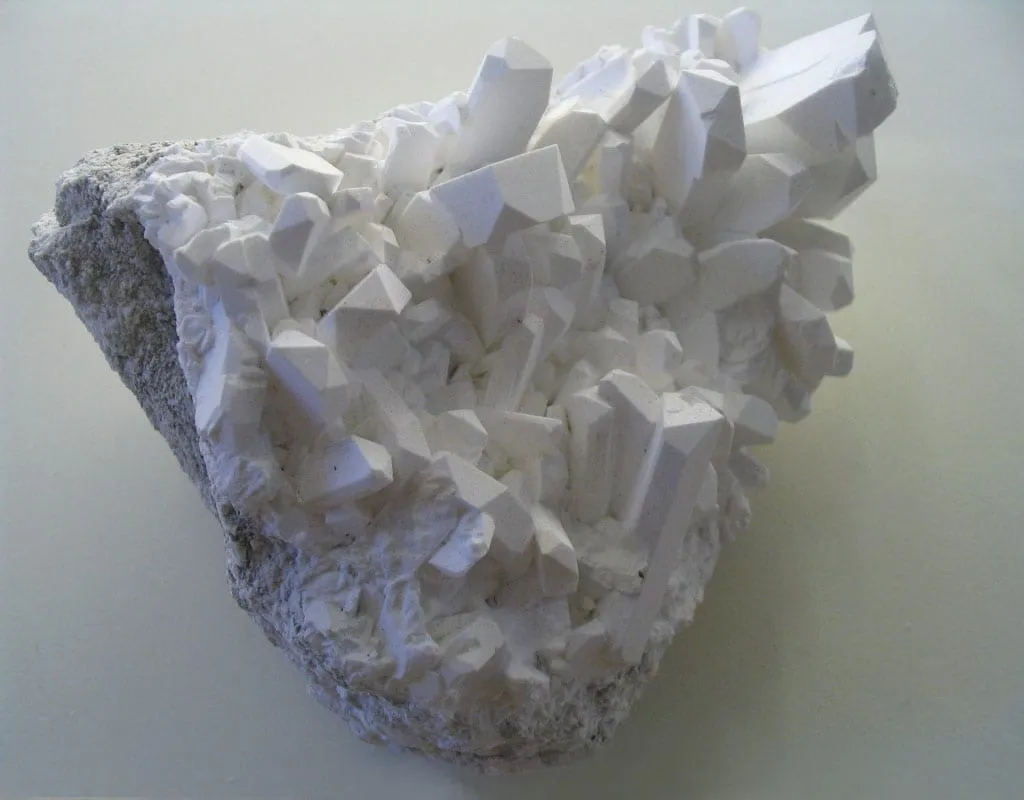
Borax (tincal)
A sodium borate that dissolves in water and crumbles to white powder in dry air; one of the world’s key tincal deposits is at Kırka in Eskişehir.
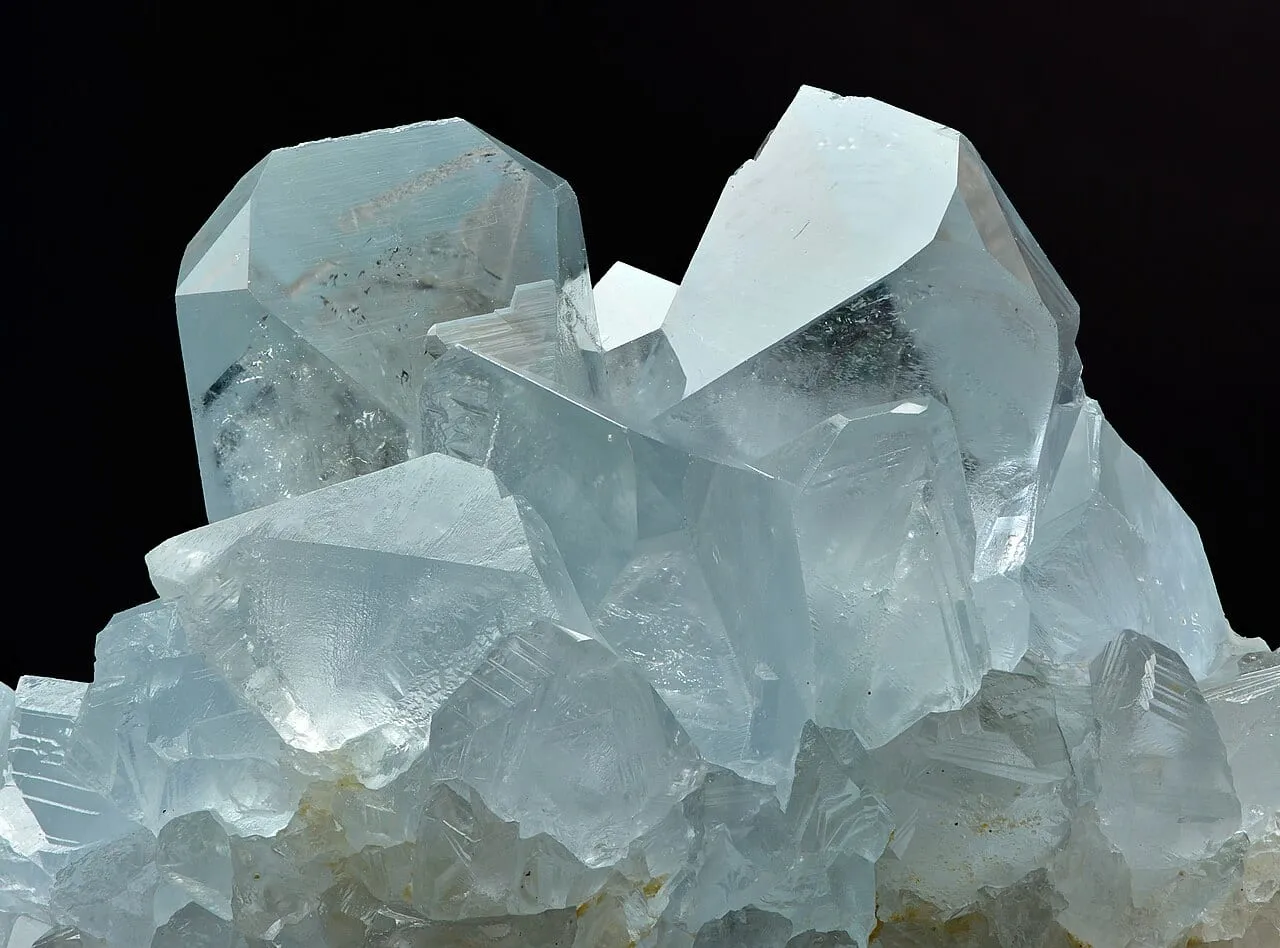
Celestine
A strontium mineral named after the sky, often forming pale blue crystals; the source of the red in fireworks.
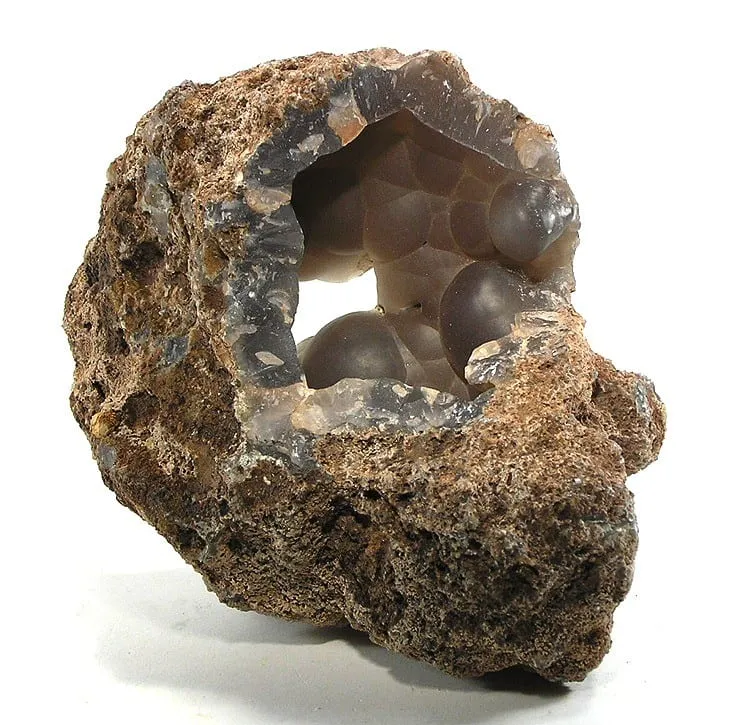
Chalcedony
A waxy-lustred stone made of quartz crystals far too small to see: the family name for agate, onyx and many other ornamental stones.