Mineral
Staurolite
(Fe,Mg)₂Al₉(Si,Al)₄O₂₀(O,OH)₄Stavrolit
Brown crystals that twin into natural crosses: called “fairy crosses”, they are believed to bring luck and protection.
Also known as: Fairy cross · Fairy stone · Cross stone
- Popularly: Common stone
- Important in Türkiye

In short
Staurolite is a silicate mineral containing iron, magnesium and aluminium. Its crystals are brown and prismatic; its most striking feature is that two crystals can grow through each other to form twins shaped like a cross or an “X”. Its name comes from the Greek words for “cross” (stauros) and “stone” (lithos). It occurs in medium- to high-grade metamorphic rocks (schist, gneiss) together with garnet, mica and kyanite.
Photos

How does it form?
Staurolite forms when clay-rich sedimentary rocks undergo medium- to high-grade regional metamorphism, that is, when temperature and pressure rise. It occurs in schist and gneiss with almandine garnet, micas and kyanite. The cross-shaped crystals arise when two crystals grow together, passing through each other along a particular plane (at 60° or 90°); this is called twinning.
What is it used for?
- Scientific indicator: Finding staurolite in a rock helps estimate the temperature, depth and pressure at which the rock was transformed, so staurolite is used as an index mineral.
- Charm and keepsake: Cross-shaped twins have been carried for centuries as charms, keepsakes and jewellery.
- Collecting: Well-formed cross-shaped crystals and twin groups are sought after for mineral collections.
In Türkiye
In Türkiye staurolite occurs in the metamorphic rocks of the Menderes Massif: staurolite–chloritoid inclusions have been found inside garnets in the Çine Massif in Aydın. This has been read as one of the traces showing that the massif once passed through a higher-pressure stage.
What determines its value?
Staurolite is very common, so its value is low. The most sought-after pieces, among collectors and the public alike, are well-formed cross-shaped twins: the symmetry of the arms, undamaged crystal faces and a well-known locality add to the value, while untwinned single crystals attract much less interest.
This information is educational, not buying, selling or investment advice. Value varies enormously with quality and treatment.
How to recognise it
- 1
Brown, short, stout prismatic crystals; the surface is often dull or resinous.
- 2
Cross-shaped twins are typical: “X”-shaped twins meeting at about 60° are more common, twins meeting at 90° in a Roman or Maltese cross are rarer. Most crystals, though, are single, untwinned crystals.
- 3
Its hardness is 7–7.5: a steel knife cannot scratch it, and it is close to quartz in hardness. Its specific gravity of about 3.7–3.8 makes it clearly heavier than quartz.
- 4
It is usually seen in schist and gneiss with garnet, mica and kyanite; when the rock weathers, its crystals can be freed into the soil and river beds.
Myths and misconceptions
MythEvery staurolite crystal is shaped like a cross.
FactMost staurolite crystals are single, untwinned prisms. The cross or “X” shape appears only in twins, where two crystals have grown through each other along a particular plane.
What is it believed to be good for?
This section reports beliefs; it is not health information. There is no scientific evidence for these claims and no stone replaces medical treatment.
The meanings people give this stone, and who holds them:
- According to George F. Kunz, the Swedish mineralogist Cronstedt wrote in 1758 that in Basel staurolite was used as an amulet at baptisms and was therefore called “Baseler Taufstein” (baptismal stone).
- According to Kunz, in Brittany these twin crystals were worn as charms and, by local legend, were said to have fallen from the sky.
- According to a legend told in Patrick County, Virginia, fairies who heard the news of the crucifixion of Christ wept, and their tears crystallised into little stone crosses as they fell to the ground.
- “Fairy crosses” are regarded as good-luck stones; Presidents Theodore Roosevelt and Woodrow Wilson are rumoured to have carried them.
What science says
The cross shape comes from a twinning the crystal makes as it grows; the stone did not fall from the sky, and fairies did not weep. There is no evidence that staurolite protects anyone or brings luck, but the “fairy cross” carries real value as a folk tradition and keepsake.
Did you know?
Fairy Stone State Park in Patrick County, Virginia, takes its name from these crystals; a small number may be collected in the park for personal use, but commercial digging is not permitted.
Staurolite is the official state mineral of the US state of Georgia.
Finding staurolite in a schist helps estimate the temperature and pressure the rock went through, which is why geologists count it as an “index mineral”.
Where is it found?
Loading map…
- Fairy Stone State Park, Patrick County, Virginia, USA · Major depositFamous for its cross-shaped twins; a small number may be collected in the park for personal use, but commercial digging is not allowed
- Fannin County, Georgia, USA · Known localityStaurolite is the official state mineral of Georgia
- Taos, New Mexico, USA · Known locality
- Pizzo Forno, Ticino, Switzerland · Known localityA well-known staurolite locality in the Lepontine Alps
- Selbu, Trøndelag, Norway · Known locality
- Keivy Mountains, Kola Peninsula, Russia · Known locality
- Brittany, France · Historic sourceAccording to Kunz, the twin crystals here were once worn as charms
- Çine Massif, Aydın, Türkiye · Known localityStaurolite–chloritoid inclusions in garnet in the Çine nappe of the southern Menderes Massif; the point marks the Çine area
Locations are approximate to protect sites. Red dots mark places in Türkiye. Open in the big map →
Frequently asked questions
What is staurolite?
Staurolite is a silicate mineral containing iron, magnesium and aluminium. Its crystals are brown and prismatic; its most striking feature is that two crystals can grow through each other to form twins shaped like a cross or an “X”. Its name comes from the Greek words for “cross” (stauros) and “stone” (lithos). It occurs in medium- to high-grade metamorphic rocks (schist, gneiss) together with garnet, mica and kyanite.
What is staurolite used for?
Scientific indicator: Finding staurolite in a rock helps estimate the temperature, depth and pressure at which the rock was transformed, so staurolite is used as an index mineral. Charm and keepsake: Cross-shaped twins have been carried for centuries as charms, keepsakes and jewellery. Collecting: Well-formed cross-shaped crystals and twin groups are sought after for mineral collections.
How hard is staurolite?
It has a hardness of 7–7.5 on the Mohs scale. It scratches glass and steel; a steel knife cannot scratch it. Its specific gravity is 3.74–3.83 g/cm³.
Where is staurolite found?
Its best-known localities: Fairy Stone State Park, Patrick County, Virginia, USA; Brittany, France; Fannin County, Georgia, USA; Taos, New Mexico, USA; Pizzo Forno, Ticino, Switzerland.
Where is staurolite found in Türkiye?
Known localities in Türkiye: Çine Massif, Aydın, Türkiye.
How can you tell if staurolite is real?
Brown, short, stout prismatic crystals; the surface is often dull or resinous. Cross-shaped twins are typical: “X”-shaped twins meeting at about 60° are more common, twins meeting at 90° in a Roman or Maltese cross are rarer. Most crystals, though, are single, untwinned crystals. Its hardness is 7–7.5: a steel knife cannot scratch it, and it is close to quartz in hardness. Its specific gravity of about 3.7–3.8 makes it clearly heavier than quartz.
Is staurolite valuable?
On the “street to diamond” value ladder it sits on step 4 of nine: Fine dimension stone and ore. Staurolite is very common, so its value is low. The most sought-after pieces, among collectors and the public alike, are well-formed cross-shaped twins: the symmetry of the arms, undamaged crystal faces and a well-known locality add to the value, while untwinned single crystals attract much less interest.
What is staurolite good for?
According to George F. Kunz, the Swedish mineralogist Cronstedt wrote in 1758 that in Basel staurolite was used as an amulet at baptisms and was therefore called “Baseler Taufstein” (baptismal stone). According to Kunz, in Brittany these twin crystals were worn as charms and, by local legend, were said to have fallen from the sky. According to a legend told in Patrick County, Virginia, fairies who heard the news of the crucifixion of Christ wept, and their tears crystallised into little stone crosses as they fell to the ground. “Fairy crosses” are regarded as good-luck stones; Presidents Theodore Roosevelt and Woodrow Wilson are rumoured to have carried them. The cross shape comes from a twinning the crystal makes as it grows; the stone did not fall from the sky, and fairies did not weep. There is no evidence that staurolite protects anyone or brings luck, but the “fairy cross” carries real value as a folk tradition and keepsake. This section reports beliefs; it is not health information. There is no scientific evidence for these claims and no stone replaces medical treatment.
Sources
- Handbook of Mineralogy: Staurolite · Mineralogical Society of America
- Staurolite · Webmineral
- Staurolite · Wikipedia
- Fairy Stones · Virginia Department of Conservation and Recreation
- The Curious Lore of Precious Stones (G. F. Kunz) · J. B. Lippincott Company; Project Gutenberg, 1913
- Metamorphism of Precambrian–Palaeozoic schists of the Menderes core series and contact relationships with Proterozoic orthogneisses of the western Çine Massif, Anatolide belt, western Turkey (Régnier, Mezger, Passchier), Geological Magazine 144 · Cambridge University Press, 2007
- Selbu Municipality · Wikipedia
External links
Draft: awaiting expert reviewReport an error ↗
On the same step
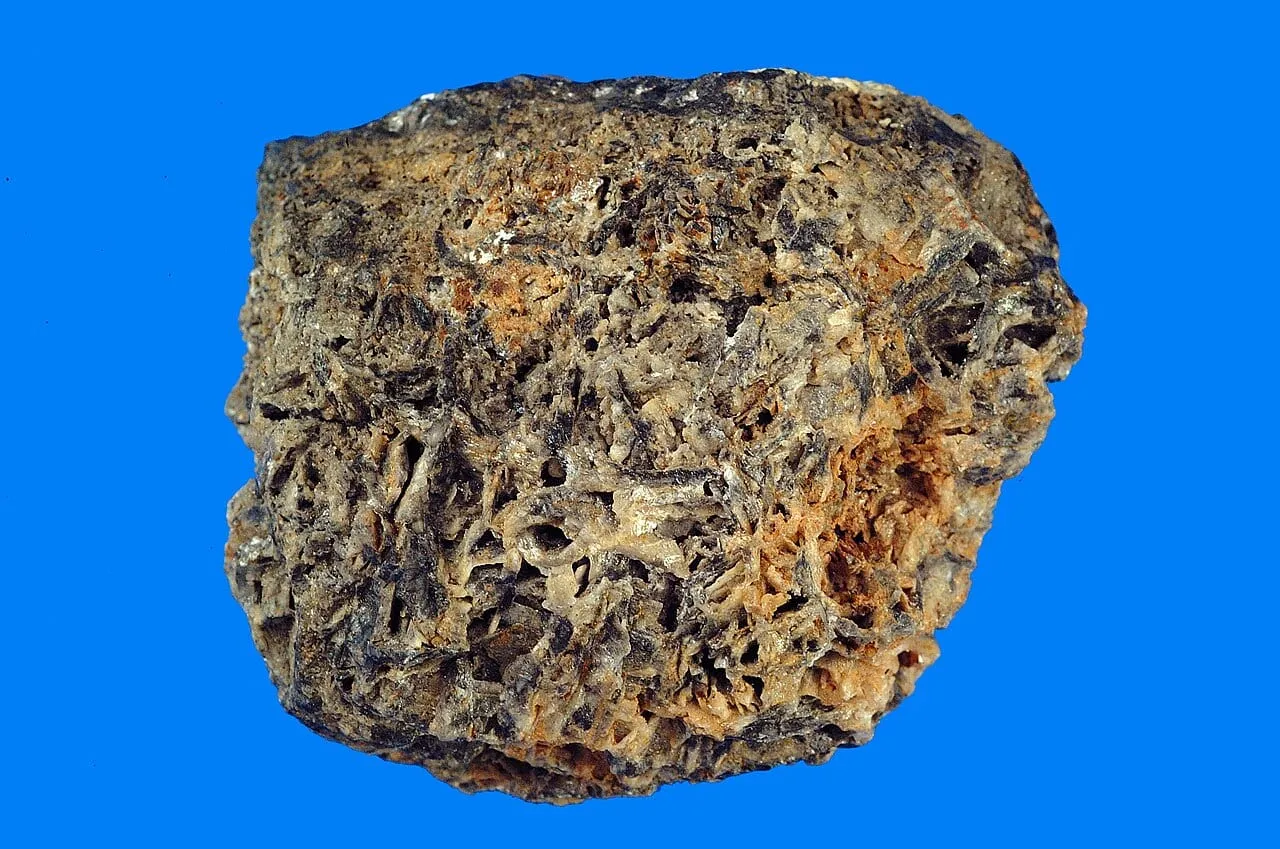
Anglesite
A heavy lead sulfate mineral with a diamond-like shine that grows as a crust around galena; it is named after the island of Anglesey in Wales.
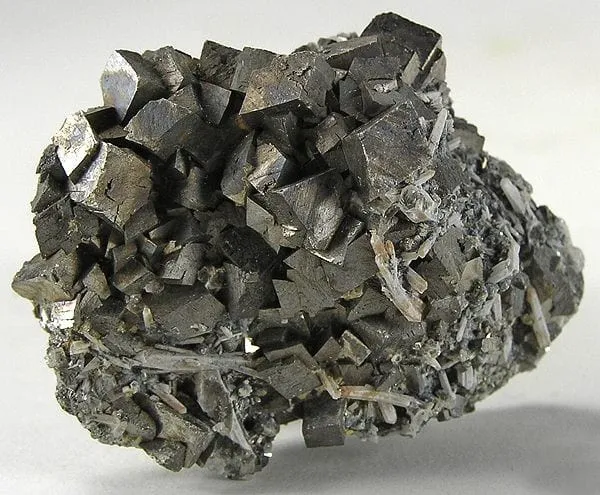
Arsenopyrite
A widespread silvery-grey sulfide containing arsenic: it smells of garlic when struck and is poisonous.
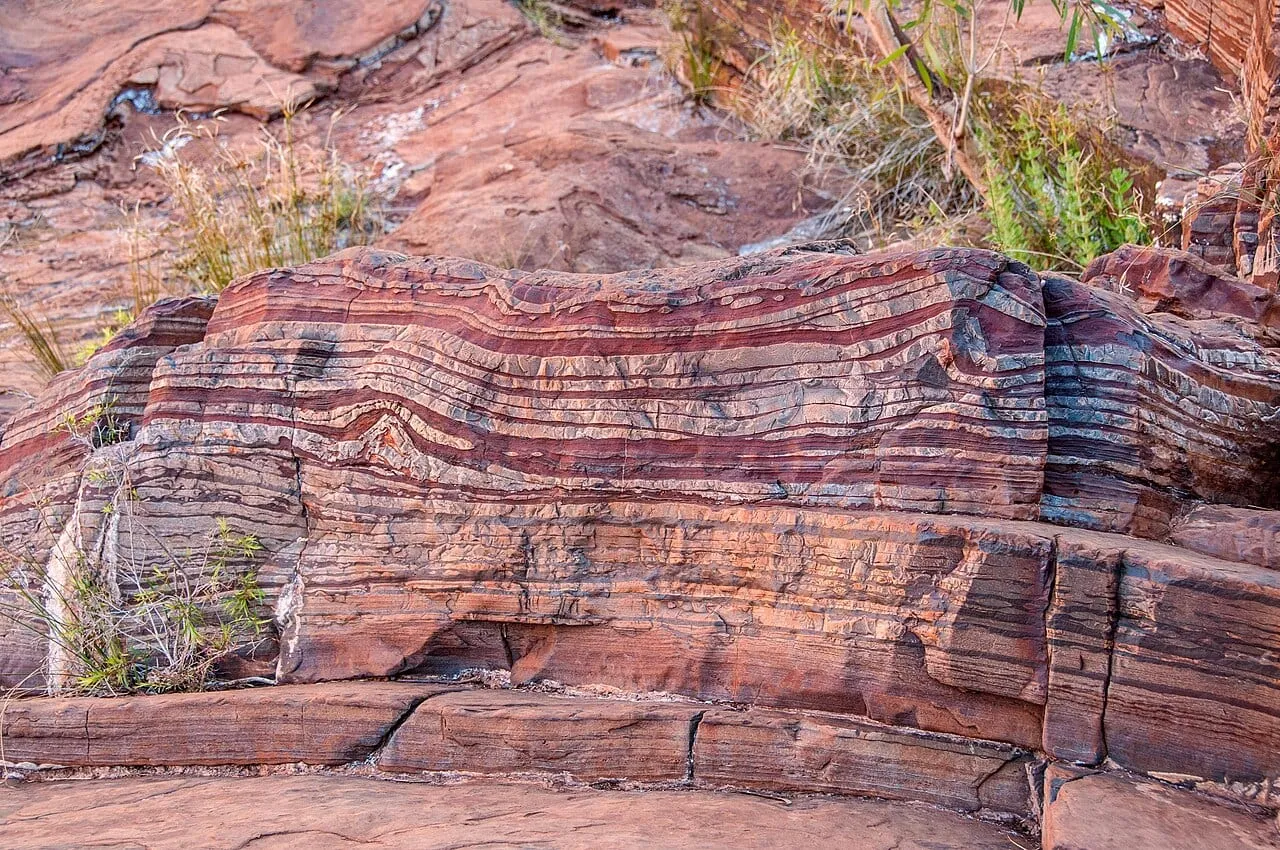
Banded iron formation
An ancient rock of alternating iron-oxide and chert bands: the record of oxygen beginning to build up on Earth, and the main source of iron ore.