Mineral
Strontianite
SrCO₃Stronsiyanit
The strontium carbonate mineral that gave strontium its name; found at Strontian in Scotland and used in sugar making in the 19th century.
- Popularly: Ore and raw material
- Ore
- Industrial
.jpg)
In short
Strontianite is a mineral made of strontium and carbon (strontium carbonate, SrCO₃). It is colourless, grey, pale yellow or pale green and forms needles, long prisms or fibrous groups. It is named after the village of Strontian in Scotland, where in 1790 signs of a new element were noticed; the element strontium is named after the same village. Strontianite is rare and usually found in small amounts; today the main ore of strontium is celestine.
Photos

How does it form?
Strontianite occurs in low-temperature hydrothermal veins and in veins inside rocks such as limestone, marl and chalk; it is also seen in geodes and in nodules (concretions). It is common in the rare rocks called carbonatites. Baryte, calcite, celestine and sulfur accompany it. At nearly all of its dozens of known localities it occurs in small amounts.
What is it used for?
- Source of strontium: The two main ore minerals of strontium are celestine (SrSO₄) and strontianite (SrCO₃). Today strontium compounds are made largely from celestine; according to the U.S. Geological Survey (USGS), the largest use in the USA is in drilling fluids, followed by ceramic ferrite magnets and by fireworks and signal flares.
- Sugar making: In the 19th century strontianite was used in the “strontianite process”, which recovered the sugar left in sugar-beet molasses (the process was developed in 1871). Around 1900 cheaper methods based on celestine replaced it.
- Collecting: Its crystals in sheaves and radiating groups interest mineral collectors.
In Türkiye
In Türkiye strontium is associated with celestine, not strontianite: celestine deposits occur in the gypsum-bearing beds of the Sivas Basin, especially around Ulaş. See the Celestine page for details.
What determines its value?
As an ore, the value of strontianite depends on its strontium carbonate content, the scarcity of impurities such as calcium and barium, the size of the deposit and the cost of mining; because strontianite deposits are mostly small, the main source of strontium today is celestine. Collectors look for needle-like or sheaf-shaped, coloured and undamaged crystal groups, attractive associations with sulfur or celestine, and specimens from historic places such as Strontian or the Münsterland.
This information is educational, not buying, selling or investment advice. Value varies enormously with quality and treatment.
How to recognise it
- 1
Its colourless, grey, pale green or yellowish crystals have a glassy shine; broken surfaces can look resinous.
- 2
Its crystals are usually needles or long prisms; it also forms fibrous, columnar and rounded groups. Twinning is common: threefold and fourfold groups are seen.
- 3
Its hardness is 3.5 and its specific gravity is about 3.8: clearly heavier than calcite (about 2.7) and lighter than baryte (about 4.5).
- 4
In a flame test strontium gives the flame a deep red colour.
- 5
It can glow under ultraviolet (UV) light, and may also glow when heated (thermoluminescence).
Fakes and imitations
What shops usually don’t tell you:
- Strontianite can be confused with aragonite and witherite, which have the same crystal arrangement, and also with celestine. Celestine is a sulfate and strontianite a carbonate. A laboratory analysis is needed for certain identification.
Myths and misconceptions
MythStrontianite is radioactive because it contains strontium.
FactThe natural strontium in strontianite is not radioactive. Strontium-90, which is mentioned in the news, is a fission product made in nuclear weapons tests and nuclear reactors and is not found in natural strontianite.
MythStrontianite and celestine are the same mineral, both being “strontium stones”.
FactBoth are ores of strontium but they are different minerals: strontianite is a carbonate (SrCO₃) and celestine a sulfate (SrSO₄). Today the main ore of strontium is the more widespread celestine.
Did you know?
The discovery of the element strontium rests on this mineral: in 1790 the physician Adair Crawford noticed that the “heavy spar” in the lead ore from Strontian was different. Humphry Davy isolated the element by electrolysis in 1808.
Between 1874 and 1900 about 650 strontianite mines opened in the Münsterland region of Germany; the mineral was used to win sugar from sugar-beet molasses. The last mine closed in 1945.
Lead mining at Strontian began in 1722, when galena was found in the hills; in later years the area yielded strontianite as well as lead.
Where is it found?
Loading map…
- Strontian, Highland (formerly Argyll), Scotland · Type localityThe village that gave its name to the mineral and to the element strontium; lead has been mined in the area since 1722
- Drensteinfurt and surroundings, Münsterland, Westphalia, Germany · Historic sourceBetween 1874 and 1900 about 650 strontianite mines opened here; Drensteinfurt was the mining centre and the last mine closed in 1945
- Leogang, Salzburg, Austria · Known localityAlpine mines listed by the Handbook of Mineralogy for strontianite
- Sierra Mojada, Coahuila, Mexico · Known localityA mining district in Coahuila; both the Handbook of Mineralogy and Wikipedia name it for strontianite
- Khibiny Mountains, Kola Peninsula, Russia · Known localityAn alkaline rock massif; strontianite also occurs in carbonatites
- Strontium Hills, near Barstow, California, USA · Known localityAccording to the Handbook of Mineralogy, hills about 16 km north of Barstow; strontianite specimens are known from Barstow
- Rosiclare and Cave-in-Rock area, Hardin County, Illinois, USA · Known localityMines of the Illinois–Kentucky fluorspar district
- Nepean, Ottawa area, Ontario, Canada · Known localityAn Ontario locality named for strontianite by the Handbook of Mineralogy and Wikipedia
Locations are approximate to protect sites. Red dots mark places in Türkiye. Open in the big map →
Frequently asked questions
What is strontianite?
Strontianite is a mineral made of strontium and carbon (strontium carbonate, SrCO₃). It is colourless, grey, pale yellow or pale green and forms needles, long prisms or fibrous groups. It is named after the village of Strontian in Scotland, where in 1790 signs of a new element were noticed; the element strontium is named after the same village. Strontianite is rare and usually found in small amounts; today the main ore of strontium is celestine.
What is strontianite used for?
Source of strontium: The two main ore minerals of strontium are celestine (SrSO₄) and strontianite (SrCO₃). Today strontium compounds are made largely from celestine; according to the U.S. Geological Survey (USGS), the largest use in the USA is in drilling fluids, followed by ceramic ferrite magnets and by fireworks and signal flares. Sugar making: In the 19th century strontianite was used in the “strontianite process”, which recovered the sugar left in sugar-beet molasses (the process was developed in 1871). Around 1900 cheaper methods based on celestine replaced it.
How hard is strontianite?
It has a hardness of 3.5 on the Mohs scale. A fingernail cannot scratch it, but a steel knife can. Its specific gravity is 3.74–3.78 g/cm³.
Where is strontianite found?
Its best-known localities: Strontian, Highland (formerly Argyll), Scotland; Drensteinfurt and surroundings, Münsterland, Westphalia, Germany; Leogang, Salzburg, Austria; Sierra Mojada, Coahuila, Mexico; Khibiny Mountains, Kola Peninsula, Russia.
How can you tell if strontianite is real?
Its colourless, grey, pale green or yellowish crystals have a glassy shine; broken surfaces can look resinous. Its crystals are usually needles or long prisms; it also forms fibrous, columnar and rounded groups. Twinning is common: threefold and fourfold groups are seen. Its hardness is 3.5 and its specific gravity is about 3.8: clearly heavier than calcite (about 2.7) and lighter than baryte (about 4.5). Strontianite can be confused with aragonite and witherite, which have the same crystal arrangement, and also with celestine. Celestine is a sulfate and strontianite a carbonate. A laboratory analysis is needed for certain identification.
Is strontianite valuable?
On the “street to diamond” value ladder it sits on step 4 of nine: Fine dimension stone and ore. As an ore, the value of strontianite depends on its strontium carbonate content, the scarcity of impurities such as calcium and barium, the size of the deposit and the cost of mining; because strontianite deposits are mostly small, the main source of strontium today is celestine. Collectors look for needle-like or sheaf-shaped, coloured and undamaged crystal groups, attractive associations with sulfur or celestine, and specimens from historic places such as Strontian or the Münsterland.
Sources
- Strontianite · Wikipedia
- Handbook of Mineralogy: Strontianite · Mineralogical Society of America
- Strontianit · Wikipedia (German)
- Strontium · Wikipedia
- Strontian · Wikipedia
- Mineral Commodity Summaries 2026: Strontium · U.S. Geological Survey, 2026
- Stratigraphy, Geochemistry and Depositional Environment of the Celestine-bearing Gypsiferous Formations of the Tertiary Ulaş-Sivas Basin, East-Central Anatolia (Turkey) · Turkish Journal of Earth Sciences 10 (1) (E. Tekin), 2001
External links
Draft: awaiting expert reviewReport an error ↗
On the same step
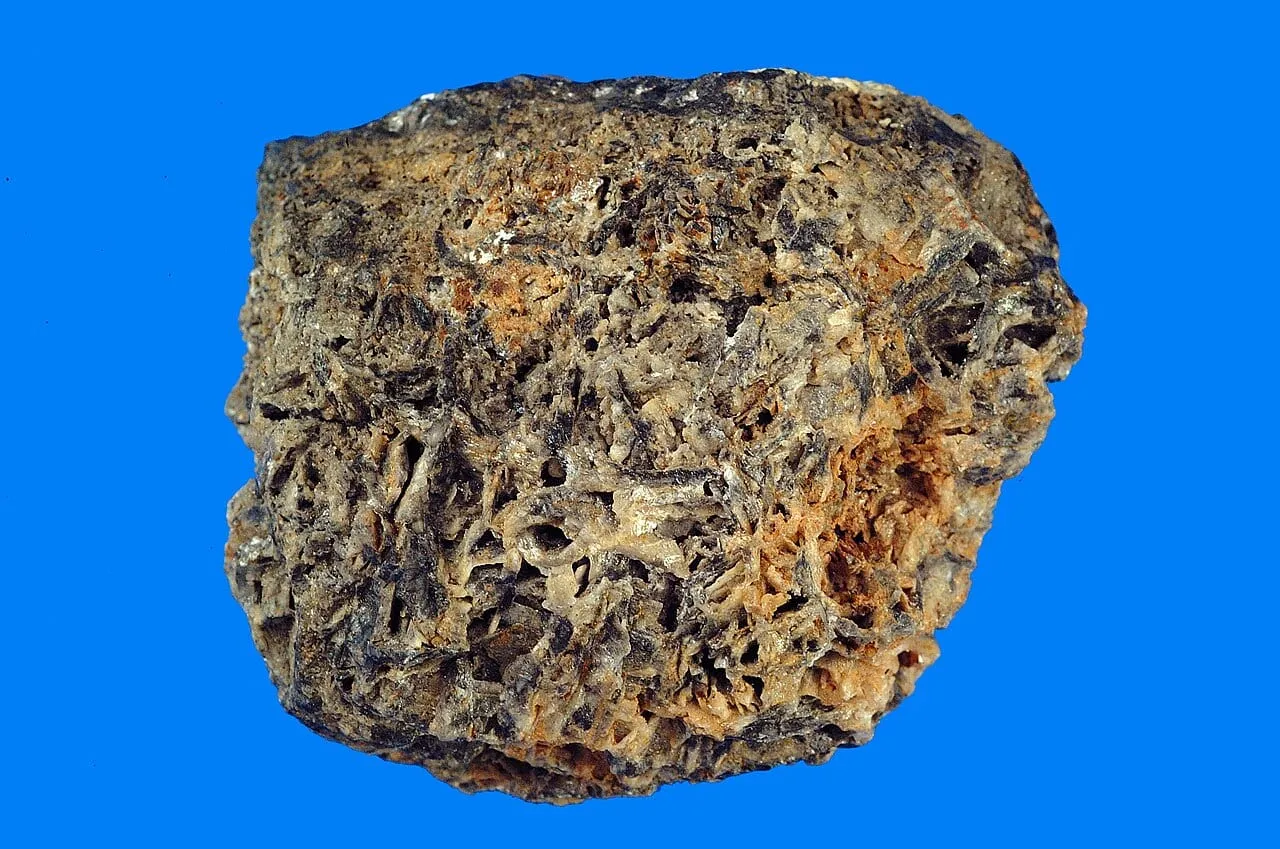
Anglesite
A heavy lead sulfate mineral with a diamond-like shine that grows as a crust around galena; it is named after the island of Anglesey in Wales.
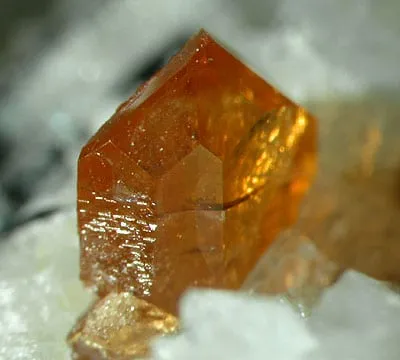
Bastnäsite
One of the main ore minerals of the “rare earth” elements such as cerium, lanthanum and neodymium; a raw material for magnets and electronics.
Borax (tincal)
A sodium borate that dissolves in water and crumbles to white powder in dry air; one of the world’s key tincal deposits is at Kırka in Eskişehir.