Mineral
Rhodonite
(Mn,Fe,Mg,Ca)SiO₃Rodonit
The rose-pink stone with black manganese veins: an ornamental stone of the Russian court and the official gemstone of Massachusetts.
- Popularly: Semi-precious stone
- Ornamental

In short
Rhodonite is a pink-red silicate mineral containing manganese. It gets its rose colour from manganese and is often marked with black manganese oxide veins or patches. It usually occurs in massive form and is cut and polished into cabochons, beads, small carvings and decorative slabs. Its name comes from the Greek word rhodon, “rose”.
Photos

How does it form?
Rhodonite forms in manganese-rich deposits: when hot fluids, the heat of magma or regional metamorphism transform manganese-bearing rocks, and sometimes through sedimentary processes. Its rose-pink colour comes from divalent manganese (Mn²⁺). When the surface of the stone is exposed to air and water, the manganese oxidises and turns brown or black, which is why rhodonite so often looks black-veined and patchy. Iron, magnesium, calcium and sometimes zinc replace manganese and change the composition; the zinc-bearing variety is called fowlerite.
What is it used for?
- Ornamental stone: Massive rhodonite is worked into cabochons, beads, small carvings and decorative slabs. At the Serrana mine in the Tarragona area of Spain, a mixture of rhodonite and pyroxmangite is extracted for decorative slabs and cabochons.
- Architecture and monuments: In the 19th century the deposits in the Ural Mountains were worked as ornamental stone; the tomb of Tsarina Maria Alexandrovna was built from a block from this area.
- Collecting: Transparent, bright pink crystals from places such as Broken Hill, Morro da Mina in Brazil and Peru are prized by collectors.
What determines its value?
What matters most in rhodonite is the vividness and saturation of the pink and the pattern of the black veins; stones that have turned brown or are dominated by black oxides are less sought after. Smooth-polishing, crack-free, large pieces are valued as ornamental stone. Transparent red crystals that can be cut are far rarer; but being soft and having perfect cleavage, they are easily damaged, so they are sought mostly as collector specimens.
This information is educational, not buying, selling or investment advice. Value varies enormously with quality and treatment.
How to recognise it
- 1
Its colour runs from rose pink to reddish brown, with typical black manganese oxide veins or patches; surface oxidation can turn the colour brown or black.
- 2
It is much harder than rhodochrosite, the other pink manganese mineral: rhodonite has a hardness of 5.5–6.5, rhodochrosite 3.5–4.
- 3
Its specific gravity is about 3.6, noticeably heavier than the look-alike pink quartz (2.65).
- 4
Crystals are rare and thick and tabular in shape; it is usually found in massive form. It has two perfect cleavages crossing at almost a right angle (about 92.5°).
Myths and misconceptions
MythRhodonite and rhodochrosite are the same stone.
FactBoth are pink manganese minerals with similar names, but rhodonite is a silicate and rhodochrosite a carbonate. Rhodochrosite is noticeably softer (3.5–4, against 5.5–6.5).
What is it believed to be good for?
This section reports beliefs; it is not health information. There is no scientific evidence for these claims and no stone replaces medical treatment.
The meanings people give this stone, and who holds them:
- In Türkiye some news and lifestyle sites claim that rhodonite balances the heart chakra, heals heartbreak and old emotional wounds, calms anger and resentment, and strengthens self-love and confidence.
- The same sources also say that rhodonite reduces stress and has positive effects on the heart and circulation.
What science says
There is no scientific evidence that rhodonite heals emotions, calms anger or helps the heart and circulation; for heart or circulation complaints, see a doctor rather than relying on a stone. The stone's pink colour comes from the element manganese; no effect on mood has been shown.
Did you know?
The tomb of the Russian Tsarina Maria Alexandrovna in the Peter and Paul Cathedral in St Petersburg, completed in 1906, was built from a block of rhodonite from the deposits near Yekaterinburg.
In 1979 rhodonite was made the official gemstone of the US state of Massachusetts.
In his 1913 book, George F. Kunz gives rhodonite as the stone for Russia in his list of stones that represent countries.
Where is it found?
Loading map…
- Yekaterinburg area, Ural Mountains, Russia · Historic sourceThe main deposits worked as ornamental stone in the 19th century were here; the tomb of Tsarina Maria Alexandrovna in St Petersburg was built from a block from this area
- Långban, Värmland, Sweden · Historic sourceThe Pajsberg and Långban iron and manganese mines yield small, brilliant, translucent crystals
- Franklin, New Jersey, USA · Known localityZinc-bearing rhodonite called fowlerite forms large, rough crystals in limestone with franklinite and zinc ores
- Broken Hill, New South Wales, Australia · Known localityGem-quality crystals
- Conselheiro Lafaiete (Morro da Mina), Minas Gerais, Brazil · Known localityGem-quality crystals
- Huallanca (Chiurucu), Ancash, Peru · Known localityTransparent, sharp, bright pink crystals from the San Martín mine
- Noda, Iwate Prefecture, Japan · Known localityThe Noda-Tamagawa mine, one of many places in Japan that yield rhodonite
- El Molar, Tarragona, Spain · Known localityA mixture of rhodonite and pyroxmangite is extracted from the Serrana mine for decorative slabs and cabochons
- Butte, Silver Bow County, Montana, USA · Known localityA rhodonite locality named in the Handbook of Mineralogy
Locations are approximate to protect sites. Red dots mark places in Türkiye. Open in the big map →
Frequently asked questions
What is rhodonite?
Rhodonite is a pink-red silicate mineral containing manganese. It gets its rose colour from manganese and is often marked with black manganese oxide veins or patches. It usually occurs in massive form and is cut and polished into cabochons, beads, small carvings and decorative slabs. Its name comes from the Greek word rhodon, “rose”.
What is rhodonite used for?
Ornamental stone: Massive rhodonite is worked into cabochons, beads, small carvings and decorative slabs. At the Serrana mine in the Tarragona area of Spain, a mixture of rhodonite and pyroxmangite is extracted for decorative slabs and cabochons. Architecture and monuments: In the 19th century the deposits in the Ural Mountains were worked as ornamental stone; the tomb of Tsarina Maria Alexandrovna was built from a block from this area. Collecting: Transparent, bright pink crystals from places such as Broken Hill, Morro da Mina in Brazil and Peru are prized by collectors.
How hard is rhodonite?
It has a hardness of 5.5–6.5 on the Mohs scale. It can scratch glass; a steel knife scratches it only with difficulty. Its specific gravity is 3.57–3.76 g/cm³.
Where is rhodonite found?
Its best-known localities: Yekaterinburg area, Ural Mountains, Russia; Långban, Värmland, Sweden; Franklin, New Jersey, USA; Broken Hill, New South Wales, Australia; Conselheiro Lafaiete (Morro da Mina), Minas Gerais, Brazil.
How can you tell if rhodonite is real?
Its colour runs from rose pink to reddish brown, with typical black manganese oxide veins or patches; surface oxidation can turn the colour brown or black. It is much harder than rhodochrosite, the other pink manganese mineral: rhodonite has a hardness of 5.5–6.5, rhodochrosite 3.5–4. Its specific gravity is about 3.6, noticeably heavier than the look-alike pink quartz (2.65).
Is rhodonite valuable?
On the “street to diamond” value ladder it sits on step 5 of nine: Ornamental stone. What matters most in rhodonite is the vividness and saturation of the pink and the pattern of the black veins; stones that have turned brown or are dominated by black oxides are less sought after. Smooth-polishing, crack-free, large pieces are valued as ornamental stone. Transparent red crystals that can be cut are far rarer; but being soft and having perfect cleavage, they are easily damaged, so they are sought mostly as collector specimens.
What is rhodonite good for?
In Türkiye some news and lifestyle sites claim that rhodonite balances the heart chakra, heals heartbreak and old emotional wounds, calms anger and resentment, and strengthens self-love and confidence. The same sources also say that rhodonite reduces stress and has positive effects on the heart and circulation. There is no scientific evidence that rhodonite heals emotions, calms anger or helps the heart and circulation; for heart or circulation complaints, see a doctor rather than relying on a stone. The stone's pink colour comes from the element manganese; no effect on mood has been shown. This section reports beliefs; it is not health information. There is no scientific evidence for these claims and no stone replaces medical treatment.
Sources
- Handbook of Mineralogy: Rhodonite · Mineralogical Society of America
- Rhodonite · Wikipedia
- Rhodochrosite · Wikipedia
- Massachusetts State Gem: Rhodonite · State Symbols USA
- The Curious Lore of Precious Stones (G. F. Kunz) · J. B. Lippincott Company (Project Gutenberg), 1913
- Rodonit Taşı Ne İşe Yarar? · benguturk.com
External links
Draft: awaiting expert reviewReport an error ↗
On the same step
Agate
The banded variety of chalcedony: it grows layer by layer in hollows in volcanic rock and shows a new pattern every time it is cut.
Almandine
The commonest garnet: a deep red, iron-rich stone named after the ancient city of Alabanda in Anatolia, used in jewellery and in sandpaper alike.
Amazonite
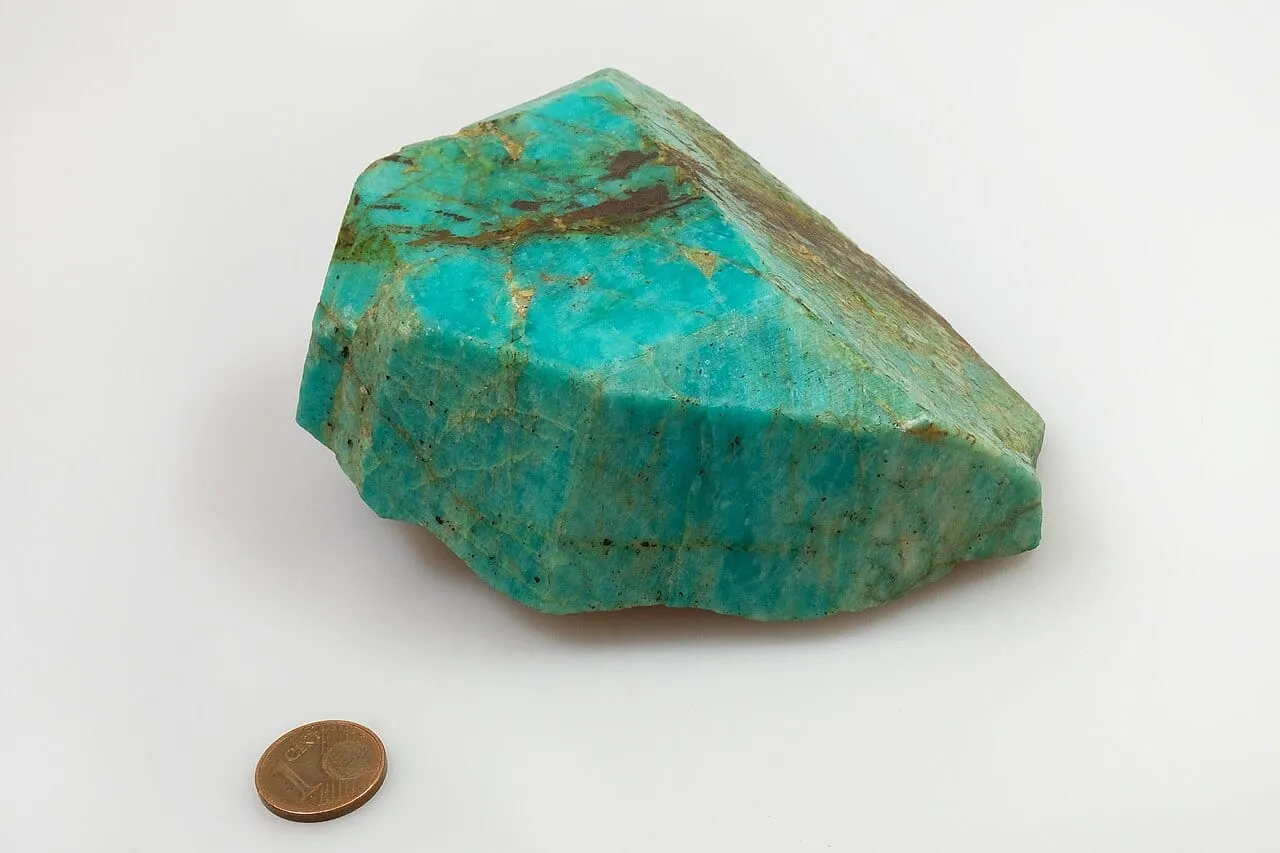
A turquoise-like green-blue feldspar: a variety of microcline worn as jewellery for more than three thousand years, but it can release lead.