Mineral
Prehnite
Ca₂Al₂Si₃O₁₀(OH)₂Prehnit
A pale green mineral that grows like bunches of grapes in basalt cavities: not a zeolite, but found with zeolites.
Also known as: Cape emerald (trade name for fine faceted material)
- Popularly: Semi-precious stone
- Gemstone
- Ornamental

In short
Prehnite is a silicate mineral containing calcium and aluminium, mostly pale green in colour. Instead of distinct crystals it usually forms kidney-shaped, grape-like or globular clusters. It is named after Colonel Hendrik von Prehn, commander of the Dutch colony in South Africa in the 18th century. Translucent green material is cut as cabochons and beads, and the rare transparent pieces as faceted stones.
Photos

How does it form?
Prehnite is a secondary or hydrothermal mineral: hot, mineral-rich waters passing through the cavities and cracks of dark volcanic rocks such as basalt deposit prehnite. Less often it is found in granites, syenites and gneisses. It is a typical product of low-grade metamorphism. It often forms rounded clusters like bunches of grapes, kidneys or stalactites on the wall of a cavity.
What is it used for?
- Jewellery: Translucent green material is worked into cabochons, beads and small carvings. Transparent, clean pieces are cut as faceted stones; these are sometimes sold as “Cape emerald”.
- Decoration and collecting: Rounded, pale green clusters and well-formed crystals are sought after by collectors; it is also sold as tumbled stones.
What determines its value?
What matters most in prehnite is its colour and translucency: vivid, even green and clean, translucent material is sought after for cabochons and beads. Transparent stones clean enough to be faceted are rare. Crystal clusters and attractive rounded specimens are valued by collectors. The extensive deposits around Wave Hill in Australia supply jewellery-grade material.
This information is educational, not buying, selling or investment advice. Value varies enormously with quality and treatment.
How to recognise it
- 1
Its colour runs from pale green to dark green and yellowish green; white, grey, yellow, pink, blue and, rarely, orange examples also occur. Its lustre is glassy to slightly pearly.
- 2
It mostly occurs not in distinct crystals but as kidney-shaped, grape-like, stalactitic or globular clusters; well-formed crystals with a square cross-section are very rare.
- 3
Its hardness is 6–6.5; it is brittle and breaks unevenly. It is mostly translucent and only rarely transparent.
- 4
It is found in veins and cavities of dark volcanic rocks such as basalt, together with zeolites, datolite, calcite and epidote.
Myths and misconceptions
MythPrehnite is a zeolite.
FactPrehnite is not a zeolite; it is a silicate containing calcium and aluminium. The confusion may come from its occurring in the same cavities as zeolites.
MythThe stone sold as “Cape emerald” is emerald.
Fact“Cape emerald” is a trade name for clean, faceted prehnite; emerald is the green variety of beryl. Prehnite is much softer than emerald (6–6.5, against 7.5–8) and is a different mineral.
What is it believed to be good for?
This section reports beliefs; it is not health information. There is no scientific evidence for these claims and no stone replaces medical treatment.
The meanings people give this stone, and who holds them:
- Today crystal-therapy practitioners regard prehnite as a “stone of unconditional love”, link it to the heart and solar plexus chakras, and claim that it calms anger and brings peace, dissolves repressed memories and unpleasant feelings, and reduces nightmares, phobias and deep fears.
- The same circles claim that prehnite helps the health of bones, teeth, hair and nails, the circulation, the kidneys and the lungs, helps the body get rid of fats and toxins, and helps in gout and blood disorders.
What science says
There is no scientific evidence that prehnite calms emotions, reduces fears or helps bone, circulatory, kidney or lung health; conditions such as gout, blood disorders or lasting anxiety call for medical assessment.
Did you know?
It is named after Colonel Hendrik von Prehn (1733–1785), military commander of the Dutch Cape Colony from 1768 to 1780; the mineral was described in 1788 from the Karoo dolerites near Cradock in South Africa.
In April 2000 rare orange prehnite was found in the Kalahari manganese fields of South Africa.
Prehnite is an indicator of low-grade metamorphism: it marks the range of temperature and pressure called the prehnite-pumpellyite facies.
Where is it found?
Loading map…
- Cradock area, Eastern Cape, South Africa · Type localityPrehnite was described in 1788 from the Karoo dolerites here
- Wave Hill Station area, Northern Territory, Australia · Major depositExtensive gem-quality prehnite deposits in the basalt tableland
- Kalahari manganese field (Hotazel area), Northern Cape, South Africa · Known localityRare orange prehnite was found here in April 2000
- Jeffrey Mine, Asbestos (Val-des-Sources), Quebec, Canada · Known localityKnown for its well-formed, square-sectioned crystals
- Copper Valley, Brandberg Mountains, Namibia · Known localityA place the Handbook of Mineralogy names for fine specimens
- Le Bourg-d'Oisans (La Combe-de-la-Selle), Isère, France · Historic sourceAn Alpine locality the Handbook of Mineralogy names for fine specimens
- Paterson, New Jersey, USA · Historic sourceA classic US locality named in the Handbook of Mineralogy and Britannica
Locations are approximate to protect sites. Red dots mark places in Türkiye. Open in the big map →
Frequently asked questions
What is prehnite?
Prehnite is a silicate mineral containing calcium and aluminium, mostly pale green in colour. Instead of distinct crystals it usually forms kidney-shaped, grape-like or globular clusters. It is named after Colonel Hendrik von Prehn, commander of the Dutch colony in South Africa in the 18th century. Translucent green material is cut as cabochons and beads, and the rare transparent pieces as faceted stones.
What is prehnite used for?
Jewellery: Translucent green material is worked into cabochons, beads and small carvings. Transparent, clean pieces are cut as faceted stones; these are sometimes sold as “Cape emerald”. Decoration and collecting: Rounded, pale green clusters and well-formed crystals are sought after by collectors; it is also sold as tumbled stones.
How hard is prehnite?
It has a hardness of 6–6.5 on the Mohs scale. It can scratch glass; a steel knife scratches it only with difficulty. Its specific gravity is 2.8–2.95 g/cm³.
Where is prehnite found?
Its best-known localities: Cradock area, Eastern Cape, South Africa; Wave Hill Station area, Northern Territory, Australia; Le Bourg-d'Oisans (La Combe-de-la-Selle), Isère, France; Paterson, New Jersey, USA; Kalahari manganese field (Hotazel area), Northern Cape, South Africa.
How can you tell if prehnite is real?
Its colour runs from pale green to dark green and yellowish green; white, grey, yellow, pink, blue and, rarely, orange examples also occur. Its lustre is glassy to slightly pearly. It mostly occurs not in distinct crystals but as kidney-shaped, grape-like, stalactitic or globular clusters; well-formed crystals with a square cross-section are very rare. Its hardness is 6–6.5; it is brittle and breaks unevenly. It is mostly translucent and only rarely transparent.
Is prehnite valuable?
On the “street to diamond” value ladder it sits on step 5 of nine: Ornamental stone. What matters most in prehnite is its colour and translucency: vivid, even green and clean, translucent material is sought after for cabochons and beads. Transparent stones clean enough to be faceted are rare. Crystal clusters and attractive rounded specimens are valued by collectors. The extensive deposits around Wave Hill in Australia supply jewellery-grade material.
What is prehnite good for?
Today crystal-therapy practitioners regard prehnite as a “stone of unconditional love”, link it to the heart and solar plexus chakras, and claim that it calms anger and brings peace, dissolves repressed memories and unpleasant feelings, and reduces nightmares, phobias and deep fears. The same circles claim that prehnite helps the health of bones, teeth, hair and nails, the circulation, the kidneys and the lungs, helps the body get rid of fats and toxins, and helps in gout and blood disorders. There is no scientific evidence that prehnite calms emotions, reduces fears or helps bone, circulatory, kidney or lung health; conditions such as gout, blood disorders or lasting anxiety call for medical assessment. This section reports beliefs; it is not health information. There is no scientific evidence for these claims and no stone replaces medical treatment.
Sources
- Handbook of Mineralogy: Prehnite · Mineralogical Society of America
- Prehnite · Wikipedia
- Prehnite · Encyclopaedia Britannica
External links
Draft: awaiting expert reviewReport an error ↗
On the same step
Agate
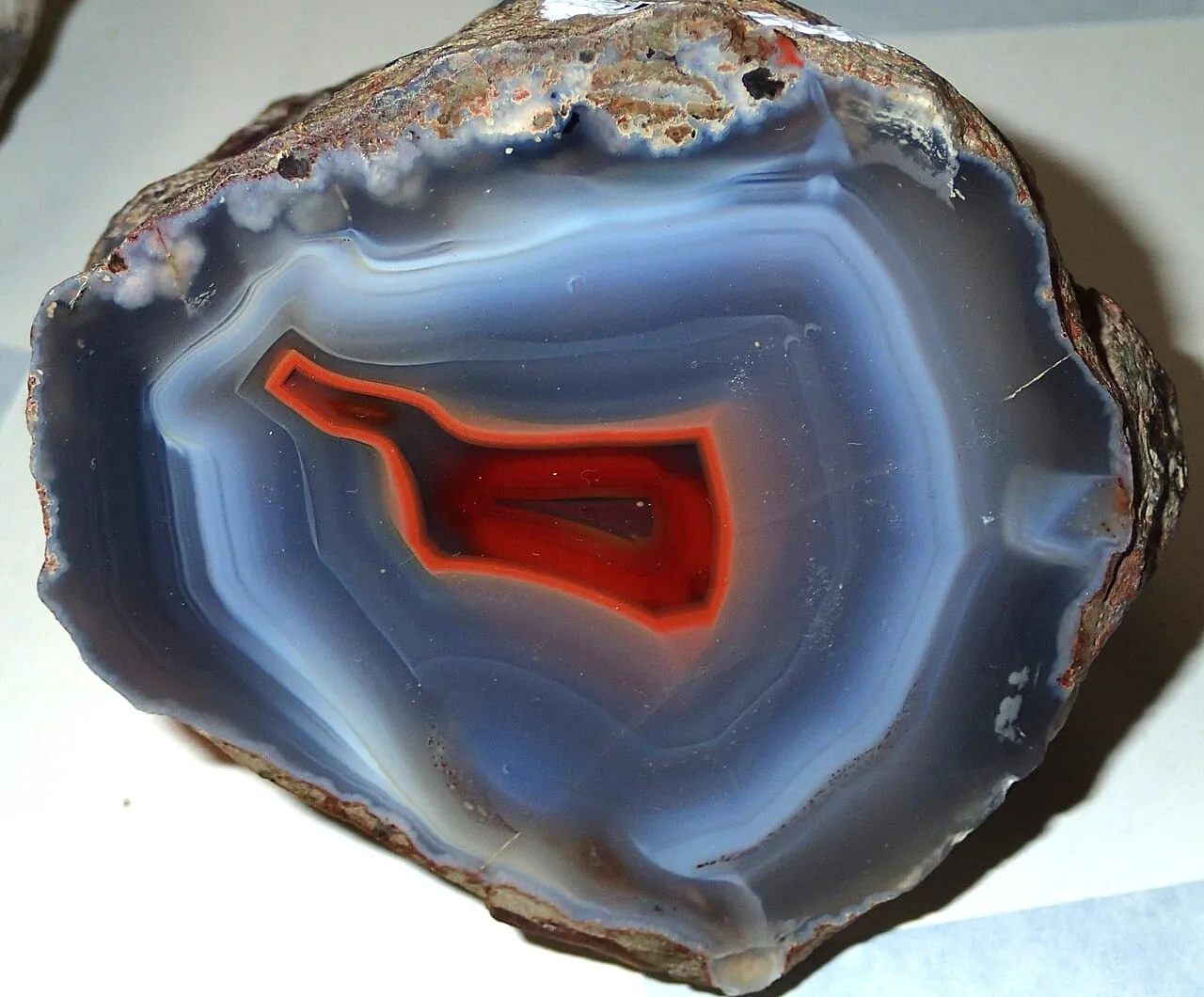
The banded variety of chalcedony: it grows layer by layer in hollows in volcanic rock and shows a new pattern every time it is cut.
Almandine
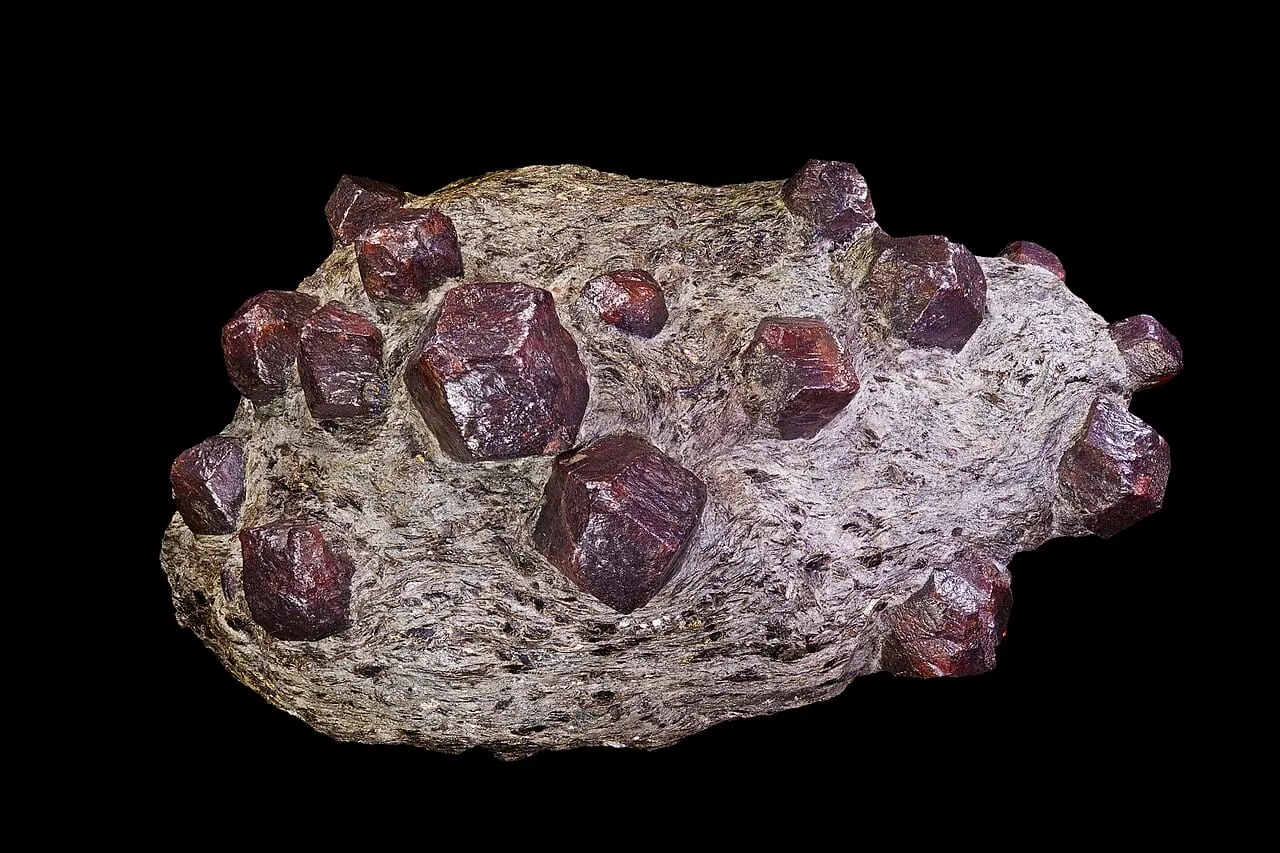
The commonest garnet: a deep red, iron-rich stone named after the ancient city of Alabanda in Anatolia, used in jewellery and in sandpaper alike.
Amazonite
A turquoise-like green-blue feldspar: a variety of microcline worn as jewellery for more than three thousand years, but it can release lead.