VarietyA variety of Jade
Nephrite
Ca₂(Mg,Fe)₅Si₈O₂₂(OH)₂Nefrit
The amphibole kind of jade: made of fine fibres matted together like felt, astonishingly hard to break, and China's jade for thousands of years.
Also known as: Nephrite jade · Pounamu (New Zealand) · Greenstone (New Zealand) · Mutton-fat jade (translucent white nephrite) · Spinach jade (dark greyish-green nephrite)
- Popularly: Semi-precious stone
In short
Nephrite is one of the two stones called “jade”; the other is jadeite. It is made of fibres of the minerals tremolite and actinolite, too fine to see, matted together like felt. This texture gives it great toughness, meaning resistance to breaking. In China, New Zealand and Taiwan it has been used for tools, jewellery and works of art for thousands of years.
Photos
How does it form?
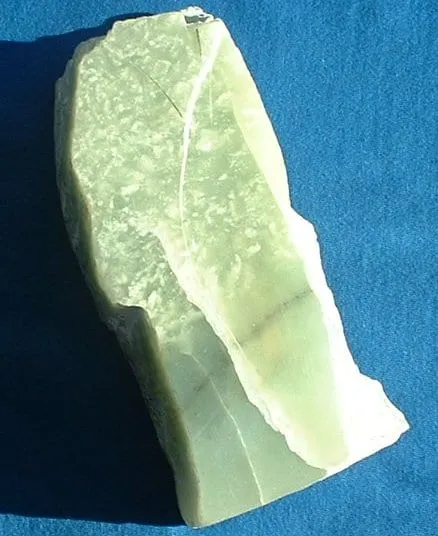
Nephrite is a rock formed when very fine, fibrous crystals of tremolite–actinolite amphiboles grow matted together like felt. Most deposits lie as lens-shaped bodies along the faulted, sheared margins of serpentinites, water-altered rocks derived from ocean crust; the deposits of New Zealand, Canada, Taiwan, Russia and China are of this kind. The Cowell deposits of South Australia, by contrast, are long lenses within metamorphosed dolomitic marble. For the family as a whole, see the jade page.
Because nephrite is so durable, it survives intact after the surrounding rock wears away. Rivers carry it off as pebbles and large boulders; the nephrite of rivers such as those around Hotan in China and the Arahura in New Zealand is gathered this way.
What is it used for?
- Carving and art: Because it can be worked very thin without breaking, it is used for carved vases, sculptures, seals and ceremonial objects; in China the tradition goes back thousands of years.
- Jewellery: It is made into bangles, pendants, beads and ring stones.
- Prehistoric tools: In the Stone Age it was used for axes, chisels and weapons from Europe to New Zealand; nephrite tools have been found in ancient lakeside settlements in Switzerland. The Māori made tools, weapons and ornaments from pounamu.
The world’s main sources
In ancient China nephrite came from now-exhausted deposits in the Yangtze delta in the time of the Liangzhu culture (3400–2250 BC), and from Liaoning and Inner Mongolia in the time of the Hongshan culture (4700–2200 BC). Later the most famous source became the rivers around Hotan. Russia’s nephrite deposits were found in Eastern Siberia in the 19th century. In recent times the main producers have been listed as Australia (Cowell), Canada (British Columbia), New Zealand and Taiwan; in Europe, the Lower Silesia region of Poland is a known source.
What determines its value?
Colour and texture matter most: in China the translucent, pure white to pale yellowish “mutton-fat” jade is the most sought after, while green nephrite should have an even, lively, spotless colour. A fine, tight texture, a good polish and freedom from cracks and blotches raise the value. In carvings, the quality of the craftsmanship and the age of the piece often count for more than the stone itself. Untreated stone is worth far more than dyed or resin-impregnated material.
This information is educational, not buying, selling or investment advice. Value varies enormously with quality and treatment.
How to recognise it
- 1
Polished, it has a soft greasy to glassy lustre; unworked surfaces are dull. It ranges from translucent to opaque and is often mottled or spotted.
- 2
With a hardness of 6–6.5, a steel knife does not scratch it easily. Its real strength is toughness: thanks to its fibrous structure it is hard to break with a blow, and broken surfaces look splintery or granular.
- 3
It is slightly lighter than jadeite (specific gravity about 2.95, against about 3.3 for jadeite); laboratories tell the two apart by density and refractive index.
- 4
Telling it reliably from imitations such as serpentine, aventurine quartzite and glass takes a gem laboratory.
Fakes and imitations
What shops usually don’t tell you:
- Serpentine and bowenite look similar to nephrite and are often sold as “jade”, but they are generally softer. Some of the stones called pounamu in New Zealand are bowenite rather than nephrite.
- Dyed or resin-impregnated stones and green glass may also be sold as nephrite; a treated stone should be clearly declared by the seller.
Myths and misconceptions
MythNephrite and jadeite are the same stone.
FactBoth are called “jade”, but they are different minerals: nephrite is a tremolite–actinolite amphibole, jadeite a pyroxene. The French mineralogist Alexis Damour established the distinction in 1863.
MythNephrite is a second-rate jade next to jadeite.
FactChina's thousands of years of jade art are built on nephrite; jadeite only reached China from Myanmar in the late 1700s. White nephrite from Hotan was sent as tribute to the Chinese court and is still highly valued today.
MythNew Zealand's pounamu is always nephrite.
FactPounamu is mostly nephrite, but the name is also used for bowenite, a translucent kind of serpentine.
What is it believed to be good for?
This section reports beliefs; it is not health information. There is no scientific evidence for these claims and no stone replaces medical treatment.
The meanings people give this stone, and who holds them:
- In 16th-century Europe nephrite was believed to help with kidney pains and colic; that is why it was called lapis nephriticus, Latin for “kidney stone”, and why the name “nephrite” comes from the Greek nephros, “kidney”.
- In Māori culture pounamu is a treasure (taonga); it is believed to absorb “mana”, spiritual power and prestige, as it passes down the generations, and heirloom pieces are sometimes named after former owners.
What science says
There is no scientific evidence that nephrite helps kidney disease or colic; anyone with a kidney complaint should see a doctor rather than rely on a stone. The place of pounamu in Māori culture, by contrast, is not a health claim but a cultural and spiritual value handed down over generations.
Did you know?
The largest known nephrite deposits lie around Cowell in South Australia: in this area, found in 1965, there are more than 100 occurrences within about 10 km², counted as about 90% of the world's reserves.
Nephrite mined in eastern Taiwan was carried all over South-East Asia by a prehistoric trade network that lasted about 3,000 years. This “Maritime Jade Road” is regarded as one of the most extensive sea-based trade networks in a single geological material in the prehistoric world.
Nephrite is the official state mineral of Wyoming in the United States.
Where is it found?
Loading map…
- Cowell, Eyre Peninsula, South Australia · Major depositFound in 1965: more than 100 occurrences within about 10 km²; the largest known nephrite deposits, counted as about 90% of the world's reserves. Green and black nephrite is produced.
- Hotan (Khotan), Xinjiang, China · Historic sourceNephrite carried down by rivers from the Kunlun Mountains; the source of the finest white jade sent as tribute to the Chinese court, including “mutton-fat” jade.
- Eastern Sayan Mountains, Buryatia, Russia · Major depositRussia's main nephrite deposits are in Eastern Siberia; the area around the Alibert graphite mine near Lake Baikal was known in the 19th century for very fine dark green nephrite.
- Dease Lake–Cassiar area, British Columbia, Canada · Major depositWestern Canada is today's main source of nephrite for cutting; nephrite was identified in British Columbia in 1886 but not worked commercially until the 1970s.
- West Coast (Arahura River), South Island, New Zealand · Major depositNephrite called “pounamu” by the Māori; since 1997 all naturally occurring pounamu has belonged to the Ngāi Tahu iwi.
- Jordanów Śląski, Lower Silesia, Poland · Known localityOne of Europe's important nephrite deposits, occurring as pockets and veins in serpentinite.
- Hualien (Fengtian), eastern Taiwan · Historic sourceSource of the prehistoric “Maritime Jade Road”, which lasted about 3,000 years; nephrite mined by indigenous peoples spread across South-East Asia.
Locations are approximate to protect sites. Red dots mark places in Türkiye. Open in the big map →
Frequently asked questions
What is nephrite?
Nephrite is one of the two stones called “jade”; the other is jadeite. It is made of fibres of the minerals tremolite and actinolite, too fine to see, matted together like felt. This texture gives it great toughness, meaning resistance to breaking. In China, New Zealand and Taiwan it has been used for tools, jewellery and works of art for thousands of years.
What is nephrite used for?
Carving and art: Because it can be worked very thin without breaking, it is used for carved vases, sculptures, seals and ceremonial objects; in China the tradition goes back thousands of years. Jewellery: It is made into bangles, pendants, beads and ring stones. Prehistoric tools: In the Stone Age it was used for axes, chisels and weapons from Europe to New Zealand; nephrite tools have been found in ancient lakeside settlements in Switzerland. The Māori made tools, weapons and ornaments from pounamu.
How hard is nephrite?
It has a hardness of 6–6.5 on the Mohs scale. It can scratch glass; a steel knife scratches it only with difficulty. Its specific gravity is 2.9–3.1 g/cm³.
Where is nephrite found?
Its best-known localities: Cowell, Eyre Peninsula, South Australia; Eastern Sayan Mountains, Buryatia, Russia; Dease Lake–Cassiar area, British Columbia, Canada; West Coast (Arahura River), South Island, New Zealand; Hotan (Khotan), Xinjiang, China.
How can you tell if nephrite is real?
Polished, it has a soft greasy to glassy lustre; unworked surfaces are dull. It ranges from translucent to opaque and is often mottled or spotted. With a hardness of 6–6.5, a steel knife does not scratch it easily. Its real strength is toughness: thanks to its fibrous structure it is hard to break with a blow, and broken surfaces look splintery or granular. It is slightly lighter than jadeite (specific gravity about 2.95, against about 3.3 for jadeite); laboratories tell the two apart by density and refractive index. Serpentine and bowenite look similar to nephrite and are often sold as “jade”, but they are generally softer. Some of the stones called pounamu in New Zealand are bowenite rather than nephrite.
Is nephrite valuable?
On the “street to diamond” value ladder it sits on step 6 of nine: Fine ornamental and collector stone. Colour and texture matter most: in China the translucent, pure white to pale yellowish “mutton-fat” jade is the most sought after, while green nephrite should have an even, lively, spotless colour. A fine, tight texture, a good polish and freedom from cracks and blotches raise the value. In carvings, the quality of the craftsmanship and the age of the piece often count for more than the stone itself. Untreated stone is worth far more than dyed or resin-impregnated material.
What is nephrite good for?
In 16th-century Europe nephrite was believed to help with kidney pains and colic; that is why it was called lapis nephriticus, Latin for “kidney stone”, and why the name “nephrite” comes from the Greek nephros, “kidney”. In Māori culture pounamu is a treasure (taonga); it is believed to absorb “mana”, spiritual power and prestige, as it passes down the generations, and heirloom pieces are sometimes named after former owners. There is no scientific evidence that nephrite helps kidney disease or colic; anyone with a kidney complaint should see a doctor rather than rely on a stone. The place of pounamu in Māori culture, by contrast, is not a health claim but a cultural and spiritual value handed down over generations. This section reports beliefs; it is not health information. There is no scientific evidence for these claims and no stone replaces medical treatment.
Family
_(Cowell_Jade,_Proterozoic;_Mount_Geharty_Jade_Mines,_20_km_north_of_Cowell,_eastern_Eyre_Peninsula,_South_Australia)_(15018752488).jpg)
_2_(24602406131).jpg)
Sources
- Nephrite · Wikipedia
- Nefrit (mineral) · Vikipedi
- Jade · Wikipedia
- Jade (Industrial Mineral Opportunities in New South Wales) · Geological Survey of New South Wales
- Jade (1911 Encyclopædia Britannica) · Wikisource, 1911
- Pounamu · Wikipedia
- Cowell, South Australia · Wikipedia
- Petrographic and microprobe study of nephrites from Lower Silesia (SW Poland), Geological Quarterly · Polish Geological Institute
- Jordanów Śląski · Wikipedia
- Mönkh Saridag (Munku-Sardyk) · Wikipedia
- Handbook of Mineralogy: Tremolite · Mineralogical Society of America
External links
Draft: awaiting expert reviewReport an error
On the same step
Achondrite
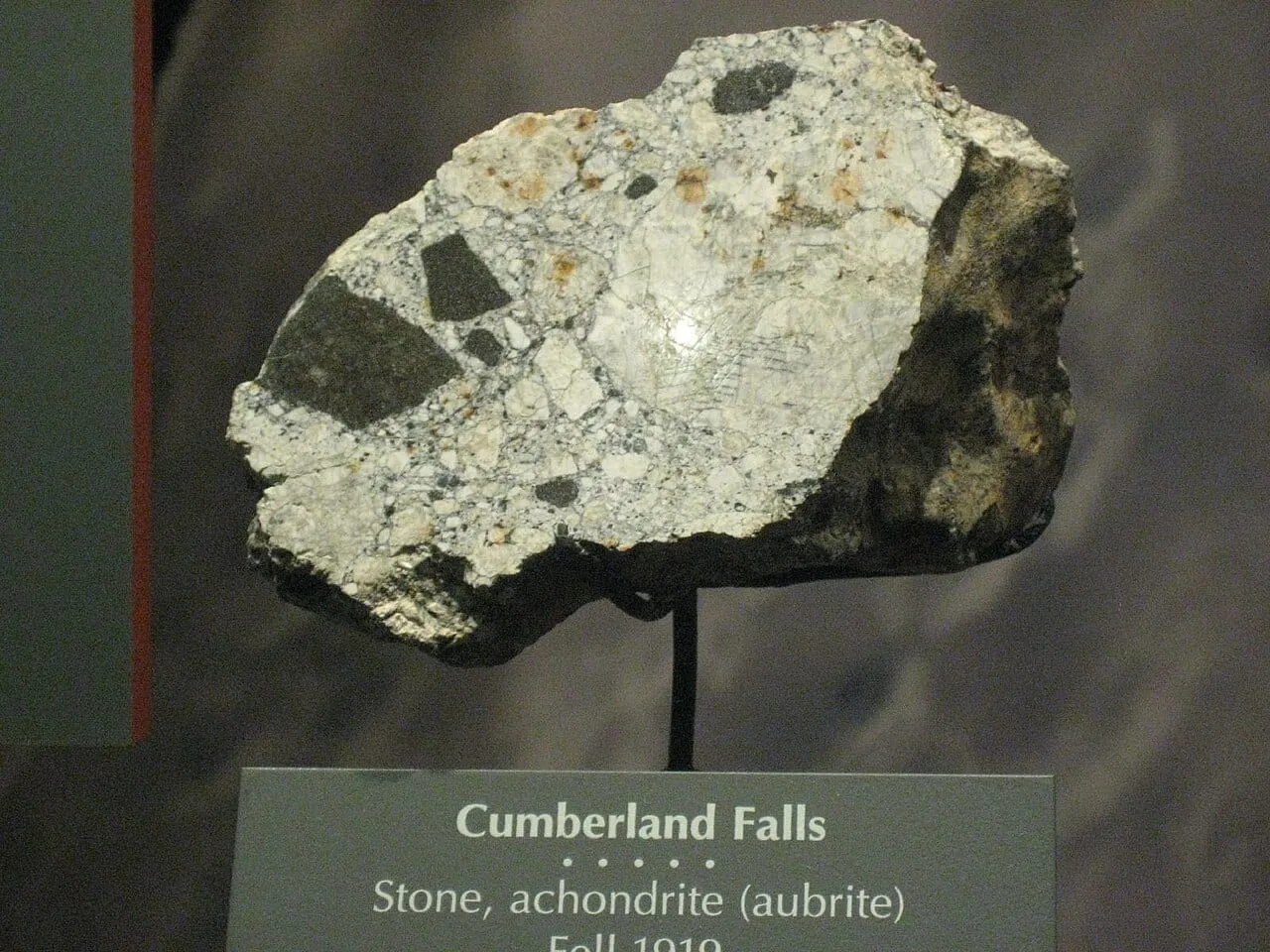
Stony meteorites with no chondrules: rock from melted asteroids, the Moon and Mars, and hard to recognise because they look like Earth rocks.
Amber
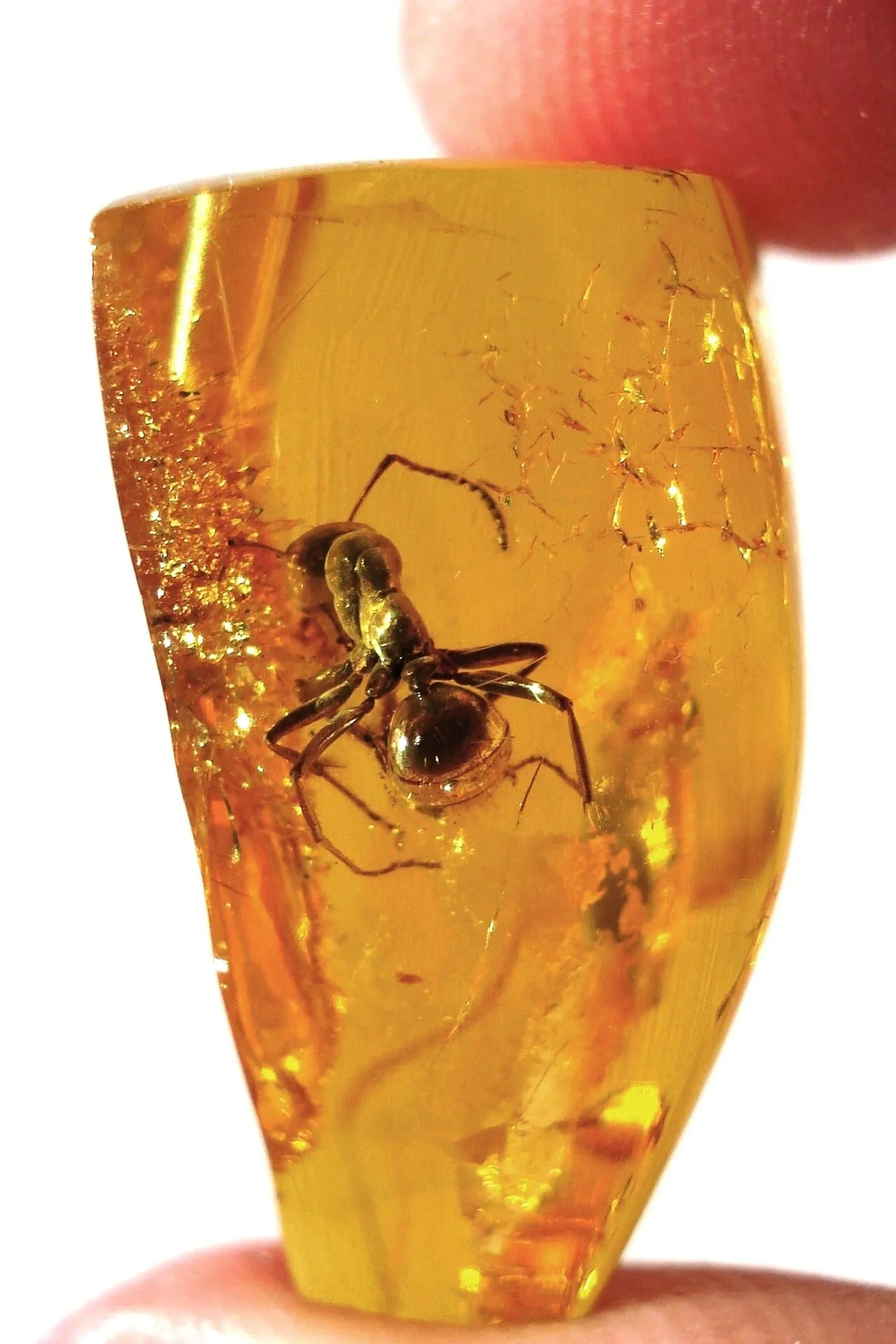
Tree resin fossilised over millions of years: a light, warm organic gem that sometimes holds prehistoric insects.
Ammolite
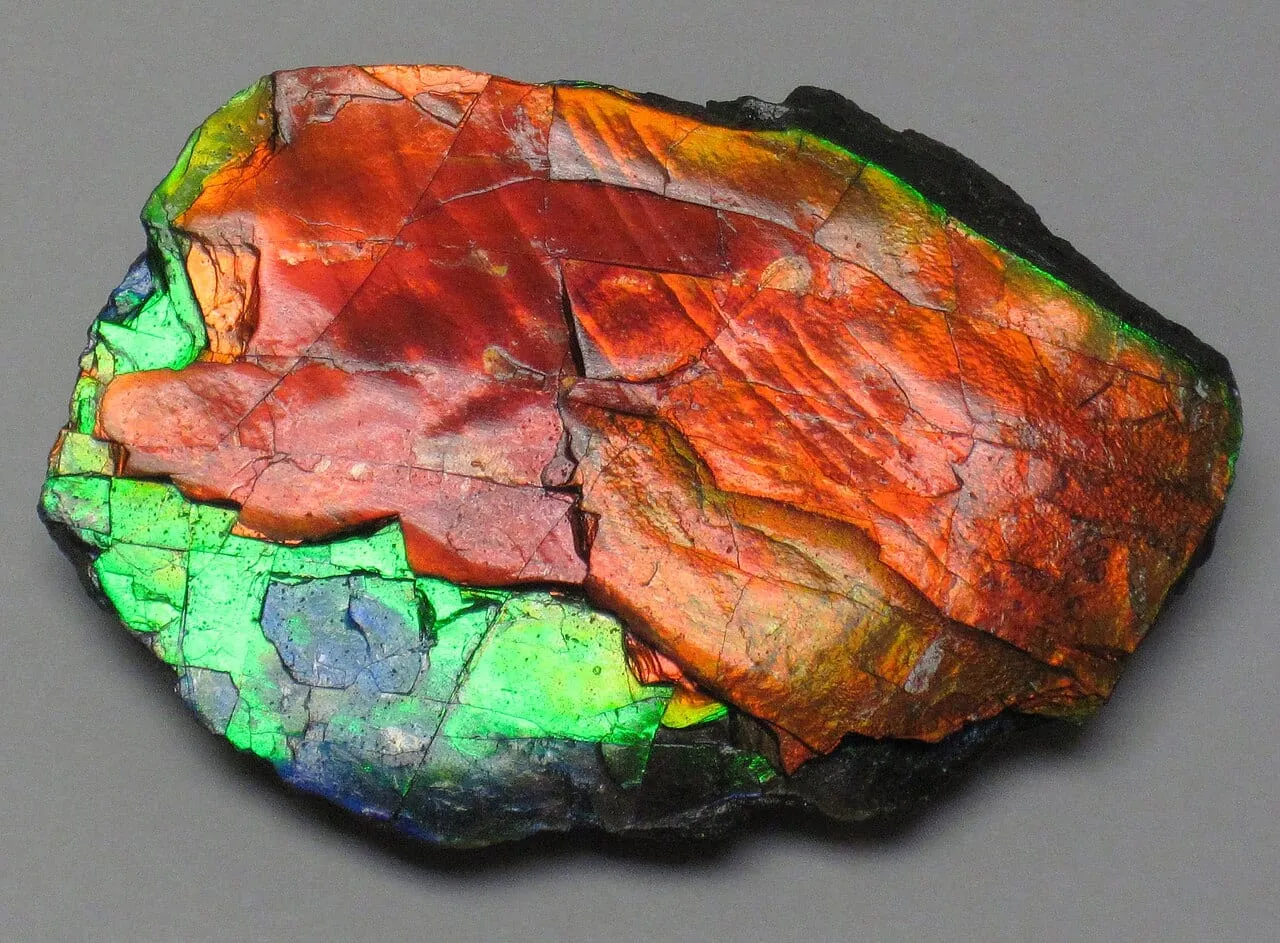
The rainbow-bright layer of fossil ammonite shell; of gem quality it comes only from the Canadian province of Alberta.