Mineral
Cordierite
(Mg,Fe)₂Al₄Si₅O₁₈Kordiyerit
The mineral behind the ceramic in catalytic converters, and, as iolite, a blue-violet gem.
Also known as: Iolite (gem variety) · Dichroite (old name)
- Popularly: Semi-precious stone
- Gemstone
- Industrial
In short
Cordierite is a ring silicate mineral containing magnesium, iron and aluminium. Because it withstands sudden temperature changes so well, synthetic cordierite ceramics are used in catalytic converters and kiln furniture. In nature it most often forms when clay-rich rocks are transformed by heat. Its transparent, blue-violet crystals are cut as the gem iolite.
How does it form?
Cordierite forms mostly when aluminium-rich rocks such as clay and mudstone are transformed by heat (metamorphism). When a mass of magma bakes the surrounding rocks, cordierite is a common mineral in the hornfels that results. It also occurs in schists, gneisses and granulites transformed by high heat and pressure deep in the crust, and in some granites, pegmatites and norites. Over time it can alter to minerals such as mica, chlorite and talc. It is also found in river sediments, as in the gem gravels of Sri Lanka.
What is it used for?
- Catalytic converters: The honeycomb-shaped carrier in the catalytic converters that cut harmful gases in vehicle exhausts is made largely of synthetic cordierite ceramic. Cordierite expands very little when heated, so it does not crack under sudden temperature changes.
- Kiln furniture: Being resistant to thermal shock, it is used in the shelves and supports of ceramic kilns, in kitchenware such as pizza stones, and also in some insulating parts and electric heating elements.
- Jewellery: Transparent, blue-violet crystals are cut as faceted stones under the name iolite.
Iolite
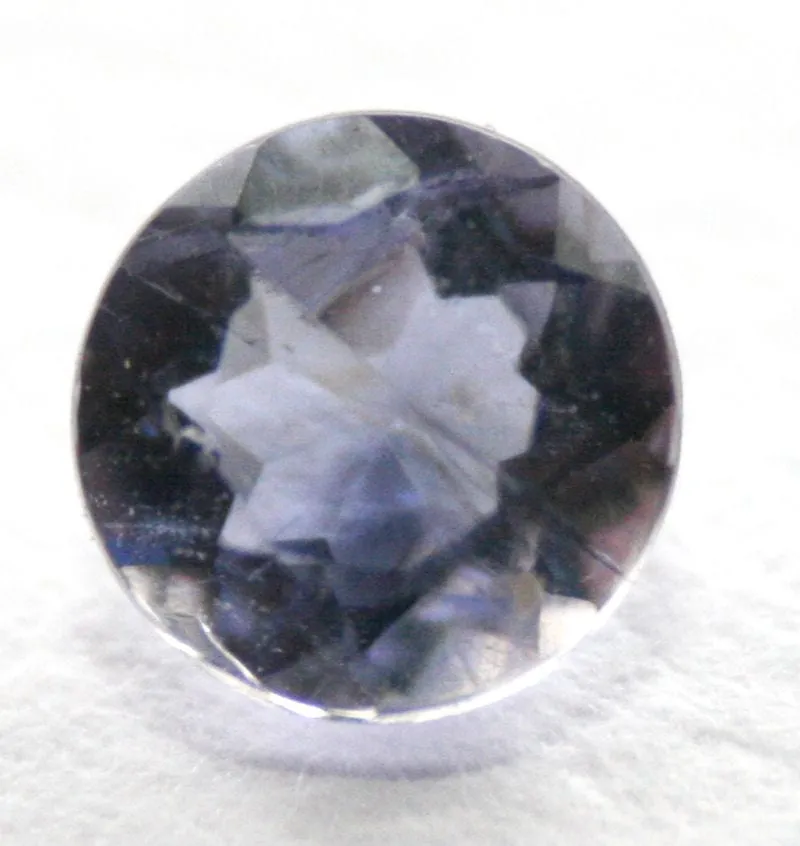
Transparent, blue-violet cordierite is sold as iolite; the name comes from the Greek word for “violet”. See the iolite page for details.
What determines its value?
Cordierite is mostly a rock-forming mineral, so in its natural state it is not a bulk raw material that people seek out; the cordierite used in industry is usually a synthetic ceramic made in factories, and its value is set by the purity and heat resistance of the ceramic. The value of the transparent blue-violet variety cut as a gem, iolite, depends on the saturation and evenness of colour, clarity, cutting the stone in the right direction because of its pleochroism, and size; the details are on the iolite page.
This information is educational, not buying, selling or investment advice. Value varies enormously with quality and treatment.
How to recognise it
- 1
Its colour is blue, smoky blue or bluish violet; greenish, yellowish-brown and grey examples also occur. In rocks it is usually granular or massive, grey-blue and glassy, and can look like quartz.
- 2
It shows strong pleochroism: viewed from different directions, the crystal looks blue, violet or yellowish grey. Its old name dichroite means “two-coloured rock” in Greek.
- 3
Its hardness is 7–7.5; even in the transparent material called iolite there is one clear cleavage direction, so it can split when knocked.
- 4
It is found in rocks such as hornfels, formed when clay-rich rocks are transformed by heat, together with andalusite, sillimanite and garnet. Certain identification needs a microscope or a laboratory.
Myths and misconceptions
MythCordierite and iolite are two different minerals.
FactThey are the same mineral. Cordierite is the name used in mineralogy and iolite is the name used in the gem trade; iolite is the transparent, blue-violet, gem-quality form of cordierite.
Did you know?
It is named after the French geologist Louis Cordier (1777–1861); the mineral was described in 1813 from specimens from Níjar in Spain.
The honeycomb-shaped ceramic carriers in catalytic converters contain a large proportion of synthetic cordierite; in manufacture the crystals are deliberately aligned along the direction in which thermal expansion is lowest, so the converter does not crack as it heats and cools.
Synthetic cordierite is also used in heat-resistant kitchenware such as pizza stones, and in the shelves and supports used inside kilns.
Where is it found?
Loading map…
- Níjar, Almería, Spain · Type localityThe mineral was described in 1813 from specimens from this area
- Bodenmais, Bavaria, Germany · Historic sourceAbundant cordierite in the Bavarian Forest, known for its old silver mines
- Orijärvi, Kisko, Finland · Historic sourceAn area of abundant cordierite according to the Handbook of Mineralogy
- Kragerø, Telemark, Norway · Known localityAn area of abundant cordierite according to the Handbook of Mineralogy
- Haddam, Middlesex County, Connecticut, USA · Known localityA cordierite locality named in the Handbook of Mineralogy; iolite is also reported from Connecticut
- Thompson, Manitoba, Canada · Known localityFine cordierite crystals according to the Handbook of Mineralogy
- Antsirabe area (Mt. Bity), Vakinankaratra, Madagascar · Known localityCordierite and iolite in the Mt. Bity district
Locations are approximate to protect sites. Red dots mark places in Türkiye. Open in the big map →
Frequently asked questions
What is cordierite?
Cordierite is a ring silicate mineral containing magnesium, iron and aluminium. Because it withstands sudden temperature changes so well, synthetic cordierite ceramics are used in catalytic converters and kiln furniture. In nature it most often forms when clay-rich rocks are transformed by heat. Its transparent, blue-violet crystals are cut as the gem iolite.
What is cordierite used for?
Catalytic converters: The honeycomb-shaped carrier in the catalytic converters that cut harmful gases in vehicle exhausts is made largely of synthetic cordierite ceramic. Cordierite expands very little when heated, so it does not crack under sudden temperature changes. Kiln furniture: Being resistant to thermal shock, it is used in the shelves and supports of ceramic kilns, in kitchenware such as pizza stones, and also in some insulating parts and electric heating elements. Jewellery: Transparent, blue-violet crystals are cut as faceted stones under the name iolite.
How hard is cordierite?
It has a hardness of 7–7.5 on the Mohs scale. It scratches glass and steel; a steel knife cannot scratch it. Its specific gravity is 2.57–2.66 g/cm³.
Where is cordierite found?
Its best-known localities: Níjar, Almería, Spain; Bodenmais, Bavaria, Germany; Orijärvi, Kisko, Finland; Kragerø, Telemark, Norway; Haddam, Middlesex County, Connecticut, USA.
How can you tell if cordierite is real?
Its colour is blue, smoky blue or bluish violet; greenish, yellowish-brown and grey examples also occur. In rocks it is usually granular or massive, grey-blue and glassy, and can look like quartz. It shows strong pleochroism: viewed from different directions, the crystal looks blue, violet or yellowish grey. Its old name dichroite means “two-coloured rock” in Greek. Its hardness is 7–7.5; even in the transparent material called iolite there is one clear cleavage direction, so it can split when knocked.
Is cordierite valuable?
On the “street to diamond” value ladder it sits on step 5 of nine: Ornamental stone. Cordierite is mostly a rock-forming mineral, so in its natural state it is not a bulk raw material that people seek out; the cordierite used in industry is usually a synthetic ceramic made in factories, and its value is set by the purity and heat resistance of the ceramic. The value of the transparent blue-violet variety cut as a gem, iolite, depends on the saturation and evenness of colour, clarity, cutting the stone in the right direction because of its pleochroism, and size; the details are on the iolite page.
Varieties

Sources
- Handbook of Mineralogy: Cordierite · Mineralogical Society of America
- Cordierite · Wikipedia
- Iolite Description (Gem Encyclopedia) · GIA
External links
Draft: awaiting expert reviewReport an error ↗
On the same step
Agate
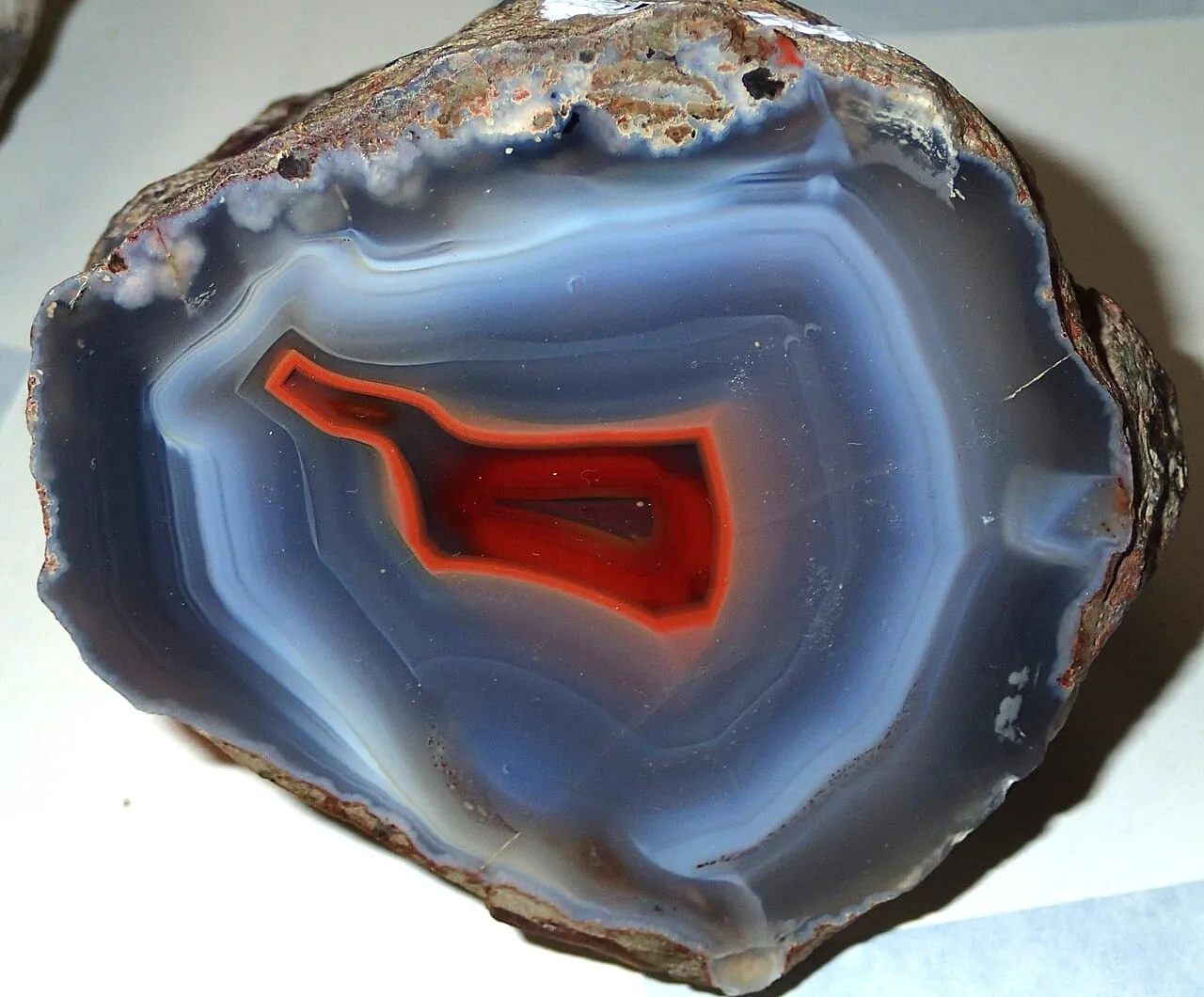
The banded variety of chalcedony: it grows layer by layer in hollows in volcanic rock and shows a new pattern every time it is cut.
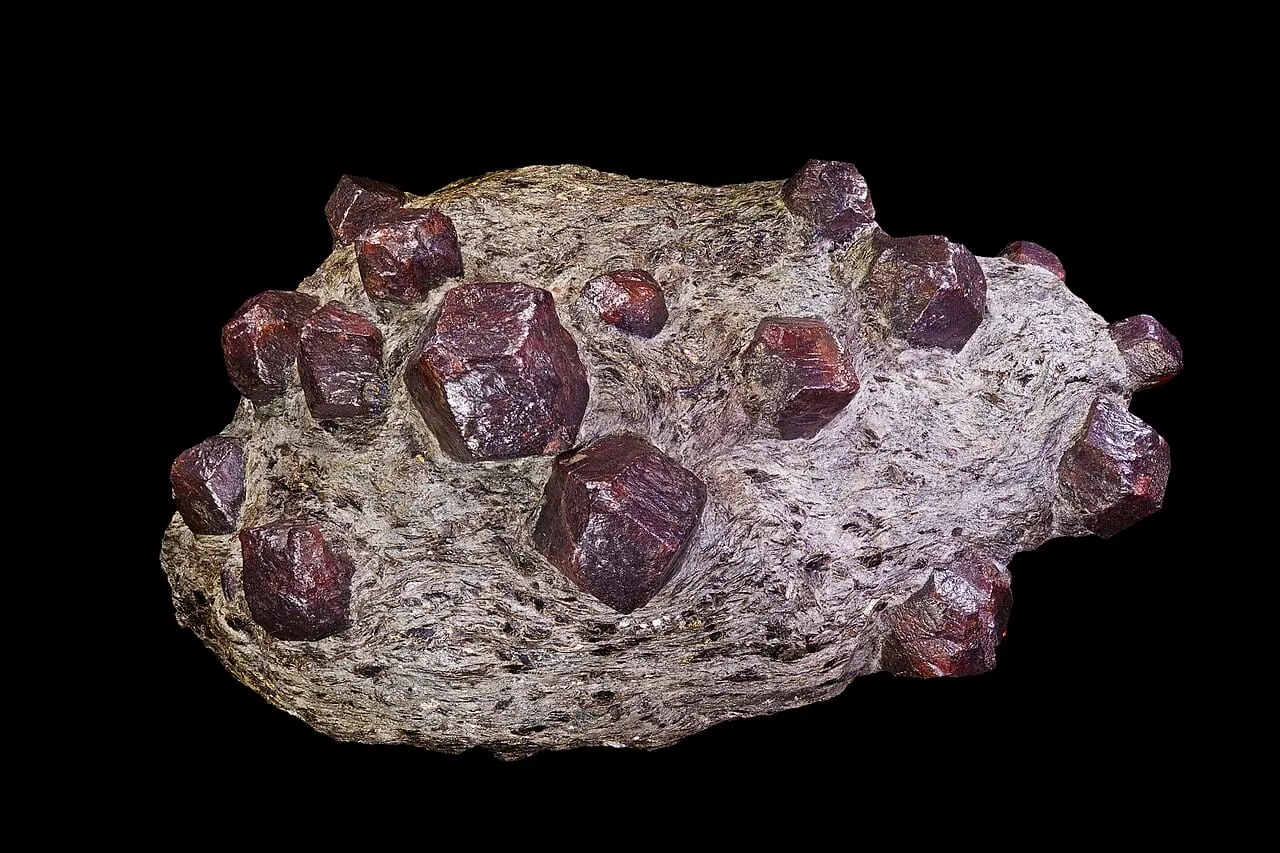
Almandine
The commonest garnet: a deep red, iron-rich stone named after the ancient city of Alabanda in Anatolia, used in jewellery and in sandpaper alike.
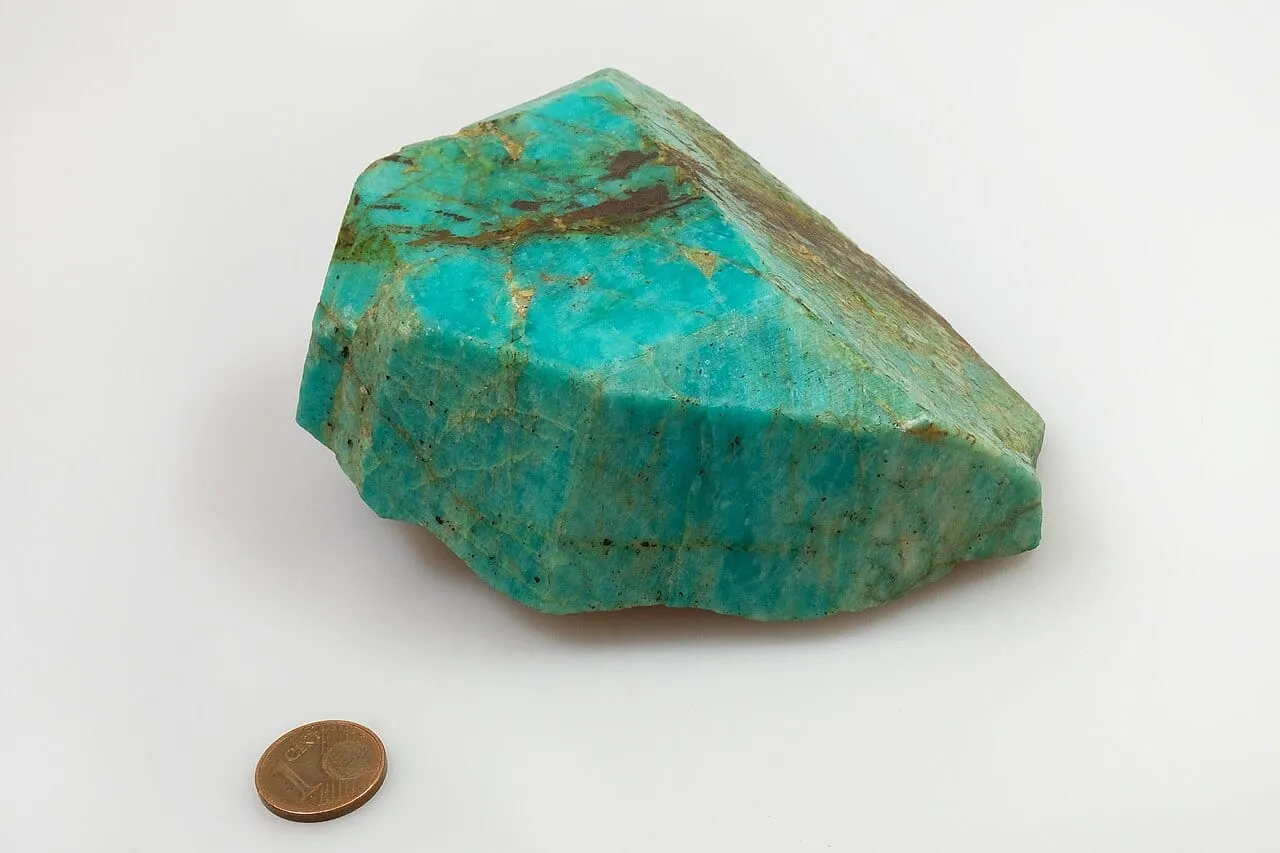
Amazonite
A turquoise-like green-blue feldspar: a variety of microcline worn as jewellery for more than three thousand years, but it can release lead.