VarietyA variety of Tektite
Indochinite
İndoçinit
The black tektites of South-East Asia: natural glass made of Earth rock melted and thrown out by a giant impact about 790,000 years ago.
Also known as: Muong Nong-type tektite (the layered kind)
- Popularly: Semi-precious stone
In short
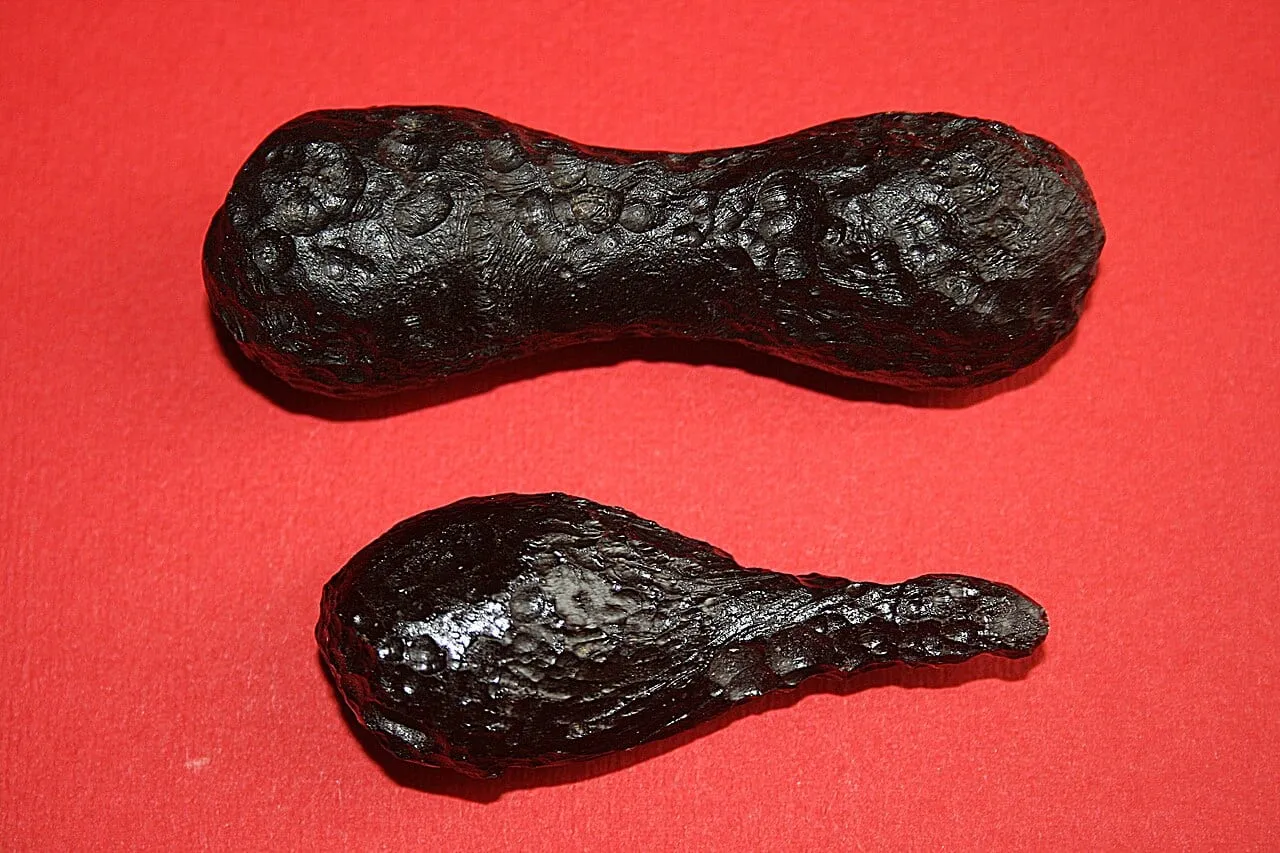
Indochinite is the regional name for the black tektites found in Thailand, Laos, Cambodia, Vietnam and southern China. These pieces of glass formed about 790,000 years ago from Earth rocks melted by a large meteorite impact; they did not come from space. Besides small spheres, teardrops and dumbbells, there are also layered blocks that can weigh tens of kilograms.
Photos
How does it form?
About 790,000 years ago a large meteorite struck South-East Asia. The energy of the impact instantly melted surface rock and soil; droplets of melt were flung high into the atmosphere and turned to glass as they cooled in flight. Indochinites are therefore part of the vast Australasian strewn field, which stretches as far as Australia and Antarctica. For the family as a whole, see the tektite page.
The crater itself long escaped detection. A study published in 2020 proposed that the crater, roughly 15 km across, lies buried on the Bolaven Plateau in southern Laos, beneath basalt lavas that flowed after the impact. The large, blocky, layered Muong Nong-type tektites, which may have landed close to the crater, formed at lower temperatures than the droplets that flew through the air. According to one study, their layers formed as the melt was sheared sideways in pools or sheets of molten material on the ground.
What is it used for?
- Science: Indochinites are studied to understand when and where the impact happened. Minerals such as coesite, which forms only at very high pressure, have been found inside Muong Nong-type pieces; inclusions like these tell scientists about the rocks that were struck.
- Archaeology: In the Bose Basin of southern China and around An Khê in Vietnam, stone tools were found in the same layer as tektites. Because the age of tektites can be measured, the tools were shown to be about 800,000 years old as well. The Bose tools are East Asia’s oldest known large cutting tools.
- Collecting: Naturally shaped pieces are gathered by collectors and museums and are a common sight in meteorite and impact-glass collections.
Where is it found?
According to Lacroix’s 1932 study, the densely strewn area stretches for about 1,200 km, from north of Hainan Island to Cambodia. In the rainy climate, pieces were often washed off the hills and collected in plains and valley floors. Today indochinites are best known from north-eastern Thailand, Laos, Vietnam, Cambodia and southern China. The largest Muong Nong-type pieces have come from Laos, Thailand, Cambodia and Hainan Island.
What determines its value?
Indochinites are plentiful, so they are among the cheapest tektites; most are sold piece by piece to collectors. Shape matters most: unbroken teardrops, dumbbells and discs, pieces whose natural surface texture is intact, and large Muong Nong-type blocks are the most sought after. A documented find location and scientifically interesting inclusions also add value. Because look-alike obsidian and glass are around, buying from a reliable source matters.
This information is educational, not buying, selling or investment advice. Value varies enormously with quality and treatment.
How to recognise it
- 1
In reflected light it is jet black; only its thin edges look brownish and translucent when held up to the light. This alone sets it apart from the clear, pale green moldavites.
- 2
Most pieces are spheres, teardrops, discs or dumbbells, with a pitted, grooved or scratched-looking surface.
- 3
The large pieces known as Muong Nong-type are blocky and angular, and fine layers show on their broken faces.
- 4
It breaks like glass, with shell-shaped (conchoidal) surfaces, contains no crystals and is not attracted to a magnet. Telling it reliably from obsidian or man-made glass takes a laboratory.
Fakes and imitations
What shops usually don’t tell you:
- Pieces of obsidian and black man-made glass resemble tektites. Obsidian is a volcanic glass and holds more water than tektites; the difference is hard to see by eye, and a firm answer comes from laboratory analysis.
Myths and misconceptions
MythIndochinite is a meteorite that fell from space.
FactIndochinite is made of Earth rock melted and thrown into the air when a meteorite struck the ground; it is impact glass, not a meteorite. In the 1930s even leading scientists such as Alfred Lacroix thought tektites came from space, but later chemical analyses disproved this.
MythIndochinite is a kind of obsidian.
FactBoth are black and glassy, but obsidian forms when lava from a volcano cools quickly. Indochinite was formed by an impact and holds much less water than volcanic glasses.
What is it believed to be good for?
This section reports beliefs; it is not health information. There is no scientific evidence for these claims and no stone replaces medical treatment.
The meanings people give this stone, and who holds them:
- Today some stone sellers and crystal-therapy sites claim that indochinite gives a “grounding” energy and protects its owner spiritually.
What science says
Indochinite is a silica-rich glass made of Earth rock melted in an impact, and it contains no material from space. There is no measurement or evidence that it gives energy or protection.
Did you know?
The French mineralogist Alfred Lacroix became curious after two tiny glass beads were noticed in a plant collection sent from Indochina. Within two years he had gathered thousands of pieces from many places in the region, and he published them in 1932.
The largest known indochinite is a layered, Muong Nong-type tektite weighing 29.0 kilograms.
The Australasian strewn field is the youngest and largest known tektite field; estimates suggest it may cover between 10 and 30 per cent of the Earth's surface.
Where is it found?
Loading map…
- Savannakhet Province (Muong Nong), Laos · Known localityThe place that gave its name to the large, blocky, layered “Muong Nong-type” tektites; it lies in the province's Nong district.
- Bolaven Plateau, southern Laos · Known localityAccording to a study published in 2020, the roughly 15 km impact crater that produced the Australasian tektites may lie buried beneath young lavas on this plateau.
- Ubon Ratchathani Province, Thailand · Known localityOne of the known sources of Muong Nong-type indochinites in north-eastern Thailand.
- An Khê, Gia Lai, Vietnam · Historic sourceAt Early Palaeolithic sites such as Gò Đá and Rộc Tưng, tektites were found in the same layer as handaxes and helped to date the tools.
- Bose (Baise) Basin, Guangxi, China · Historic sourceEast Asia's oldest known large cutting tools were found in a tektite layer dated to about 803,000 years ago.
- Hainan Island, China · Known localityOne of the places where the largest Muong Nong-type tektites are known; the northern end of the find area Lacroix described in 1932 also reaches north of this island.
Locations are approximate to protect sites. Red dots mark places in Türkiye. Open in the big map →
Frequently asked questions
What is indochinite?
Indochinite is the regional name for the black tektites found in Thailand, Laos, Cambodia, Vietnam and southern China. These pieces of glass formed about 790,000 years ago from Earth rocks melted by a large meteorite impact; they did not come from space. Besides small spheres, teardrops and dumbbells, there are also layered blocks that can weigh tens of kilograms.
What is indochinite used for?
Science: Indochinites are studied to understand when and where the impact happened. Minerals such as coesite, which forms only at very high pressure, have been found inside Muong Nong-type pieces; inclusions like these tell scientists about the rocks that were struck. Archaeology: In the Bose Basin of southern China and around An Khê in Vietnam, stone tools were found in the same layer as tektites. Because the age of tektites can be measured, the tools were shown to be about 800,000 years old as well. The Bose tools are East Asia's oldest known large cutting tools.
How hard is indochinite?
It has a hardness of 5–6 on the Mohs scale. It can scratch glass; a steel knife scratches it only with difficulty. Its specific gravity is 2.3–2.5 g/cm³.
Where is indochinite found?
Its best-known localities: An Khê, Gia Lai, Vietnam; Bose (Baise) Basin, Guangxi, China; Savannakhet Province (Muong Nong), Laos; Bolaven Plateau, southern Laos; Ubon Ratchathani Province, Thailand.
How can you tell if indochinite is real?
In reflected light it is jet black; only its thin edges look brownish and translucent when held up to the light. This alone sets it apart from the clear, pale green moldavites. Most pieces are spheres, teardrops, discs or dumbbells, with a pitted, grooved or scratched-looking surface. The large pieces known as Muong Nong-type are blocky and angular, and fine layers show on their broken faces. Pieces of obsidian and black man-made glass resemble tektites. Obsidian is a volcanic glass and holds more water than tektites; the difference is hard to see by eye, and a firm answer comes from laboratory analysis.
Is indochinite valuable?
On the “street to diamond” value ladder it sits on step 5 of nine: Ornamental stone. Indochinites are plentiful, so they are among the cheapest tektites; most are sold piece by piece to collectors. Shape matters most: unbroken teardrops, dumbbells and discs, pieces whose natural surface texture is intact, and large Muong Nong-type blocks are the most sought after. A documented find location and scientifically interesting inclusions also add value. Because look-alike obsidian and glass are around, buying from a reliable source matters.
What is indochinite good for?
Today some stone sellers and crystal-therapy sites claim that indochinite gives a “grounding” energy and protects its owner spiritually. Indochinite is a silica-rich glass made of Earth rock melted in an impact, and it contains no material from space. There is no measurement or evidence that it gives energy or protection. This section reports beliefs; it is not health information. There is no scientific evidence for these claims and no stone replaces medical treatment.
Family

_13.jpg)

Sources
- Indochinite · Wikipedia
- Australasian strewnfield · Wikipedia
- Tektite · Encyclopaedia Britannica
- The Australasian tektite source crater: Found at last? (H. J. Melosh), PNAS 117(3) · National Academy of Sciences (PubMed Central), 2020
- Australasian impact crater buried under the Bolaven volcanic field, Southern Laos (Sieh et al.), PNAS · National Academy of Sciences, 2020
- Zur Beleuchtung des Meteoritenproblems (Mit Bezug auf das durch A. Lacroix erschlossene indochinesische Tektitgebiet) (F. E. Suess), Mitteilungen der Geologischen Gesellschaft in Wien 25 · Geologische Gesellschaft in Wien (GeoSphere Austria)
- Sulfide globules in Muong Nong-type tektites from Laos (Křížová et al.), EPSC Abstracts 12, EPSC2018-327 · European Planetary Science Congress, 2018
- Revisiting the paleomagnetism of Muong Nong layered tektites: Implications for their formation process (Gattacceca et al.), Meteoritics & Planetary Science · Wiley, 2021
- Bose, China (Human Origins Program) · Smithsonian National Museum of Natural History
- High precision 40Ar/39Ar dating of Australasian tektites associated with bifacial tools in the Bose Basin and in Vietnam (Michel et al.), Quaternary Science Reviews 346 · CEPAM (CNRS), 2024
- The Early Paleolithic Go Da Site and the Bifacial Lithic Industries of Southeast Asia (Kandyba et al.), Archaeology, Ethnology & Anthropology of Eurasia 49(4) · Institute of Archaeology and Ethnography SB RAS, 2021
- Traces of Paleolithic age discovered in Vietnam · VietNamNet
- Savannakhet province · Wikipedia
- Bolaven Plateau · Wikipedia
External links
Draft: awaiting expert reviewReport an error
On the same step
Agate
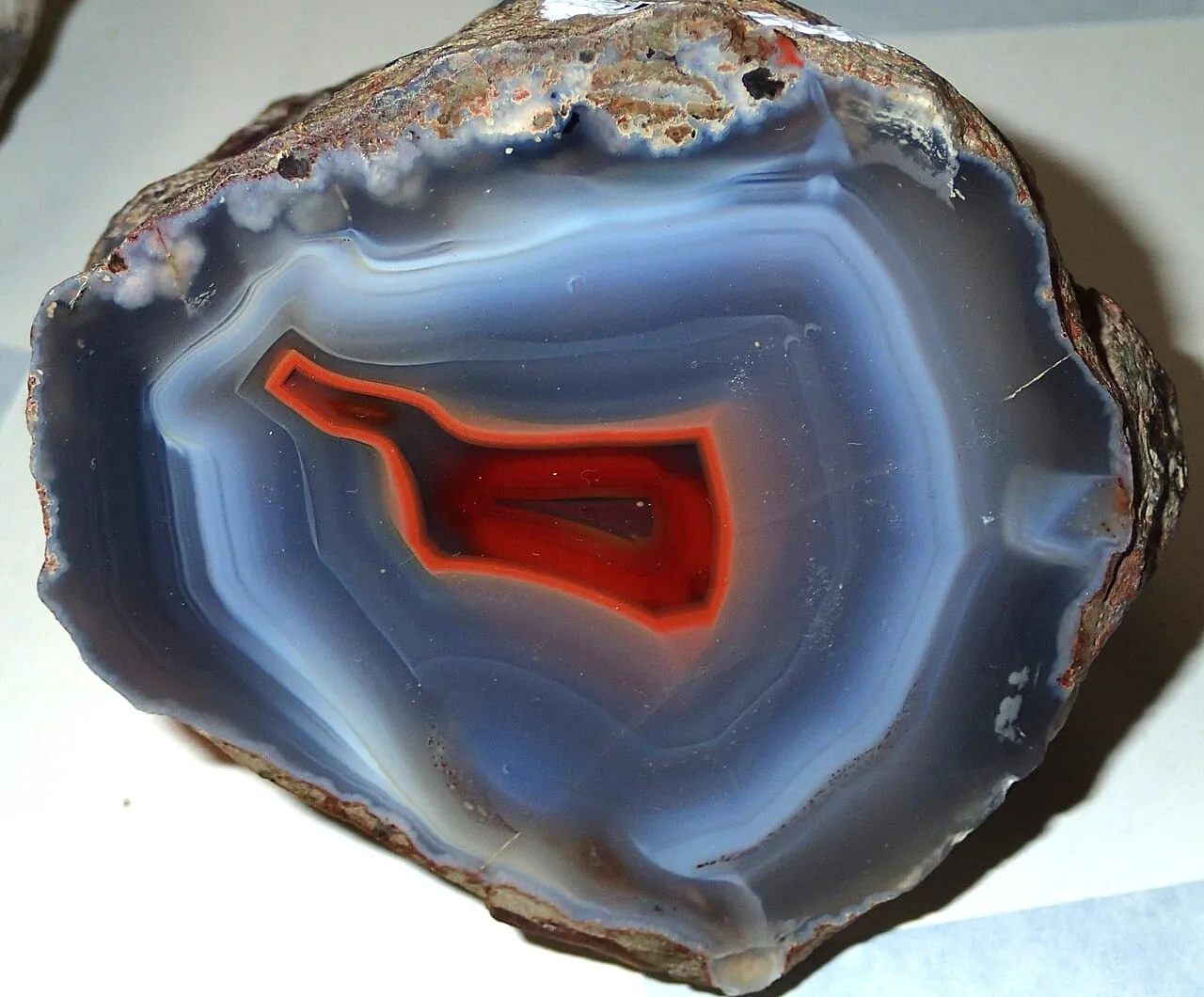
The banded variety of chalcedony: it grows layer by layer in hollows in volcanic rock and shows a new pattern every time it is cut.

Almandine
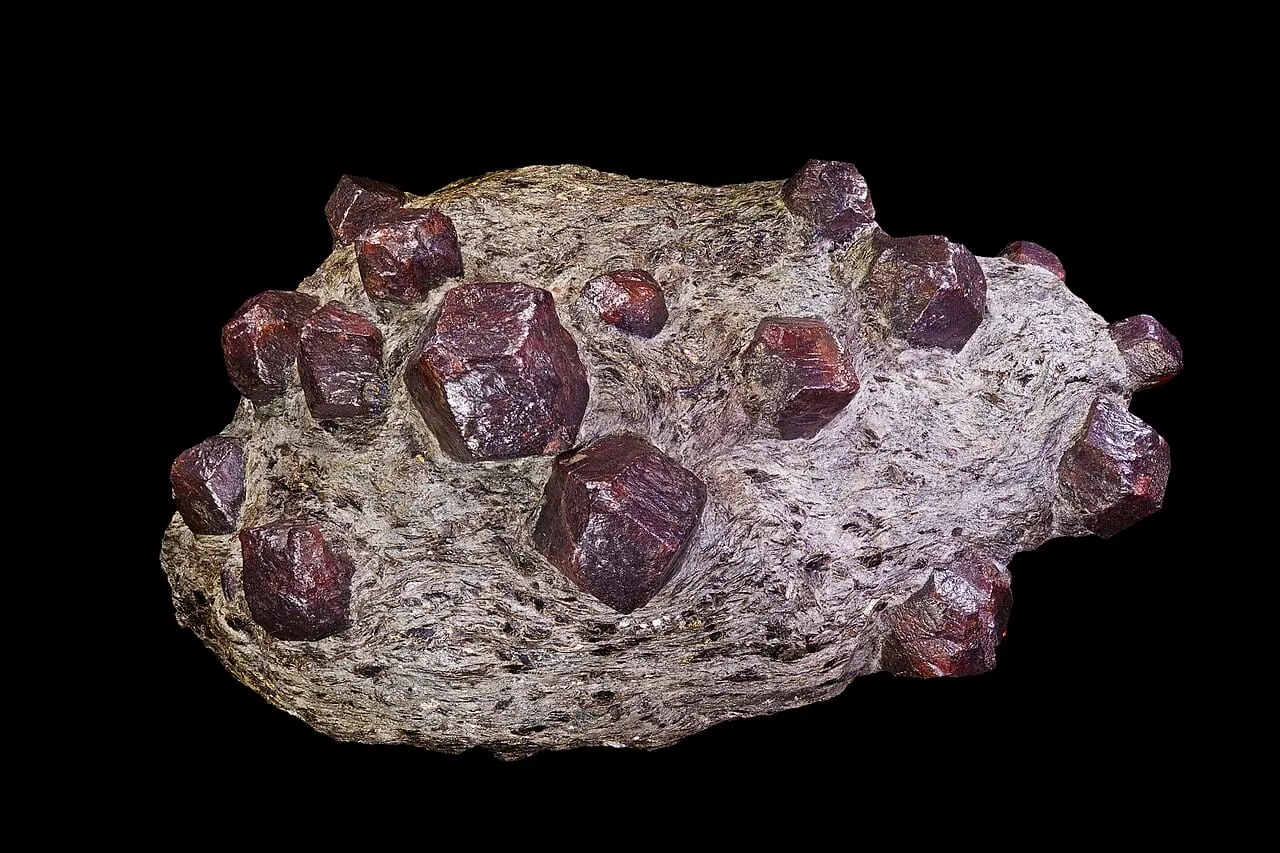
The commonest garnet: a deep red, iron-rich stone named after the ancient city of Alabanda in Anatolia, used in jewellery and in sandpaper alike.
Amazonite
A turquoise-like green-blue feldspar: a variety of microcline worn as jewellery for more than three thousand years, but it can release lead.