Mineral
Diopside
CaMgSi₂O₆Diyopsit
The calcium-magnesium member of the pyroxene family: its green chromium variety, sometimes called “Siberian emerald”, is an affordable gem.
Also known as: Chrome diopside (green, chromium-bearing variety) · Siberian emerald (misleading nickname of chrome diopside) · Violane (manganese-rich violet to pale blue variety)
- Popularly: Semi-precious stone
- Gemstone

In short
Diopside is a pyroxene made of calcium, magnesium, silicon and oxygen (CaMgSi₂O₆). It most often forms pale to dark green, short prismatic crystals; there are also colourless, white, yellow, black and, more rarely, blue or violet ones. It forms where calcium-rich rocks such as marble meet hot magma (skarns) and in kimberlite and peridotite deep in the Earth. Its vivid green chromium variety (chrome diopside) is cut for jewellery.
Photos

How does it form?
Diopside forms when calcium- and magnesium-rich rocks are transformed: according to the Handbook of Mineralogy it is common in calcium- and magnesium-bearing metamorphic rocks, especially skarns, gneisses and schists, and in some kimberlites and peridotites; it is less common in alkali basalts and andesites. Skarn develops where limestone or marble meets hot magma; calcite, forsterite, grossular, vesuvianite and wollastonite occur with it. According to Wikipedia, diopside is also an important mineral of the Earth’s mantle.
What is it used for?
- Jewellery: Clear green diopside is faceted, and star diopside is cut as cabochons. Wikipedia counts chrome diopside as a semi-precious stone. According to the ICA, chrome diopside is mostly mined in Yakutia and Siberia and is the most affordable gem in a pure rich green.
- Diamond prospecting: Because chromium-bearing diopside grains occur near kimberlite pipes, they are used as a clue when searching for diamond deposits.
- Technology: Diopside-based ceramics and glass-ceramics have potential applications in areas such as biomaterials, immobilising nuclear waste and sealing solid oxide fuel cells (Wikipedia).
- Collecting: Green, well-formed, clear crystals appeal to mineral collectors.
In the pyroxene family
Diopside is one of the most important members of the pyroxene group; it forms a continuous mixing series with iron-bearing hedenbergite and with augite. For the much commoner dark pyroxene, see the augite page. Jadeite is a pyroxene too (described on the jade page), but it contains sodium and aluminium.
In Türkiye
Diopside occurs in Türkiye in skarn deposits and at marble contacts. According to a study published in the Eskişehir Osmangazi University journal in 2009, the Susurluk skarn deposit east of Balıkesir formed along the contact between the Oligo-Miocene Çataldağ granitoid and Mesozoic crystalline limestone and marble. The exoskarn zone is arranged as garnet–pyroxene–vesuvianite–wollastonite, and the pyroxenes are of diopside–hedenbergite composition (the diopside proportion ranges from about 20 to 96%). These specimens are not of gem quality.
What determines its value?
Colour counts most in chrome diopside: vivid, saturated, even green is sought. It is usually found in small sizes; in large stones the colour becomes so rich that the stone looks too dark (ICA). Clarity, cut quality and size also matter; because it is soft and has cleavage, cutting and setting need care. In black star diopside the sharpness of the star is sought, and in violet-blue violane the intensity of colour. For collectors, well-formed, undamaged crystals and those from well-known places such as Ala or the Zillertal are valued.
This information is educational, not buying, selling or investment advice. Value varies enormously with quality and treatment.
How to recognise it
- 1
Crystals are short prisms with a nearly square cross-section and can reach 50 cm; it also forms granular, columnar or massive lumps.
- 2
Its two cleavage directions meet at about 87° and 93°, a typical pyroxene angle.
- 3
Its hardness is 5.5–6.5: a steel knife scratches it only with difficulty, but quartz scratches it. It is usually green, but can be colourless, white, yellow, black, grey or brown.
- 4
It occurs in marbles and skarn rocks with minerals such as calcite, forsterite, grossular, vesuvianite and wollastonite.
Fakes and imitations
What shops usually don’t tell you:
- The name “Siberian emerald” is misleading: chrome diopside has nothing to do with emerald; emerald is beryl and diopside is a pyroxene.
- Diopside and iron-bearing hedenbergite form a continuous mixing series; intermediate compositions cannot be told apart by eye and need a laboratory analysis.
Myths and misconceptions
MythChrome diopside is a cheap emerald.
Fact“Siberian emerald” is a trade nickname; chrome diopside is a pyroxene and unrelated to emerald (beryl). It is also much softer (5.5–6.5; emerald 7.5–8).
MythGreen diopside is very durable as a ring stone.
FactIts hardness is only about 5.5 and it has cleavage in two directions; the ICA therefore says it suits earrings and pendants better than a ring that gets a lot of wear.
What is it believed to be good for?
This section reports beliefs; it is not health information. There is no scientific evidence for these claims and no stone replaces medical treatment.
The meanings people give this stone, and who holds them:
- Crystal-therapy websites claim that chrome diopside opens the “heart chakra” and supports feelings of love, compassion and forgiveness.
- The same sites say diopside helps recovery after surgery or serious illness, and helps with physical weakness and hormonal balance.
What science says
No study supports these claims. Diopside is an ordinary calcium–magnesium silicate mineral, and no effect on the body or on feelings is known. Recovery after surgery or serious illness should be left to the treatment and care a doctor recommends.
Did you know?
Its name comes from the Greek for “twice” and “face” and alludes to the two possible orientations of the prism zone.
Diopside was discovered and first described about 1800 by the Brazilian naturalist José Bonifácio de Andrada e Silva.
Chrome diopside is a common constituent of peridotite fragments and scattered grains occur near kimberlite pipes, so it is used as a pointer when prospecting for diamonds.
In the 1980s scientists at Imperial College in the UK developed “silceram”, a diopside-based glass-ceramic made from blast-furnace slag and other waste.
Where is it found?
Loading map…
- Ala Valley (Ala di Stura), Piedmont, Italy · Historic sourceA locality for fine crystals named by the Handbook of Mineralogy
- Saint-Marcel, Aosta Valley, Italy · Known localityA place cited for specimens of the violet-blue “violane” variety
- Zillertal Alps (Schwarzenstein), Tyrol, Austria · Known localityA locality for fine crystals according to the Handbook of Mineralogy
- Outokumpu, North Karelia, Finland · Known localityA locality for fine crystals named by the Handbook of Mineralogy
- Inagli massif (near Aldan), Sakha (Yakutia), Russia · Major depositThe main source of chrome diopside; the Handbook of Mineralogy cites large crystals; the point is the town of Aldan
- Slyudyanka, near Lake Baikal, Russia · Known localityA Siberian locality named by the Handbook of Mineralogy
- Kunlun Mountains, Xinjiang, China · Known localityThe Handbook of Mineralogy cites large, gemmy crystals from here
- Khaplu (Khapalu), Gilgit-Baltistan, Pakistan · Known localityThe Pakistani locality named by the Handbook of Mineralogy (together with Chamachu)
- Tôlanaro (Fort-Dauphin) area, Anosy, Madagascar · Known localityAmpandrandava and Andranodambo; Wikimedia Commons holds a cut diopside of Madagascan origin
- Kimberley, Northern Cape, South Africa · Known localityChromium-bearing diopside from kimberlite pipes; the Handbook of Mineralogy gives an analysis of chromian diopside from the Dutoitspan mine
- Susurluk, Balıkesir, Türkiye · Known localityPyroxenes of the diopside–hedenbergite series in a skarn deposit at a granitoid–marble contact
Locations are approximate to protect sites. Red dots mark places in Türkiye. Open in the big map →
Frequently asked questions
What is diopside?
Diopside is a pyroxene made of calcium, magnesium, silicon and oxygen (CaMgSi₂O₆). It most often forms pale to dark green, short prismatic crystals; there are also colourless, white, yellow, black and, more rarely, blue or violet ones. It forms where calcium-rich rocks such as marble meet hot magma (skarns) and in kimberlite and peridotite deep in the Earth. Its vivid green chromium variety (chrome diopside) is cut for jewellery.
What is diopside used for?
Jewellery: Clear green diopside is faceted, and star diopside is cut as cabochons. Wikipedia counts chrome diopside as a semi-precious stone. According to the ICA, chrome diopside is mostly mined in Yakutia and Siberia and is the most affordable gem in a pure rich green. Diamond prospecting: Because chromium-bearing diopside grains occur near kimberlite pipes, they are used as a clue when searching for diamond deposits.
How hard is diopside?
It has a hardness of 5.5–6.5 on the Mohs scale. It can scratch glass; a steel knife scratches it only with difficulty. Its specific gravity is 3.22–3.38 g/cm³.
Where is diopside found?
Its best-known localities: Inagli massif (near Aldan), Sakha (Yakutia), Russia; Ala Valley (Ala di Stura), Piedmont, Italy; Saint-Marcel, Aosta Valley, Italy; Zillertal Alps (Schwarzenstein), Tyrol, Austria; Outokumpu, North Karelia, Finland.
Where is diopside found in Türkiye?
Known localities in Türkiye: Susurluk, Balıkesir, Türkiye.
How can you tell if diopside is real?
Crystals are short prisms with a nearly square cross-section and can reach 50 cm; it also forms granular, columnar or massive lumps. Its two cleavage directions meet at about 87° and 93°, a typical pyroxene angle. Its hardness is 5.5–6.5: a steel knife scratches it only with difficulty, but quartz scratches it. It is usually green, but can be colourless, white, yellow, black, grey or brown. The name “Siberian emerald” is misleading: chrome diopside has nothing to do with emerald; emerald is beryl and diopside is a pyroxene.
Is diopside valuable?
On the “street to diamond” value ladder it sits on step 5 of nine: Ornamental stone. Colour counts most in chrome diopside: vivid, saturated, even green is sought. It is usually found in small sizes; in large stones the colour becomes so rich that the stone looks too dark (ICA). Clarity, cut quality and size also matter; because it is soft and has cleavage, cutting and setting need care. In black star diopside the sharpness of the star is sought, and in violet-blue violane the intensity of colour. For collectors, well-formed, undamaged crystals and those from well-known places such as Ala or the Zillertal are valued.
What is diopside good for?
Crystal-therapy websites claim that chrome diopside opens the “heart chakra” and supports feelings of love, compassion and forgiveness. The same sites say diopside helps recovery after surgery or serious illness, and helps with physical weakness and hormonal balance. No study supports these claims. Diopside is an ordinary calcium–magnesium silicate mineral, and no effect on the body or on feelings is known. Recovery after surgery or serious illness should be left to the treatment and care a doctor recommends. This section reports beliefs; it is not health information. There is no scientific evidence for these claims and no stone replaces medical treatment.
Sources
- Diopside · Wikipedia
- Handbook of Mineralogy: Diopside · Mineralogical Society of America
- Diopside · Webmineral
- Chrome Diopside · International Colored Gemstone Association (ICA)
- Susurluk (Balıkesir) skarn yatağının mineralojik ve petrografik özellikleri (A. Orhan, H. Mutlu), ESOGÜ Müh. Mim. Fak. Dergisi 22(2) · Eskişehir Osmangazi Üniversitesi, 2009
- Ala di Stura · Vikipedi (İtalyanca)
- Saint-Marcel, Aosta Valley · Wikipedia
- Zillertal Alps · Wikipedia
- Outokumpu · Wikipedia
- Aldan, Russia · Wikipedia
- Slyudyanka · Wikipedia
- Kunlun Mountains · Wikipedia
- Khaplu · Wikipedia
- Fort-Dauphin (Tôlanaro) · Wikipedia
- Kimberley, Northern Cape · Wikipedia
- Susurluk · Wikipedia
External links
Draft: awaiting expert reviewReport an error ↗
On the same step
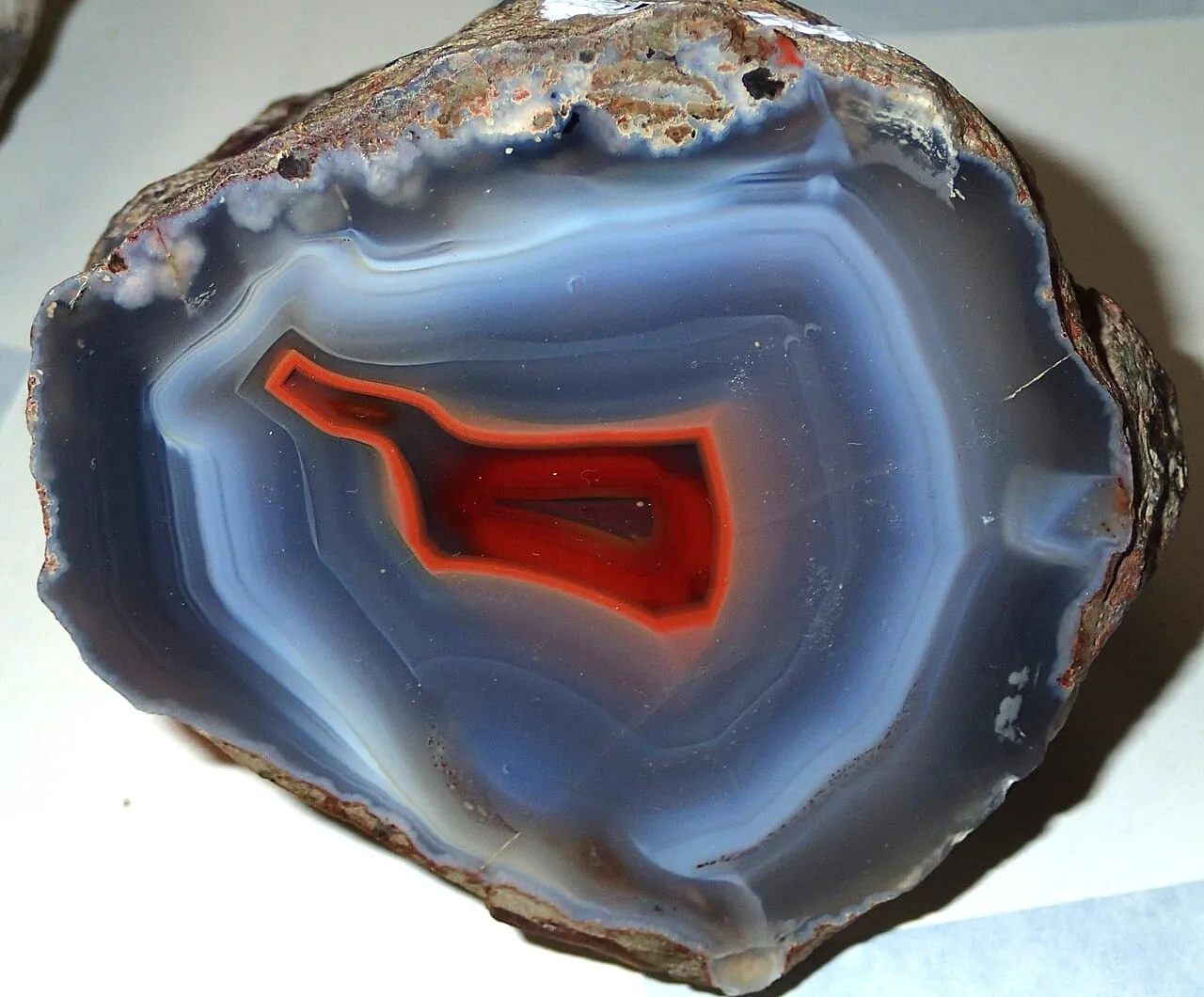
Agate
The banded variety of chalcedony: it grows layer by layer in hollows in volcanic rock and shows a new pattern every time it is cut.
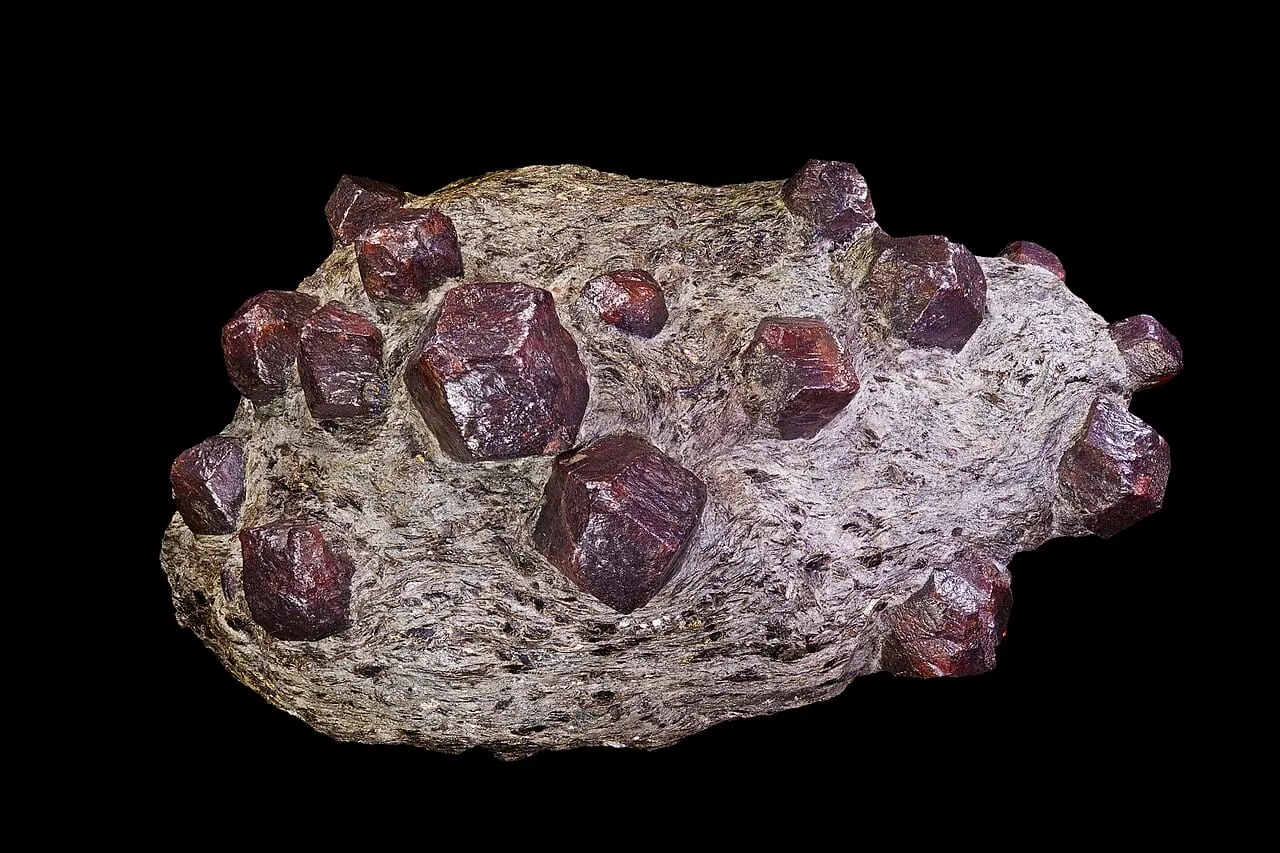
Almandine
The commonest garnet: a deep red, iron-rich stone named after the ancient city of Alabanda in Anatolia, used in jewellery and in sandpaper alike.
Amazonite
A turquoise-like green-blue feldspar: a variety of microcline worn as jewellery for more than three thousand years, but it can release lead.