Mineral
Augite (pyroxene)
(Ca,Na)(Mg,Fe,Al,Ti)(Si,Al)₂O₆Ojit (piroksen)
The most common pyroxene, which darkens basalt and gabbro: inconspicuous, yet one of the key building blocks of Earth’s crust.
- Everyday

In short
Augite is a dark green or black mineral containing calcium, magnesium, iron, silicon and oxygen. It is the most common member of the mineral group called pyroxenes. Most of the dark grains in dark rocks such as basalt and gabbro are augite.
How does it form?
Augite crystallises as magma cools. It is plentiful in silica-poor basaltic magmas rich in magnesium and iron, which makes it one of the main minerals of basalt and gabbro. Large augite crystals visible to the naked eye, set in the fine-grained groundmass of a basalt, are a common sight. It also occurs in some metamorphic rocks formed at high temperatures.
Pyroxenes and amphiboles
Augite is the most common member of the pyroxene group. In pyroxenes the silicon–oxygen tetrahedra are linked into single chains; in amphiboles such as hornblende they form double chains. This difference in structure shows up in the cleavage angles: pyroxenes split almost at right angles, amphiboles at about 56° and 124°. In the field, the best way to tell these two dark minerals apart is to look at their cleavage surfaces with a hand lens.
What is it used for?
Augite has no economic value on its own, but the rocks that contain it are useful: basalt serves as crushed stone for roads and as building stone, and gabbro is sold as “black granite” for flooring and cladding.
How to recognise it
- 1
It forms short, stubby, dark green, brown or black prisms whose cross-sections look square or eight-sided.
- 2
Its two cleavage planes meet almost at right angles (about 87° and 93°); in hornblende these angles are about 56° and 124°.
- 3
Its streak is greyish green. With a hardness of 5.5–6, a steel knife scratches it only with difficulty.
- 4
It occurs in dark igneous rocks such as basalt, gabbro and andesite, often together with olivine and plagioclase.
Fakes and imitations
What shops usually don’t tell you:
- Much of the dark colour of gabbro and diabase, rocks sold in the stone trade as “black granite”, comes from pyroxenes such as augite; scientifically these rocks are not granite.
- Augite can be confused with hornblende, black tourmaline and biotite. The cleavage angle is the most reliable clue; certain identification needs a thin section under the microscope.
Did you know?
Its name comes from the Greek word for “lustre”, a reference to the sheen of its cleavage surfaces.
Because the crust beneath the oceans is made largely of basalt and gabbro, augite is one of the most abundant minerals on our planet.
Where is it found?
Loading map…
- Vesuvius and Monte Somma, Campania, Italy · Known localityWell-formed augite crystals in volcanic rocks
- Mount Etna, Sicily, Italy · Known locality
- České středohoří (around Bílina and Ústí nad Labem), Czechia · Historic sourceClassic augite crystals from volcanic rocks
Locations are approximate to protect sites. Red dots mark places in Türkiye. Open in the big map →
Sources
- Handbook of Mineralogy: Augite · Mineralogical Society of America
- Augite · Encyclopaedia Britannica
External links
Draft: awaiting expert reviewReport an error ↗
On the same step
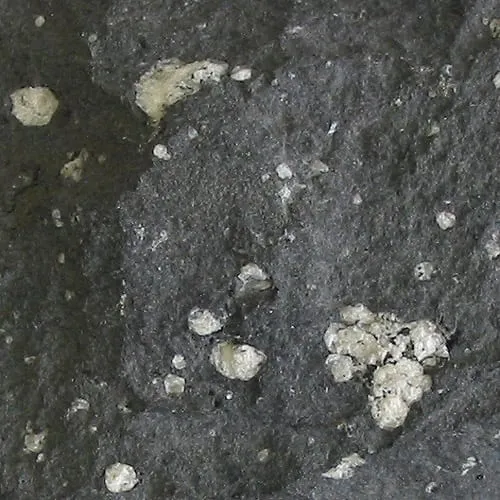
Andesite
The rock of volcanic arcs, named after the Andes — and the pink-grey stone of Ankara Castle.
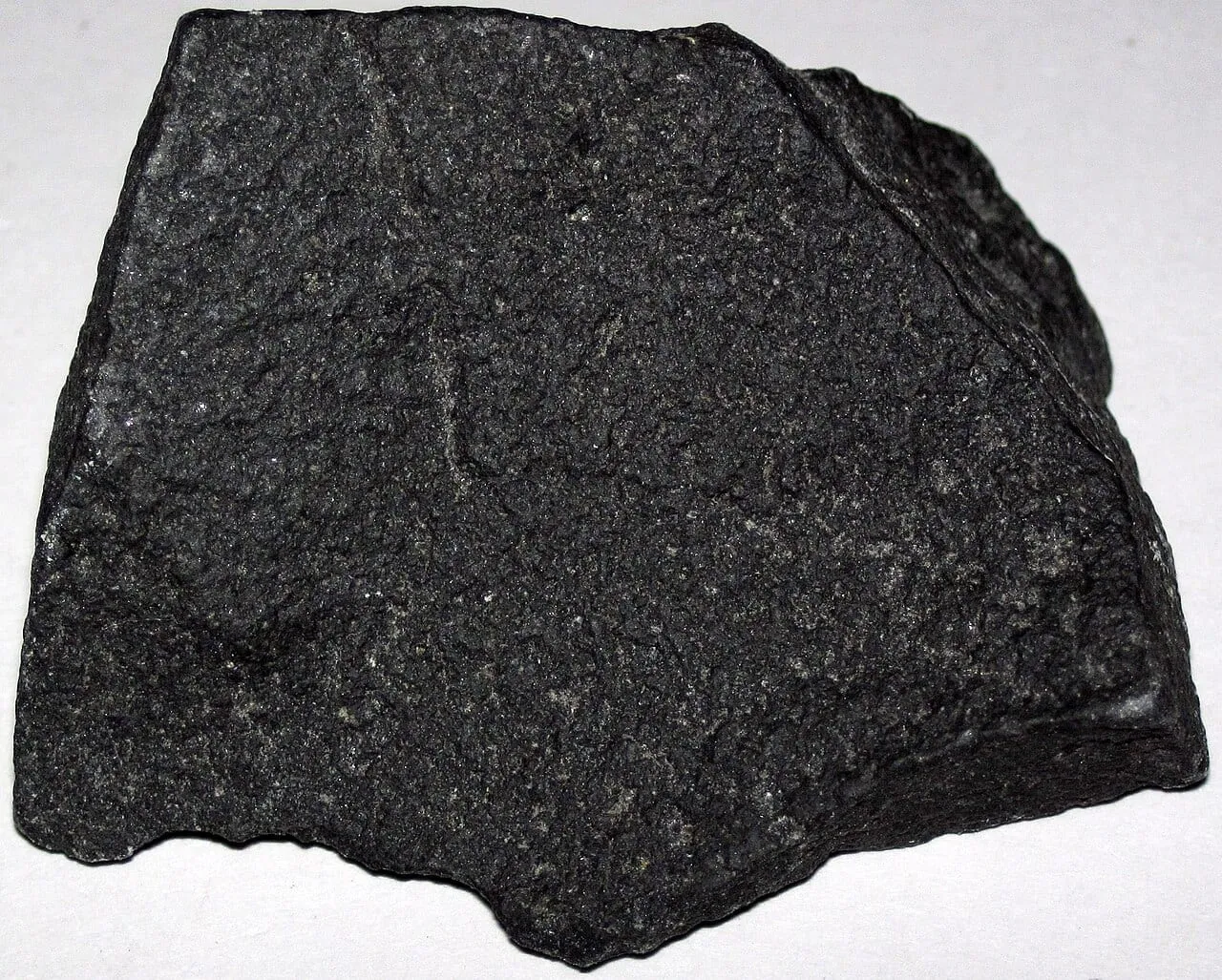
Basalt
The rock of the ocean floors and the Moon’s dark plains — the most common volcanic rock on Earth.
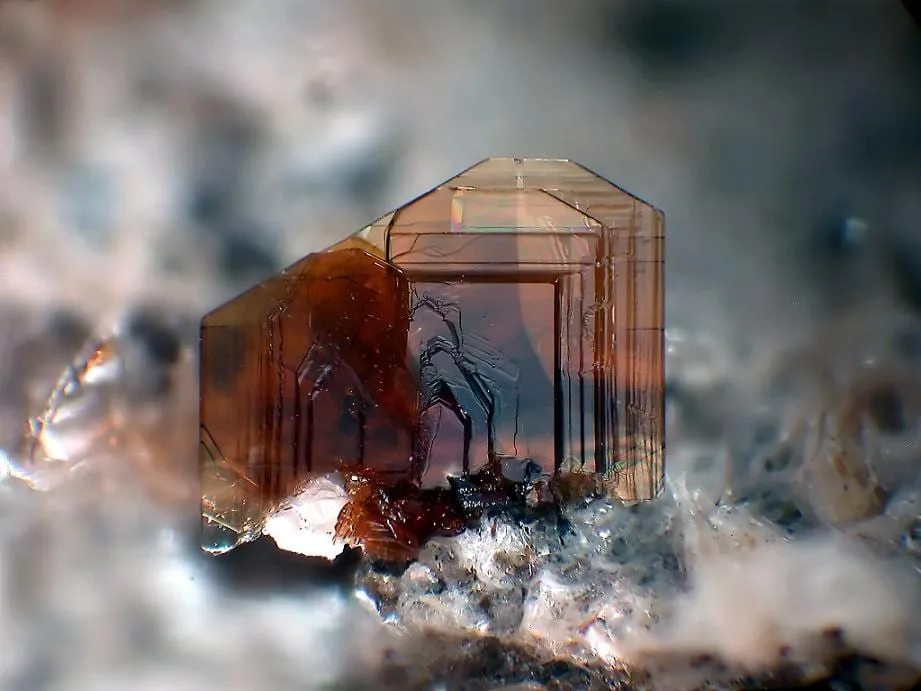
Biotite
The shiny black flakes in granite: a dark mica that peels into thin sheets and can glitter like gold as it weathers.