Mineral
Dumortierite
Al₇(BO₃)(SiO₄)₃O₃Dumortiyerit
A vivid blue, fibrous boron-aluminium silicate: mistaken for sodalite or lapis lazuli because it looks like them, but far harder than either.
Also known as: Dumortierite quartz (quartz with blue dumortierite needles)
- Popularly: Semi-precious stone
- Ornamental
- Industrial

In short
Dumortierite is a mineral containing aluminium, boron and silicon. It usually occurs as fibrous masses of fine, needle-like crystals and is known for its vivid blue colour; greenish blue, violet and brown examples also occur. Massive blue material is used for cabochons and beads. Quartz that contains blue dumortierite needles is called “dumortierite quartz”.
Photos
_3.jpg)
How does it form?
Dumortierite forms when aluminium-rich rocks are transformed by high heat and pressure (regional metamorphism) and when rocks are baked around magma (contact metamorphism); it also occurs in boron-rich pegmatite veins. It is found as fine veinlets cutting schists or as scattered grains, sometimes with minerals such as quartz, cordierite, kyanite, andalusite, sillimanite, muscovite and rutile.
What is it used for?
- Jewellery and decoration: Massive blue material is worked into cabochons, beads and small carvings. “Dumortierite quartz” is also cut as a faceted stone, showing the blue needles inside crystal quartz.
- Industry: It is used in making high-grade porcelain. The Champion mine near Oreana in Nevada, USA, was once mined commercially.
- Collecting: Sprays of needle-like blue crystals and finely crystallised pieces are sought after in mineral collecting.
What determines its value?
What matters most in dumortierite is the vividness and evenness of the blue, the pattern on the polished surface, and the availability of crack-free, even pieces. Pale or patchy material mixed with rock or quartz is less sought after. Transparent crystals that can be faceted are very rare; most material is opaque or translucent massive rock. Blue needles inside rock crystal quartz (dumortierite quartz) are of interest to collectors.
This information is educational, not buying, selling or investment advice. Value varies enormously with quality and treatment.
How to recognise it
- 1
Its colour is vivid blue, greenish blue, violet, purple or brown. It usually occurs as masses made of fine, needle-like or fibrous crystals.
- 2
Its hardness is 7–8.5, close to or above quartz. It is much harder than the sodalite (5.5–6) and lapis lazuli (about 5–5.5) it resembles.
- 3
It shows strong pleochroism: viewed from different directions, the crystals change between deep blue and colourless or very pale blue.
- 4
In “dumortierite quartz”, clusters of blue needles and phantom planes can be seen inside clear quartz.
- 5
A gem laboratory is needed for certain identification; for example, blue needles in rock crystal quartz have been confirmed as dumortierite by Raman analysis.
Fakes and imitations
What shops usually don’t tell you:
- Dumortierite can be confused with sodalite or lapis lazuli and has been used as imitation lapis; its hardness and refractive index are different from theirs.
Myths and misconceptions
MythDumortierite is a kind of quartz.
FactDumortierite is a separate mineral, an aluminium borosilicate. “Dumortierite quartz” is quartz that contains dumortierite needles; it is sometimes called a quartz, but dumortierite is not truly a kind of quartz.
MythBlue dumortierite is sodalite or lapis lazuli.
FactIt is mistaken for them because of its similar blue, and has been used as imitation lapis, but the three are different stones. Dumortierite is markedly harder than sodalite and lapis.
What is it believed to be good for?
This section reports beliefs; it is not health information. There is no scientific evidence for these claims and no stone replaces medical treatment.
The meanings people give this stone, and who holds them:
- Today crystal-therapy practitioners claim that dumortierite increases patience, balance and focus, makes it easier to understand others and to progress towards goals, is linked with the throat chakra, and joins the spirit with the body.
- The same circles claim that dumortierite relieves migraine, sore throats, toothache, sprains and period pain, and helps the thyroid gland, fevers and thymus problems.
What science says
There is no scientific evidence that dumortierite increases patience and focus or relieves pain, fever or thyroid or thymus problems; for lasting pain, fever or hormonal problems, see a doctor rather than relying on a stone.
Did you know?
Its name comes from the French palaeontologist Eugène Dumortier; the mineral was described in 1881 near Chaponost in France.
In 2015 GIA documented, from the Serra do Espinhaço in the Brazilian state of Bahia, the first prismatic blue and colourless dumortierite inclusions in rock crystal quartz.
Dumortierite is also used in making high-grade porcelain.
Where is it found?
Loading map…
- Chaponost, Rhône, France · Type localityDumortierite was described here in 1881
- Champion mine (near Oreana), Nevada, USA · Major depositA deposit that was once mined commercially
- Quartzsite, La Paz County, Arizona, USA · Known localityA dumortierite locality named in the Handbook of Mineralogy
- Dehesa, San Diego County, California, USA · Known localityThe source of the sample the Handbook of Mineralogy uses for its electron-microprobe analysis
- Gföhl unit, Lower Austria · Known localityThe most extensive study of dumortierite was made in the high-grade metamorphic Gföhl unit
- Ambositra area, Amoron'i Mania, Madagascar · Known localityThe Handbook of Mineralogy reports fine examples from many places in Madagascar; Ambositra is one
- Erongo Mountains, Namibia · Known localityA locality named in the Handbook of Mineralogy
- Serra do Espinhaço (around the Vaca Morta quarry), Bahia, Brazil · Known localityWhere blue dumortierite needles in rock crystal quartz (dumortierite quartz) are found
Locations are approximate to protect sites. Red dots mark places in Türkiye. Open in the big map →
Frequently asked questions
What is dumortierite?
Dumortierite is a mineral containing aluminium, boron and silicon. It usually occurs as fibrous masses of fine, needle-like crystals and is known for its vivid blue colour; greenish blue, violet and brown examples also occur. Massive blue material is used for cabochons and beads. Quartz that contains blue dumortierite needles is called “dumortierite quartz”.
What is dumortierite used for?
Jewellery and decoration: Massive blue material is worked into cabochons, beads and small carvings. “Dumortierite quartz” is also cut as a faceted stone, showing the blue needles inside crystal quartz. Industry: It is used in making high-grade porcelain. The Champion mine near Oreana in Nevada, USA, was once mined commercially. Collecting: Sprays of needle-like blue crystals and finely crystallised pieces are sought after in mineral collecting.
How hard is dumortierite?
It has a hardness of 7–8.5 on the Mohs scale. It scratches glass and steel; a steel knife cannot scratch it. Its specific gravity is 3.21–3.41 g/cm³.
Where is dumortierite found?
Its best-known localities: Chaponost, Rhône, France; Champion mine (near Oreana), Nevada, USA; Quartzsite, La Paz County, Arizona, USA; Dehesa, San Diego County, California, USA; Gföhl unit, Lower Austria.
How can you tell if dumortierite is real?
Its colour is vivid blue, greenish blue, violet, purple or brown. It usually occurs as masses made of fine, needle-like or fibrous crystals. Its hardness is 7–8.5, close to or above quartz. It is much harder than the sodalite (5.5–6) and lapis lazuli (about 5–5.5) it resembles. It shows strong pleochroism: viewed from different directions, the crystals change between deep blue and colourless or very pale blue. Dumortierite can be confused with sodalite or lapis lazuli and has been used as imitation lapis; its hardness and refractive index are different from theirs.
Is dumortierite valuable?
On the “street to diamond” value ladder it sits on step 5 of nine: Ornamental stone. What matters most in dumortierite is the vividness and evenness of the blue, the pattern on the polished surface, and the availability of crack-free, even pieces. Pale or patchy material mixed with rock or quartz is less sought after. Transparent crystals that can be faceted are very rare; most material is opaque or translucent massive rock. Blue needles inside rock crystal quartz (dumortierite quartz) are of interest to collectors.
What is dumortierite good for?
Today crystal-therapy practitioners claim that dumortierite increases patience, balance and focus, makes it easier to understand others and to progress towards goals, is linked with the throat chakra, and joins the spirit with the body. The same circles claim that dumortierite relieves migraine, sore throats, toothache, sprains and period pain, and helps the thyroid gland, fevers and thymus problems. There is no scientific evidence that dumortierite increases patience and focus or relieves pain, fever or thyroid or thymus problems; for lasting pain, fever or hormonal problems, see a doctor rather than relying on a stone. This section reports beliefs; it is not health information. There is no scientific evidence for these claims and no stone replaces medical treatment.
Sources
- Handbook of Mineralogy: Dumortierite · Mineralogical Society of America
- Dumortierite · Wikipedia
- Gem News: Dumortierite in rock crystal quartz, Gems & Gemology Spring 2015 · GIA, 2015
- The Occurrence and Gemological Properties of Wessels Mine Sugilite (Shigley, Koivula, Fryer), Gems & Gemology 23(2) · GIA, 1987
External links
Draft: awaiting expert reviewReport an error ↗
On the same step
Agate
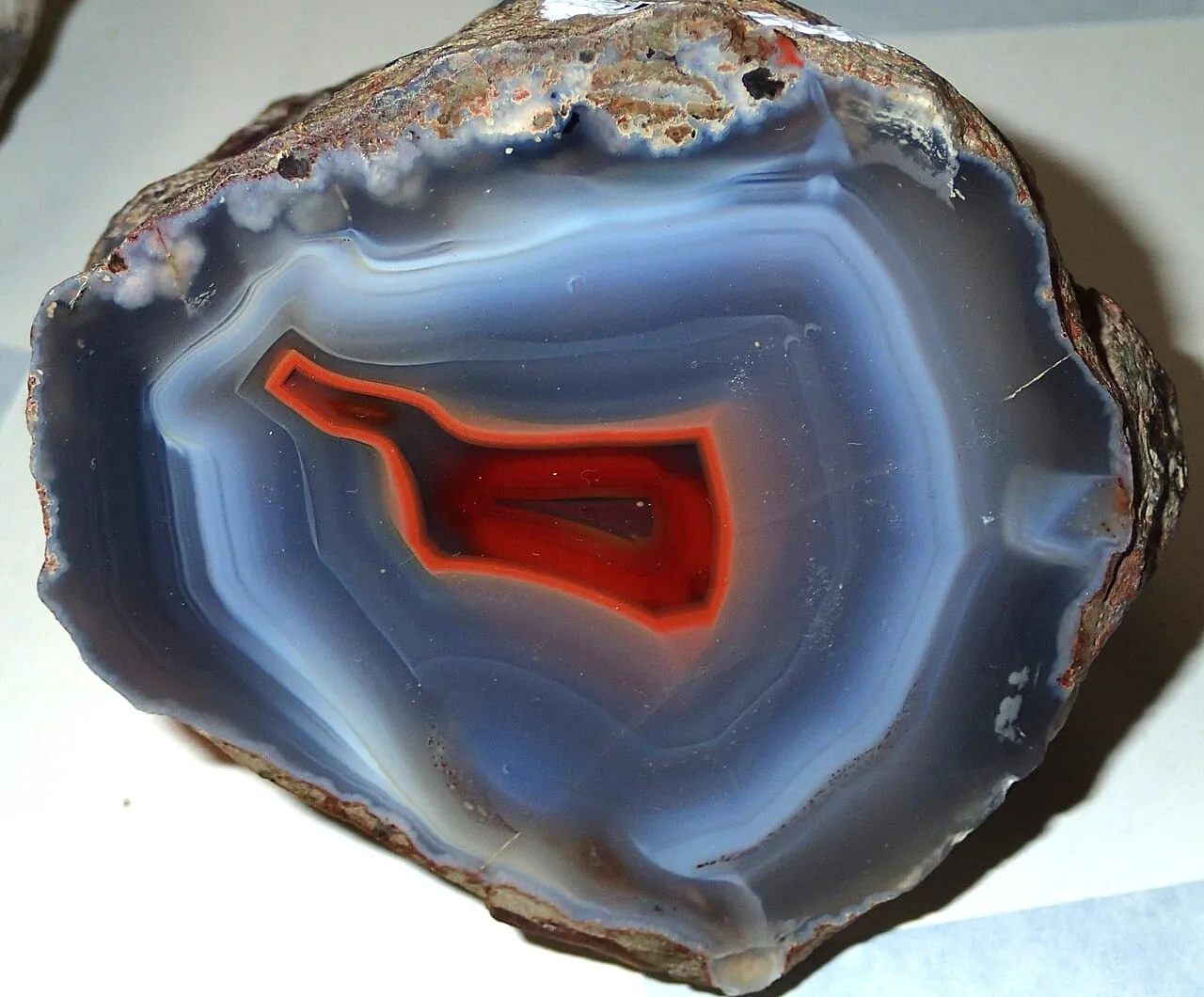
The banded variety of chalcedony: it grows layer by layer in hollows in volcanic rock and shows a new pattern every time it is cut.
Almandine
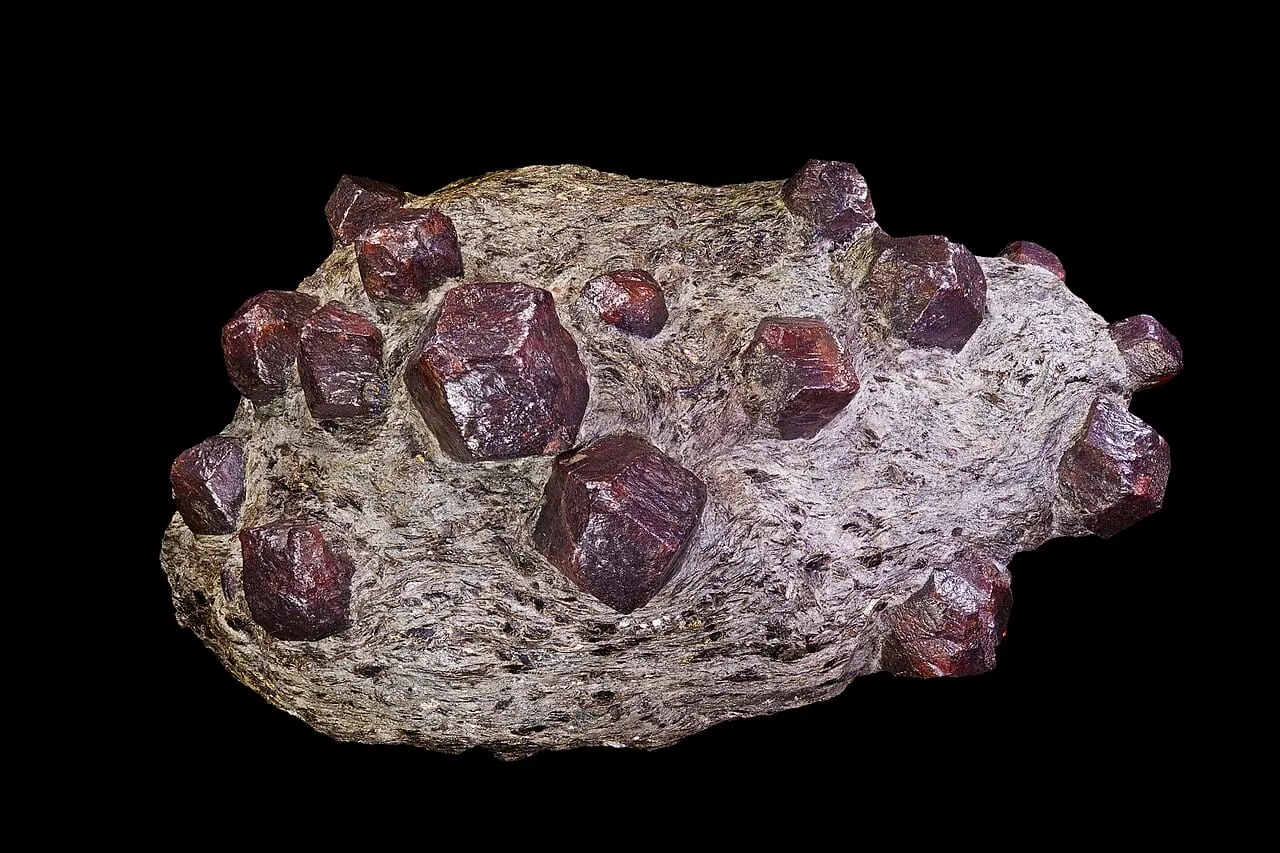
The commonest garnet: a deep red, iron-rich stone named after the ancient city of Alabanda in Anatolia, used in jewellery and in sandpaper alike.
Amazonite
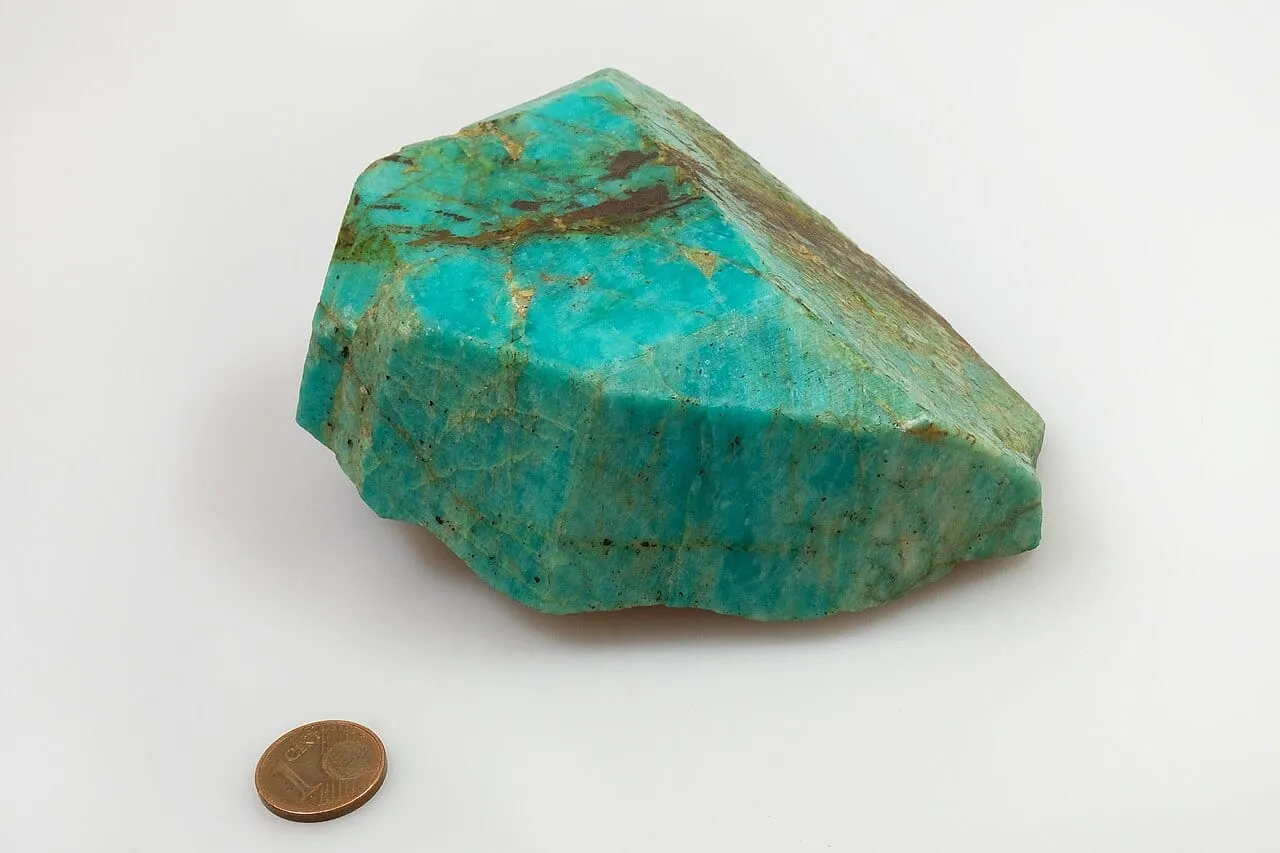
A turquoise-like green-blue feldspar: a variety of microcline worn as jewellery for more than three thousand years, but it can release lead.