Organic gem
Copal
Kopal
Tree resin that has not yet finished becoming amber: from a few decades to a few thousand years old, light, yellow and often holding insects.
Also known as: Gum copal · Young amber (misleading trade name) · Kauri gum (New Zealand copal)
- Popularly: Semi-precious stone

In short
Copal is resin from tropical trees that has hardened but has not yet turned into amber. Amber takes millions of years to form, while copal is usually somewhere between a few decades and a few thousand years old. Because it looks so like amber, it is used in jewellery and is often sold as amber. In Central America it has been burned as a sacred incense for thousands of years.
Photos

How does it form?
Some tropical trees release a sticky resin to protect themselves when their bark is wounded. The resin hardens on contact with the air; if it is later buried in soil or sediment, it loses its volatile components and its molecules link up (polymerise), making it harder still. The halfway stage of this change is called copal, and the finished product, millions of years later, is amber.
Most copal comes from trees that are still living today: Hymenaea trees of the legume family in East Africa, Madagascar and South America, Protium and Bursera trees in Central America, and the kauri tree (Agathis australis) in New Zealand. Some is collected straight from living trees, and some is dug out of the ground around the trees or where old forests once stood. Insects, spiders and flowers that land on the resin while it is still sticky are trapped and preserved inside it.
What is it used for?
- Incense and ceremony: the Maya and the Aztecs burned copal as a sacred incense and placed it in offerings. It is still burned in ceremonies in Mexico and Central America.
- Varnish: from the 18th century, Europeans used copal as a good raw material for varnishing furniture and carriages. In the 19th century its use on railway carriages in England and America greatly increased demand, and from 1910 New Zealand’s kauri gum also went into making linoleum. Today it has largely been replaced by synthetic resins.
- Jewellery and ornaments: because it looks like amber, it is made into beads, pendants and small ornaments.
- Science: the insects in copal are studied because they record recent wildlife of tropical forests that are now disappearing fast.
Copal or amber?
Copal and amber are the same material at different ages. Both are light, float in salt water and feel warm in the hand. The difference is that copal has not fully hardened yet: a drop of acetone makes it sticky within seconds, its surface cracks over time and a blade cuts it easily. Amber stands up to these tests much better. Most pieces that sellers call “young amber” are in fact copal.
Where is it found?
Much of the copal sold today as an ornamental material comes from the coastal forests of Madagascar and from the department of Santander in Colombia. Historically the most important commercial copal was Zanzibar copal, gathered on the East African coast and sold through Zanzibar; in 1859, 68% of this trade went to America and 24% to Germany. In New Zealand’s Northland region, kauri gum dug from the ground was the main livelihood between 1870 and 1920. The Mexican state of Guerrero is the traditional source of Bursera copal for incense.
What determines its value?
Copal is worth far less than amber and should always be sold clearly as copal. As an ornamental stone, its value depends on clarity, colour, size and inclusions: pieces with insects or plants attract more interest, but because these are present-day species they have less scientific importance than inclusions in amber. Surface crazing and the tendency to deteriorate over time lower its value. For copal used as incense, purity and scent are what matter.
This information is educational, not buying, selling or investment advice. Value varies enormously with quality and treatment.
How to recognise it
- 1
Like amber it is very light (specific gravity about 1.06) and floats in saturated salt water, so the salt-water test does not tell copal from amber.
- 2
A drop of acetone on a hidden spot makes the surface of copal sticky within 2–3 seconds and leaves a small dull mark, while amber is usually unaffected or only slightly affected. The test leaves a mark, so do not use it on valuable pieces.
- 3
Over time a fine network of cracks (crazing) forms on its surface, and it cuts and crumbles easily under a blade. Its hardness is about 2, softer even than a fingernail.
- 4
Telling copal reliably from amber needs laboratory methods such as infrared spectroscopy (FTIR).
Fakes and imitations
What shops usually don’t tell you:
- Copal itself is often the imitation: it may be sold as “amber”, “young amber” or “polished copal”. In Madagascar, resin collected straight from the tree is also marketed as “polished copal”.
- Plastic and synthetic resin imitations are made of materials such as polyester and epoxy, sometimes with insects embedded in them. Some of them float in salt water too, so only a laboratory can be sure.
Myths and misconceptions
MythCopal with insects inside is a fossil millions of years old.
FactRadiocarbon dating of insect-bearing copal from Madagascar has shown that this resin is at most a few hundred years old. The insects in copal are usually species that are still alive today.
MythResin sold as “young amber” is a kind of amber.
FactThe name is misleading: the resin in question is copal, a young resin that is not yet fully polymerised. It turns sticky with acetone, cracks over time and is worth much less than amber.
MythThere is a fixed age that separates copal from amber.
FactWhether resin turns into copal and then into amber depends more on conditions such as temperature and pressure than on age, so there is no fixed boundary and the terms are still debated. Sources give ages for copal ranging from 50 years to 1.6 million years.
What is it believed to be good for?
This section reports beliefs; it is not health information. There is no scientific evidence for these claims and no stone replaces medical treatment.
The meanings people give this stone, and who holds them:
- The Maya and the Aztecs believed that the scent and white smoke of burning copal opened communication between people and the gods; copal was placed in offerings and regarded as “food of the gods”.
- In Aztec times copal was believed to help with toothache, a bloated stomach, bleeding and the bites of venomous animals.
- In Central America, farmers are recorded as burning copal as an offering to protect their fields.
- Some indigenous communities in Mexico and Central America still burn copal as a sacred incense in temazcal (sweat lodge) ceremonies and on Day of the Dead altars.
What science says
There is no scientific evidence that copal cures toothache, stomach complaints or venomous bites; anyone bitten by a venomous animal needs medical help straight away. Like any incense, burning copal releases fine particles and volatile organic compounds into the air; incense smoke breathed often indoors is known to irritate the airways, so good ventilation is needed.
Did you know?
The word “copal” comes from copalli, the Aztec (Nahuatl) word for “incense”.
More than 300 objects made of copal from the Templo Mayor excavations in Mexico City have been studied: bars, spheres, human-shaped figurines and the handles of sacrificial knives.
In the 1890s about 20,000 people in New Zealand were digging kauri copal (kauri gum) out of the ground; at the time 70% of the oil varnishes made in England used kauri gum.
Where is it found?
Loading map…
- Sambava region, north-eastern Madagascar · Major deposit“Madagascar copal”, gathered from Hymenaea verrucosa trees in the lowland coastal forests; radiocarbon dating shows it is at most a few hundred years old, and it is sold in the markets of Sambava, Antalaha and Mananjary.
- Santander, Colombia · Major deposit“Colombian copal” has traditionally been extracted in this department and comes from Hymenaea trees; the oldest dated piece is about 10,600 years old. The exact extraction sites are poorly known.
- Northland, New Zealand · Historic sourceThe resin of the kauri tree dug from the ground (kauri gum); between 1870 and 1920 it was the region's main industry, centred by the 1910s around Ahipara and Houhora.
- Zanzibar and the East African coast, Tanzania · Historic source“Zanzibar copal”, from Hymenaea (Trachylobium) verrucosum trees in East Africa, was the principal commercial copal; in the 19th century the trade was controlled through the Sultan of Zanzibar.
- Guerrero, Mexico · Known localityCopal from the Bursera bipinnata tree has been carried from here to Morelos, Puebla and Mexico City since pre-Hispanic times. In the Late Postclassic period this resin was also taken to the Aztec capital, Tenochtitlan.
Locations are approximate to protect sites. Red dots mark places in Türkiye. Open in the big map →
Frequently asked questions
What is copal?
Copal is resin from tropical trees that has hardened but has not yet turned into amber. Amber takes millions of years to form, while copal is usually somewhere between a few decades and a few thousand years old. Because it looks so like amber, it is used in jewellery and is often sold as amber. In Central America it has been burned as a sacred incense for thousands of years.
What is copal used for?
Incense and ceremony: the Maya and the Aztecs burned copal as a sacred incense and placed it in offerings. It is still burned in ceremonies in Mexico and Central America. Varnish: from the 18th century, Europeans used copal as a good raw material for varnishing furniture and carriages. In the 19th century its use on railway carriages in England and America greatly increased demand, and from 1910 New Zealand's kauri gum also went into making linoleum. Today it has largely been replaced by synthetic resins.
How hard is copal?
It has a hardness of 2 on the Mohs scale. It is soft enough to scratch with a fingernail. Its specific gravity is 1.03–1.1 g/cm³.
Where is copal found?
Its best-known localities: Sambava region, north-eastern Madagascar; Santander, Colombia; Northland, New Zealand; Zanzibar and the East African coast, Tanzania; Guerrero, Mexico.
How can you tell if copal is real?
Like amber it is very light (specific gravity about 1.06) and floats in saturated salt water, so the salt-water test does not tell copal from amber. A drop of acetone on a hidden spot makes the surface of copal sticky within 2–3 seconds and leaves a small dull mark, while amber is usually unaffected or only slightly affected. The test leaves a mark, so do not use it on valuable pieces. Over time a fine network of cracks (crazing) forms on its surface, and it cuts and crumbles easily under a blade. Its hardness is about 2, softer even than a fingernail. Copal itself is often the imitation: it may be sold as “amber”, “young amber” or “polished copal”. In Madagascar, resin collected straight from the tree is also marketed as “polished copal”.
Is copal valuable?
On the “street to diamond” value ladder it sits on step 5 of nine: Ornamental stone. Copal is worth far less than amber and should always be sold clearly as copal. As an ornamental stone, its value depends on clarity, colour, size and inclusions: pieces with insects or plants attract more interest, but because these are present-day species they have less scientific importance than inclusions in amber. Surface crazing and the tendency to deteriorate over time lower its value. For copal used as incense, purity and scent are what matter.
What is copal good for?
The Maya and the Aztecs believed that the scent and white smoke of burning copal opened communication between people and the gods; copal was placed in offerings and regarded as “food of the gods”. In Aztec times copal was believed to help with toothache, a bloated stomach, bleeding and the bites of venomous animals. In Central America, farmers are recorded as burning copal as an offering to protect their fields. Some indigenous communities in Mexico and Central America still burn copal as a sacred incense in temazcal (sweat lodge) ceremonies and on Day of the Dead altars. There is no scientific evidence that copal cures toothache, stomach complaints or venomous bites; anyone bitten by a venomous animal needs medical help straight away. Like any incense, burning copal releases fine particles and volatile organic compounds into the air; incense smoke breathed often indoors is known to irritate the airways, so good ventilation is needed. This section reports beliefs; it is not health information. There is no scientific evidence for these claims and no stone replaces medical treatment.
Sources
- Copal · Wikipedia
- Copal · Encyclopaedia Britannica
- Copal (Gemology, section 16.28) · Geosciences LibreTexts
- Is it Copal or Amber? (E. Sanders & S. Stocklmayer), The Australian Gemmologist 28(6) · Gemmological Association of Australia, 2024
- Unravelling the mystery of “Madagascar copal”: Age, origin and preservation of a Recent resin (Delclòs et al.), PLOS ONE 15(5) · PLOS, 2020
- Estudio de los yacimientos del “copal de Colombia” y su aplicación en los análisis de pérdida de biodiversidad (M. L. Ramos Ortega) · Universidad Industrial de Santander, 2021
- Kauri gum · Wikipedia
- Northland Region · Wikipedia
- Objects made of copal resin: a radiological analysis (N. V. Lona), Boletín de la Sociedad Geológica Mexicana 64(2) · Sociedad Geológica Mexicana, 2012
- Sacred Smoke of Copal: From Mesoamerican Religion to Chicanx Ceremonies (R. Mendoza Nunziato), ReVista · Harvard University, David Rockefeller Center for Latin American Studies, 2021
- Copal, the “food of the gods” · El Universal (Mexico), 2017
- Incense smoke: clinical, structural and molecular effects on airway disease (Lin, Krishnaswamy & Chi), Clinical and Molecular Allergy 6 · BioMed Central, 2008
- Santander Department · Wikipedia
- Guerrero · Wikipedia
- Unguja · Wikipedia
External links
Draft: awaiting expert reviewReport an error
On the same step
Agate
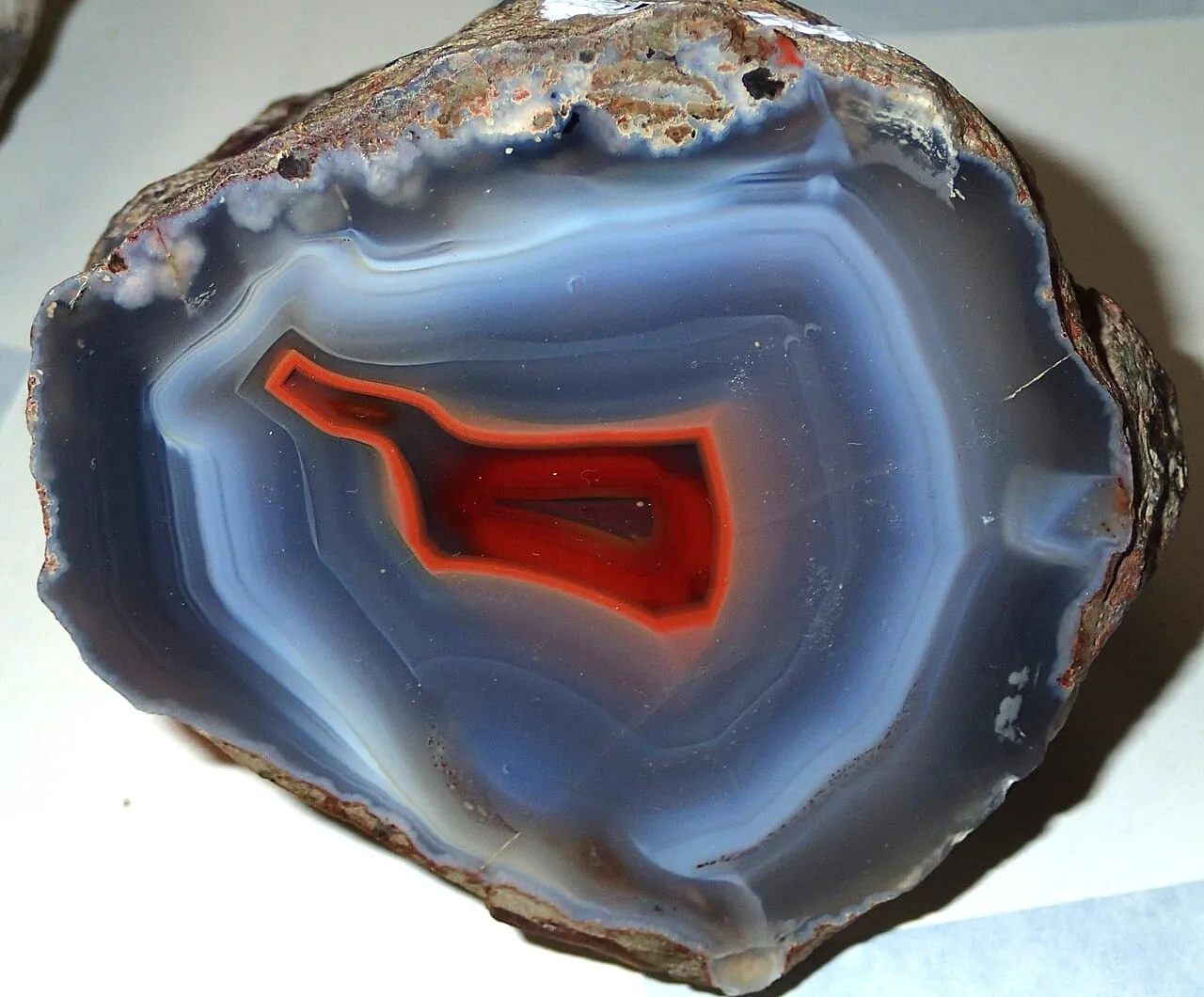
The banded variety of chalcedony: it grows layer by layer in hollows in volcanic rock and shows a new pattern every time it is cut.

Almandine
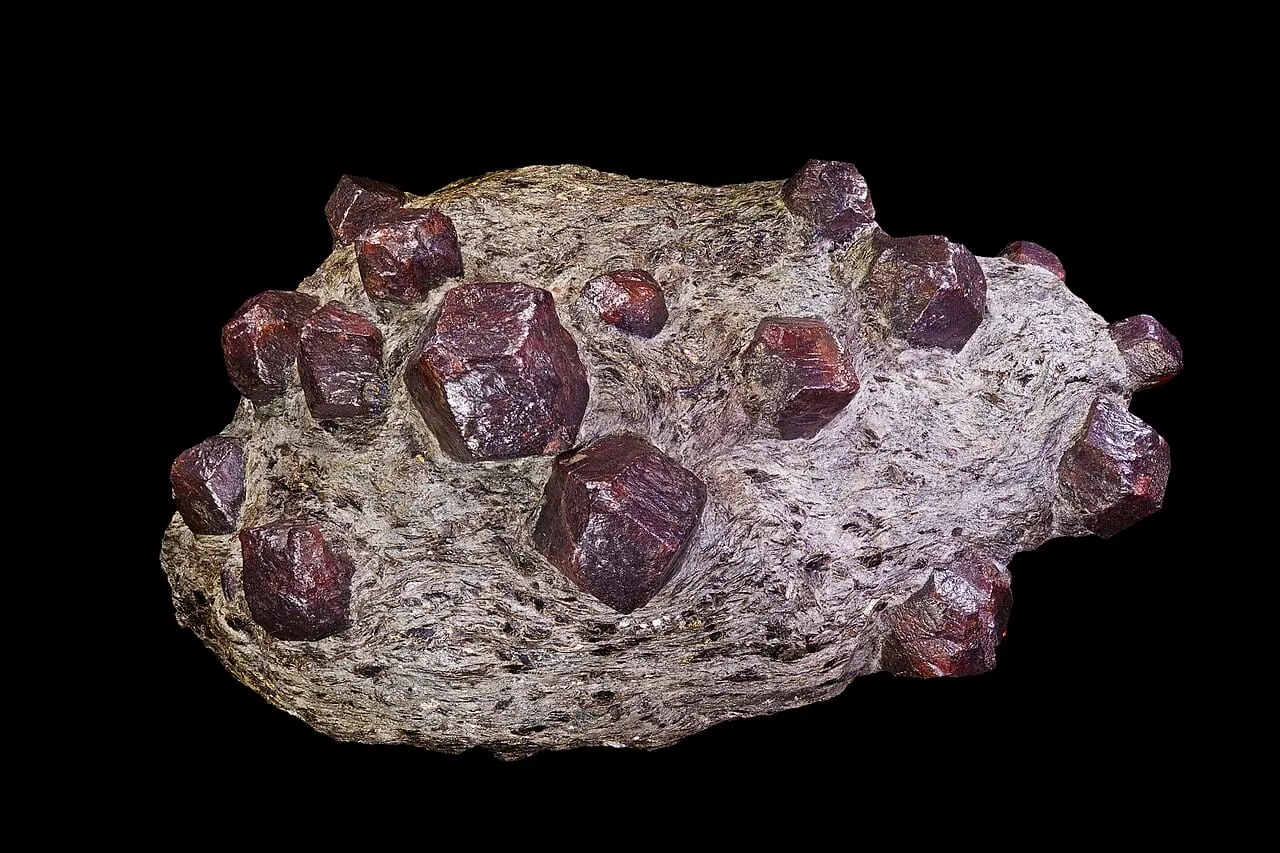
The commonest garnet: a deep red, iron-rich stone named after the ancient city of Alabanda in Anatolia, used in jewellery and in sandpaper alike.
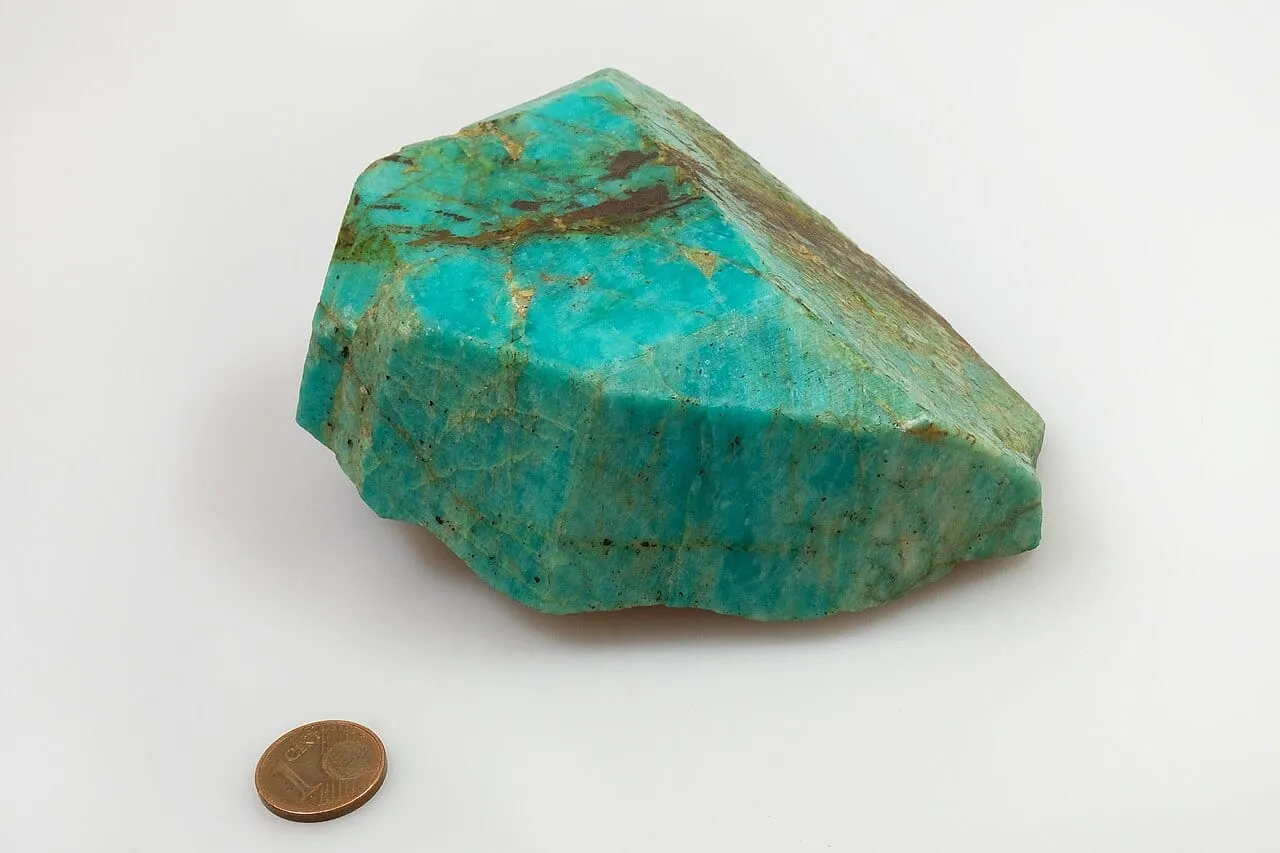
Amazonite
A turquoise-like green-blue feldspar: a variety of microcline worn as jewellery for more than three thousand years, but it can release lead.