VarietyA variety of Andalusite
Chiastolite
Al₂SiO₅Kiyastolit
The kind of andalusite that shows a natural black cross or “X” when cut; for centuries it was carried as an amulet and pilgrim’s keepsake.
Also known as: Cross stone · Lapis crucifer · Macle
- Popularly: Semi-precious stone
In short
Chiastolite is an opaque, grey or whitish variety of the mineral andalusite. As the crystal grows, graphite (carbon) and clay are trapped along its diagonals, so a cut across the crystal reveals a dark cross or “X”. The name comes from the Greek chiastos, “arranged diagonally”, and refers to the Greek letter chi (χ), which looks like an X.
Photos
How does it form?
Chiastolite forms when clay-rich, carbon-rich sedimentary rocks are heated and transformed (metamorphism). When a hot body of magma such as granite is emplaced, it heats the surrounding slates; in this “baked” zone andalusite, the form of aluminium silicate that is stable at low pressure, grows as crystals. Grains of graphite (carbon) and clay in the rock become trapped inside the growing crystals.
According to the explanation proposed by Frondel in 1934, and accepted today, these impurities cling to the fastest-growing corners of the crystal. As graphite builds up, growth at the corners slows, then the crystal grows again; as this cycle repeats, the graphite forms a feather-like pattern along four arms. The chiastolite slates in the zones around the Skiddaw granite in England, which change as the granite is approached, are a well-known example.
What is it used for?
- Amulet and religious symbol: Its natural cross made it an amulet and pilgrim’s keepsake for centuries, and it is still used in jewellery as a Christian symbol.
- Ornamental stone: Slices cut across the crystal and polished are made into pendants, earrings and cabochons; the town of Laraquete in Chile is known for handmade jewellery of chiastolite, called “piedra cruz”.
- Collecting: Large crystals with a clear pattern are sought by mineral collectors.
- Science: Chiastolite and andalusite are among the index minerals that show a rock was heated at low pressure; geologists map the heated zones around granites with them.
What determines its value?
Chiastolite is an inexpensive ornamental and collector’s stone; its value depends above all on how clear and symmetrical the cross is: a sharp black cross with even arms on a pale background is the most sought after. A good polish, freedom from cracks and size also matter for cut slices. Being opaque, it is not faceted but worked into slices, cabochons and pendants. Large crystals from famous localities such as Mount Howden or Lancaster are sought by collectors.
This information is educational, not buying, selling or investment advice. Value varies enormously with quality and treatment.
How to recognise it
- 1
It forms prism-shaped grey or whitish crystals with an almost square cross-section; a cut across the crystal shows a black cross, an “X” or a checkerboard-like pattern inside.
- 2
The pattern changes along the crystal: according to Kunz, slices from one end first show a white cross outlined in black, then the black cross grows stronger further along; no two crosses are ever exactly alike.
- 3
It occurs as rods embedded in slate, schist and hornfels that were heated around a hot body of magma such as granite.
- 4
It differs from the “fairy crosses” of staurolite: in staurolite the cross is formed on the outside by two crystals crossing at right angles, while in chiastolite the cross lies inside a single crystal and only shows when it is cut.
Fakes and imitations
What shops usually don’t tell you:
- Staurolite twins are also sold as “cross stones”; they are not chiastolite but a different mineral.
Myths and misconceptions
MythChiastolite and staurolite (“fairy cross”) are the same stone.
FactThey are different minerals. Staurolite’s cross shape comes from two crystals twinned at right angles; chiastolite’s cross comes from graphite and clay inclusions inside an andalusite crystal. Kunz notes that the name “lapis crucifer” in old books on stones was used for both.
MythChiastolite is a mineral species of its own.
FactChiastolite is andalusite with inclusions and is not accepted as a separate mineral species. Although the name is discredited as a species name, it is still widely used by collectors.
What is it believed to be good for?
This section reports beliefs; it is not health information. There is no scientific evidence for these claims and no stone replaces medical treatment.
The meanings people give this stone, and who holds them:
- According to Kunz, chiastolite worn touching the skin was once believed to stop bleeding from any part of the body and to increase the flow of milk, and to cure all kinds of fever when hung from the neck.
- The same source says that, because its cross was taken as a holy sign, chiastolite was believed to drive evil spirits away from the wearer.
- From the 16th century, pilgrims returning from Santiago de Compostela carried chiastolites across Europe as amulets and souvenirs.
What science says
There is no evidence that chiastolite stops bleeding, increases milk, lowers fever or drives away evil spirits; bleeding and high fever need medical help. The cross is an entirely natural pattern, formed as graphite and clay line up along the diagonals while the crystal grows.
Did you know?
The first known picture of chiastolite appears in a book on stones by Laet, published in 1648.
Some crystals from Mount Howden in South Australia reach 12–15 cm in length, and one is about 5 cm across; they were described in the journal of the Australian Museum in 1902.
The way the cross forms was explained in 1934 by the mineralogist Frondel: fast-growing crystal corners trap graphite, growth there slows as graphite builds up and then speeds up again, and as the cycle repeats it leaves a four-armed pattern.
Where is it found?
Loading map…
- Boal, Asturias, Spain · Major depositAn area where large chiastolite crystals are very abundant
- Santiago de Compostela, Galicia, Spain · Historic sourceThe “cross stones” that pilgrims carried across Europe as amulets and souvenirs from the 16th century on
- Carreço, Viana do Castelo, Portugal · Known locality
- Mount Howden (north of Bimbowrie), Olary, South Australia · Major depositLarge crystals up to 12–15 cm long with very distinct markings, found in schist or as rolled pebbles
- Sangping Mine, Nanyang, Henan, China · Known locality
- Lancaster, Worcester County, Massachusetts, USA · Historic sourceMany chiastolite spots in the schists of western Lancaster; a classic North American collecting area
- Laraquete, Biobío Region, Chile · Known localityKnown for handmade jewellery of chiastolite, locally called “piedra cruz” (cross stone)
- Skiddaw granite aureole, Cumbria, England · Known localityAndalusite (chiastolite) prisms in slates baked by the granite, within zones that change towards the granite
Locations are approximate to protect sites. Red dots mark places in Türkiye. Open in the big map →
Frequently asked questions
What is chiastolite?
Chiastolite is an opaque, grey or whitish variety of the mineral andalusite. As the crystal grows, graphite (carbon) and clay are trapped along its diagonals, so a cut across the crystal reveals a dark cross or “X”. The name comes from the Greek chiastos, “arranged diagonally”, and refers to the Greek letter chi (χ), which looks like an X.
What is chiastolite used for?
Amulet and religious symbol: Its natural cross made it an amulet and pilgrim’s keepsake for centuries, and it is still used in jewellery as a Christian symbol. Ornamental stone: Slices cut across the crystal and polished are made into pendants, earrings and cabochons; the town of Laraquete in Chile is known for handmade jewellery of chiastolite, called “piedra cruz”. Collecting: Large crystals with a clear pattern are sought by mineral collectors.
How hard is chiastolite?
It has a hardness of 6.5–7.5 on the Mohs scale. It scratches glass and steel; a steel knife cannot scratch it. Its specific gravity is 3.13–3.17 g/cm³.
Where is chiastolite found?
Its best-known localities: Boal, Asturias, Spain; Mount Howden (north of Bimbowrie), Olary, South Australia; Santiago de Compostela, Galicia, Spain; Lancaster, Worcester County, Massachusetts, USA; Carreço, Viana do Castelo, Portugal.
How can you tell if chiastolite is real?
It forms prism-shaped grey or whitish crystals with an almost square cross-section; a cut across the crystal shows a black cross, an “X” or a checkerboard-like pattern inside. The pattern changes along the crystal: according to Kunz, slices from one end first show a white cross outlined in black, then the black cross grows stronger further along; no two crosses are ever exactly alike. It occurs as rods embedded in slate, schist and hornfels that were heated around a hot body of magma such as granite. Staurolite twins are also sold as “cross stones”; they are not chiastolite but a different mineral.
Is chiastolite valuable?
On the “street to diamond” value ladder it sits on step 5 of nine: Ornamental stone. Chiastolite is an inexpensive ornamental and collector’s stone; its value depends above all on how clear and symmetrical the cross is: a sharp black cross with even arms on a pale background is the most sought after. A good polish, freedom from cracks and size also matter for cut slices. Being opaque, it is not faceted but worked into slices, cabochons and pendants. Large crystals from famous localities such as Mount Howden or Lancaster are sought by collectors.
What is chiastolite good for?
According to Kunz, chiastolite worn touching the skin was once believed to stop bleeding from any part of the body and to increase the flow of milk, and to cure all kinds of fever when hung from the neck. The same source says that, because its cross was taken as a holy sign, chiastolite was believed to drive evil spirits away from the wearer. From the 16th century, pilgrims returning from Santiago de Compostela carried chiastolites across Europe as amulets and souvenirs. There is no evidence that chiastolite stops bleeding, increases milk, lowers fever or drives away evil spirits; bleeding and high fever need medical help. The cross is an entirely natural pattern, formed as graphite and clay line up along the diagonals while the crystal grows. This section reports beliefs; it is not health information. There is no scientific evidence for these claims and no stone replaces medical treatment.
Family


Sources
- Chiastolite · Wikipedia
- Andalusite · Minerals.net
- Andalusite Value, Price, and Jewelry Information · International Gem Society
- Handbook of Mineralogy: Andalusite · Mineralogical Society of America
- On some specimens of chiastolite from Bimbowrie, South Australia (C. Anderson), Records of the Australian Museum 4 (7): 298–302 · Australian Museum, 1902
- Skiddaw Metamorphic Aureole · Alessandro Da Mommio, alexstrekeisen.it
- The Curious Lore of Precious Stones (G. F. Kunz) · J. B. Lippincott Company; Project Gutenberg, 1913
External links
Draft: awaiting expert reviewReport an error
On the same step
Agate
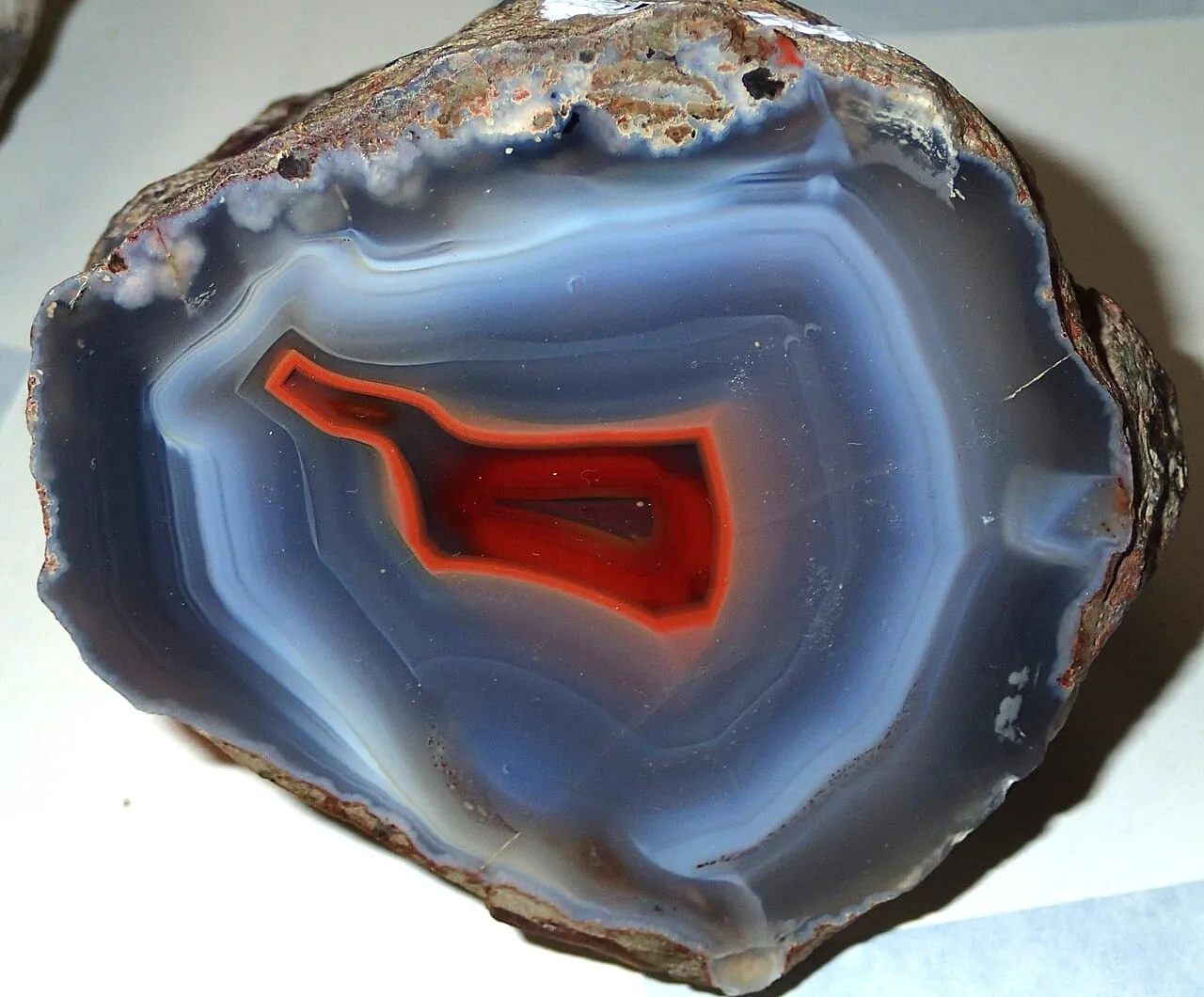
The banded variety of chalcedony: it grows layer by layer in hollows in volcanic rock and shows a new pattern every time it is cut.
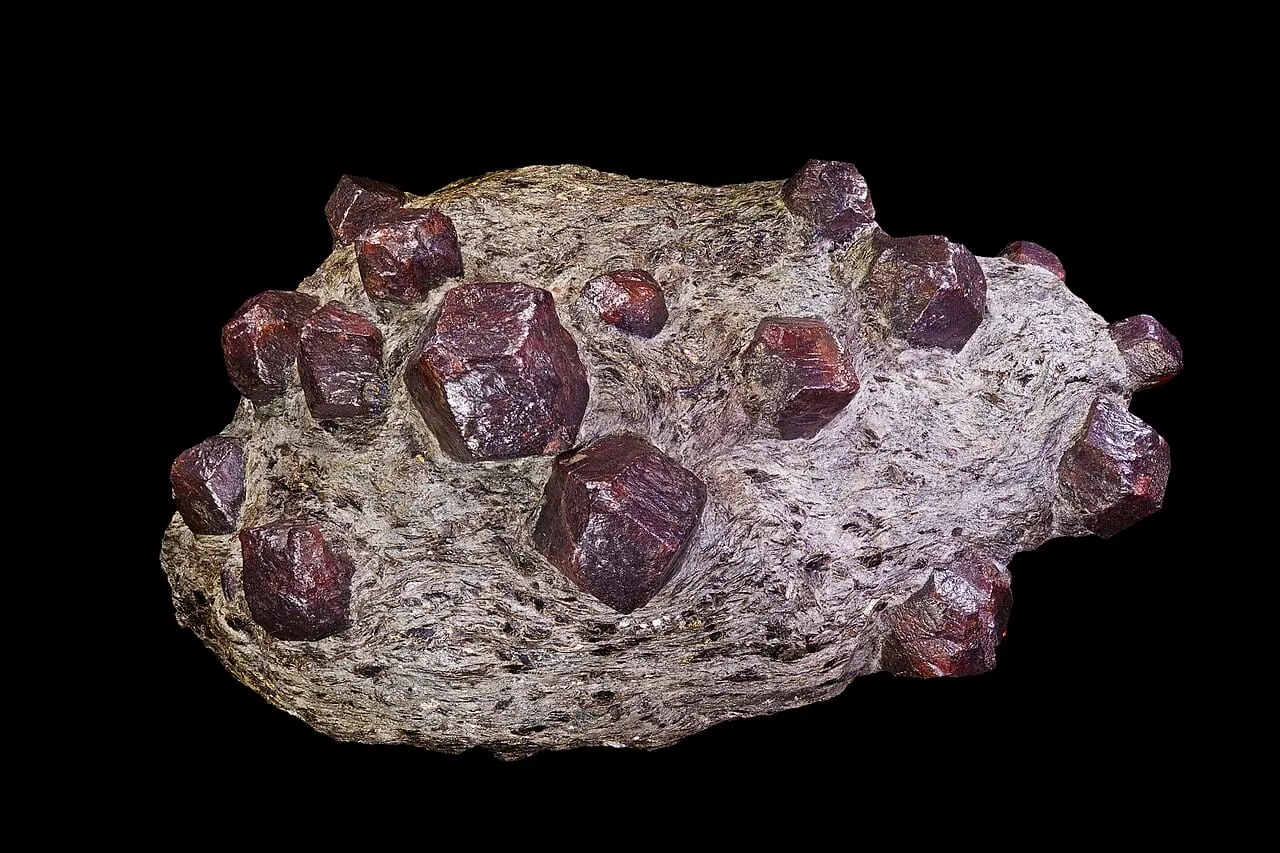
Almandine
The commonest garnet: a deep red, iron-rich stone named after the ancient city of Alabanda in Anatolia, used in jewellery and in sandpaper alike.
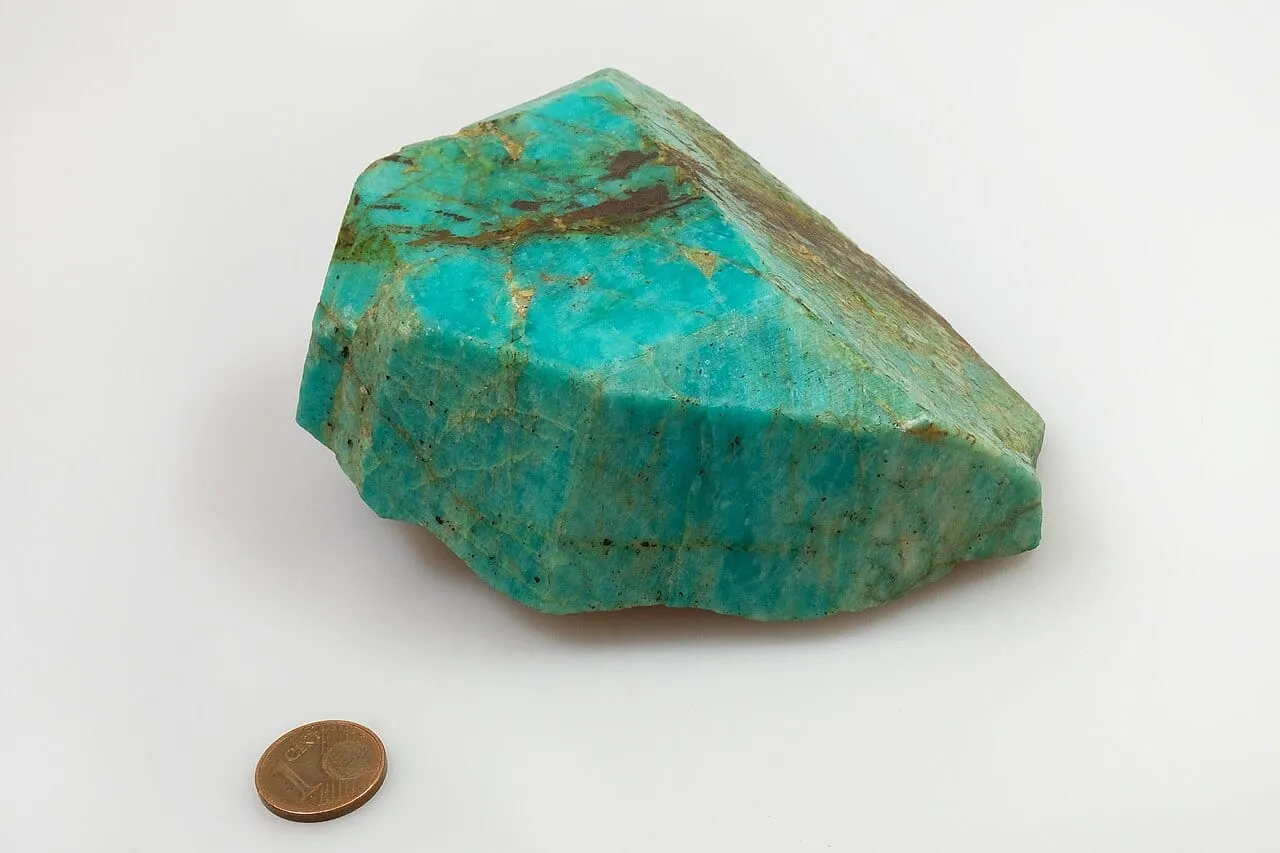
Amazonite
A turquoise-like green-blue feldspar: a variety of microcline worn as jewellery for more than three thousand years, but it can release lead.