Mineral
Andradite
Ca₃Fe₂(SiO₄)₃Andradit
The calcium-iron garnet: its varieties include green demantoid, black melanite and yellow topazolite, and it splits light more than any other garnet.
Also known as: Demantoid (green variety) · Topazolite (yellow-green variety) · Melanite (black, titanium-bearing variety) · Colophonite (brown, resin-like variety) · Rainbow garnet (iridescent andradite, especially from Japan)
- Popularly: Semi-precious stone
- Gemstone
In short
Andradite is the garnet that contains calcium and iron. Its colour ranges from green to yellow, brown and black. It is named after the Brazilian scientist José Bonifácio de Andrada e Silva. Because it splits light more strongly than other garnets, it looks bright and fiery. Its best-known variety is emerald-green demantoid; black melanite and yellowish-green topazolite are varieties too.
Photos
How does it form?
Andradite forms mostly where limestone meets hot magma or calcium-rich igneous rocks (skarn); it also grows in serpentinite, chlorite schist and alkali-rich igneous rocks. It is accompanied by vesuvianite, chlorite, epidote, spinel, calcite, dolomite and magnetite.
Its colour comes largely from iron: ferric iron gives yellow and brown tones, traces of chromium give green and titanium gives black. Andradite also forms mixtures with grossular. For the family as a whole, see garnet.
What is it used for?
- Jewellery: Green demantoid and yellowish-green topazolite are cut as gems; black melanite is used as an accent stone and, in the past, in mourning jewellery. Because hardness is 6.5–7, a protective setting is advised for a ring stone.
- Collecting: Sharp andradite crystals formed in skarns and serpentinite are found in mineral collections.
Varieties
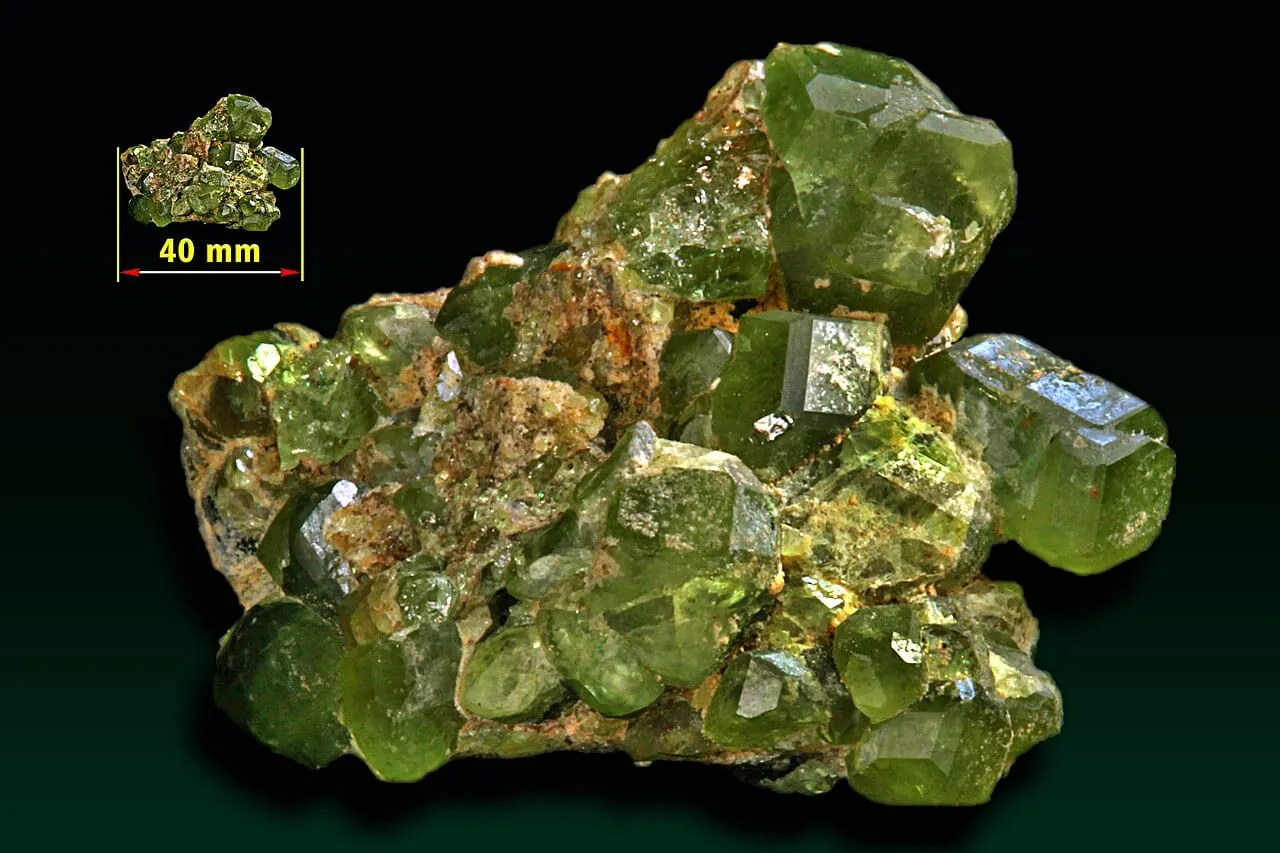
- Demantoid: emerald green; described on its own page.
- Topazolite: yellow or yellowish green; rarer even than demantoid.
- Melanite: a black, titanium-bearing variety; it can show a diamond-like (adamantine) lustre.
- Colophonite: brown, reddish or orange-ish; shines like resin or amber.
- Rainbow garnet: andradite with coloured reflections playing on its surface.
- Mali garnet: an andradite–grossular mixture.
In Türkiye
Garnets of andradite composition in skarn zones developed at the contact between limestone and granitoid around Susurluk in Balıkesir province were reported in a doctoral thesis completed at Pamukkale University in 2023; the skarn garnets at Çavuşlu, by contrast, are of almandine composition. The thesis concluded that most of the garnet occurrences studied in Türkiye have low or limited potential as gemstones.
What determines its value?
Most andradite is a collector’s mineral; gem-quality examples are rare. Value varies greatly with the variety: green demantoid is the most valuable and has a page of its own; yellowish-green topazolite is rarer still; black melanite is used as an accent stone. Colour, clarity, cut and size matter; because it splits light so strongly, small light-coloured stones look very lively while the effect is hidden in dark stones. For mineral specimens, the sharpness of the crystals and the fame of the locality decide.
This information is educational, not buying, selling or investment advice. Value varies enormously with quality and treatment.
How to recognise it
- 1
Crystals are usually twelve- or twenty-four-faced, sometimes a combination of the two; they occur in skarns and serpentinite together with calcite, epidote and magnetite.
- 2
The colour is green, yellowish green, yellow, brown, brownish red or black; rarely, zones such as red and green are seen in the same stone.
- 3
Its hardness is 6.5–7 and it is sensitive to heat; in an ultrasonic cleaner or steam cleaner a stone may shatter.
- 4
Because it splits light so strongly (dispersion), small light-coloured stones show rainbow flashes (“fire”); in dark stones this effect can be hidden.
Fakes and imitations
What shops usually don’t tell you:
- Green glass and green YAG (a laboratory-made material with the garnet structure) may be sold in place of green andradite, that is, demantoid.
- Demantoid may have been heat-treated to lighten its colour and remove brown tones.
Myths and misconceptions
MythAndradite is only green demantoid.
FactDemantoid is the best-known variety of andradite but not the only one; the same mineral also occurs as yellowish-green topazolite, black melanite and brownish colophonite.
MythTopazolite is a kind of topaz.
FactTopazolite is andradite garnet; its name refers only to a colour resemblance to yellow topaz. Garnet and topaz are separate minerals.
What is it believed to be good for?
This section reports beliefs; it is not health information. There is no scientific evidence for these claims and no stone replaces medical treatment.
The meanings people give this stone, and who holds them:
- Today crystal-therapy websites claim that andradite strengthens self-confidence and emotional balance and reduces fear and anxiety.
- The same circles say that melanite, the black variety, “grounds” a person and shields against negative influences, and that andradite supports the immune system.
What science says
There is no scientific evidence that andradite affects self-confidence, emotional balance or immunity, or that it “grounds” and protects a person. For lasting fear or anxiety, a doctor or mental-health professional should be consulted, not a stone.
Did you know?
Andradite was first described in 1868 from Drammen in Norway and named after the Brazilian statesman, naturalist and poet José Bonifácio de Andrada e Silva (1763–1838).
Andradite has the highest dispersion of any garnet, higher even than that of diamond.
Andradite found in Japan and Mexico with rainbow colours playing on its surface is called “rainbow garnet”.
Its black variety, melanite, was used in mourning jewellery in the past.
Where is it found?
Loading map…
- Drammen, Buskerud, Norway · Type localityWhere the mineral was first described, in 1868
- Arendal, Agder, Norway · Known localityA district of southern Norway cited in the mineralogical literature as an andradite locality
- Valmalenco, Sondrio, Lombardy, Italy · Known localityDemantoid with asbestos-fibre inclusions, and other andradite varieties, in serpentinite
- Bobrovka River, Nizhny Tagil district, Ural Mountains, Russia · Historic sourceThe classic source of gem-quality green andradite (demantoid) crystals
- Antetezambato, Ambanja District, Diana Region, Madagascar · Major depositA mining area producing fine demantoid and topazolite since 2009
- Wessels mine, near Kuruman, Northern Cape, South Africa · Known localityA mine cited in the mineralogical literature as an andradite locality
- San Benito County, California, USA · Known localityA range of gem-quality varieties: topazolite, demantoid, melanite and cat's-eye andradite
- Susurluk, Balıkesir, Türkiye · Known localityAndradite-composition garnet in skarn zones at a limestone–granitoid contact; documented in an academic study
Locations are approximate to protect sites. Red dots mark places in Türkiye. Open in the big map →
Frequently asked questions
What is andradite?
Andradite is the garnet that contains calcium and iron. Its colour ranges from green to yellow, brown and black. It is named after the Brazilian scientist José Bonifácio de Andrada e Silva. Because it splits light more strongly than other garnets, it looks bright and fiery. Its best-known variety is emerald-green demantoid; black melanite and yellowish-green topazolite are varieties too.
What is andradite used for?
Jewellery: Green demantoid and yellowish-green topazolite are cut as gems; black melanite is used as an accent stone and, in the past, in mourning jewellery. Because hardness is 6.5–7, a protective setting is advised for a ring stone. Collecting: Sharp andradite crystals formed in skarns and serpentinite are found in mineral collections.
How hard is andradite?
It has a hardness of 6.5–7 on the Mohs scale. It scratches glass and steel; a steel knife cannot scratch it. Its specific gravity is 3.7–4.1 g/cm³.
Where is andradite found?
Its best-known localities: Drammen, Buskerud, Norway; Antetezambato, Ambanja District, Diana Region, Madagascar; Bobrovka River, Nizhny Tagil district, Ural Mountains, Russia; Arendal, Agder, Norway; Valmalenco, Sondrio, Lombardy, Italy.
Where is andradite found in Türkiye?
Known localities in Türkiye: Susurluk, Balıkesir, Türkiye.
How can you tell if andradite is real?
Crystals are usually twelve- or twenty-four-faced, sometimes a combination of the two; they occur in skarns and serpentinite together with calcite, epidote and magnetite. The colour is green, yellowish green, yellow, brown, brownish red or black; rarely, zones such as red and green are seen in the same stone. Its hardness is 6.5–7 and it is sensitive to heat; in an ultrasonic cleaner or steam cleaner a stone may shatter. Green glass and green YAG (a laboratory-made material with the garnet structure) may be sold in place of green andradite, that is, demantoid.
Is andradite valuable?
On the “street to diamond” value ladder it sits on step 5 of nine: Ornamental stone. Most andradite is a collector’s mineral; gem-quality examples are rare. Value varies greatly with the variety: green demantoid is the most valuable and has a page of its own; yellowish-green topazolite is rarer still; black melanite is used as an accent stone. Colour, clarity, cut and size matter; because it splits light so strongly, small light-coloured stones look very lively while the effect is hidden in dark stones. For mineral specimens, the sharpness of the crystals and the fame of the locality decide.
What is andradite good for?
Today crystal-therapy websites claim that andradite strengthens self-confidence and emotional balance and reduces fear and anxiety. The same circles say that melanite, the black variety, “grounds” a person and shields against negative influences, and that andradite supports the immune system. There is no scientific evidence that andradite affects self-confidence, emotional balance or immunity, or that it “grounds” and protects a person. For lasting fear or anxiety, a doctor or mental-health professional should be consulted, not a stone. This section reports beliefs; it is not health information. There is no scientific evidence for these claims and no stone replaces medical treatment.
Varieties


Sources
- Handbook of Mineralogy: Andradite · Mineralogical Society of America
- Andradite Garnet Value, Price, and Jewelry Information · International Gem Society
- Andradite · Wikipedia
- Garnet · Wikipedia
- Türkiye'de seçili granatların mineralojik, petrografik, spektroskopik, jeokimyasal ve gemolojik özelliklerinin belirlenmesi (doktora tezi, Ufuk Ören) · Pamukkale Üniversitesi, 2023
External links
Draft: awaiting expert reviewReport an error ↗
On the same step
Agate
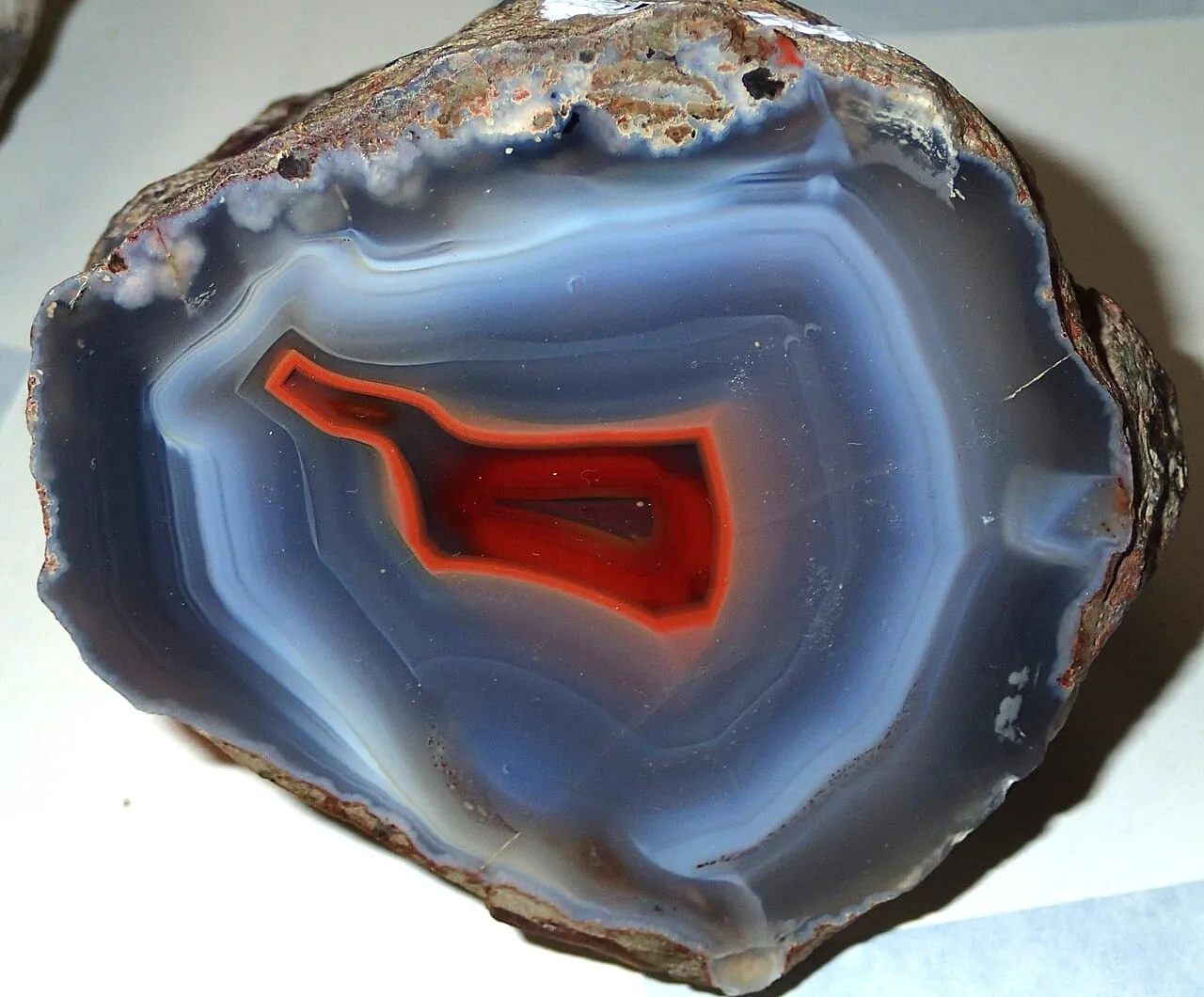
The banded variety of chalcedony: it grows layer by layer in hollows in volcanic rock and shows a new pattern every time it is cut.
Almandine
The commonest garnet: a deep red, iron-rich stone named after the ancient city of Alabanda in Anatolia, used in jewellery and in sandpaper alike.
Amazonite
A turquoise-like green-blue feldspar: a variety of microcline worn as jewellery for more than three thousand years, but it can release lead.